• Preparing for Retirement

    I took a hike today. Hiking is an activity I want to do after I retire on January 7, 2022. It occurred to me this week that I didn’t need to wait until then to research hiking groups. A simple Google search led me to a Twin Cities hiking meetup at Afton State Park on Sunday. 45 people had registered for the hike.

    Crystel gave a hearty laugh when she scrolled my Facebook (she was home for the day from college). Twin Cities Bike Club, she chortled. I might do that when I retire, I said a bit defensively. Even though I have an electric bike I can still join, right? Doesn’t Crystel think that I pedal? Just because I put the bike on cruise on for an entire twenty-mile ride on my recent 63rd birthday?

    Other activities I’m interested in are pre pre-beginner lessons in pickle ball. The few times I’ve tried the game I awoke my inner Frankenstein as I lurched for the ball. Most often I missed the ball entirely. I’ll also be pursuing writing, classes, reading, travel, and cross-country skiing.

    I expected to be fully retired in January, but a recent job offer with minimal hours has altered my thinking. I’m excited about this new job opportunity.

    I’ve also recognized an internal shift about the idea of being a grandparent. When the kids were in their teens, I preached, lectured, and cajoled safe sex. Topping it off with a trip to Planned Parenthood on a Christmas Eve. Though I feel the shift, I continue to want grandparenting to be years away. Jody and I were older parents to Juan and Crystel. We can be much older grandparents.

    I’ve explored other meetup groups and added them to my profile: Twin Cities Indoor/Outdoor Sports, Minnesota Hardy Hikers, Outdoor Introverts, Outdoor & Snow Lovers, Cross Country Skiing, MN Sierra Club Outings and Intrepid, Fit & Social.

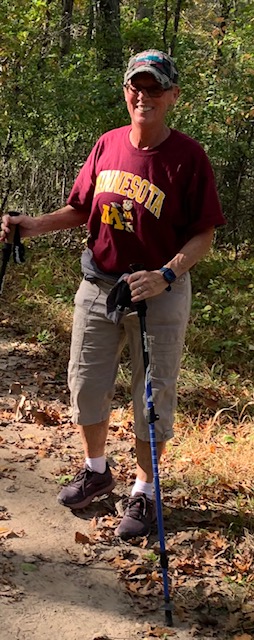
    One group put my membership on hold. They required a photo to join. I had Jody snap one of me on our Sunday hike and uploaded it to their site. The administrator requested a new photo that showed my entire face with no sunglasses. She also mentioned that she couldn’t tell by my picture but wanted to give me a heads up that the members’ average age is just over 50. She didn’t want me to be surprised if I was a lot younger than that. I was still welcome to join but it was up to me.

    I uploaded a new photo. I hope they can keep up with me.

    ,

    One response to “Preparing for Retirement”

    1. Bev Bachel Avatar
      Bev Bachel

      Several of my friends have just started playing pickleball and say it’s a blast. I hadn’t thought of giving it a try but your post made me think I should.

  • Beyond Peshtigo

    The Great Chicago Fire began October 8, 1871. More than 100,000 residents were left homeless and 300 lost their lives. Help flowed in nationally and internationally to rebuild the city.

    North of Chicago, the largest and deadliest forest fire in United States history took place the same day in Peshtigo, Wisconsin. Over 1,200,000 acres (1,875 square miles) burned. The number of people killed can only be estimated because church and government records burned in the fire. Some of the 1,500 to 2,500 men, women and children would never be identified. The fires were so intense that some victims were totally incinerated. 

    Many of the Peshtigo fire victims were immigrant farmers and small-town dwellers. Belgian and German settlers bought acres of cheap land to farm only to discover thick forests covered the area. Along with the railroads and timber industry, farmers slashed through the trees and left much wood on the ground. It was not unusual to see several small fires burning. Even ships in Green Bay and Lake Michigan experienced visibility problems from smoke. In 1871 drought dried fields and wood waste. October 8 a cold front moved in and whipped flames from many small fires into a giant firestorm with temperatures of about 2,000 degrees Fahrenheit.

    People who hid in their wells or storm cellars died. People who tried to outrun the flames in their wagons or buggies died. Some burned, some suffocated. Others drowned while seeking refuge in rivers or ponds. The flames formed a tornado of fire that tossed buildings into the air. Peshtigo was burned to the ground with only two buildings remaining. Fires burned on both side of Green Bay touching Marinette and stopping short of Sturgeon Bay.

    The Belgian Heritage Center remembers the fire each October and the dramatic impact it had on its community. Thick wooded lands were transformed into barren acres. Wooden farmhouses were replaced by red brick buildings. Roadside chapels stood near many homes. 

    My Belgian ancestors lived in the Peshtigo fire area. This year I find a strange comfort in the reality that awful fires are not a modern experience but have devastated parts of our country before. Instead of seeing our current wildfires as one more sign that we are heading toward doom, history is reminding me that there can be more living on the other side of disaster. Learning from the disaster to make the rebuilding smarter is the challenge.

    , , , ,

  • Roadblock

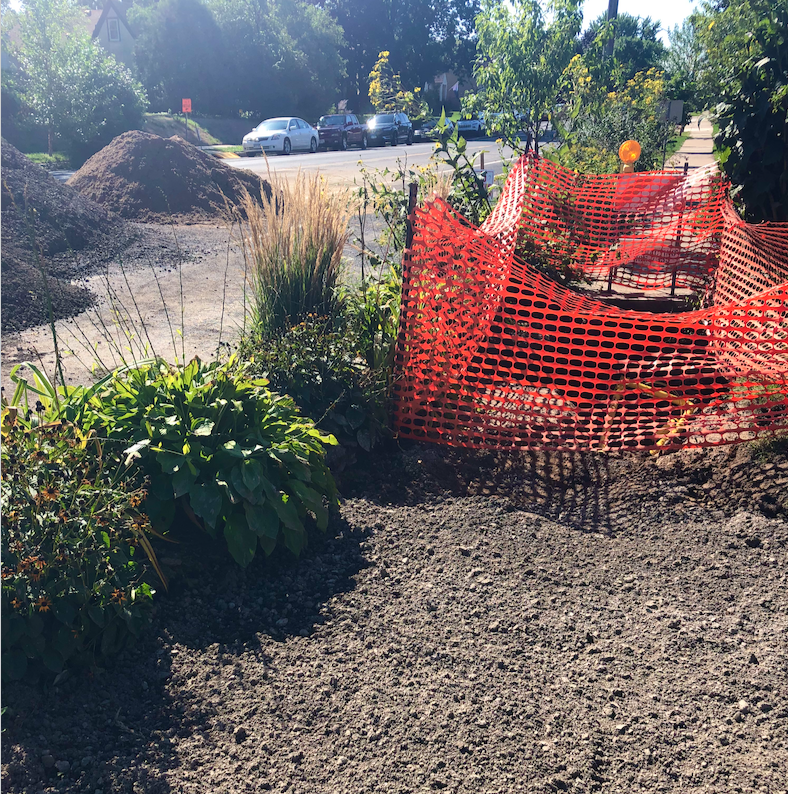
    A screeching, beeping monster clawed a mountain of dirt from my front yard, pirouetting in a repetitive mechanical dance.

    In a surprising moment of consideration, the monster’s keepers preserved my ratty, overgrown boulevard garden, which fringed the gaping hole where sidewalk used to be. As if that garden is worth the care they gave it! They didn’t know I’d gladly be rid of the hosta and daylilies.

    Workers in neon green coveralls appeared waist deep in the front yard. Urban prairie dogs. Do they like standing in holes, dirty and damp? Being where the rest of us don’t go? Searching for a pipe—hidden—but not exactly a treasure. 

    Weeks later, cars still charge up to the roadblock in disbelief, apparently thinking, You can’t stop me, I’ll get through. Some seem to contemplate launching à la Thelma and Louise over the one-foot precipice into the scraped dirt and escaping, only to accept reality, veer into a nearby parking lot, and cut through the alley. Back on their way.

    That’s how this summer, or really this whole year, has felt because of COVID. We’ve hurried toward the life we wanted, only to see—again—not here, not now. Go around, adapt, try again.

    At night it’s peaceful. No clattering buses driving by. No thumping bass from passing cars or snatches of song from cyclists.

    Silent orange hazard lights blink like fireflies.

    , , , , ,

    5 responses to “Roadblock”

    1. Bev Avatar
      Bev

      Love this…part essay, part poem. And you’re exactly right, it is how the year has felt thanks (or no thanks) to COVID.

    2. Ann Coleman Avatar

      That’s a very good analogy (if that’s the word I want, I seem to have an excess of stupidity lately!) for this past year. I’m hoping there’s light at the end of the tunnel: I’ve heard several doctors and now some scientists say that they think the pandemic will finally be under control, world-wide, by next year. The virus will always be with us, but it will no longer be ruling our lives by then.

      1. Ellen Shriner Avatar

        Hope that’s true!

    3. Eliza Waters Avatar

      How considerate of them to spare your garden. Our road crews seem hell-bent to destroy what they can. 😉

      1. Ellen Shriner Avatar

        I was pretty surprised!


Recent Posts

  • Borrowed Time

    Rain hammered the passenger van, rattling the metal like gravel tossed against a tin roof. Each burst sounded closer, louder, as if the storm were trying to break its way in. Why today, of all days, when Juan was visiting his birth family? We had planned it so carefully. We’d even had a kind of…

  • From Minneapolis

    …they have cost children the life of their mother….

  • A Few of My Favorite Things

    When I feel world-weary, I actively try to turn away from the world’s troubles and focus on the many good things in my life. In addition to my family and friends, here are some things I enjoyed this past year—art, books, nature. Sorry, no raindrops on roses! When I saw this painting I wanted to…