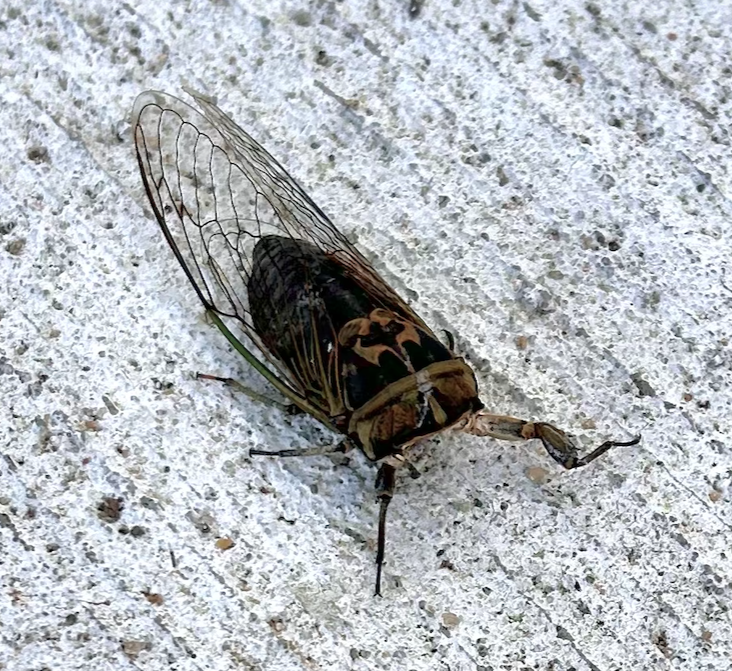
Buzzing cicadas signal summer’s last gasp. Cooler days and school are ahead and soon summer will officially be over. The sun is still warm but a hint of melancholy drifts in with fall’s cool breezes. Yet another summer is gone and I haven’t done everything I meant to do.But theexuberant excess of the Minnesota State Fair next week is the remedy.
I didn’t grow up going to state fairs. Ohio’s is in Columbus, three hours south of Toledo, my hometown. Years ago, when a friend urged my husband and I to go to the Minnesota State Fair, I was skeptical. To do what—see cows? Play midway games you never win?
She persuaded us to try it, even when our sons were toddlers. The plan was to go at 8 a.m. when it’s cooler and less crowded. Leave after lunch. Our friend initiated us into state fair lore: Do the park and ride buses which are crowded, entertaining, and efficient. Get mini donuts for breakfast. Cinnamon sugar over greasy fried dough—what’s not to like? Try at least one crazy new food for lunch (the state fair has hundreds—it’s a yearly competition). Birria crunch bombs? A pretzel shaped like a mustache? Peri-peri hot chicken bowl?
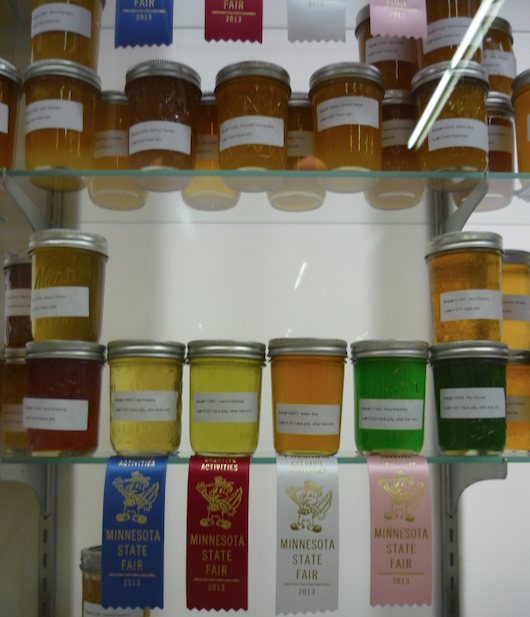
We had more fun than expected. The Princess Kay of the Milky Way butterhead sculpture. Fancy chickens with colorful plumage. A glimpse of rural life with 4H-ers parading the cows, sheep, or horses they raised. The Creative Crafts building with spectacular quilts, fanciful crocheted animals, and clothing ranging from professionally tailored to endearing first efforts. Jeweled jellies. Wilting cookies and breads. The Fine Arts building showcasing paintings, photos, and sculptures—a rare equal opportunity for unknown as well as established artists. Impressive crop art and giant pumpkins in the Ag building.
Later we accompanied our grade school sons, who embraced junk food and water rides, but quickly learned midway games were a ripoff. For several years they collected Academic All-Star certificates at a casual ceremony. I’m not sure how rigorous the standards were, but we were happy to celebrate academic effort.
High school marching bands are invited to perform at the state fair, and for several years our youngest participated. His bandmates poured out of several buses, wearing band T-shirts (August is way too hot for wool uniforms and tall white hats with black plumes). Free admission was the main perk for the teenagers. They marched and played a few songs and then were free to shuck their instruments and go have fun. Band moms like me handed out water in the mid-afternoon heat then adjourned for a beer at the Leinenkugel Lodge.
Two State Fair Grandstand performances are especially memorable. Bonnie Raitt playing blues hits from her “The Nick of Time” album in 1990. The weather was threatening but she had us rocking and cheering until the news interrupted—blues legend Stevie Ray Vaughan had died in a helicopter crash. We were all shocked and sad, but she did her best to perform, offering the concert as a tribute. In 2022, I returned for of Diana Ross. The nostalgia trip was fun, but when we were leaving, a shooting in the parking lot had us has all scrambling to get out of there.
Although our sons are grown, my husband and I still go. At 8 a.m., the air is cool and I’m tempted to bring a light jacket but know better. Once there, our shared cup of Sweet Martha’s chocolate chip cookies makes it easier to say goodbye to summer.
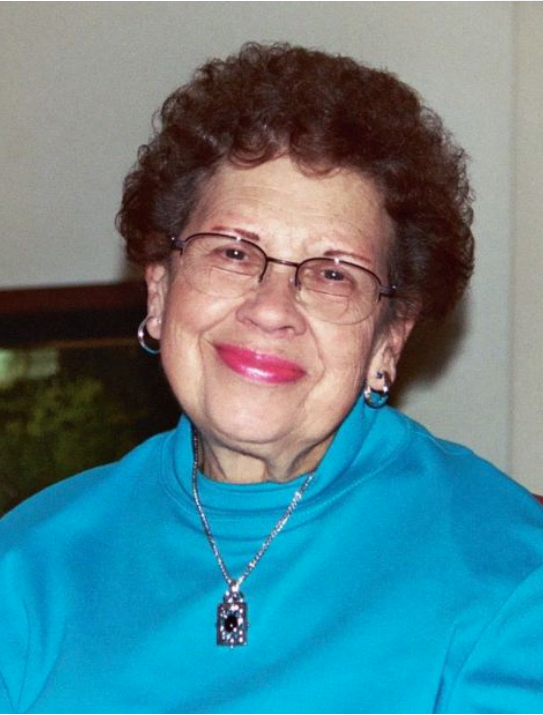
My Aunt Corinne, who died nearly 12 years ago, nudged me recently. It took the form of a question from my cousin, who wondered why the plaque on Aunt Corinne’s crypt had never been completed. The cemetery staff told her they’d never received her ashes, so they couldn’t update the plaque.
The ashes weren’t there? Where were they?
My mother’s younger sister Corinne was a widow without children, so her ties to her nieces and nephews—to my cousin and her siblings and to me and my siblings—were important to her. As she grew older and her health deteriorated, my two brothers and I helped with practical matters and some financial paperwork, and my sister managed her health care. When Aunt Corinne died, I flew from Minnesota to Ohio, and one of my brothers and I set her prepaid funeral arrangements in motion.
Aunt Corinne was sweet, fun-loving, and thoughtful, so her death was certainly a loss. Even as we mourned her, we were besides ourselves with worry about my mother. The day after Aunt Corinne died, Mom fell and ruptured her spleen. She needed emergency surgery and was in ICU so she couldn’t attend the funeral. She went to rehab where she fell again. That began the downhill slide which ended with her death two months after Aunt Corinne died.
During those months, I’d flown back to Ohio several times to see Mom. Distraught and preoccupied, I overlooked the email from the funeral home telling me Aunt Corinne’s ashes were ready to be interred. I don’t recall the funeral home following up to remind me about them.
When my cousin asked me about the ashes, I had no idea where they could be. I began trying to piece together the trail. None of us had them. Had Aunt Corinne donated her body to science and her ashes never came back to us? My sister said no. Aunt Corinne nudged me again. I recalled saving an old email from the funeral home. I thought it was related to my mother’s funeral at the same funeral home Aunt Corinne had used. When I opened it, I saw it was the original email about Aunt Corinne’s ashes. I can’t explain why I still had it, except Aunt Corinne needed me to find it.
OMG, could the funeral home still have the ashes almost 12 years later?
They do! I was so relieved. We had all done our best during that difficult time, but had missed the last step. After several calls to the funeral home and cemetery, I was able to arrange for Aunt Corinne’s ashes to be sent to the cemetery. I appreciate the chance to fix what we didn’t even know was broken.
Soon Aunt Corinne will join her husband Uncle Bob in their crypt. She’ll have lots of company. Her brother and sister-in-law (my cousin’s parents) are in a nearby crypt. I’m glad she’ll finally be where she belongs!