• What Work Would I Do if I Were an Immigrant?

    Olga*, 42, was an architect in the Ukraine and now she is a homemaker. Gina, 28, was a civil engineer in Venezuela and now she is a server. Deqa, 32, was an accountant in Somalia and now she works as an assembler. When I tutor these adult English Language Learners, I often consider what it would be like if the situation were reversed and I were the immigrant. What work could I do?

    I’ve made my living as a writer and a teacher—work that requires a good command of the language, both written and spoken. As a marketing communication writer, understanding connotation (e.g., ‘cheap’ vs. ‘inexpensive’) and nuance (e.g., the perspective of suburban mothers vs. that of urban mothers) were key to being persuasive. Since project management was a big part of my work, I developed schedules and budgets and coordinated the efforts of several other team members.

    As a teacher, I’ve needed to use clear, simple wording and examples that would help someone comprehend a word or concept. I’ve had to be quick with alternative explanations, too. When I tutor immigrants, I am also teaching American culture as well as English language so I must remember not to make assumptions about anybody’s worldview or beliefs.

    If I lived in Ukraine, Venezuela, Somalia, Mexico, Thailand, Ethiopia, Vietnam, or any of the other places my students come from, I wouldn’t know those languages and cultures well enough to make a living as a teacher or writer. My M.A. in English would be irrelevant, just as Olga’s, Gina’s, and Deqa’s degrees are.

    When I review my non-language-based skills, my list is short and sounds like the work my students do: cooking, cleaning, factory work, or stocking merchandise in a store. With time and a bit more knowledge of language and culture, I could take care of children or infirm adults. As my language improved, perhaps I could be a sales clerk, wait tables, or drive a cab.

    But professional work in which I use my communication, analytical, and organizational skills would be closed to me. What also would be lost to me is the respect that goes with having a professional career. If I were an immigrant with poor language skills, most people would assume I was stupid and uneducated—nothing more than the cleaner or babysitter I appeared to be.

    If I were an immigrant, I wouldn’t want to be pitied for the challenges of learning a new language and culture (and neither do my students). I would have chosen to emigrate. Or maybe I’d be a refugee who didn’t want to leave but needed a safe place to start over. Either way, before I moved, I would have been aware that it’s hard to learn a new language and work in a foreign country—the bare minimum needed to survive. If I missed my homeland, was lonely, felt disrespected, or experienced outright hostility, it would be mine to deal with. In time, I could hope that safety, security, and a better quality of life would come.

    When I work with student immigrants, I keep in mind that it’s hard to do what they do, even though they chose it. I admire their grit, persistence, ability to work toward long term goals, and overall resilience. I wonder if I would have the same qualities if I were starting over in a new country?

    *All names have been changed to protect student privacy.

    , , , , ,

    8 responses to “What Work Would I Do if I Were an Immigrant?”

    1. Kim Gorman Avatar

      Great post. The title caught my attention right away. I am in awe of anyone who comes to another country and attempts the language regularly. The few times I’ve been abroad I felt so self-conscious trying out just some basic words and phrases! I have waitressed, so I could do that, provided I could verbally communicate. I could teach English. Be a nanny. I don’t know. It’s a great question and I have so much respect for people who are willing to come here and start at the bottom for the promise of a better life. That takes tremendous courage.

      1. Ellen Shriner Avatar

        I’ve had that same feeling abroad when I’ve attempted my limited Spanish and French— you feel so helpless!

    2. bbachel Avatar

      Another well-done post that made me think about things in a new way. And thanks for all you do to tutor others. It’s such a valuable service, and I know you do it with a great deal of care and compassion.

      1. Ellen Shriner Avatar

        Thanks for reading, Bev! I so appreciate hearing from you–glad the perspective was useful.

    3. Eliza Waters Avatar

      Important points to consider, Ellen. Most people don’t really think about what it would be like to uproot your family (or split it up, which is worse) and start over in a new country.
      I went to an immersion language school in Guatemala and remember feeling like an idiot with the vocabulary of a 5-year-old. And forget nuance, I embarrassed myself constantly. It was humbling!

      1. Ellen Shriner Avatar

        That’s the way I feel when I try to speak Spanish or French!

    4. Debra Avatar

      Thoughtfully expressed. Hits home.

      1. Ellen Shriner Avatar

        Thanks, Debra!

  • Are You My Mother?

    In the classic children’s picture book Are You My Mother? a newly hatched bird falls from its nest and wanders about asking that question of a kitten, a hen, a dog, and a few inanimate objects. He is clueless about his own identity and terribly lost.

    You may have been nurtured by a mother possessing all the perfection of Caroline Ingalls or struggled through childhood with a parent who took lessons from Hamlet’s Queen Gertrude. For most people growing up in Mom’s kitchen fell in a more safe and boring middle ground with measured opportunities to learn about yourself and the world. A place where Mom, trusted adults, books, television and other kids helped answer questions whether insignificant or intense.

    The maker of peanut butter sandwiches, enforcer of daily tooth brushing, comforter of physical or emotional injuries, was just a woman who happened to be older than you. She wasn’t gifted by the gods with amazing knowledge, a graduate of a secret parenting program, or anywhere near perfect. She didn’t know why 9/11 happened, how to stop social injustice, who to call about global warming. Her job was to make sure you felt loved and protected, often difficult work in an imperfect world.

    Discovering that your mother has a masters in labor economics, hides a bag of bodice busters in the closet, holds strong feelings about mutual funds versus annuities, was married before she met your father suggests a richness in this woman’s life that has nothing to do with your existence. This is the school where she learned the mirepoix that flavored every scold, joke or counsel.

    Even when the person who mothered you becomes too old or fragile to cook a really good dinner or read a favorite author without help, there will still be unknowns to explore in the woman who taught you to fake burp, to connect cables on a sound system, to ask your boss for more responsibility, to speak in many voices so your child giggles as you read Are You My Mother?.


    Reprinted from cynthiakraack.com May 9, 2015

    , , , , , , , , ,

    2 responses to “Are You My Mother?”

    1. Kim Gorman Avatar

      This is a beautiful piece about mothers!

      1. cmkraack Avatar
        cmkraack

        Thank you, Kim. Hope the sun is shining where you are today.

  • The Half-Life of Family Heirlooms

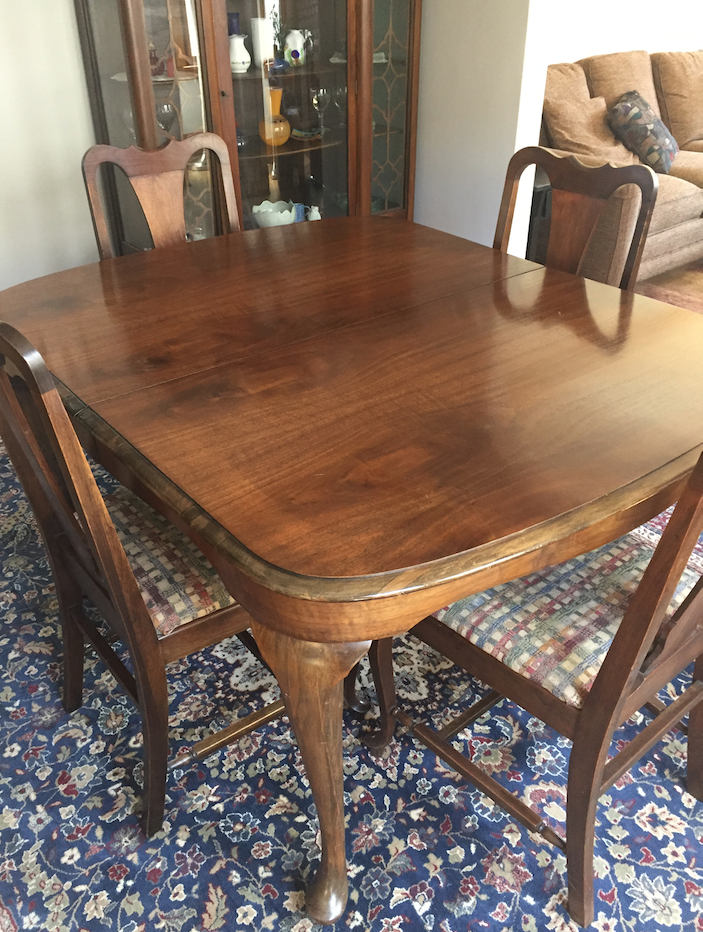
    Recently, when I served dessert to women friends around my grandmother’s dining room table, we described our uneasy relationship with the objects the women of our families treasured.

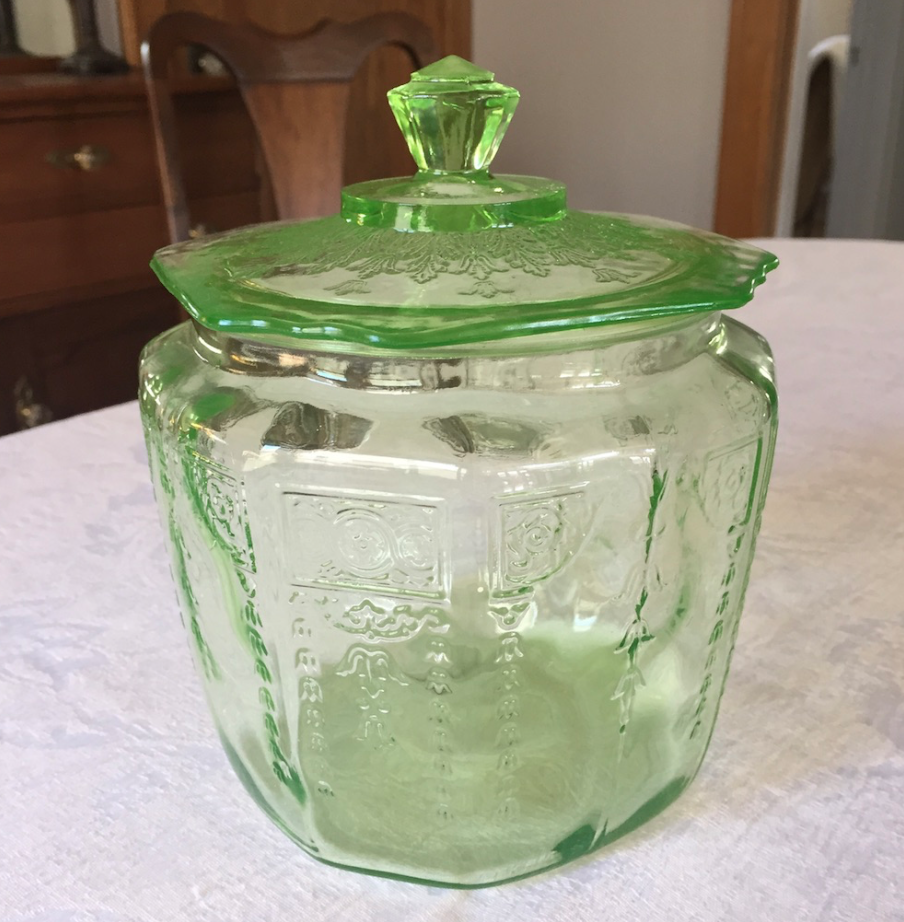
    Now when we have homemade cookies, we store them in Mimmie Shriner’s Depression glass instead of saving it for good.

    Women of the Greatest Generation, like my mother, cared about “good” china, crystal, and real silverware. They hoped to get full sets of it as wedding presents, and they cherished their mother’s and grandmother’s things. For them, the hope chest tradition was alive and well. They collected china and linens before they married and instilled that value in my Baby Boom friends and me. But our Millennial kids don’t want to fuss with handwashing goblets or ironing tablecloths. Not that I blame them. I don’t either. Nonetheless, my friends and I are distressed about what to do with the tableware and linens we’ve inherited. Let alone the quilts, furniture, and photographs.

    We were brought up to value them, but the tableware really doesn’t make much sense in our lives. Where do you keep it between holidays? Wouldn’t holiday meals be less work if all your dishes could go in the dishwasher? And yet, this stuff mattered so much to our mothers. How can we just donate it to charity? But people do—Goodwill is full of 12-piece place settings with dainty floral borders. I’ve seen Waterford crystal goblets there too.

    Articles like,No One Wants Your Stuffhave taught me to rethink my assumptions. The popularity of books like The Gentle Art of Swedish Death Cleaningand The Life-Changing Magic of Tidying Up make clear that either I can purge my stuff or my kids will.

    Mimmie Shriner’s table where she served her out-of-work relatives on Sundays during the Depression

    I’m becoming reconciled to the half-life of memories. When my siblings, first cousins, and I—the last people to remember Mimmie Shriner or Grandma Pleitz—are gone, my grandmothers will become “ancestors” instead of the vivid people they are in my head. Mimmie’s dining room table will just be an antique table, and Grandma Pleitz’s crystal goblets will just be wine glasses. Their significance is in my memories; my sons and any future daughters-in-law don’t have those associations—they never knew my grandmothers.

    Many evenings, I sip wine from one of Grandma Pleitz’s eight goblets.

    Yet the objects are a visible reminder of past generations—hardworking, loving women who wanted pretty things in their lives. How can I honor the memory of these women without feeling burdened by their stuff? One way I’ve chosen is to use the good crystal and china even if it isn’t a holiday. When it chips or breaks, I throw it out. That way my grandmothers come to mind and are more present in my life. If their tablecloths get shrunk or stained—so be it. At least they got used and enjoyed. Likewise, I honor my grandmothers by keeping a few things I really like so I can look at them often. Finally, I remind myself that heritage doesn’t reside in the objects alone. It’s also passed down through our family’s recipes, traditions, stories, and values.

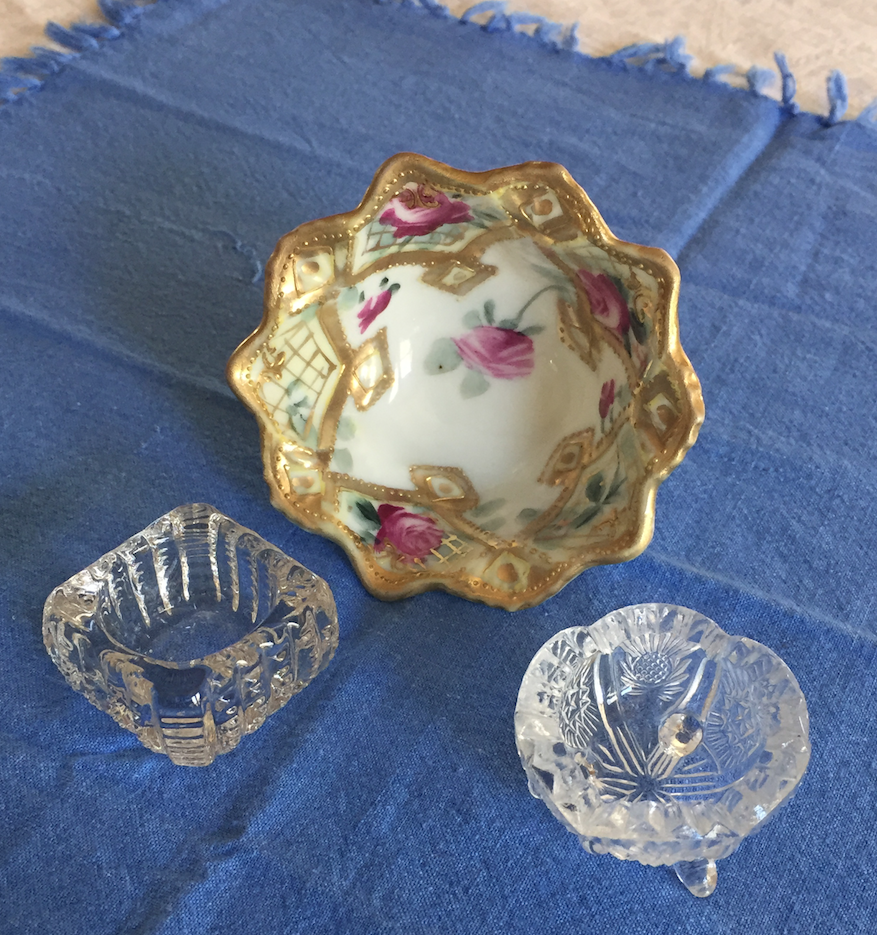
    Mimmie put hairpins in this small handpainted dish. I never put salt Grandma Pletiz’s salt cellars, but I still like them.

    I accept that my sons and future daughters-in-law may not care about my stuff—whether inherited or chosen during 30+ years of marriage. If they do, they will have different memories than mine. I hope they only keep what they care about.

    , , , , ,

    10 responses to “The Half-Life of Family Heirlooms”

    1. Kim Gorman Avatar

      This is such an important topic. When my beloved grandmother passed, I was blessed to receive her mahogany hope chest, along with her china, silverware, a beautiful bedspread like piece with a scene of the Virgin Mary hand painted on it that I have no idea what to do with. I also have all of her photo albums beginning with when she and my grandfather married, and a large painted portrait of her and my grandfather in their middle years. To my astonishment, her own children, my father and aunt, didn’t want any of it. My father only wanted the hope chest so he could sell it, but thankfully my great aunt stuck up for me and said she heard my grandmother say she wanted me to have it. I also have her parents’ (my great-grandparents) giant trunk that they packed their belongings in when they came over to America from Sicily. It’s up in the loft in our garage doing nothing, but I cannot bear to get rid of it. I cherish all of these items and I will never get rid of them. I will think carefully about who to leave them to, though admittedly once they are in someone else’s hands, what they do with it is out of their control. Like you, I use the china on holidays or when I have dinner parties, but I have to admit I can’t deal with having to clean the silver so I avoid using it.

      1. Ellen Shriner Avatar

        Your grandmother probably believed her special things were her main legacy, though of course, it is much wider than that. Wonderful that you respect and treasure her things. Think of all the stories behind the objects!

    2. Ann Coleman Avatar

      I like your idea of actually using your mother’s treasured heirlooms. It’s a way of honoring her and being practical as well. I still have the china set I got when I was married, and lots of other old dishes that belonged to my relatives. But I also use them whenever we have large family gatherings. Still, the only thing that makes them precious is the memories associated with them. So if I can’t remember who gave me something and I don’t use it regularly, I do get rid of it.

      1. Ellen Shriner Avatar

        I agree–it’s the memory that makes a piece a treasure. I’ve also let go of anything that I was unlikely to use and anything I didn’t feel a strong connection to.

    3. Bev Bachel Avatar

      Such a timely post as I struggle with what to keep and what to let go of, made more challenging by the day as two loved ones in their 90s are passing on things to me that they hope I will once treasure as they did.

      1. Ellen Shriner Avatar

        Taking their feelings into account makes the project so hard. They want someone to love what they have loved. I think they consider it to be part of their legacy, and of course, we want to honor that. When I was dealing with my mother’s things and her sister’s belongings, I tried hard to keep in mind that their lives and legacies were so much more than their things. It was hard though. A lot of angst and tears.

    4. Pam Gemin Avatar
      Pam Gemin

      This was a tough one for me, given my parents’ lives as collectors of beautiful things. I kept my favorites, but it was overwhelming. Their estate sale drew people around the block. With no one to pass things onto, I understand Ellen’s sentiments. Luckily, my family used our old stuff for everyday, even silverware. This essay resonated with me on many levels. Thanks! ❤️

      1. Ellen Shriner Avatar

        Your parents had SO many wonderful things. I’m glad you kept your favorites. Letting go of the stuff is hard, but for me what’s even harder is accepting that my sons don’t have the memories to draw on.

    5. Eliza Waters Avatar

      It’s a different world now, for sure. I can’t help but think we’ve lost something of value, the least of which is the value of fine things and cherished company.

      1. Ellen Shriner Avatar

        I still do like the idea of making the table look nice, but I’ve broadened my sense of what occasions call for it. However, I agree with you about losing something of value when we let go of fine things–sometimes convenience is over-rated.


Recent Posts

  • Borrowed Time

    Rain hammered the passenger van, rattling the metal like gravel tossed against a tin roof. Each burst sounded closer, louder, as if the storm were trying to break its way in. Why today, of all days, when Juan was visiting his birth family? We had planned it so carefully. We’d even had a kind of…

  • From Minneapolis

    …they have cost children the life of their mother….

  • A Few of My Favorite Things

    When I feel world-weary, I actively try to turn away from the world’s troubles and focus on the many good things in my life. In addition to my family and friends, here are some things I enjoyed this past year—art, books, nature. Sorry, no raindrops on roses! When I saw this painting I wanted to…