When it Comes to Your Age, Do You Share?

I’m a few months shy of 65, and yes, I find that nearly impossible to believe—and sometimes difficult to share.

Divulging one’s age is definitely a personal decision. I respect that, and so do most women I know.

My friend Maery, who coincidentally turns 65 today, not only willingly shares her age, she dares people to make a joke or a derogatory comment. 

Others I know are more sensitive about sharing. One reason is because they fear age-related discrimination. That’s the situation of another friend who, unlike me, spent most of her 30s and 40s as a stay-at-home mom focused on her family.

Now, eager to complete her PhD and advance in her career, she recently declined being nominated for the Minnesota 50 Over 50, an AARP Minnesota awards program that honors Minnesotans over the age of 50 who are doing amazing things in one of five categories: arts, business, community, nonprofit and disruptor.

Two other women I know declined to be nominated as well because they, too, didn’t want to call attention their age. One felt doing so would diminish her accomplishments, another thought doing so might jeopardize her job hunt.

The male colleague who asked them if he could nominate them described the experience as awkward and uncomfortable. He went on to say that he would never feel uncomfortable asking a man about his age. And he doubts a man would ever decline being nominated because of his age.  

What do you think? Do you own your age or are you sensitive about revealing it? If so, why? Do you see a difference between how men and women view age and their willingness to talk about it? What can we, individually or as a society, do to help ourselves and others openly claim—and share—our age? 

Share your thoughts. 
Renewal

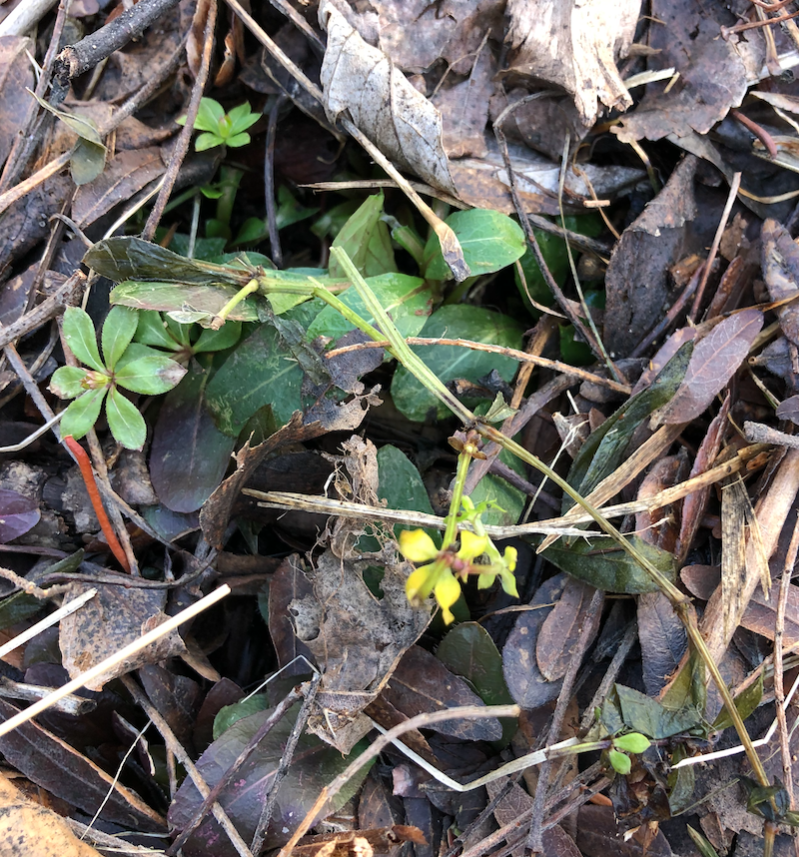
On days when sun warms my shoulders and tiny green leaves push aside matted brown ones, the idea of spring’s renewal buoys me. 

I was raised Catholic and the celebration of Easter and spring have always been linked. But I’ve drifted away from the Catholic Church. The Easter rituals of my youth—the stations of the cross, Easter vigil, joyfully meeting the day in a new dress, hat, gloves and shiny shoes—are no longer relevant to me. 

Easter is meant to be about immortality. Rebirth. But what does Easter mean to me now? I have more years behind me than ahead of me. The idea of rebirth in an afterlife should be coming into sharper focus, but isn’t.

Without the religious underpinnings, Easter feels odd. But Easter is still about gathering my family, enjoying a good meal, hope, and renewal.

The midwestern world is coming alive again after a long harsh winter. That’s reason to celebrate. My life and nature go on with their seasons. 

My Sixties Echo My Twenties

Volunteering, embracing new ventures, and self-learning described my twenties. I ran marathons, took week-long bike trips with Jim Klobuchar (Jaunt with Jim), and was flooded with personal insights. Not long before this, I was a two pack a day smoker, didn’t own a bike, and hadn’t yet begun any inner work.

Springing into my twenties, I embodied two mottos: “Say Yes! to everything if it isn’t illegal or dangerous,” and “Don’t let fear stop me from doing things alone.” Do it anyway. Outer and inner work was simultaneous. I was desperate to understand myself. I wanted to be my own wise person. Seek my own counsel. Only then could I really be free to live my best life.

I rollerbladed marathons with a nephew. Volunteered at a week-long Christmas pageant, dressed as a Shepherd, herding live sheep. Often, I cat, and house sat for others while they were on vacation. After many attempts, I quit smoking.

Going it alone opened my world to many possibilities. If I wanted to do something, I could do it. I didn’t know anyone on my initial ‘Jaunt with Jim’ bike trip. By week’s end, I had lifelong friends.

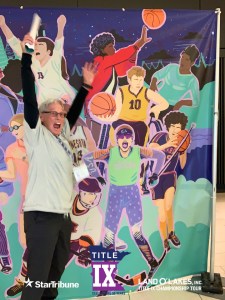
A sense of déjà vu came over me the last week of March when I volunteered to be a Brand Ambassador for the Title IX Celebration at the Mall of America. There were eight days of family-friendly activities, games, and performances to celebrate the 50th anniversary of Title IX.

I stood under the basket on the Fastenal Sport Court in the Rotunda shagging balls for the free throw contest.

I still hadn’t learned. Just like I biked over a rumble strip on my inaugural bike trip, spilling out, scraping my arms and legs, I was hit twice in the face with a basketball before I determined that positioning myself under the hoop was best left for others. I came home with black eyes.

My next volunteer assignment was the selfie booth. That might have been a mistake on the organizers’ part. The only person taking selfies was me. I can still entertain myself. That hasn’t changed one bit.

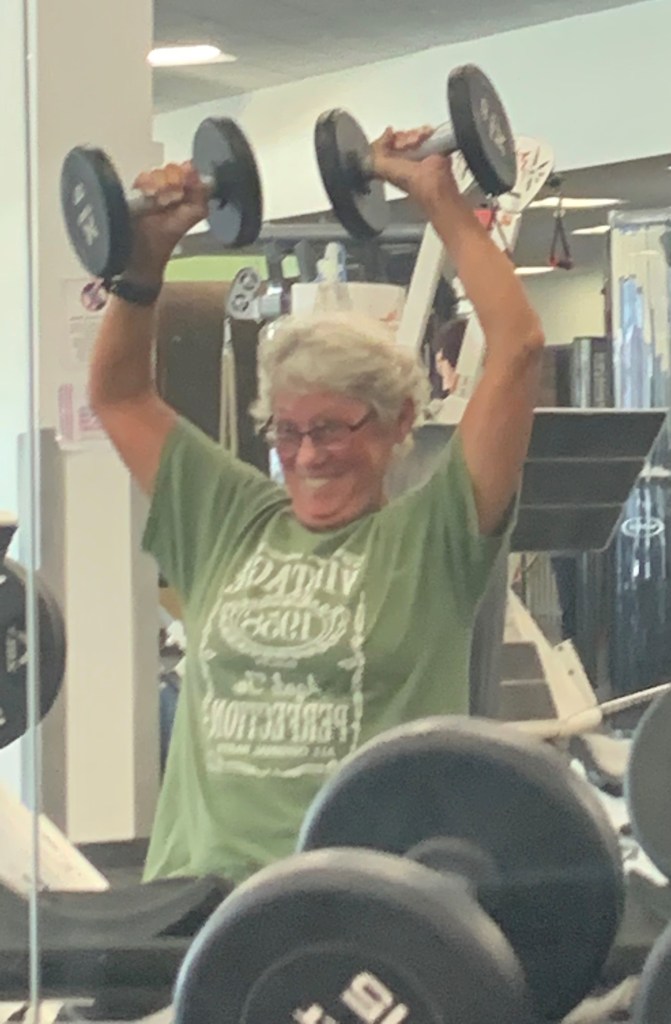
A familiar fear came over me when I started strength training. Crystel helped me over the hump and accompanied me on my first BodyPump group training at the YMCA. Sometimes, it’s good to have a friend. After one group session, I realized that my weights were not evenly placed on my barbell. No wonder I was unbalanced during the class with one end going up and coming down lopsided. I thought something was off.

Teresa, Crystel, and I volunteering concessions at Twins game.

Last week I started volunteering at Achieving Dreams. The program is entirely comprised of volunteers. All proceeds are focused on our mission to help families afford meaningful and positive experiences in organized activities and education. Jody, Crystel and I, along with friends are donating our time to fundraise for Crystel and others’ educational expenses.

How much time do I have left in this life? 10 years, 15? A day?

What’s next? Perhaps, biking across Iowa on my electric bike, grey hair askew, steering away from rumble strips, lifting my legs up when I go through puddles.

I’ll figure it out. I’m my own best counsel. I’m living my best life.

In Any Way You Can

“The war. What is more opposite to music? The silence of ruined cities and killed people…Our parents are happy to wake up in the morning in bomb shelters—but alive. Our loved ones don’t know if we will be together again. The war doesn’t let us choose who survives and who stays in eternal silence….Fill the silence with your music. Fill it today to tell our story. Tell the truth about this war on your social networks, on TV. Support us, in any way you can. Any – but not silence. And then peace will come.”

Ukraine President Volodymyr Zelensky’s Grammy Awards Speech

A hand in its winter glove. Shoes and ankles poking from the earth. Blocks of a modern city reduced to rubble. Couples saying good-bye. Mothers, eyes devoid of emotion, carrying babies and leading tiny children wearing bright snowsuits across miles of empty streets. Old women crying.

Baby Boomers grew up reading about WW II and the Korean conflict because fathers, uncles, or grandfathers would not talk about what their experience. Pictures from the concentration camps and what we were taught was so vivid, I thought Anne Frank was a contemporary. Evening news in the 1960s and 1970s carried pictures of body bags, scorched lands, a young girl running naked through chemical-filled air in Vietnam. While the first wave of Boomer males received draft numbers and one-way tickets to Vietnam, many of their generation took to the streets to demand no more war.

But men in power can’t seem to walk away from using weapons and terror to grab a piece of land, access to a bit more wealth, deny the right to life for people from different nationalities or faith. Their march of destruction and the death of innocent fellow humans screams evil. For the Greatest Generation and the Boomers, today’s television triggers memories of skeletal survivors walking Europe’s burned fields, of staggering death tolls on Pacific islands, a mushroom cloud over Japan, young vets missing limbs. I had not heard the language of genocide until watching interviews with Russian citizens who spoke about the need to wipe Ukraine and its people off the earth. I cannot forget it.

As regular people, we are played by the intellectual powers of all sides. Russia probably claims success for each person frightened by images from their brutality in Ukraine.  Our government probably balances the need to keep Ukraine’s misery in citizens’ minds while controlling fear. No matter who manipulates the message, the Ukrainians own it in their daily fight for freedom.