Category: War

  • Choosing to Believe

    A few weeks ago, I visited Pearl Harbor and the USS Arizona memorial. I wasn’t sure what to expect. My father was in the Navy during WWII at Normandy and later in the Pacific. I wanted to honor his service and the legacy of my parents’ generation who sacrificed and died to preserve our democracy.

    I stared into the water at the rusting sunken ship, which is a gravesite for more than 900 sailors. I wondered if they were young like Dad who signed up at 21, or if they had any idea what they were getting into when they joined the Navy. Pearl Harbor was a large naval base, but in 1941, it probably seemed like they were in the middle of nowhere, doing nothing important. Until it was bombed.
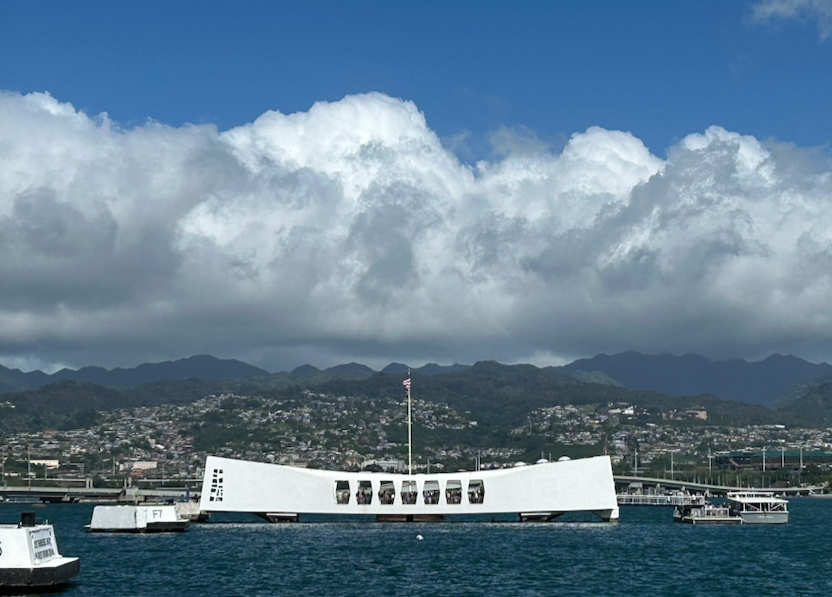
    USS Arizona Memorial

    In his later years, Dad said matter-of-factly, “War is hell.” He didn’t favor patriotic parades or ever make a big deal out of his service. Much as he hated war, he was also profoundly committed to preserving democracy. 

    Standing on deck of the memorial with the breeze rippling the water and lifting my hair, I didn’t feel a deep connection to Dad. Instead I felt frustrated, angry, and deeply sad that 85 years later, our country’s democracy is crumbling. I want to apologize to all the people who sacrificed and died so we wouldn’t see a day when the Current Occupant would engage us in a senseless war, trash our relationships with our international allies, and run roughshod over citizens’ constitutionally protected rights.

    I am worried about our country’s future. We certainly weren’t perfect 10 years ago or 20 years ago, but at least democracy was viable and mostly functioning then.

    More recently, I heard Yo-Yo Ma perform with the Minnesota Symphony Orchestra, and the music was as exceptional and moving as I expected. When he came out to play an encore, he alluded to Minnesota’s ordeal with ICE and our impressive community spirit. The audience clapped long and loud, grateful to be seen and acknowledged. Ma described the piece by Pablo Casals he intended to play. He said the music gets so quiet it almost disappears and there is fragility in the moment, but the music grows and fragility becomes strength.

    I am choosing to believe that as fragile as our democracy is right now, too many of us believe in it to let it disappear, so it will grow strong again.
  • Another Crisis

    My family moved from Luxemburg, Wisconsin, population less than 500, to Milwaukee during the summer of 1961. From a grade school with eight grades spread over six classrooms, my brother and I were enrolled in a Catholic elementary school with 150 kids in every grade. We had never seen so many kids. 

    The first year was rough on my mother who no longer had a part-time job, a bowling league, or knew the names of everyone in the parish. She didn’t even know the names of women on our block. By the summer of 1962 life could be testy in our household. My great-grandmother moved back to Luxemburg and took me with her at the start of summer. 

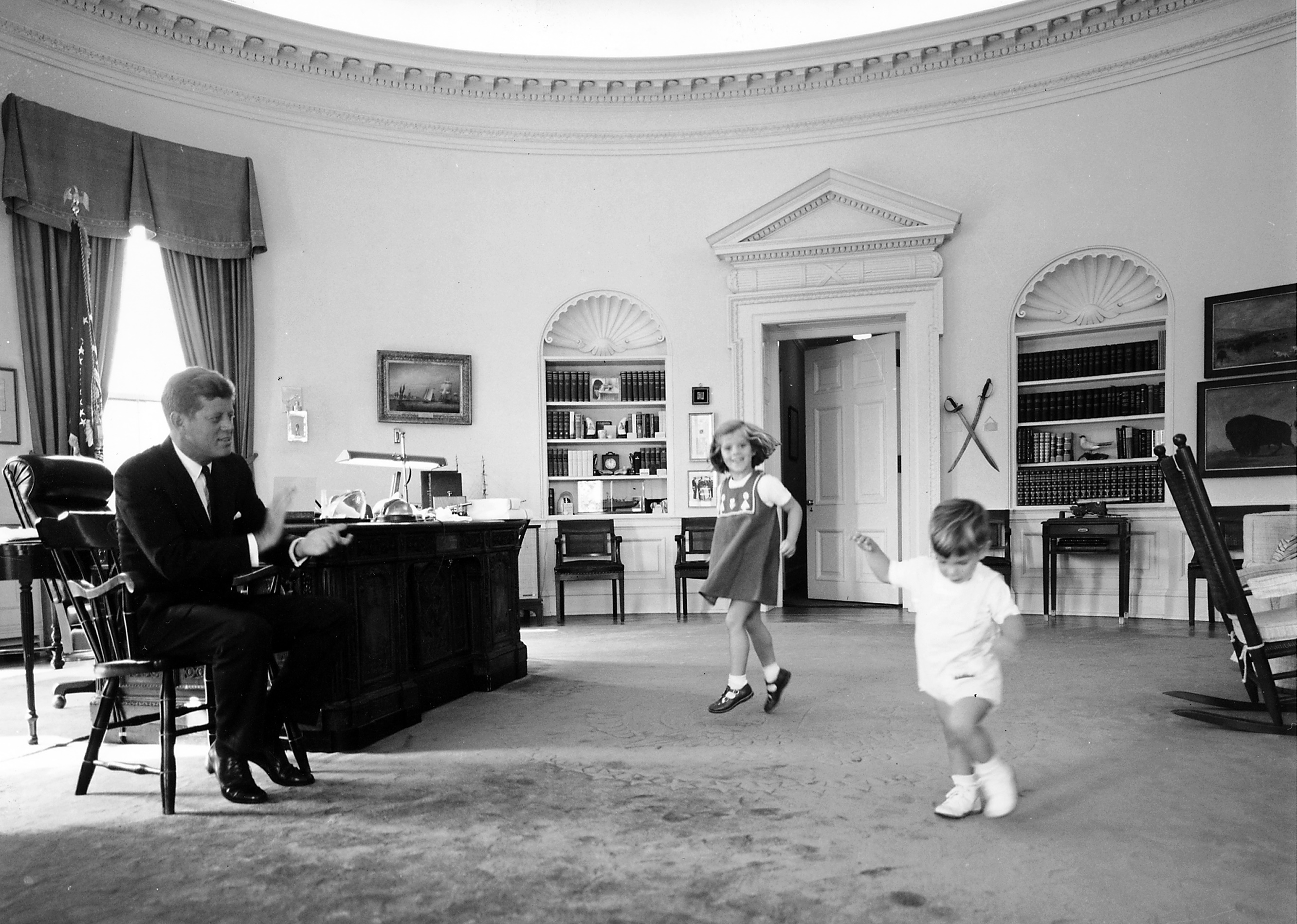
    Our second school year began with more confidence and my mother found a seasonal job. She was happier. Until October 16 when the beginning of the Cuban Missile Crisis moved the world toward danger. People were deeply afraid that Cold War was morphing into actual war with Russia, including missiles falling on the United States. Adults knew about the horror of war. Kids were directed in useless duck and cover drills, crawling under our desks with our hands over our heads.

    My mother wanted to be in our Luxemburg home with its dug-out basement, food cellar and indoor pump. Our Milwaukee ten-year-old ranch offered no place to hide. It was too late to build a bomb shelter. She emptied the clothes closet in a spare room, brought in blankets and pillows, water jugs, crackers, peanut butter and other food plus towels, tissue and a bucket. She listened to the radio constantly. We went to bed fully dressed. October 28, she woke us with orders to get into the closet. Blankets had been placed over window curtains, a rug rolled at the bottom of the door. We listened to news coverage throughout the night. The crisis was averted. Nerves remained raw for years.

    We’re back to practicing some odd form of duck and cover. And it is just as useless. The stakes are high for every citizen and much of the world.

    Square
  • In Any Way You Can

    “The war. What is more opposite to music? The silence of ruined cities and killed people…Our parents are happy to wake up in the morning in bomb shelters—but alive. Our loved ones don’t know if we will be together again. The war doesn’t let us choose who survives and who stays in eternal silence….Fill the silence with your music. Fill it today to tell our story. Tell the truth about this war on your social networks, on TV. Support us, in any way you can. Any – but not silence. And then peace will come.”

    Ukraine President Volodymyr Zelensky’s Grammy Awards Speech

    A hand in its winter glove. Shoes and ankles poking from the earth. Blocks of a modern city reduced to rubble. Couples saying good-bye. Mothers, eyes devoid of emotion, carrying babies and leading tiny children wearing bright snowsuits across miles of empty streets. Old women crying.

    Baby Boomers grew up reading about WW II and the Korean conflict because fathers, uncles, or grandfathers would not talk about what their experience. Pictures from the concentration camps and what we were taught was so vivid, I thought Anne Frank was a contemporary. Evening news in the 1960s and 1970s carried pictures of body bags, scorched lands, a young girl running naked through chemical-filled air in Vietnam. While the first wave of Boomer males received draft numbers and one-way tickets to Vietnam, many of their generation took to the streets to demand no more war.

    But men in power can’t seem to walk away from using weapons and terror to grab a piece of land, access to a bit more wealth, deny the right to life for people from different nationalities or faith. Their march of destruction and the death of innocent fellow humans screams evil. For the Greatest Generation and the Boomers, today’s television triggers memories of skeletal survivors walking Europe’s burned fields, of staggering death tolls on Pacific islands, a mushroom cloud over Japan, young vets missing limbs. I had not heard the language of genocide until watching interviews with Russian citizens who spoke about the need to wipe Ukraine and its people off the earth. I cannot forget it.

    As regular people, we are played by the intellectual powers of all sides. Russia probably claims success for each person frightened by images from their brutality in Ukraine.  Our government probably balances the need to keep Ukraine’s misery in citizens’ minds while controlling fear. No matter who manipulates the message, the Ukrainians own it in their daily fight for freedom.