Rest in Peace, Patty C.

I first met Patty in 1978. We were both English majors at Drake University in Des Moines. I was in my early 20s, she in her mid-30s.

We didn’t have a lot in common.

I lived with a roommate I didn’t like in a campus dorm. She lived with her husband and young son in a four-bedroom house about 15 minutes away. I was a poor college junior who spent my weekends drinking beer that cost $1 a pitcher. She spent her weekends with her parents, swimming in their indoor swimming pool and sipping cocktails graced with fruit from their lemon and lime trees.

Both English majors, Patty and I were paired up on a class paper we worked diligently on to earn an A. I no longer recall what grade we received, but we became good friends in the process. She enjoyed hearing my stories about dorm life, and I liked hearing stories about her parents’ home and lavish lifestyle.  

Looking back, what I think we enjoyed most was sharing our hopes and dreams with someone who not only truly listened, often for hours on end, but also believed in our ability to achieve those dreams.

A year later, in December of 1979, I graduated and moved back to Minneapolis where I went to work for the Minnesota Senate, first as a page and then as an intern researching DWI legislation.

In mid-August of 1980, out of the blue, I received a letter from Drake University’s English department offering me a graduate-school fellowship. In exchange for teaching two sections of freshman English and working 10 hours each week in the school’s writing lab, I would earn a master’s degree in English.

I wanted to accept the school’s offer, but I’d already spent all my savings getting my undergrad degree. And having been raised by a dad whose mantra was, “If you can’t pay cash, don’t buy it,” I was reluctant to take on more student debt.

But then Patty invited me to come live with her. And suddenly my dream of earning a master’s became a reality.

The rules for living at Patty’s were simple: two dos and two don’ts. Do empty the dishwasher each morning and do grocery shopping with her once a week. Don’t smoke pot in the house and don’t have sex with her husband (she’d once found him in bed with one of her best friends).

We quickly settled into a routine. Her husband dropped me off on campus on his way to work each morning, and Patty drove me home each afternoon after we had both finished our classes.

We read books and wrote papers, and spent our free time penning bad poetry, drinking beer (her husband worked at Coors) and frying ourselves in the sun.

We also talked a lot about our hopes and dreams. Mine started out modest, but she encouraged me to dream bigger and set goals. It was her encouragement that led me to set a goal of someday writing a book. (Decades later, thanks in large part to her, I did: a book on goalsetting that’s been translated into five languages and is helping young people around the globe set their own goals.)

I liked being part of Patty’s family. Quiet early mornings at the kitchen table sipping coffee and writing in our journals. Afternoons playing catch with her son or helping him with his homework. Weekends hanging out with her parents or her husband’s colleagues.

After 18 months, with classes complete, I moved back to Minneapolis.

For years, Patty and I talked often, regularly exchanged long stream-of-consciousness letters, some of which held our deepest desires and our darkest fears and visited one another now and again.

Eventually she and her husband divorced, and she moved to Arkansas. She also got sick: first with a mysterious disease that was never diagnosed, then with tuberculosis followed by heart disease. Along the way, she made me promise that I’d be at her funeral—no matter when or where—and that I’d make sure Lynyrd Skynyrd’s Free Bird was played.

But as the years passed, our letters got less frequent. And although we did come close to getting together in person a few years ago when I vacationed about 50 miles from her home, we never did as she’d woken up that day not feeling well and had to cancel.

I still wrote a couple of times a year. Sometimes I heard back, sometimes I didn’t. Then, I sent several letters that went unanswered. I wasn’t worried at first, but then sent a letter asking if I’d said or done something to upset her. When I still didn’t hear back, I wrote to her sister who called me immediately to tell me Patty had died several months earlier, most likely from a massive heart attack. Patty’s sister and son had wanted to tell me but didn’t know how to reach me.

There was no funeral. I’m glad, as I would have felt terrible missing it.

But I did download Free Bird to my phone. In honor of our friendship, I play it now and again, always with a heart full of gratitude to a forever friend who made a huge difference in my own life, not only by encouraging my early hopes and dreams but also by being the first friend who truly believed I could achieve them.

Keeping Track

I come from people who keep track of everything: groceries to get, bills to pay, upcoming events, the day’s experiences, and past events.

As a young woman, my mom kept a diary that noted what mattered in her days: starting a novena and that a guy she was dating was kind of full of himself (they were happily married for 67 years anyhow). WE’RE AT WAR! she wrote in December 1941. Later in life, she recorded the weather daily on small pads of paper she kept next to the sofa. At her funeral, my cousins told me my uncle (her brother) had also kept meticulous notes—some about his garden, others about the weather. We marveled at the shared habit.

When my mother-in-law recently moved, at least 20 years’ worth of journals turned up. I was aware of her habit because she often asked how to spell something we’d served for dinner. Cioppino or ratatouille. She enjoyed keeping notes about what we ate and did during visits.

I’ve gotten an extra measure of documenting genes. Off and on since high school, I’ve kept personal journals in which I work out confusing feelings. I also make entries in a gratitude journal to remind myself of what’s good and right in my world despite the pandemic and trying political times. I document garden plans—what’s planted where and ideas for next year’s garden. I have lists of books I want to read along with books I’ve already read and what I thought of them. When dieting, I keep track of my exercise and meals.

I’m not alone in those habits, but for me, it doesn’t stop there. I have a ridiculous number of notes in my phone app. Supposedly 194 of them, but that can’t be right! Poems I like, blog ideas, writing tips, ideas for pottery projects, a list of lawn chemicals that won’t harm birds and pollinators, the steps for starting the snow blower. The notes go on and on!

My reasons can be practical. I want to remember something or find it quickly, and my phone is always with me. I tell myself I’m being efficient and orderly . . . but maybe ‘obsessive’ would be more accurate! Other times, keeping track is an emotional impulse. My personal and gratitude journals help me maintain equilibrium.

The habit of keeping track intrigues me. I think there’s something universal, something beyond the practicality of grocery lists, receipts, and calendars. The same impulse that leads people to document their lives on Instagram or Facebook, keeps me writing extensive notes and ongoing journals. It’s what caused my relatives to make daily diary entries.

As far as I know, my mom didn’t consult her weather notes after the fact. My uncle might have looked up which kind of tomatoes did well. I don’t know if my mother-in-law refers to her notes to remind herself of a previous year’s Christmas dinner. I suspect she doesn’t.

I believe the impulse to keep track is a way of saying, “I was here. My life matters. To me.”

What do you keep track of?

And how are the children? A true story.

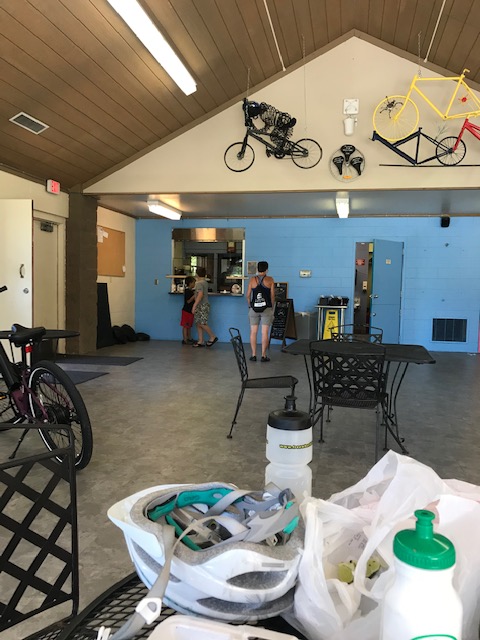
The teenage girl first eyed the man through the concession window. He lifted the garbage can lid then set it back. He looked familiar to The Girl. Loaves and Fishes, she thought. The one who vacuumed the floor at the end of the night. Wore a green fedora hat.

His red bike overflowing with garbage, junk, and plastic bottles leaned against a column.

The Girl turned to her friend the Nordic Skier and whispered urgently, “He’s trying to get garbage.” Nordic Skier barely shrugged her shoulders. The Girl said with more emphasis, “Looking for food.”

Nordic Skier yawned. I’m not here for it, her tired posture messaged.

The man was grandpa-old. Wore a plaid long sleeve shirt, long jeans though it was a warm summer afternoon.

The Girl got busy with customers. She and her two friends worked at the refreshment stand. Ice cream, pizza, coffee and soda. Not much, really. Nothing you could find in the garbage except maybe pizza crust.

A chair scraped the floor, and the Nordic Skier was suddenly next to The Girl at the sink. Nordic Skier turned her body away, covered her mouth. “He’s drinking out of the containers.”

Finding no garbage outside, the man had moved inside to the garbage can in the corner. He had found melted ice cream in throwaway cups and bowls.

The Girl’s sigh was audible through the black face mask she wore. Her eyes threw serious shade. Like you woke now? She gazed over her friend’s shoulder to the seating area. The man was lifting a Styrofoam bowl and letting liquid drip into his mouth. “Oh my gosh, go offer him something.”

Nordic Skier’s eyebrows raised. “I’m the one that told you. Beside you’re the one that wants to help people.” She furrowed her brows. “That’s your career, periodt.”

They both turned to their other friend who was standing near the ice-cream display freezer. She was the smallest, youngest, and quietest of the three of them. A Cross Country runner. Not the fastest. Not the slowest. Observant. Steady. Strong. Formidable.

“You go,” said The Girl.

Their very quiet friend, responded, “I fully support your idea, but I’m not going to do it.”

The Girl barked at her.

The diminutive friend growled back.

“Fine!” The Girl dried her hands.

The man walked towards the door. The Girl followed him. “Sir, sir.”

He kept walking. Big Yikes. The Girl didn’t want the family who just came into the seating area to observe her struggling to talk to the man. She turned back to the refreshment stand. Nordic Skier was making a violent slashing motion across her neck and pointing forcefully to the man.

The family moved to the concession window away from The Girl.

The Girl steeled herself. “Sir, sir. Would you like us to give you some food?”

The man stopped and leaned his ear towards the girl, tapping his ear.

“Would you like some free ice-cream?”

He placed his palms in prayer.

The Girl dished out a scoop of rumba cherry because old people like rumba cherry, and a scoop of chocolate because everyone likes chocolate, and finally a scoop of rich and famous, cause, yeah, why not?

He sat down at a table. The Girl brought him his ice-cream. He bowed in prayer.

Nordic Skier said, “Oh my gosh. I’ve got the other half of the pizza I haven’t eaten.” Then she thought of the ten-dollar bill that she had found on the floor a few hours earlier. Serendipitous, for sure. She taped the ten-dollar bill to the pizza box.

While the man was eating, The Girl took a KIND bar that Nordic Skier had taken from her backpack and tossed away because the unopened wrapper had gooey stuff on it. “What are you doing? People need this. They are starving. Right here in our own town.” Nordic Skier and The Girl gave the man the KIND bar.

The man bowed in thanks.

A couple of days later, The Girl saw the man. He was waiting at the door. The Girl was tending to customers and couldn’t approach him.

The man came to the window. “She’s paying for me,” he said softly. He nodded to a woman. The woman shook her head in agreement.

“Three scoops,” the man said.

“The Usual?” The Girl asked.

He smiled.

Periodt.


In Memory

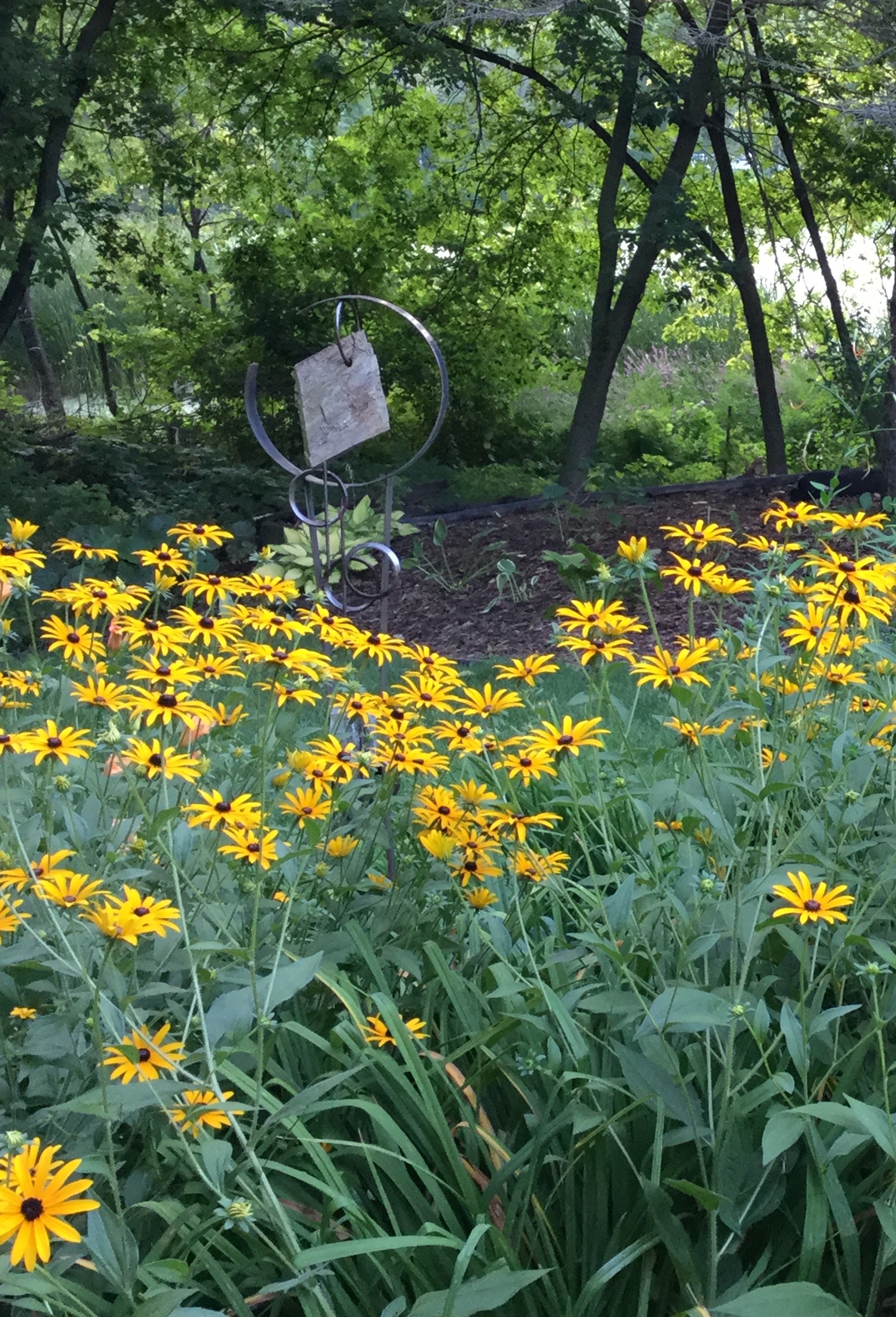
Door County, WI: Sunsets are earlier. Black-eyed Susan dominates gardens as hydrangea fade. Squirrels fearlessly dart across sidewalks, decks and paths to grab early acorns. Field mice and chipmunks are in the same race for food stores.

Trees are beginning to change. Yellowing leaves increase in numbers each day. Kids still run on beaches and play wherever a swing set is not closed. Young people gather with cases of beer, many without masks. More cautious folks crowd outdoor dining places. Multi-generational families wander about as if it were August 1, not September 1. COVID has changed the normal rhythms of summer while Mother Nature delivers heat and humidity where houses didn’t need air conditioning ten years earlier. Lake Michigan pushes beyond its all-time high water mark, devouring docks and houses’ front yards.

When it already feels as if the stars are out of synch, COVID has taken the fathers of three friends or relatives. Three members of the Greatest Generation, living in three different states, in congregate facilities for three very different reasons. Friends and family called them Jim, Dom, and Marlin. They had eleven adult children among them plus almost four dozen grandchildren or great-grandchildren. Two were veterans and one farmed his entire life. Family photos show them joking with great, tall grandsons, sitting with the newest grandbaby resting on an arm, in wheelchairs by Christmas trees. These were men who loved and were loved.

Thanks to COVID, they died comforted by staff members as their families were mostly kept away. In the heat of August, sons and daughters mourned the once strong fathers who built businesses, walked fields, fixed tractors, painted houses, taught them to throw a ball, sang next to them in church, made the final journey of life without endangering family.

The Greatest Generation is disappearing as COVID ignites within our communities. They fought for our country’s freedom, raised families, built the cars and houses and machines of the 20th century USA, fed the world. In turn COVID has left us unable to protect them, not even gather for proper farewells.

As summer sneaks away, as our elderly pass in the settings meant to keep them safe, as our days of small social gatherings and playing games outdoors with our grandchildren are numbered, COVID is like the spreading black-eyed Susan which left unchecked threatens to obliterate the beauty of other blooms.

In honor of James Armstrong, Dominic St. Peter, and Marlin Hunt. With sympathy to their families and to all who have lost loved ones to this pandemic. Friends, please help friends stay healthy and strong.

Black-eyed Susan