• Days of Belgian Pie

    John, my last living uncle, passed away January 25, on his 90th birthday. One aunt remains and I hope she will be able to be there to say good-by to the last of her siblings. 

    It is cold in Wisconsin and my uncle’s beloved parish church may be chilly as his family gathers for his funeral this week. The cold would not have bothered him during his working years on the railroad or hunting with friends and family. When he was a kid hunting was not so much a sport, but a way to keep meat, canned or frozen, on hand to feed seven or eight people. Railroad workers, both my grandfather and uncle, never made a lot of money. My aunt cooked and sewed and gardened while working part-time to help support their family. Raised on a farm, she knew how to work as well as have fun. They both had big hearts.

    When my ninety-four-year-old grandfather passed away, he was buried out of St. Mary’s Catholic Church in Luxemburg, Wisconsin. It was the first time I spoke at a funeral and shared with my eleven-year-old daughter the traditions of grieving in a small town where families are often intertwined, and most people have a public reputation. 

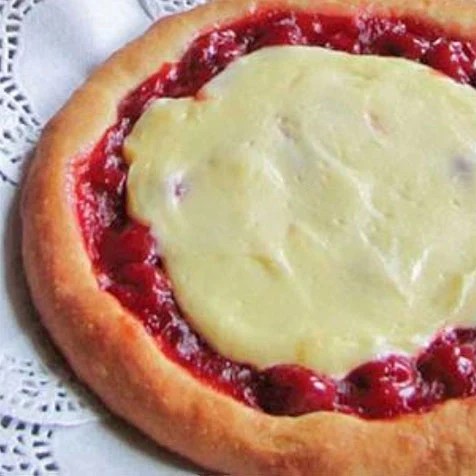
    Women from the parish made the food for my grandfather’s funeral luncheon. One of his cousins, who was also in her nineties, started baking when she heard he had passed. She made dozens of Belgian pies, enough so an entire six-foot table could be filled multiple times with slices of the sweet dough pie with soft cheese topping covering prune, apple, cherry, apricot, raisin, rice or poppyseed filling. It is an acquired taste.

    Noise filled St. Mary’s School cafeteria from lunch until we were asked to leave. There were a few photos, but the tradition of picture boards or videos at funerals had not come to Luxemburg. Instead conversations about my grandfather’s life were shared which often triggered laughter. Lots of laughter. For a relatively small man, Uncle John had a large and distinctive voice. His laughter may have been one of loudest in the crowded space. With our parents still alive and doing the job of representing the family, the cousins gathered our children to do introductions and talk about growing up with our grandfather. 

    My Uncle John looked a lot like his father. He was fiercely protective of his family, and they reciprocated. Hopefully my cousins, their children, and grandchildren will fill another room with stories of his life and laughter. Traditions like baking Belgian pies for a funeral may have faded away, but the love of family at a time of loss holds.
    4 responses to “Days of Belgian Pie”

    1. Eliza Waters Avatar

      My condolences, it sounds like your uncle had a rich, long life.

      1. cmkraack Avatar
        cmkraack

        He was a positive force and generous person.

    2. Carole Duff Avatar

      Lovely post, a loving tribute to family. Thank you for sharing.

      1. cmkraack Avatar
        cmkraack

        Thank you, Carole.

  • Reclaiming My Focus

    Focus. It’s an ability I used to take for granted. But not anymore. For whatever reason—age, information overload, pandemic-induced anxiety—I’m just not able to concentrate the way I once did.

    Is the inability to do so a warning sign of cognitive decline?

    After coming across conflicting opinions online, that’s a question I plan to ask at my next physical. In the meantime, I did what I usually do when seeking answers, I found a book to read: Stolen Focus: Why You Can’t Pay Attention and How to Think Deeply Again byJohann Hari.

    What I learned—that our attention is being stolen—was disturbing enough but the fact that Facebook and other social media companies have intentionally designed their sites to keep us online and coming back so they can maximize their revenue has prompted me to shy away from logging on.

    Despite this, Amazon knows what I’m reading, and Alexa often knows what I’m having for dinner. Google Nest knows if I’m home, and Google Maps knows where I’m at when I’m not.

    While there are some positives to this—for instance, I no longer have to look up and then print directions—I don’t like feeling that I’m being surveilled.

    So I unplugged Alexa and put her in the basement, and I closed out 60+ accounts I rarely use. I also unsubscribed from dozens of e-letters.

    And, after a University of Oregon study found that if we are focusing on something and get interrupted, it takes 23 minutes on average for us to get back to the same state of focus, I’ve turned off the ringer on my phone and no longer leave email open all day.

    The goal: to return my focus to what I really want to be paying attention to: my family and friends and the causes I care about.

    , , ,

    10 responses to “Reclaiming My Focus”

    1. Ann Coleman Avatar

      Bless you for having the courage to write this! Of course you felt spied on, because you were being spied on! Social media is designed to be addictive, and all those assistants are constantly monitoring our movements. At the moment, that information is being used to sell us stuff, but just think what would happen if we found ourselves living in a dictatorship? Even if we don’t use Alexa or Siri, as you say, our phones are tracking our location (so are our cars) and all our written words (texts, emails, this comment) are also not private. It’s downright creepy, so we tend to simply not think about it. You took all the steps you can to get your focus back on the things you want to focus on, which is great! But as for privacy, that’s a dinosaur…….completely extinct.

      1. Bev Bachel Avatar
        Bev Bachel

        I appreciate your thoughtful comment. And you are right, privacy is extinct. And the more I learn about how much we are monitored, the worse I feel.

    2. Eliza Waters Avatar

      A reduction in media is always a good idea. There is just too much to take in. As an aside, my SIL told me today about a study linking sugar with dementia. I gave up sugar 11 months ago, and I noticed late this summer that my attention was returning (no more starting a paragraph 3x!) and brain fog is lifting, so there might be something to that!

      1. Bev Bachel Avatar
        Bev Bachel

        Thanks for taking the time to comment and for bringing up sugar. I have been reading about sugar connected to dementia at a time when I’m consuming more sugar than usual and have thought about cutting back but that’s as far as I’ve gotten. You’ve motivated me to get serious, particularly since you’ve said your brain fog, something I’ve been struggling with, is lifting.

        1. Eliza Waters Avatar

          I encourage you, Bev. It takes about 2 weeks for the craving to stop. Then it goes to willpower when you see a dessert, esp. when you are hungry! It takes a bit of discipline to ‘just say no’ to sugar! But in time you will feel better, have better immunity and clearer thinking, guaranteed!

    3. Ellen Shriner Avatar

      Great topic! I’m very distractible, so I’ve shut off social media notifications. I just check occasionally when I’m taking a break. I also turn off email when I’m trying to write—everyone can live without me for 2 hours. I realize that’s easier now that I’m retired, but I did it while I was working and needed to concentrate or hit a deadline. I agree with your conclusion— save our precious attention for who and what matter most.

      1. Bev Bachel Avatar
        Bev Bachel

        Thx for commenting. Hope you are doing well. Looking forward to your next post.

    4. Karen Seashore Avatar

      This rings so true for me….I am not sure that I will get away from the email trap in the next few months, but I have been doing better on pinpointing how distractions affect me. But sometimes, particularly when I am writing, I need to “leave” for a bit in order to have my thoughts settle. Is there such a thing as a useful distraction? 🙂

      1. Bev Bachel Avatar
        Bev Bachel

        Yes, I do believe some distractions are useful. For instance, sometimes when I get anxious trying to write, I find folding laundry a useful distraction.

        1. Karen Seashore Avatar

          Emptying the dishwasher — since our shelves are open, I can see the tidiness emerging out of disorganization!

  • Thoughts on Aunthood

    Many families are close-knit with aunts and uncles living nearby who attend every birthday party, soccer match, school play, and graduation. But I’ve always been the aunt who lived hundreds of miles away from my nieces and nephews. I wasn’t around so they haven’t known me well, but I knew more about them than they realized (after all, brothers and sisters do talk).

    My side of the family 2022

    I used to regret living too far away to actively participate in their lives, but lately I’ve realized getting to know each other as adults is good. I can see them for who they are now. The adult version. Minus the endless stories of their youthful foibles to trip us up. We visit in-person once or twice a year and supplement our ties with social media posts and occasional texts.

    During visits, I ask about their work or whatever is most important to them. When several of my nieces became mothers, we talked about their experiences. I validated their challenges—sometimes caring for tiny people is monotonous. Breastfeeding can be hard—do what’s best for your situation. A couple of nieces have expressed their thoughts about relationships, and I’ve supported whatever approach works for them. I happened to be around when one nephew was having a bad week and he shared his feelings with me. Conversations with another nephew might cover philosophy or food. 

    No doubt there are other older people in their lives—coworkers, in-laws—but as the sister or sister-in-law to their parents, I have a special perspective. I can share history and insights about their parents and other family members, rounding out what they know. I’m free to appreciate and accept them without the judgment a parent brings. Sometimes I offer different views than their parents’, but my nieces and nephews are old enough to draw their own conclusions. If nothing else, I’m an additional older person who likes and supports them.

    In the moment, I think they appreciate my efforts. I don’t expect too much though, especially when I recall how little I knew my aunts and uncles when I was younger. They were kindly presences but largely peripheral, or so I thought. Now, I understand how aware aunts are, even if we remain behind the scenes.

    My interactions with my nieces and nephews are brief—not much to go on—but they mean a lot to me. I always knew being an aunt was important, but I didn’t always know why. Finally, it’s this—they add to my life and I hope I add to theirs.

    My husband’s side of the family 2018

    , ,

    4 responses to “Thoughts on Aunthood”

    1. Luanne Avatar

      Ellen, lots of young people in hubby’s side of the family! I have not been around for my one niece and one nephew either. I wish I had been. Even now, I don’t get to see them very much. I’m so glad for you that you have opportunities to hang with the nieces and nephews.

      1. Luanne Avatar

        And I meant your hubby, not mine ;).

        1. Ellen Shriner Avatar

          Thanks for reading! Now I have grand nephews and nieces to get to know too 😁

        2. Luanne Avatar

          My niece has a daughter. I have met her, but only as a baby. Going to see her this spring, I hope!


Recent Posts

  • Borrowed Time

    Rain hammered the passenger van, rattling the metal like gravel tossed against a tin roof. Each burst sounded closer, louder, as if the storm were trying to break its way in. Why today, of all days, when Juan was visiting his birth family? We had planned it so carefully. We’d even had a kind of…

  • From Minneapolis

    …they have cost children the life of their mother….

  • A Few of My Favorite Things

    When I feel world-weary, I actively try to turn away from the world’s troubles and focus on the many good things in my life. In addition to my family and friends, here are some things I enjoyed this past year—art, books, nature. Sorry, no raindrops on roses! When I saw this painting I wanted to…