Thank You for Being a Friend

There may have been times in my life where I’ve wished for more friends, but surveying the landscape of the years, I’ve been pleasantly surprised at the growing richness of friendship around me. These friendships are both comforting and surprising. As a lifelong introvert and a bit of a loner, it’s taken me a while to find my footing with my friends. 

I’m surprised, perhaps, because sometimes I’ve taken friendships for granted or maybe even realized that I may not always have been the best friend. I have forgotten birthdays, or let too much time go between phone calls, or even missed responding to texts. My well-crafted reply to an email or text often gets lost in my head. This does not reflect my affections. When I think of my friends, I smile internally recalling ways that I’ve met people, our histories and ways we’ve time we spent together, even if it was a long time ago. 

When I was young, I had visions of popularity, thinking that popular people had the most friends, and who doesn’t want a lot of friends? I quickly learned that my quiet, introverted nature often set me apart as being shy or just too withdrawn to make easy connections with others. I longed for real connections and conversations, but didn’t know how to get there. 

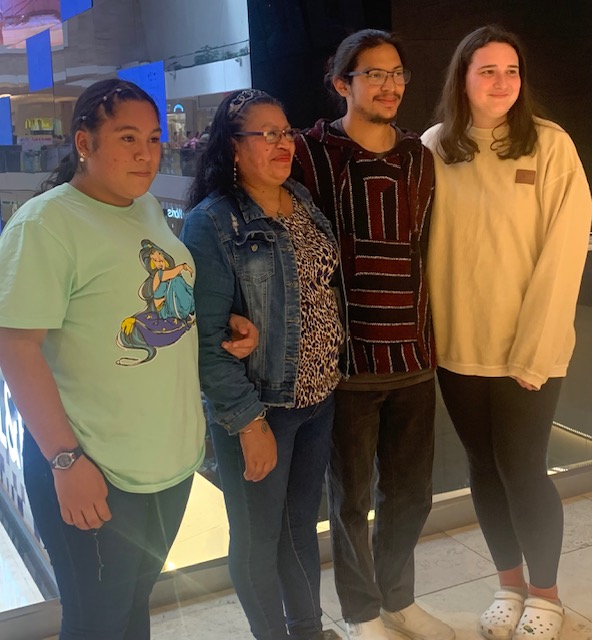
The author with her daughter and former roommate (and friend of 30+ years).

The insecurity of adolescence has annoyingly stuck with me, although it’s less of an issue now than it used to be. But it is still a force that keeps me in the shadows more than it should. 

In my 50s now, I still want to connect with people and find that I can still get in my own way when I worry about whether someone will like me or when I feel self-conscious. It is all too easy to pull into myself when faced with a group of people I don’t know very well.

When I do make a friend, it usually sticks. I’ve been fortunate to make meaningful connections with people through the years, and despite my occasional inattentiveness, somehow those connections have lasted. Often those friendships unfolded over time and with a shared history; other times my connection was immediate and easy. 

I’ve been lucky to be a part of a writing group that has been going for 20 years, where we’ve grown to know each other in unique and vulnerable ways through our writing voices and so much more. I’ve been equally fortunate to be part of a knitting group that has been meeting for even longer, bonding over knitting, conversation, and laughter. And I’ve made individual connections with people here and there: A friend I used to work with who shares my love of reading and always laughs at my jokes. A former roommate who saw me through some tough times and is the one that still generates loud and frequent laughter in me. Another friend I met at a neighborhood park when our kids were preschoolers. Other friends I’ve made through my daughter.

Writing Besties: Brenda, Ellen, Jill, and Elizabeth

I haven’t always had the time or energy to maintain friendships over the years. One of my sisters has friendships from elementary school, and she regularly sees others from her high school days. I can date my longest friendship to a friend I made in college, when we met in journalism school and quickly connected over books and writing. Blessedly, we are still connected despite being separated by more than a thousand miles and one time zone.  

Developing and maintaining friendships takes time and intention, and it’s something I’ve found harder to do in my middle age years. Marrying in my mid-thirties and then becoming a mother in my early 40s put me out of sync with many of my peers. Early motherhood was often fraught with anxiety, and I found myself wishing for more connection. And then the pressures of working and caring for family made it harder to carve out time for friendship. I can still find myself feeling lonely at times, as my daughter grows more independent and will soon be out of the house. 

I think the answer to that is to lean into the friendships that I have and nurture them a bit more. So, if you are my friend, please forgive me for missing your birthday or not calling more often. Know that you still hold a place in my heart. And expect to hear from me soon. 

Sounds of Water

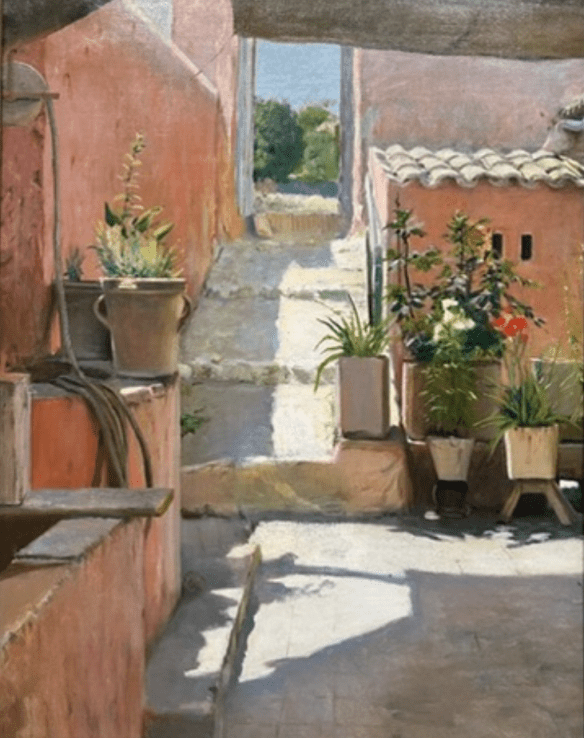
 Geese squawk on the small pond behind our house. Wings flapping makes a more pleasant sound. The sound of running water reminds me to go jiggle the toilet’s flusher chain that occasionally sticks. A very old, small fountain in my office makes comforting white noise if fed a cup of water weekly.

Fortunate to live in the Midwest where water is plentiful, I love and fear its many sounds. Seven inches of rain, our sump pump sending a geyser out of the basement, a drip somewhere in the house, ice dams are the opposite of pleasant. Even a small amount of water can destroy. Like a dried toilet seal leading to a slow leak absorbed in a basket of winter gloves, hats, and scarfs for months and molding before seasonal discovery.   

Raised next to Lake Michigan, nothing sooths me as much as its gentle rhythms. Small waves touching a sandy shore. Larger waves warning of changing weather.  Sparkling surfaces reflecting light. The coast and sky creating a paint card of greys when clouds dominate. Thunder heard miles before a storm will move on shore. The cawing of birds hunting for food.

In this time of insecurity when scarcity is the essence of our national feeling, I dread more struggles over who might own or control the future of our Great Lakes’ water wealth. Suburbs suing for access to water miles from borders, states diverting without permission, computer giants demanding this precious life necessity to cool their equipment. 

How will our voices be heard? How will water priorities be evaluated? The small questions about watering lawns are easy. The big questions are more complex.

A Cautionary Tale

Recently, I stopped at Walgreens to test my nearly expired ATM card. Turns out it is expired. Tired and preoccupied with that, I didn’t notice the slight gray-haired guy standing nearby. 

As I left the store he walked with me and asked if I’d gotten my money. What?! I looked at him more closely. One rotten tooth, disheveled. Possibly homeless, but certainly down on his luck. 

He walked too close and commented on my purse being pretty. I understood he was trying to get money from me either by panhandling or by robbing me, and I knew I had to get away from him. But he seemed unstable, maybe volatile—mentally ill or high—I couldn’t tell which. I was reluctant to set him off. 

He stayed close and kept trying to talk to me. As I neared my car, I said in a rude voice, “I’ve got to go. Bye!!” Even though I wanted to get rid of him, I was trying to treat this potentially homeless guy like a person. I thought if I got in the car and drove away I’d be OK. 

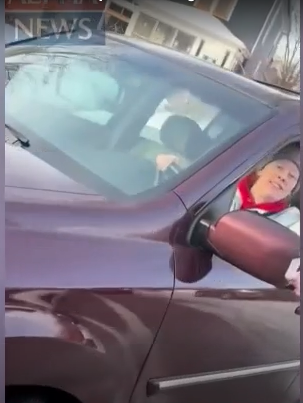
I opened the car door. He saw cleaning supplies on the front seat and said, “Oh, are you a cleaner?” I said, “Yes” and quickly got in and locked the doors. He was standing very close to the driver’s side mirror. When he heard the locks click, he got mad and started banging on the window and shouting at me. I have no idea what he was saying, but I was scared and wanted to get out of there. He was still standing very close to the car when I put it in reverse, cut the wheel, and started to back up. He shrieked, “You ran over my foot!” and fell to his butt. 

He continued screaming, “You ran over my f***ing foot.” I apologized, saying, “I’m sorry. I never meant to hurt you. I’ll call for help.” I was shocked and scared, but thought if I’d hurt him I had to stay and deal with the situation.

After I called 911, he yelled, “Get me some ice. You ran over my f***ing foot.” I went back into Walgreens. As I paid for the ice I told the clerk a man was injured in the parking lot and the paramedics would be coming. 

The guy took the ice and slipped off his shoe. His bare foot had a small abrasion and it might have been a little puffy. Hard to tell. About then three first responders (firefighters) arrived. Two gray-haired guys and one younger one. They questioned the guy and asked me what had happened. One said, “Are you sure you ran over his foot? It might be a scam.” I thought I had hurt his foot, but honestly didn’t know.

One of the firefighters asked the ‘victim’ if he could wiggle his toes. He could. He got up and began walking around and talking to a firefighter, enjoying the attention. Off to the side the other firefighters speculated the guy was high. 

Shortly after, the paramedics arrived. They asked the guy the same questions and offered to take him to the hospital for an x-ray, but he didn’t want to go. By then we all recognized the situation was a stupid waste of time. 

The paramedics told me the police would be delayed. We stood around deciding what to do. The situation seemed under control. I offered to lock myself in the car while I waited for the cops but the firefighters said, “We’re not leaving you alone with this guy.” 

Meanwhile the guy decided he’d walk home on his supposedly injured foot. Clearly it was time for all of us to go. The firefighters said the cops could find me if they wanted to follow up. They never did.

Only later did I think, “Wait. That guy was menacing me. Harassing me, trying to get money from me. Why was I so concerned about him?”

I wish I would have handled the situation differently, but I’m sharing this story so you’ll have some strategies ready in case you ever find yourself in a similar situation. 

  • Pay attention to your surroundings if you use ATMs.
  • If someone follows you or bothers you, return to the store or business and ask for help.
  • Alert other people in the area that there’s a problem by yelling, “Get away from me! Leave me alone!”
  • If you’re in your car, lay on the horn to scare away the stranger and/or alert others to the trouble.

Before this incident, it never dawned on me I might look like a target. I’m not used to thinking of myself that way. And I don’t like it. Because I’m a woman or perhaps because I’m gray-haired, I may appear vulnerable. But I don’t want that loser’s interpretation to define me. 

Going forward, I hope to be better prepared. I hope you will be, too.

In Honor of Those Who Teach

Marquette University’s development rep wanted to visit (aka ask for a donation). On a hot summer day Samantha Adler and I sat down with iced drinks to chat about education before the pitch. First, we circled topics searching for things we had in common beyond my alma mater and valuing education. We wandered into talking about growing up in small towns.

She grew up in Monticello, Indiana, the same small town as my husband. She had attended Meadowlawn Elementary. I mentioned my mother-in-law spent decades there as a third-grade teacher.

Samantha asked for her name. 

“Mrs. Kraack.”

Her eyes got wide. “Mrs. Kraack! She read to us after she retired.”

“That would be her.”

“She was amazing. She made me want to read.”

There we sat, two strangers across a table, connected by the kind of educator who could make small children want to read.

“I read Winnie the Pooh books to my children, and I do all the voices like Mrs. Kraack. I haven’t thought of her for so long. This is amazing.”

We both had goosebumps while sharing Mrs. Kraack stories. I told her truthfully that this opportunity to talk about my mother-in-law was a wonderful gift. 

Helen Kraack taught at least a thousand elementary school children during her career. She was on her third generation of students in some families. Teaching was not a job for her, but a mission. She worked hard to be sure every third grader leaving her classroom could read, manage their time, know how to be kind to others, and dream of their futures.

How do you measure the success of teachers like Mrs. Kraack? Many tried when she received an Indiana Shining Star for Excellence in Teaching, when she retired, when she passed. Stories about kids who went to college, who became professionals, who held leadership positions, won awards. 

Then there are untold stories about little girls like Samatha who learned to love reading while listening to Mrs. Kraack. A girl who would earn a full scholarship to St. Mary’s College and develop a career making college possible for other kids. A mother who reads Winnie-the-Pooh books to her children. 

Many thanks to all who enter classrooms this school year or teach in other ways. Know that even on your most lackluster days, your influence may brighten a child’s day and well outlive you. There are people who have your backs and wish you all the best. 

Emily Kraack Chad and Helen Kraack

“Some people care too much. I think it’s called love.”
― A.A. Milne, Winnie-the-Pooh

What I Didn’t See Coming 10 Years Ago

Marveling at Marie Antionette’s crazy little cottage at Versailles. Dancing to Aretha Franklin with my youngest son at his backyard wedding reception. Collaborating with my husband on creative projects like the bed frame he crafted and the quilt I designed. Sharing a Thanksgiving feast with family at the home of my oldest son and his wife. Spending summer mornings reading and writing on the porch. Enjoying hugs and giggles with my granddaughters. That’s what I hoped retirement would look like when I gave up paid work 10 years ago, and often it has. 

When the chance to launch this phase came at 61, I eagerly jumped even though my career as a marketing communications copywriter and occasional college writing instructor had meant a lot to me. I’d come of age when women in those roles weren’t a given, and I’d made sacrifices to find my place in that world. 

I expected my identity would evolve and be redefined by retirement—sometimes by me, more often by strangers who are dismissive of retirees. I rejected their stereotypes and for a time, when people casually asked at parties, “What do you do?” I answered, “I’m a writer.” Accurate, but incomplete. Now I don’t bother with that artifice. I know I’m a badass. Whether others see it or not is irrelevant.

Since retiring, my personal life has developed in predictable and happy ways. We welcomed daughters-in-law, and they and our sons bought houses and had children. We’ve loved being part of those changes. What I didn’t see coming was Trump in 2016, COVID and George Floyd’s killing in 2020, and Trump again. 

Today the world beyond my personal circle feels dramatically different than it did in 2015. There were problems aplenty then, but the government was still functional. This year DOGE slashed congressionally-approved funding for federal services including national parks, FEMA, NIH, USAID, and more. The executive branch disregards constitutional rights and federal laws without consequence. I could continue with my list of troubling changes, but I won’t depress you with it.

In the past decade I’ve become more politically aware. More outraged. More impassioned. I began taking part in protest marches—something I never imagined doing. The whole idea sounded scary. Nonetheless, in 2017 I marched alongside my husband and our youngest son, who joined us despite being on crutches while recovering from a traumatic bike accident. Seeing so many like-minded people in the streets was heartening. Since then I’ve continued participating in marches, selectively. 

I recognize the limits of protests, but it’s important to me to show up. I also began writing actual letters and emails to political leaders (vs. the forms political organizations provide). I doubt either effort does much good, but I hope the sheer size of the protests will get through to politicians. I have to do something. This isn’t the world I want. This isn’t what the United States is meant to be.

I anticipate during the next 10 years of retirement, my personal life will evolve even further in expected ways. 

But I fervently hope the political pendulum swings back from this destructive trajectory and re-centers on sanity, decency, and a functioning democracy.