• A Foreign Country

    OLYMPUS DIGITAL CAMERAI visited a foreign country last night while in my own vehicle, a country where I will never be granted citizenship.

    Antonio was up front with me, and five boys of varying personalities sat, sprawled, and perched behind us. Before leaving Richfield for Minneapolis, I looked to make sure all the Cub Scouts were buckled in. For some children, escaping the safety rules undetected can be a badge of honor. And, Cub Scouts is all about badges.

    Within five minutes, we were headed north on 35W to tour the foundry where I work as a Human Resource Manager. The tour would complete the Geologist pin for the Scouts.

    Within ten minutes, I was chewing my fingernails.
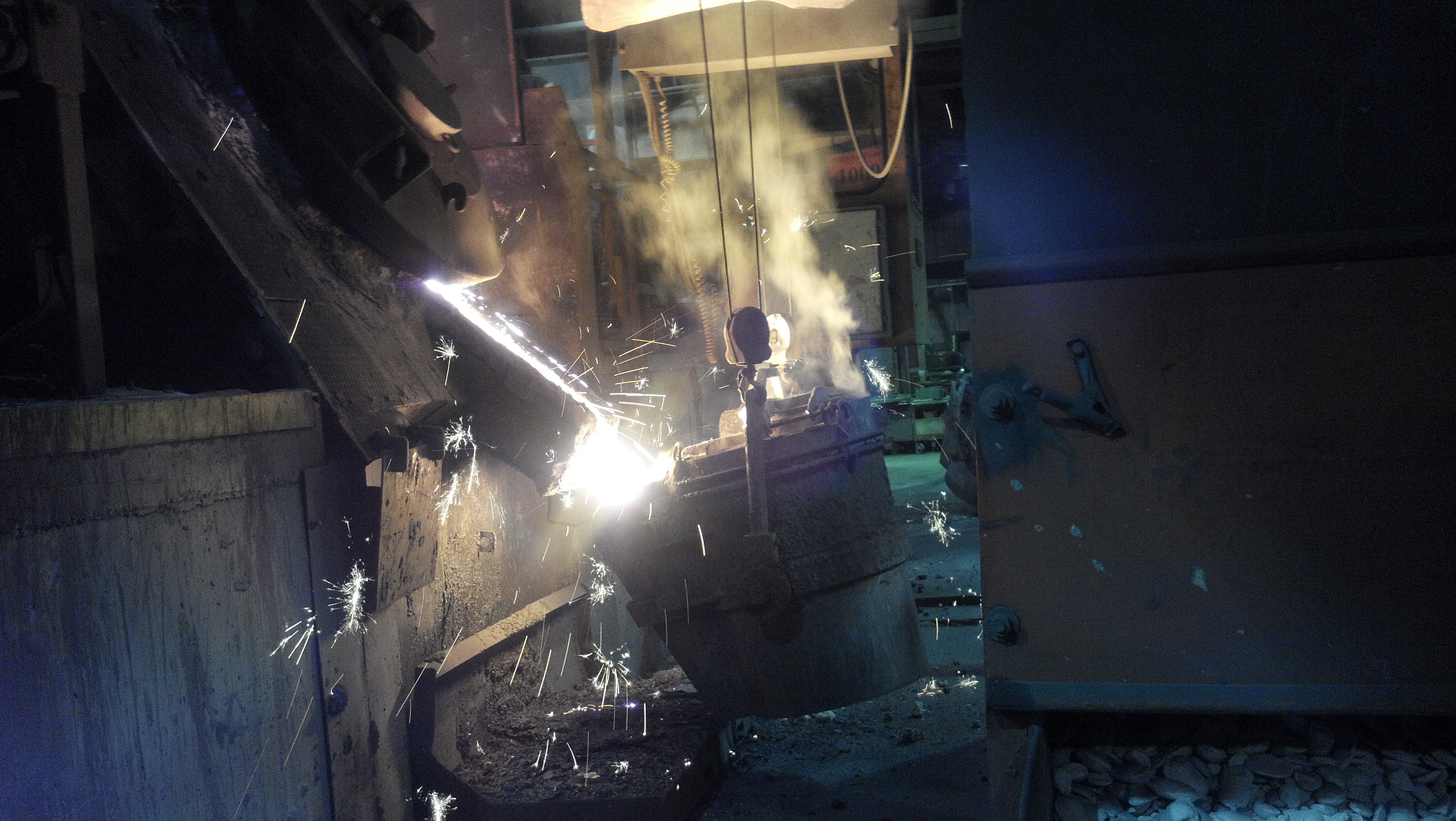
    iron being poured into a ladle from the melt deck
    iron being poured into a ladle from the melt deck

    I had no clue that I was entering unfamiliar territory when the boys tumbled into my vehicle. Very soon after I started driving, I realized that I had never experienced a van full of ten year old boys. Sure, I had ferried two or three of them from place to place, but never a van full. A group of boys alters chemistry.Immediately, I became invisible to them as a mom, a female, and an adult. Their conversation bounced from subject to subject like two very bad Ping-Pong players that just wouldn’t quit. It seemed like the fourth graders were jockeying for what would be acceptable conversation. One boy mentioned boobies; another boy said that was inappropriate. I looked at Antonio and raised my eyebrows. He looked back at me with wide eyes.

    iron being poured from d
    iron pourer taking iron from dinghy

    Since I didn’t know all of the boys well, I couldn’t discern who was speaking. I really liked the kid who said, “That’s inappropriate.” But then again, like all kids, he might have been trying to be sarcastic.

    Keeping my eyes on the road, I listened closely to the conversation and questioned whether or not I should speak up. After chewing my third fingernail, I decided that as long as there wasn’t any berating talk or more body part talk, I wouldn’t say anything and let the conversation jump from topic to topic.

    The boys covered the gamut from Pokémon to Twin Towers, from the World Trade Center to Why are we talking about history—let’s talk about manly stuff, to a manly discussion of farts, to don’t distract the driver to singing a ditty about farts, to my dad’s friend made this Internet game, to that building is where my dad works, and so on.

    OLYMPUS DIGITAL CAMERAAfter the foundry tour and the appropriate oohs, ahs, and that’s awesome, we were back in the van, and I was thrust back into foreign country. The bookends of an Indian chief the boys were given, made with molten iron at the foundry, were soon kissing in the back seat.  I’m sure that the foundry man who made those bookends didn’t expect that.

    This experience has confirmed that Jody and I have been right to make sure Antonio is surrounded by boys so he will know how to navigate male culture. What makes me raise my eyebrows and bite my nails, he can handle –it’s a wild ride but he knows how to stay afloat.

    , , , ,

    2 responses to “A Foreign Country”

    1. Bonnie Gruberman Avatar
      Bonnie Gruberman

      Hola Beth,
      Yo quiero visitar tu empleo y tener un “tour” contigo!!
      De #455

    2. wendyaskinner Avatar

      Great post! What a hoot. It reminds me of hauling 5 squirrely* ninth grade * boys* *in my van with my son. My motherly naivete dissolved in an instant.

  • Wandering in the Land of What If

    Picture taken by Christian Koehn (Fragwürdig), from Wiki Commons
    Picture taken by Christian Koehn (Fragwürdig), from Wiki Commons

    Lately, I’ve been wondering what the American appetite for post-apocalyptic stories—both movies and books—says about our culture. We are constantly bombarded with The Hunger Games, Children of Men, Book of Eli, Matrix and similar stories. And there are more on the way. I recently saw trailers for After Earth with Will and Jaden Smith and Oblivion with Tom Cruise. What attracts us to these themes?

    It Could Happen

    At first, I thought it meant that many people felt powerless and doomed—maybe we aren’t headed for irreversible damage right this minute, but it could happen in the near future. The idea that we could be nearly destroyed via nuclear holocaust, disease or asteroid isn’t so hard to imagine. Those possibilities already exist. Well OK, I can’t take destruction by asteroid seriously, but the other two aren’t farfetched. Bombing by rogue state (re: 9/11), drug-resistant tuberculosis, and the Ebola virus already exist. Today, even the flu is killing people.

    The “we’re all doomed” mindset may be part of our culture, but I don’t think that’s the main reason behind our cultural fascination with dystopias. I don’t see people flocking to see Amour, a movie about an aging couple coping with her illness and impending death—that definitely could happen, but it’s way too real and scary for a lot of people, including me.

    What If?

    Tons of movies and books like The Handmaid’s Tale, Children of Men, and On the Beach start with a speculative premise—What if the world were nearly destroyed, how would survivors behave? These stories explore human behavior as well as the strange new worlds. What If generally becomes a cautionary tale—because resources are scare or fertility is at risk, the government / a corporation/ society imposes dehumanizing restrictions on the survivors. Forced childbearing, extinction, or forced suicide are the frightening new realities. What makes the stories scary is our recognition that governments, corporations and societies can and do run amuck—it’s not so farfetched.

    Test Your Mettle

    Some of the emotional appeal of post-apocalyptic books and movies is that we identify with the heroes and imagine that if we were faced with the hardships, we’d be resilient survivors. We’d outsmart the evil government and resist being brainwashed. We’d escape. We feel more powerful than we really are.

    Well At Least My Life is Better Than That

    Or maybe it’s that by briefly immersing ourselves in the horrible world pictured in a movie or book puts the shortcomings of our own lives in perspective—at least I’m not scrounging around bombed out buildings for scraps of food or I don’t have to fight to death to save my sister . . .

    A variation on that theory is that getting caught up with a dramatic and frightening plot is a safe thrill like riding a roller coaster. Scary, but in the end, you know you’ll walk away unscathed.

    But do we walk away unscathed? Or do these movies and books thrill us but make catastrophic events seem acceptable?

    If you like this genre, do any of my theories fit you? Which ones?  If not, what draws you in?

    , ,

    6 responses to “Wandering in the Land of What If”

    1. Pam Avatar
      Pam

      I recently saw the film Melancholia, and enjoyed it in a very odd way. But it also made me a little sick, if that makes sense. Another one that I know a lot of women were freaked out by is The Handmaid’s Tale. I think that one had the most impact on me as far as disaster movies. Great topic, great conversation!

    2. Bev Bachel Avatar

      At some point, I would have said I don’t like the genre, but after reading Hunger Games, I’m more open to books like it because they bring up a powerful question: What would I do if I were in the same situation? I remember asking myself this was when I was in Amsterdam several years ago. I visited the Resistance Museum and the Ann Frank House, certain I would have opposed the Nazis and been among those who actively helped people like Ann and her family. But then I read statistics about how many people just “went along.” It wasn’t right that Jewish people had to register, but oh well. At some point, I realized that’s pretty much how I live my life. I’m upset that gays can’t marry but I’ve never attended a rally or written an editorial. I care about those who are homeless but nearly every day say no to someone who asks me for money. So I wonder, if it were me battling for my life in Hunger Games, what would I do, really do? I hope it’s more than I do in a typical day.

      1. Ellen Shriner Avatar

        You raise an interesting point–I’ve often wondered how I would have behaved if I’d been a Jew in Nazi Germany. Or a German. Of course, I hope I would be courageous and do the right thing, but fear I wouldn’t. But crises–and that’s what all the post-apocalyptic stories have at their core–often have the effect of allowing people to be their best selves.

        What’s harder is the slowly building crisis–the one you may or may not perceive as a crisis–then it’s harder to act decisively.

        But if we ever need to be in a bunker, I’d be glad to have you with me–you’d be great. Thanks for your comment!

        1. Bev Bachel Avatar
          Bev Bachel

          To sisterbunkerhood…

      2. wendyaskinner Avatar

        Bev brings up good points and before I read the post, I was thinking about how Hitler created an apocalyptic world in Europe. Reading “The Lucifer Effect” by Philip Zimbardo can give you an idea of how easy it is for ordinary people to behave in sadistic ways. When we call another human being “crazy,” “an animal” or “evil,” we marginalize them and justify not caring about them and thus we mistreat them.

        Ellen also brings up a good point also that post-apocalyptic stories allow characters to “be their best selves.” In my experience, I’ve “been my best self” when I know an individual personally who’s being mistreated. I’ve risen to the occasion more than once to defend them–specifically my children, sisters, and next-door neighbors. This is one reason why it is SO important to get to know and befriend your neighbors–whether they live next door, in the next cubicle, or on the next branch of the family tree.

        1. wendyaskinner Avatar

          (Dang, Ellen. I should have proofread this before posting!)

  • WHO IS THE MAYOR?

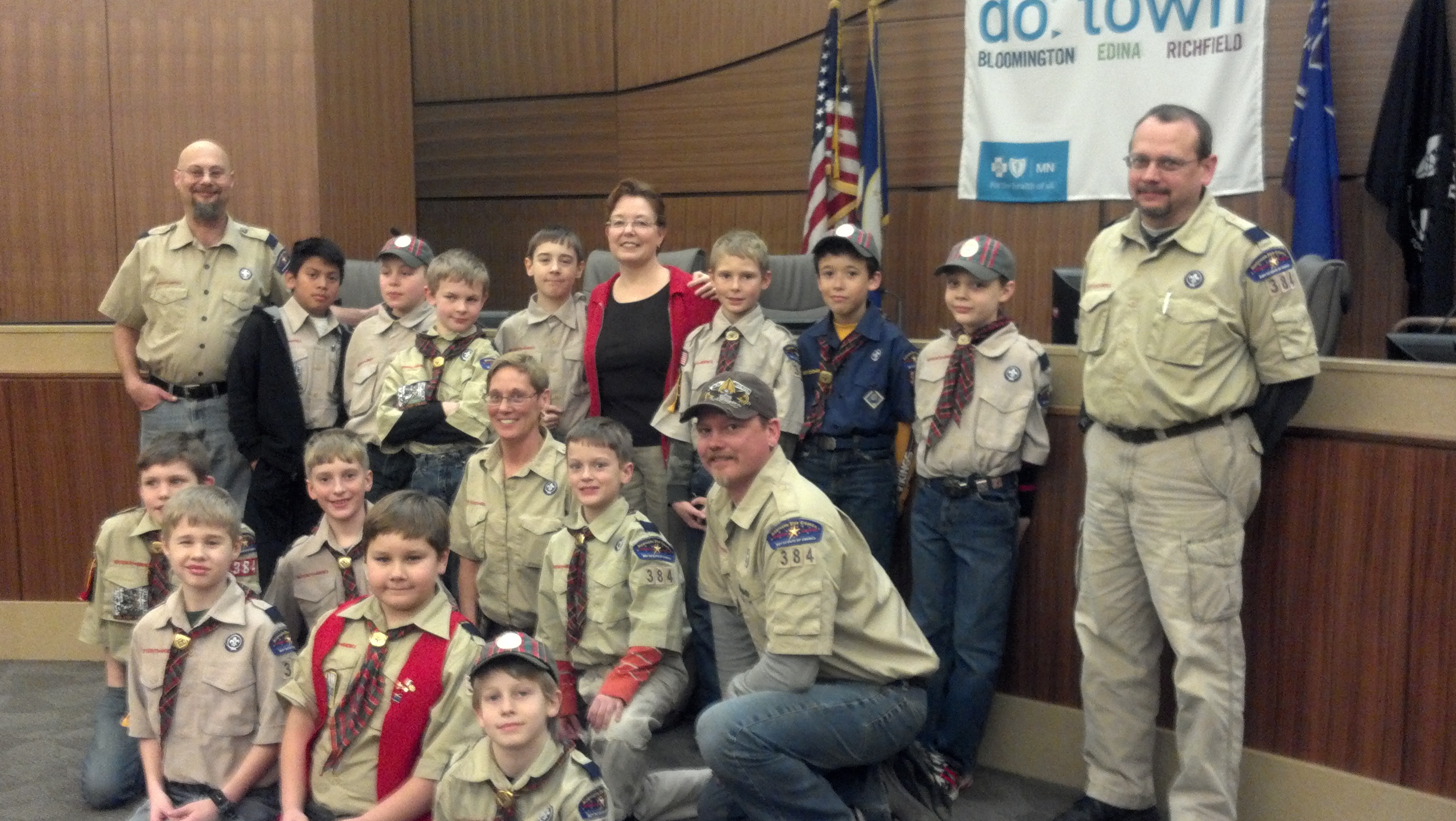
    January 18, 2013 140She’s the lady in the red sweater, and you, the den leader, are hoping, hoping that the Cub Scout sitting next to her, won’t turn his head and let out his humongous sneeze that you have been watching build for the past minute as he inhaled, inhaled again, and yet again. After he turns his head away from her, at least you hope he did, because at the very last moment you just couldn’t bear to look andJanuary 18, 2013 097 dropped your eyes, he exploded, after which you bring your eyes up to see the same Scout staring at the Mayor’s hair and you hope, really hope, that he doesn’t reach out and touch her head or her sweater or her arm or her hand, and you know he might do any of these or all of these. He likes to TOUCH, and he really looks like he’s going to do something even though at the moment he is busy palming his nose with both hands, and all you can think of is that he is a flu carrier and he is about to hand it to the Mayor.

    Who is the Mayor?

    She’s the one with the cheery personality who asks your 13 Cub Scouts the question, “Well, what do you think a mayor does?” which really, really makes you wish that you had remembered to discuss communicating with respect when a Scout responds with, January 18, 2013 102“She runs the city blabbly blab blab.”

    Who is the Mayor?

    She’s the one who is very articulate, but when she asks the Scouts what makes a good citizen, you want to take the jaws of life and extricate the memory chip from all the small electronics in the room. The meeting with the Mayor will only last for half an hour, but still that is too long for the parent who can’t look up from his smart phone for the entire time and the sibling of a Scout who has her face so close to her Nintendo DS screen that you are sure that she is suffering from partial blindness. I bet they can’t tell you that the Mayor’s sweater is a vibrant red, sharper than any cardinal that you have seen this winter.

    Who is the Mayor?

    She’s the one who uses her special badge to let the Scouts see the council chambers and sit in the overstuffed chairs that wheel around even though they immediately grab January 18, 2013 105for the skinny microphones that snake upwards. The first thing the Scouts learn is that the microphones are on and you are sure that they January 18, 2013 110are going to snap them in two as they yank them toward themselves. After you, the den leader, reign in chaos by yelling that ALL hands must IMMEDIATELY go into their own lap, only then do you dare take a breath.

    Who is the Mayor?

    January 18, 2013 201She is why you ask all the Scouts to remove their non-scouting headwear for the group picture. And you hope that the Scout who has his scouting cap tilted liked a gang member will straighten it for the picture in case it goes viral.

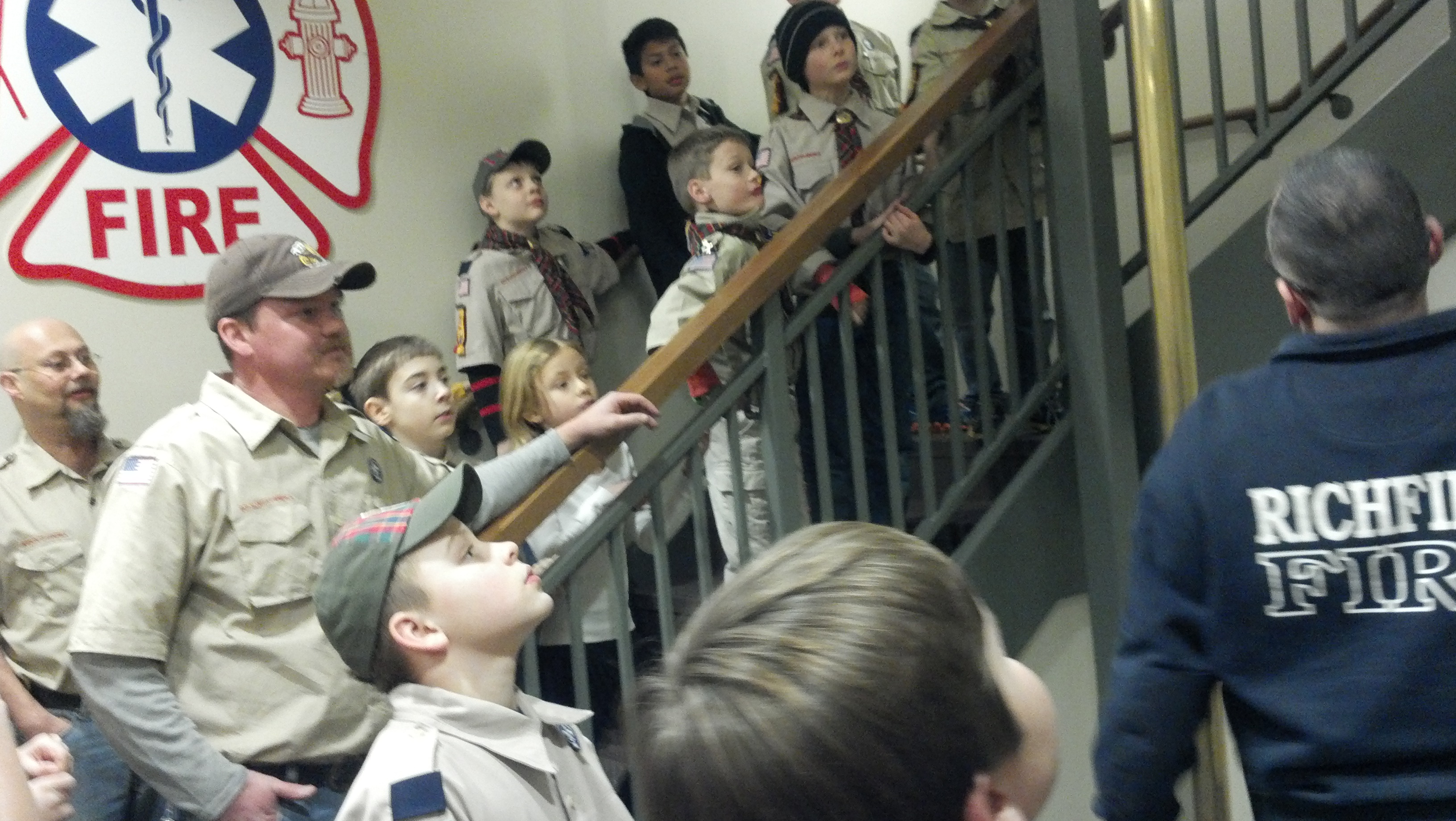
    Ultimately, Richfield Mayor, Debbie Goettel, is the gracious woman who communicates citizenship to your Cub Scouts. You hope they will remember at least one thing that she says, even if the thing theyJanuary 18, 2013 203 remember is that she is the one who organized the awesome one-hour tour with the fire department.

    , , ,


Recent Posts

  • Borrowed Time

    Rain hammered the passenger van, rattling the metal like gravel tossed against a tin roof. Each burst sounded closer, louder, as if the storm were trying to break its way in. Why today, of all days, when Juan was visiting his birth family? We had planned it so carefully. We’d even had a kind of…

  • From Minneapolis

    …they have cost children the life of their mother….

  • A Few of My Favorite Things

    When I feel world-weary, I actively try to turn away from the world’s troubles and focus on the many good things in my life. In addition to my family and friends, here are some things I enjoyed this past year—art, books, nature. Sorry, no raindrops on roses! When I saw this painting I wanted to…