Thank You for Being a Friend

There may have been times in my life where I’ve wished for more friends, but surveying the landscape of the years, I’ve been pleasantly surprised at the growing richness of friendship around me. These friendships are both comforting and surprising. As a lifelong introvert and a bit of a loner, it’s taken me a while to find my footing with my friends. 

I’m surprised, perhaps, because sometimes I’ve taken friendships for granted or maybe even realized that I may not always have been the best friend. I have forgotten birthdays, or let too much time go between phone calls, or even missed responding to texts. My well-crafted reply to an email or text often gets lost in my head. This does not reflect my affections. When I think of my friends, I smile internally recalling ways that I’ve met people, our histories and ways we’ve time we spent together, even if it was a long time ago. 

When I was young, I had visions of popularity, thinking that popular people had the most friends, and who doesn’t want a lot of friends? I quickly learned that my quiet, introverted nature often set me apart as being shy or just too withdrawn to make easy connections with others. I longed for real connections and conversations, but didn’t know how to get there. 
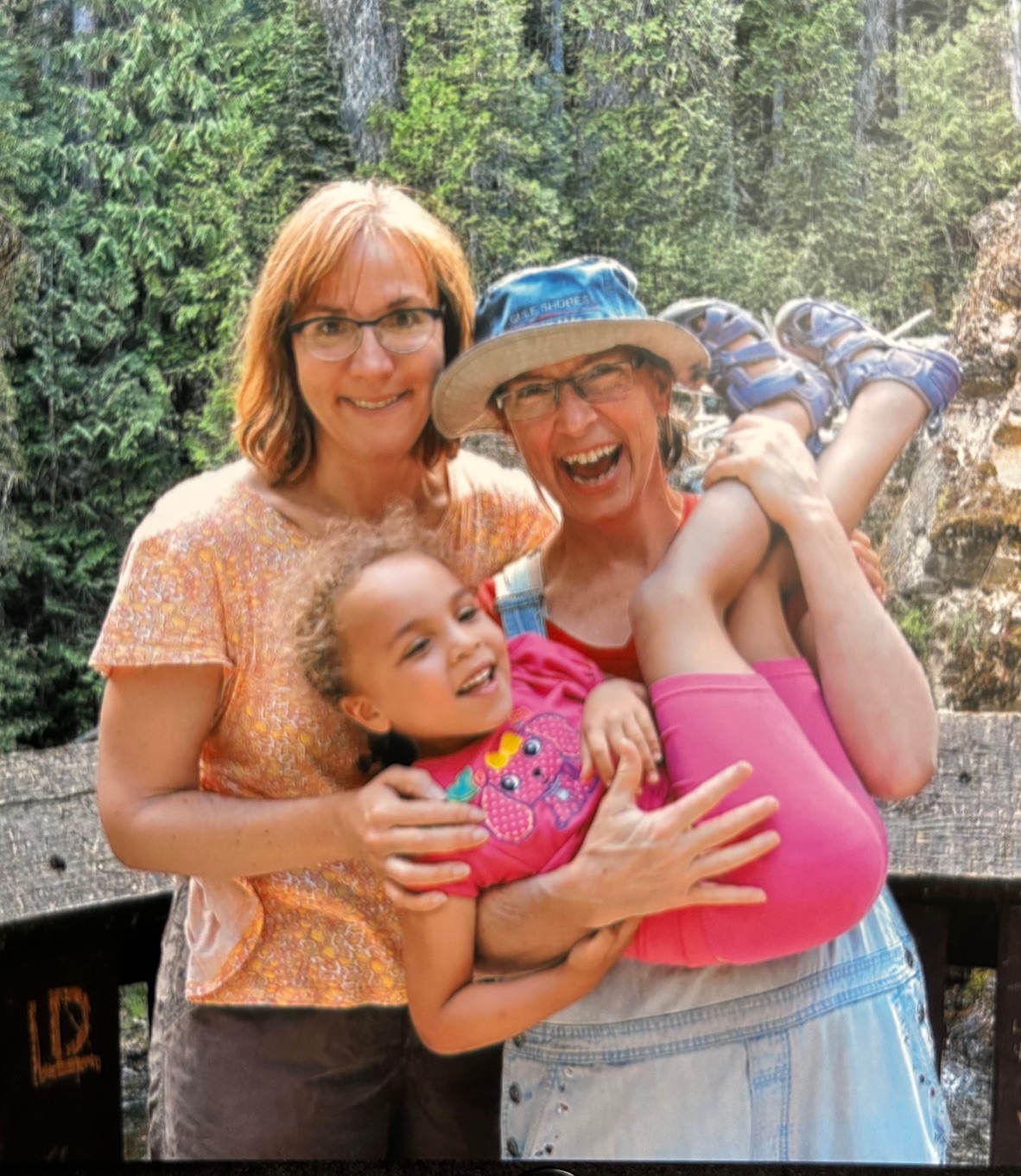
The author with her daughter and former roommate (and friend of 30+ years).

The insecurity of adolescence has annoyingly stuck with me, although it’s less of an issue now than it used to be. But it is still a force that keeps me in the shadows more than it should. 

In my 50s now, I still want to connect with people and find that I can still get in my own way when I worry about whether someone will like me or when I feel self-conscious. It is all too easy to pull into myself when faced with a group of people I don’t know very well.

When I do make a friend, it usually sticks. I’ve been fortunate to make meaningful connections with people through the years, and despite my occasional inattentiveness, somehow those connections have lasted. Often those friendships unfolded over time and with a shared history; other times my connection was immediate and easy. 

I’ve been lucky to be a part of a writing group that has been going for 20 years, where we’ve grown to know each other in unique and vulnerable ways through our writing voices and so much more. I’ve been equally fortunate to be part of a knitting group that has been meeting for even longer, bonding over knitting, conversation, and laughter. And I’ve made individual connections with people here and there: A friend I used to work with who shares my love of reading and always laughs at my jokes. A former roommate who saw me through some tough times and is the one that still generates loud and frequent laughter in me. Another friend I met at a neighborhood park when our kids were preschoolers. Other friends I’ve made through my daughter.

Writing Besties: Brenda, Ellen, Jill, and Elizabeth

I haven’t always had the time or energy to maintain friendships over the years. One of my sisters has friendships from elementary school, and she regularly sees others from her high school days. I can date my longest friendship to a friend I made in college, when we met in journalism school and quickly connected over books and writing. Blessedly, we are still connected despite being separated by more than a thousand miles and one time zone.  

Developing and maintaining friendships takes time and intention, and it’s something I’ve found harder to do in my middle age years. Marrying in my mid-thirties and then becoming a mother in my early 40s put me out of sync with many of my peers. Early motherhood was often fraught with anxiety, and I found myself wishing for more connection. And then the pressures of working and caring for family made it harder to carve out time for friendship. I can still find myself feeling lonely at times, as my daughter grows more independent and will soon be out of the house. 

I think the answer to that is to lean into the friendships that I have and nurture them a bit more. So, if you are my friend, please forgive me for missing your birthday or not calling more often. Know that you still hold a place in my heart. And expect to hear from me soon. 
In the Company of Mothers

“You are such a good mom.” Ah, I leaned in, these words meaning more to me than my friend could know.

I had been talking about the latest challenges with my young teen, where everything felt new, unfamiliar, and uncomfortable. I took a minute to let the words sink in. It was the kind of thing my mom used to tell me.

My mom and I talked frequently when my baby was a baby, me needing to hear the calm of her voice, steadied by years of mothering. She seemed to meet with ease all the challenges of raising four kids close in age. Or at least that’s the way it seemed to me.

By the time I became a mother, my mom had been a grandparent to nine already, the oldest in college and the youngest just into the double digits. I was late to the game and met motherhood with a fair amount of hand-wringing. Those early days were especially fraught-filled. Was my baby sleeping enough? Eating enough? Hitting all the right growth markers? There was so much to worry about.

My mom didn’t always know how anxious I was, but I would call her just to hear her voice. In my postpartum funk, I couldn’t tell her I was scared and lonely—I don’t know why—but I might instead give her a mundane update of how the day was going with my infant, hoping she could intuit my struggles. I was afraid of my own fear and questioned everything I did.

As my child grew, my mom was a steady source of reassurance and always wanted to know what my little one was up to. I would tell her some tale of my busy toddler, then preschooler, then elementary student. The stories were mostly amusing, but sometimes I was exasperated or uncertain. “You’re doing a good job, Brenda,” she would say. I’d always think, “Really?” It never felt that way. But she knew what I needed to hear.

~

I miss that. My mom is no longer here to comfort or commiserate, to offer hope for parenting through the teen years. She passed away right before the pandemic and right as my child was entering the tween years. Now I find myself among the many motherless daughters out there, feeling my way along. While I know that I am lucky to have had my mom for as long as I did, I still miss her and her unconditional support. And I really want to know how she made it through parenting four kids from infancy to adulthood—especially through the teen years.

The author and her mom Lois.

She used to say that she had a lot of help, especially from my dad when we were all younger. And that having a lot kids close together was just what people were doing at the time. Now she would probably tell me she did the best she could and that she was far from perfect. And that she was also buoyed by a loose network of family, friends, neighbors, and others.

~

I wonder now what she would say about the precocious child who has turned into a strong and independent teenager. I imagine telling her of the latest tale and hearing her say, “Oh, Brenda,” lowering her voice on the “Oh” to add to the sense that she knew it was hard. Or maybe she’d shake her head and murmur words of commiseration. My child is much like one of my siblings, whose teenage years were punctuated by frequent conflict with my parents. Would my mom tell me she could understand the challenges of parenting an iron-willed but sensitive child? Or would she think of herself as a teenager, wishing that she had been nicer to her own mother? I never imagined my mom as a teenager but only as my mom and was surprised when she told me she regretted clashing with her own mom when she was young.

So perhaps this tells me that we never quite get it right and despite the anxiety, the self-doubt, the struggles, and even the loneliness, we are making it through.

My mother leaned on her own sisters, neighbors, friends, colleagues, and I am, too. I am banking on the collective wisdom of this vast community of mothers I am part of. They look like the friend who laughs with me and the one who offers a listening ear or a word of advice and then the one who just tells me I’m doing a good job.

Confessions of a Pandemic Parent

Now that this COVID pandemic is largely over—or at least we hope—this may be a safe time to make a few confessions, one parent to another. 

When the lockdown began last spring, we adjusted to working and schooling at home for what we thought would be a few weeks, at max. I thought, “Great! What an opportunity to spend more time with my kid!” I imagined a sweet vision of idyllic harmony as my tween daughter and I bonded even more as we read books, painted watercolors, went for walks in the neighborhood. I could even get more involved in her education. Ahhhh. It was going to be bliss!

It didn’t exactly turn out that way. Here’s what really happened:

I was often afraid my daughter would develop scurvy from her largely unregulated diet of carbs, salty snacks, way too much sugar, and way too few fresh fruits and vegetables. My frequent reminders to eat more fruit are met with “I’m full.”

I was frequently tempted to Google “feral children” after seeing my daughter’s hair in a mat of frizz after no one had bothered to brush it for days. We learned that grooming is overrated.

Pajamas often doubled as day wear (and vice versa), especially when we never left the house. And socks were wholly unnecessary, even on those rare occasions when we did need to go somewhere and there was snow on the ground. We learned to get by with a minimum of fuss.

Once upon a time, a very long time ago, I thought it just might be fun to homeschool. I must have been nuts. After months of distance learning mainly via Zoom, the best I could do was ask, “Aren’t you supposed to be in class now?”

More often than not, 4:00 p.m. rolled around and I found myself asking my daughter, “Did you eat lunch today?” I feared the answer would be “no” because I know I certainly didn’t make her anything. If I was lucky, she may have concocted a smoothie at some point during the day.

It’s okay for a developing child to go to bed at 11:00 p.m., right? After all, there was not much taxing her brain and body during the day. Every night as I watched the time tick closer and closer to my own bedtime, I cried out, “Why are you still up!?!”

I found myself suddenly more amenable to things that would have been hard and fast “no’s” just six months earlier. Case in point: getting a cat, to which I am allergic, and yet it was sold as a method of providing “emotional support” during these trying times. And where does said cat sleep? On my bed, since the cat has started waking up her “true owner” at 5:00 a.m. by biting toes.

After years of putting off entry into more social media, I acquiesced to creating an Instagram account, which has been appropriated by the tween and is mainly a vehicle for posting pictures of the cat and recipes for smoothies.

We quickly careened down the slippery slope of unlimited screen time. I don’t know how we got here. It seems so far from the reasonable and even idealistic standards I used to have—actual daily screen time limits of an hour or so. But this pandemic parent lost her will to enforce more limits.

While my daughter has never been a good napper and has always seem to not need that much sleep, I on the other hand, found myself growing more and more tired. I perfected the afterwork nap. Pandemic life is exhausting!

I found new delight in doing errands. All. By. Myself. Drives to the bank and post office have never been more satisfying. And even the excuse of going into my empty workplace was a welcome change.

Someone should really start a Parents Union with universally agreed upon work expectations, hours, duties, etc. The words “I am done for the day!” have slipped out of my mouth more than once—mostly at the end of what has seemed like an endless day. (See late bedtimes, above.)

I even tried going old school in the fall after we had been indoors way too much. Me: “You know, some parents just send their kid outside and say, ‘Don’t come in for an hour’.” Daughter: “Mom, you are NOT that parent.” Touché, kid.

So faced with my shortcomings, I swallowed my pride and admitted that the year knocked me for a loop. Then I mustered up some gumption to do it one more day. And then another.

Slowly, we have started leaving the house for school, for work, even to socialize with other people—in real life. As life begins to look a little more normal, we may even begin to miss each other a little (in the case of the tween) or a lot (in the case of the weepy mother). And then I will wish for all that time at home, when we rarely said “goodbye.”

I’m (Not) Sorry


Brenda behind mug

Guest blogger Brenda van Dyck is no longer in a sorry state

I’ll admit it—I don’t generally set a lot of goals for myself. I live in Minnesota, after all, the land of the naturally above average. But I have set a big goal for myself: to stop saying “I’m sorry.” I blame my Minnesota roots.  It didn’t even occur to me that this was a thing until I saw a mug at the “I Like Me” store booth at—where else?—the Minnesota State Fair. It was a simple mug with the shape of Minnesota and the words “I’m Sorry” written across the front. It was a forehead-slapping moment.

Here in the North Star state, we have much to apologize for. We apologize for these harsh Minnesota winters. Who would willingly subject themselves to subzero weather and live in a climate that keeps us hidden from our neighbors for half of the year? And then there is the mosquito, the unofficial state bird, that attacks any exposed flesh for the three nice months of the year.

And we’re not even as nice as our moniker “Minnesota Nice” would suggest. I was shocked to hear that non-natives have trouble breaking into our tight web of social and familial connections. Of course, I felt bad about that.

We Minnesotans have perfected the art of passive-aggressiveness. We have trouble being direct and assertive, for fear of confronting people; we couch our behavior behind the cloak of “I’m sorry.” When someone budges in line at a store, we say, “I’m sorry, but I think I was next.” Or when the waiter gets our order wrong: “I’m sorry, but this isn’t what I ordered.” We’re not sorry! We just don’t want to come off as too brash, too–might I say–East Coast.

But it’s more than just being from Minnesota, the land of perpetual guilt. Growing up Catholic adds to this sorry state. I remember preparing for my first confession as a child. While I was not perfect, I was stumped when it came to confession, something that I had to tell the priest I was truly sorry for. Without being able to come up with anything egregious, I may have said that I was mean to my brother. The memories are fuzzy now.  The truth was that if I was mean to my brother, he probably had it coming. He usually did.

We’ve all encountered people who fall over themselves unnecessarily apologizing for things. These are people who feel bad about everything. At least I’m not that bad. I think.

Over the years, I’ve perfected the art of the “apology.” I apologize when I have to ask for something and I’m afraid the person will say no.

I apologize when I think I’m bothering someone. “I’m sorry to call so late…” even when it’s not really that late.

I apologize in order to ingratiate myself to others. “I’m sorry I didn’t get back to you earlier…” when I knowingly procrastinated.

I apologize sometimes to spare someone’s feelings, “I’m sorry, but I have to go.”

I say “I’m sorry” as an imprecise verbal filler, as in “I’m sorry to tell you this, but your skirt is tucked into your tights.”

I have said, “I’m sorry to have to ask… “ “I’m sorry you were caught in the middle of that… “ “I’m sorry to be a bother….”

I’ve had to stop myself from starting emails with “I’m sorry, but…” as a buffer to break bad news.

Maybe apologizing is an effort to be perfect. Often these words simply come out of my mouth because I don’t want to cause offense and I fear falling out of people’s favor.

Alternatively, we’ve all heard the “non-apology” apology. “I’m sorry IF you were offended…”

Then there are the insincere apologies of children, the sarcastic “I’m ssooorrrrryy,” we force them to make to classmates or siblings. But if I say I’m sorry and I’m really not, isn’t that the same thing?

Why have I been doing this all these years? Can it really be that I am afraid of offending people? That I’m afraid of what people may think of me if I offend them, even unintentionally? Yes. And yes. There it is. Somewhere along the line, it occurred to me that I should be a little braver in my everyday life. That I should stand up for my true feelings instead of acting and reacting the way that I think people expect me to. Or in a way that risks putting me in disfavor.

I’m sorry that I’ve been saying “I’m sorry” all these years without giving it a second thought. Now when I find myself composing an email and I have more time for reflection, I delete the words “I’m sorry” from the beginning of an email. And in speaking to people, I’ve stopped myself from saying, “I’m sorry” when it’s not appropriate.

If I only say I’m sorry for things that I am truly sorry for, doesn’t that make my apologies more sincere and meaningful?

I would like to try the tactic of replacing the words “thank you” for “sorry,” as the comic artist Yao Xiao illustrates in her comic strip Baopu #15. She suggests, for instance, instead of apologizing for being late, say “thank you for waiting for me” or when you feel like you’re rambling, not to apologize but to thank the person who is listening to you. It’s a subtle verbal shift in words, but a seismic mental one.

I am not sorry about not saying sorry any more.


Brenda van Dyck is an occasional guest blogger on WordSisters. To learn more about her or our other guest bloggers, click on Guests above.

The Makings of an Extraordinary Pie

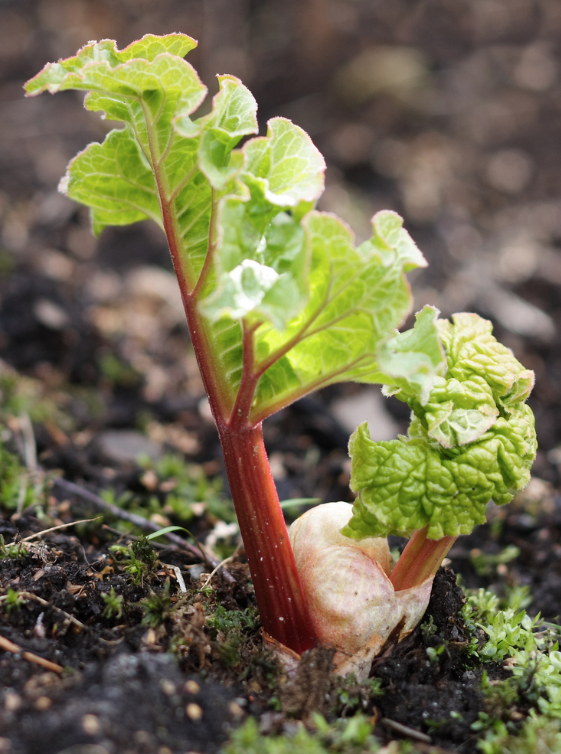
Photo by Miika Silfverberg - originally posted to Flickr as Young rhubarb

Photo by Miika Silfverberg – originally posted to Flickr as Young rhubarb

It was the sure sign of spring—those first green tufts of rhubarb pushing their way through a patch of the garden that may just a month earlier still have been covered with snow. After seeing the rhubarb, we knew the growing season would soon follow and the garden would once again be full of green and growing things. With their agrarian roots, my parents both tended the garden, but it was my mother who found a use for the rhubarb.

She showed my siblings and me how to tame its tartness by dipping the stalks into a cup of sugar. I imagine that her mother may have shown her this on the Iowa farm where she started her life. Picking the pinkest stalk available, I would dip one end into a cup of sugar so it was completely covered with the miniscule crystals of sweetness, the juice from the cut end of the stalk leaving just enough moisture for the sugar to stick to; I’d bite off the coated end and immediately taste a tart and sweet mixture of flavors that made my mouth pucker in delight.

Screen Shot 2015-08-27 at 10.53.59 AMOf course, rhubarb is the perfect conduit for sugar, as proven by one bite of my mom’s rhubarb pie, a particular favorite. My mother and I would pick a variety of stalks—the ruby red ones, the ones that were both pink and green, and then a few that were perhaps a little too green. But mixed with flour, sugar, and butter, the mixture would meld together into a tangy, sweet concoction that tasted perfect between the layers of a flaky pie crust.

Admittedly, rhubarb is not the most popular of vegetables. I believe the reason we may have had it was because it was a food that the earth could provide, and in my parents’ upbringing, no food went unused. Even a vegetable that needed a great deal of sugar to make it palatable. Now as I see rhubarb come back in my garden, spring after spring, I am reminded of that some things will always be.

But in truth, I let this harbinger of summer go to waste. I get excited about its growth, but don’t pick the stalks when I should, always thinking that I don’t have enough time for pie or muffins or even a simple rhubarb sauce. Soon their leaves start to turn yellow and their stalks shrivel, as if shaming me. I think of my parents and their disdain for waste. I look at the waning crop and admonish myself to be a better steward of this steadfast plant. Perhaps I should be gentler with myself, remembering that my mother baked pie when she was off from teaching school in the summer and had more time to show me all the steps to baking a pie—from mixing the filling, to rolling out the pie crust, and knowing when the filling was bubbling up just enough to tell us it was done.

***

After my mother had moved out of my childhood home with its massive garden, we went for one last look before the closing sale. Surveying the garden, which was overrun with weeds, I asked my mom, “Do you want anything from the garden?”

“Will you see if there is any rhubarb?” she asks. Sure. And there is, among the stinging nettle, wild daisies, and bindweed. Of course there is rhubarb. There always has been. I gingerly make my way through the weeds and begin breaking stalks off. “How much do you want?” I call up to my mom, who’s watching from the deck. “Oh, I don’t know, a few stalks,” she answers.

I pick a fistful of stalks, and not eager to stop, I get a few more, knowing that this rhubarb, the last that we will pick from this garden, will make an extraordinary pie.