The Half-Life of Family Heirlooms

Recently, when I served dessert to women friends around my grandmother’s dining room table, we described our uneasy relationship with the objects the women of our families treasured.
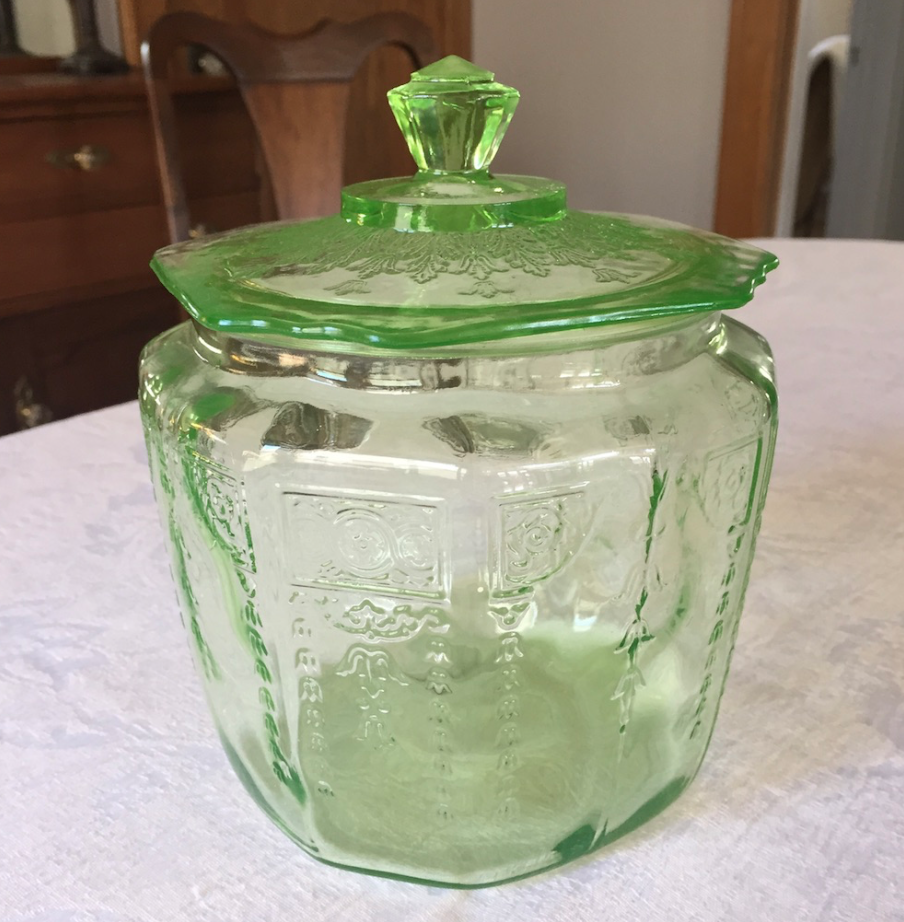
Now when we have homemade cookies, we store them in Mimmie Shriner’s Depression glass instead of saving it for good.

Women of the Greatest Generation, like my mother, cared about “good” china, crystal, and real silverware. They hoped to get full sets of it as wedding presents, and they cherished their mother’s and grandmother’s things. For them, the hope chest tradition was alive and well. They collected china and linens before they married and instilled that value in my Baby Boom friends and me. But our Millennial kids don’t want to fuss with handwashing goblets or ironing tablecloths. Not that I blame them. I don’t either. Nonetheless, my friends and I are distressed about what to do with the tableware and linens we’ve inherited. Let alone the quilts, furniture, and photographs.

We were brought up to value them, but the tableware really doesn’t make much sense in our lives. Where do you keep it between holidays? Wouldn’t holiday meals be less work if all your dishes could go in the dishwasher? And yet, this stuff mattered so much to our mothers. How can we just donate it to charity? But people do—Goodwill is full of 12-piece place settings with dainty floral borders. I’ve seen Waterford crystal goblets there too.

Articles like,No One Wants Your Stuffhave taught me to rethink my assumptions. The popularity of books like The Gentle Art of Swedish Death Cleaningand The Life-Changing Magic of Tidying Up make clear that either I can purge my stuff or my kids will.
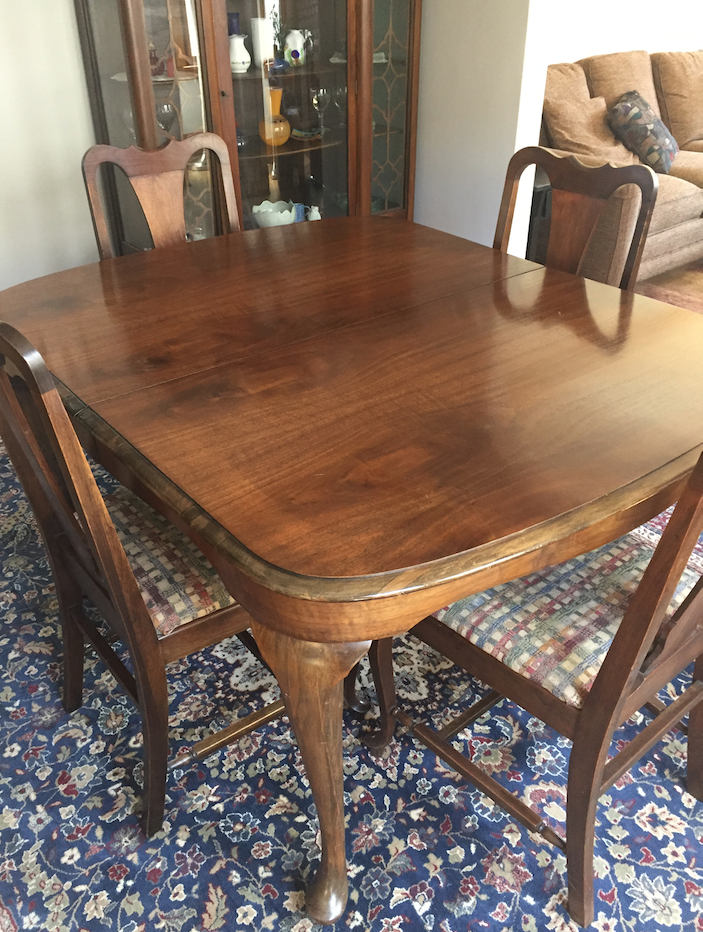
Mimmie Shriner’s table where she served her out-of-work relatives on Sundays during the Depression

I’m becoming reconciled to the half-life of memories. When my siblings, first cousins, and I—the last people to remember Mimmie Shriner or Grandma Pleitz—are gone, my grandmothers will become “ancestors” instead of the vivid people they are in my head. Mimmie’s dining room table will just be an antique table, and Grandma Pleitz’s crystal goblets will just be wine glasses. Their significance is in my memories; my sons and any future daughters-in-law don’t have those associations—they never knew my grandmothers.

Many evenings, I sip wine from one of Grandma Pleitz’s eight goblets.

Yet the objects are a visible reminder of past generations—hardworking, loving women who wanted pretty things in their lives. How can I honor the memory of these women without feeling burdened by their stuff? One way I’ve chosen is to use the good crystal and china even if it isn’t a holiday. When it chips or breaks, I throw it out. That way my grandmothers come to mind and are more present in my life. If their tablecloths get shrunk or stained—so be it. At least they got used and enjoyed. Likewise, I honor my grandmothers by keeping a few things I really like so I can look at them often. Finally, I remind myself that heritage doesn’t reside in the objects alone. It’s also passed down through our family’s recipes, traditions, stories, and values.
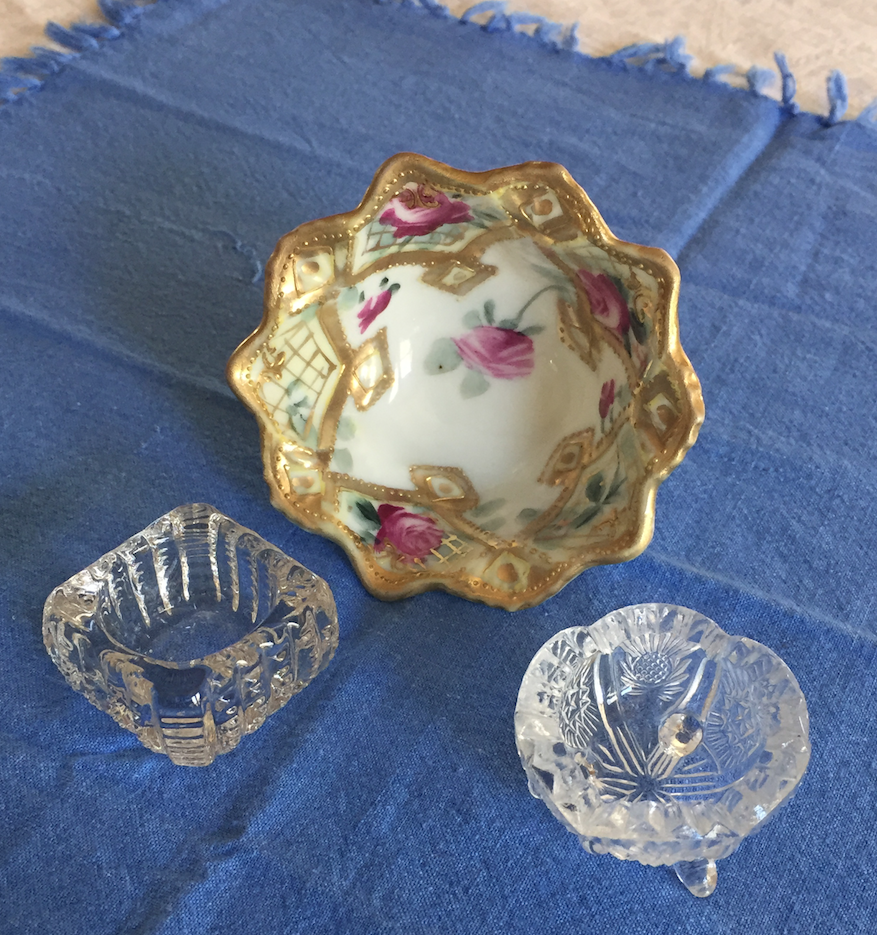
Mimmie put hairpins in this small handpainted dish. I never put salt Grandma Pletiz’s salt cellars, but I still like them.

I accept that my sons and future daughters-in-law may not care about my stuff—whether inherited or chosen during 30+ years of marriage. If they do, they will have different memories than mine. I hope they only keep what they care about.

One Person Can Make a Difference

One person can make a difference.

Aunt Kate did.

My Aunt died 30 years ago but it is her that comforts me. I imagine me sitting next to her, wrapping myself around her ham of an arm and never letting go. She loved me. That I know. I could see it in her worried eyes. I could feel it in her nervous energy. She wasn’t perfect, neither was I in our relationship. In my early twenties she had asked me to meet her at a wake for a dear friend of hers. I told her that I would but then I didn’t show. I had my excuses. I was too tired. I had worked long hours on the night shift into the morning. I was exhausted and needed sleep. I couldn’t summon the energy to dress into nice clothes, navigate through the cold wintry weather, and step into the funeral home. She asked me later that day where I was. I could hear her disappointment. I held the phone to my ear, imagined her waiting for me. My aunt who didn’t ask anything of me but this one time, who counted on me to be there for her.

Aunt Kate was a caretaker of her siblings throughout her life, before her service in the army and after. She never married.

It was her boyfriend from days gone by that had passed away and I didn’t show. My one unforgiveable regret.

She must have forgiven me because as she lay dying at age 83, she visited me though we were miles apart. Her white shadowy spirit passed through the room. I was kneeling at my bedside, sobbing because I knew that I would never make it to her in time.

At that moment, my mother called. “Aunt Kate died,” she said.

“I know.” I felt oddly comforted by Aunt Kate’s presence. By her choice to see me before she departed this life. She recognized my love for her. “I know,” she was saying to me. “I know.”

It’s because of Aunt Kate that I live my life differently. I show up for people that I care about though I may be too tired, too exhausted, too busy, and the drive too far.

I went to Aunt Kate’s gravesite on the anniversary of her death. She would have liked that I thought of her and put flowers at her headstone. She would have liked that I pulled two of the flowers from the bouquet and put one on each side of her at her neighbor’s graves though neither of us knew them. She would have liked that I showed up though it was impossibly hard to find her grave at Fort Snelling even though I had been there before. It was cold. It was windy. I had to go to the bathroom. I didn’t give up. She didn’t give up on me.

It’s her that comforts me even now.

Reduced Focus

For the past four years my eye prescription remained relatively unchanged. Unfortunately, my glasses haven’t remained unscarred through an infant’s grabbing hands, a puppy’s curiosity, and life in general.

I took advantage of a coupon to buy an emergency pair of bifocals for $250. During a recent week of travel I wore that pair. My eyes never adjusted to the left lens, the one the optical tech said was stronger than my old prescription. Each afternoon I found it difficult to zip through messages on my phone, enjoy a book, or read small print on a menu. Headaches started early in the day. I panicked about fulfilling writing obligations and tried to not think that maybe my eyes were in trouble.

This is the kind of bad decision I made because of a high deductible health insurance policy. The $175 eye exam would be out of pocket so spending $400 for the security of back up glasses felt prohibitive. I shopped around and spent less. Fortunately, my discomfort ended when I returned home and put on the old glasses. Scratches and all, my vision cleared, and the headaches stopped.

Others are making more difficult decisions—taking the gamble of not purchasing an asthma inhaler for themselves to make it possible to pay for a partner’s insulin, cancelling necessary lab work or tests to pay for their child’s asthma inhaler, not following a physician’s directions in using an expensive medication to stretch its use, staying in a hated job to hold on to health insurance, not replacing bald tires on the family car because of a health emergency.

Most of my adult experience was in a health maintenance organization. We groused about wait times for appointments, lack of choice in the optical area, going to a hospital across town, but we never faced decisions like today. If we hesitated about taking a child to clinic for a possible ear infection, it was about traffic or workload and not about the $125 bill.

These decisions are made in all zip codes throughout our wide metropolitan area. Only the very wealthy or very fortunate are exempt. We don’t comment on a good friend’s darkened tooth, push a neighbor to join in a night out, or question why a kid’s wheezy cough doesn’t improve. We’re all too polite to talk about the healthcare monkey choking America’s sense of comfort and scared about what’s coming next.

IMG_5422

I Didn’t Come This Far

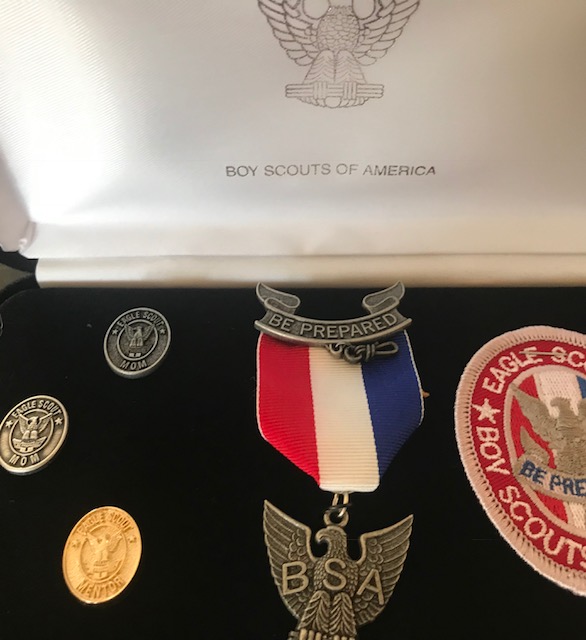
My eye’s widened when the rich black velvety coffin box was opened. Inside was a sterling silver Eagle medal, an Eagle Scout embroidered emblem, an oval pin for the Eagle’s mother and one for the dad. The Boy Scout Eagle Presentation kit was impressive.

I was silent, contemplating the honor of being an Eagle Scout and the work it involved: 21 merit badges, camping requirements, an Eagle project, paperwork filled out and verified.

Everything about this presentation box was great, except one thing.

“Juan Jose’ has two moms,” I said. “Can I exchange the dad pin for another mom pin?”

“I don’t think that’s a problem,” the female receptionist agreed. “Let me check.”

I didn’t come this far in scouts with Juan Jose’ to get a dad pin.

Juan Jose’ and Beth

I reflected to first grade when he joined his Tiger den. I thought that I’d be able to drop him off at the meeting, run an errand, return and pick him up. I soon found out that dens were as strong as their parent volunteers. It was also clear that our Tiger den leader needed help with our group of boys. The male den leader and I became a team. I organized the projects and the field trips, and he used his booming voice to bring the boys to attention. When he couldn’t make the meetings, I’d surprise the boys with my wolf whistle when I needed them to listen.

Juan asked me why he had to be in cub scouts. Because you have two moms, I told him. You need to know how to navigate in a group of boys. There are things I can’t teach you. He responded saying he liked his life and I could be his dad. It doesn’t work that way, I said, though his words made me feel good.

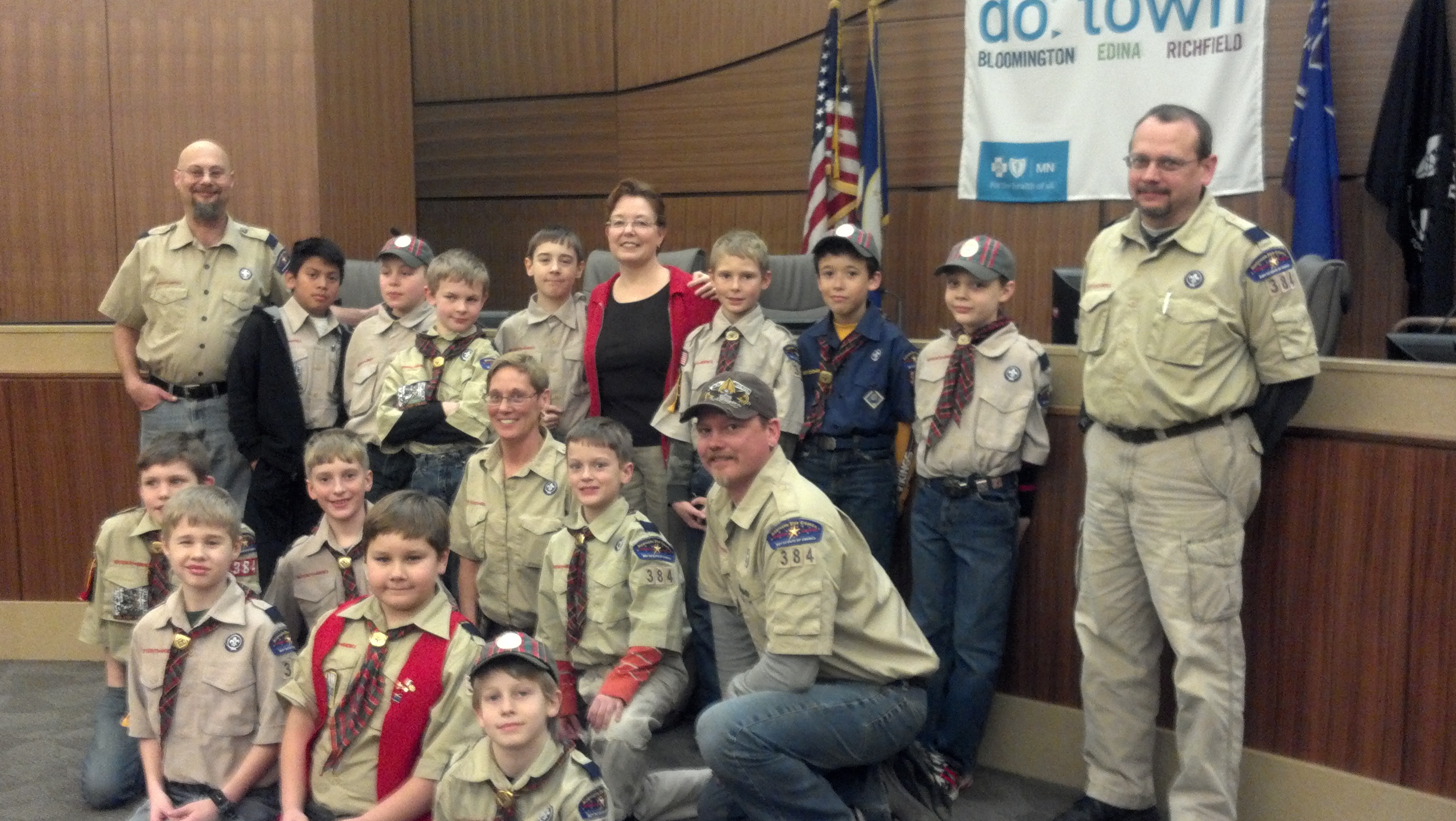
Our den at a field trip to city hall.

I was proud of the fact that our den of ten boys stayed intact for five years, with many of the cub scouts receiving their Arrow of Light and going on to join boy scouts.

I had agreed with Juan that once he reached this point, he could make the decision to go on for his Eagle or to stop scouts. I thought for sure he’d quit. Especially, after the camping trip that was supposed to show how fun it was to be in Boy Scouts which seemed more like an evening of hazing. That night, the worst of nights, when it was darker than dark, we were both crying. I reminded him that he didn’t have to do this anymore. He could be done.

During troop visits, he found one he liked, and he stayed. I told him that I’d support him, be right at his side, but since this was his decision, quitting scouts wouldn’t be an option until he earned his Eagle.

Arrow of Light

I touched the softness of the presentation kit. I could hear a woman telling the receptionist that I could swap the dad pin for a mom pin in the Scout Shop downstairs.

In the Scout store, I opened the kit and asked to swap the dad pin for a mom pin. “My son has two moms.”

“Oh no, we don’t do that,” the man said. He was my age, greying at the temple.

“That’s not what they said upstairs,” I told him.

“Who said that?” he countered.

My voice raised, “The only two women up there. The receptionist and the woman she asked.” I was ready to go to battle. He didn’t understand that I didn’t spend all this time in scouts to get a dad pin. The fact that I had to argue about this was ridiculous. Two moms in Juan Jose’s life had been normal for him since he was eight months old.

“I’ll take it up with them,” he said. “Just a moment.”

When he came back with the mom pin, I smiled. I watched as he undid the dad pin, replacing it with the mom pin.

I couldn’t help it, my smile grew. “Maybe two dads will come in and you will have another dad pin,” I said.

He grunted. I laughed, knowing I had spoken his worst fear and that it could happen.