Category: American Culture

  • One Hundred Reasons to Be Thankful

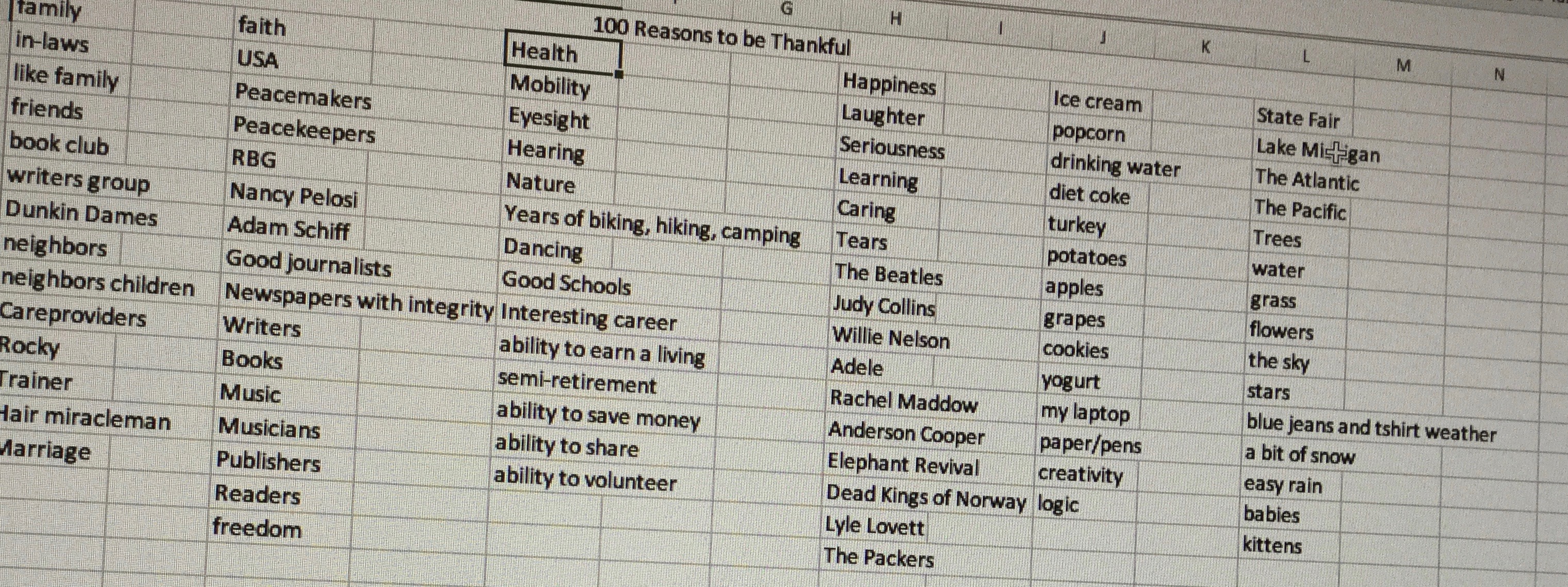
    For weeks I have noodled around the idea of posting a simple list of the people, places, abilities, things, conditions, blessings to bring meaning to this year’s Thanksgiving day.  An introvert with a history of over thinking added complexity to the simple list. Capturing one hundred reasons to be thankful posed a bountiful problem: Do I capture family as one listing or name everyone? The same thought rumbled around for friends, for neighbors, and friends who play multiple roles. Should individual writers be called out or tumble them together. And what about music? Does the list become trivial with additions like homemade caramels and fresh popcorn? What about specific brand call outs?

    My expectations for this Thanksgiving were not very high. It is a holiday that traditionally is celebrated by all of us in the U.S. The slow slog toward a nation divided topped by the trauma of impeachment hearings had me dragging my feet while approaching the common table. Friends do their daily grateful lists, but that habit didn’t stick any better than water exercise or keeping a drawer of perfectly rolled underwear ala Marie Kondo.

    The nerdy spreadsheet used to record one hundred reasons to be thankful could be filled with the names of people, pets, foods, books, music and such to flesh out section and become quite a document. My self-editor is constrained by assuming you would want to be amused or impressed if those columns were offered. Many of us have a richness of reasons to be thankful—love, family, friends, a place to call home, jobs, talents, faith, a beloved nation. And responsibility to extend another’s list. Needs extend 365 days a year.

    Happy Thanksgiving.
    IMG_0343

  • The Kids aren’t Here

    Our family includes many teachers, most in public school. Our kids have attended public schools, parochial schools, private schools, been homeschooled. Homework and talking about school happens at the kitchen table, in the car, while raking leaves.

    It was a surprise that a school system where I have volunteered is struggling with absenteeism of 32 to 50 percent . And that reflects the national pattern of over 8 million U.S. students missing nearly a month of school each year. At this rural school there is poverty, students are widely disbursed, transportation options are limited. There are stories about kids needed at home to help care for siblings or other family members. Anxiety or bullying issues make attendance difficult.

    In general, some parents feel schools don’t meet their kids’ needs. Some parents find the public education system to be monolithic in protecting traditional, seats in the chairs methods when other models exist. A teacher I respect told me that the process of pushing bright, unorthodox kids to adjust to rules that are necessary for control in classrooms of 28 students is sad, but ultimately prepares everyone for living in the real world.

    School representatives cite anecdotal reasons for kids’ absenteeism. There may not be a ride available if a bus is missed. A doctor’s appointment can be an hour drive from school. Parents don’t feel their kids miss much if they stay home. The family needs to be away to care for relatives. A child is needed to care for younger or older relatives. The parents plan an extended vacation. Some claim to intermittently homeschool. A child is being bullied and administration is not responsive. A child suffers from mental health issues with no help during the school day. Travel for extracurricular activities eats up hours. When bad grades start, kids know they’re bound for summer school and give up.

    Across the larger education sector, how does a child miss 30 days of school without prompting a remedial plan? How does a school system support learning in one-third to one-half of their enrolled students who are not present? What do students need to learn today and how is that delivered? So much money and so much policy maintain traditional archetypes when other societal archetypes are adapting or falling aside.

    Schools are not unlike trains running on tracks installed a hundred years ago. There are reasons old rail beds have become hiking and biking trails. Like other social systems, the pathways to completing an education relevant now, and in the future, have changed.  School buildings, curriculum, teacher preparation systems, and teaching methods need dramatic review and overhaul. Fewer test scores, more involvement in the big world.

    The question is not where are the kids, but how can we be sure there are good reasons for them to be here?

    IMG_6266

  • Pure Nostalgia and a Weird Convergence

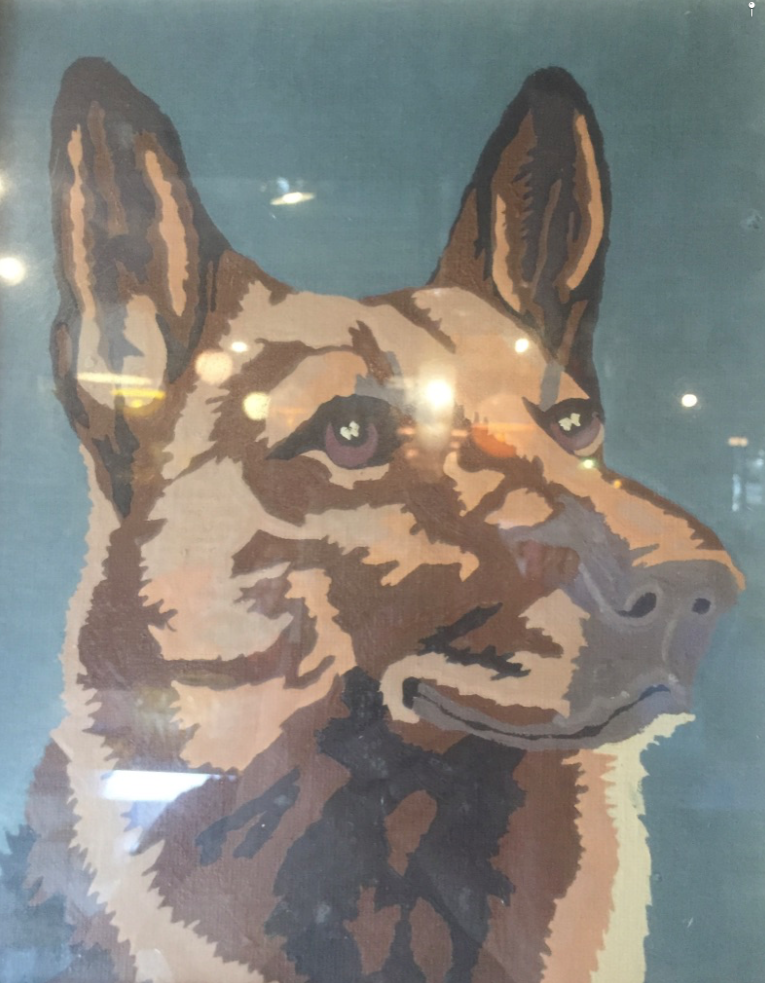
    Seeing the paint-by-number ‘artworks’ decorating Hot Plate, a neighborhood breakfast place, plunged me into nostalgia.

    At 10, nothing was better than making art that looked ‘real’ or perhaps I should say, ‘recognizable.’ Horses fascinated me and I labored at drawing them, using my horse statue for reference. One birthday, I received a paint-by-numbers kit for a horse portrait. Dip the cheap brush into the dime-sized plastic pots of paint, dab it in the blue-outlined shapes and voilà—my horse looked like the one shown on the box! Success!

    A weird convergence.

    Until my husband read the historical note in Hot Plate’s gallery, I’d never known that the Craft Master Corp., which made the paint-by-number kits, was headquartered in Toledo, my hometown. At first I thought, “That figures,” then I reminded myself that Toledo is also home to the Toledo Museum of Art, at the other end of the art world spectrum.

    While crunching home fries and laughing at the paintings of questionable landscapes, sad clowns, and plucky dogs, I marveled at the paint-by-numbers concept. Someone had to curate images, analyze and isolate the placement of highlights and shadows, and choose the appropriate colors. Today, that function can easily be done in a graphics program, but in the 1960s that wasn’t the case.

    The appeal of paint-by-number kits (popular in the 1950s and 1960s) and Bob Ross’ PBS show, “The Joy of Painting”(mid-1980s to mid-1990s, now immortalized on YouTube and in popular culture) is the idea that ordinary people with little or no artistic training can have an outlet for their creative impulses and paint something they’ll be pleased with.

    On the paint-by-numbers box was the slogan, “Every man a Rembrandt!” We l l l, not exactly. But for my 10-year-old self, there was a real pleasure in making a painting that turned out.