Category: American Culture

  • July 4th Weekend 2020

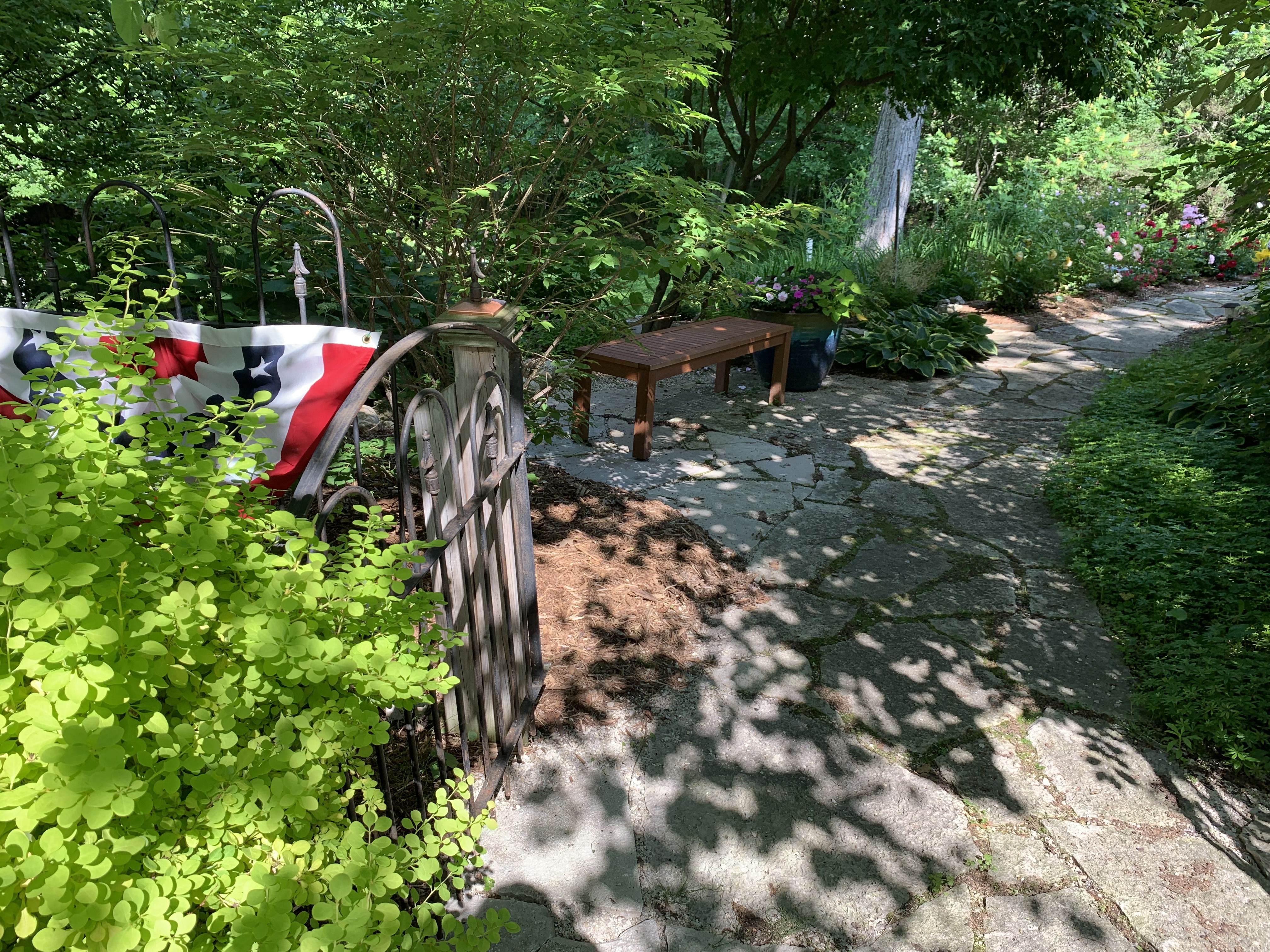
    Some things feel normal this holiday weekend. Humidity and heat blanket parts of the nation. Corn is knee high in many fields. Red, white and blue bunting decorates front porches, small shops, and grocery cases where the traditional hamburgers and hot dogs are on special for cookouts. Someone in the neighborhood is shooting off illegal fireworks. The little kids are decorating their trikes and bikes for an exciting ride down the block with families standing at the curb wearing patriotic t-shirts and waving small flags.

    That’s where holiday normal stops. No big parades, no gigantic firework displays, no large gatherings in a park with multiple grills and coolers full of shared drinks or food. Kids don’t wander from their front stoop as siblings ride down the street. Social distancing keeps everyone from huddling in groups to catch up on life. Adults, with masks in a  pocket, are trying to put aside their worries for a few hours.

    We’re a country with deep problems. Some days the news is so discombobulating that sleep is evasive. More of our citizens have died of COVID-19 than we lost in WWI, twice as many as lost in Vietnam. Inequality is a hard truth digging into long held assumptions about US as a land of equal opportunity. Money and power are in the hands of too few with too many lacking access to food, healthcare, jobs, housing.

    Halfway through 2020, many of us are tired and seriously challenged to find uplifting themes. With global economies and a global pandemic, there are virtually no nations sailing in smooth waters. There are many friends and family to grieve, much to repair, more to build afresh, and not enough resources to address all the needs.

    On this July 4th 2020 weekend, I wish you all health, safety, and the strength to invest in citizen engagement through what will be long, tough months. Please be kind to each other, seek common ground, and vote when the opportunity arises.
    IMG_0121

  • One Hundred Reasons to Be Thankful

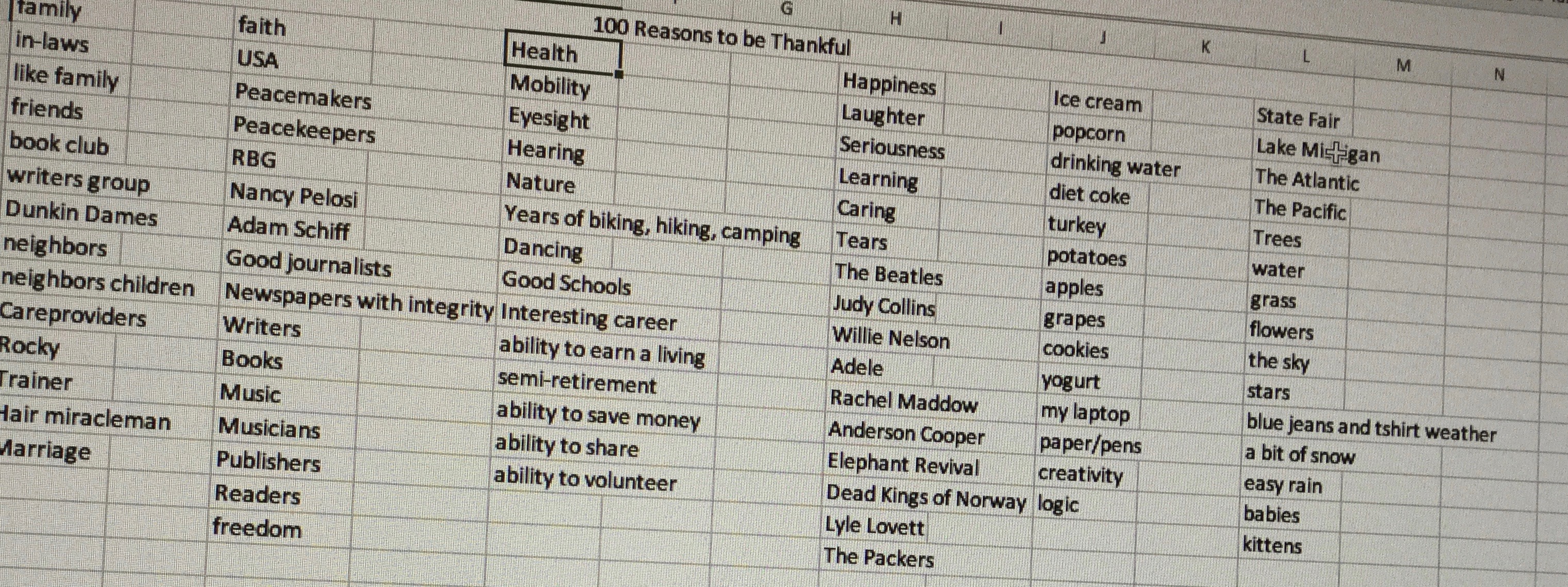
    For weeks I have noodled around the idea of posting a simple list of the people, places, abilities, things, conditions, blessings to bring meaning to this year’s Thanksgiving day.  An introvert with a history of over thinking added complexity to the simple list. Capturing one hundred reasons to be thankful posed a bountiful problem: Do I capture family as one listing or name everyone? The same thought rumbled around for friends, for neighbors, and friends who play multiple roles. Should individual writers be called out or tumble them together. And what about music? Does the list become trivial with additions like homemade caramels and fresh popcorn? What about specific brand call outs?

    My expectations for this Thanksgiving were not very high. It is a holiday that traditionally is celebrated by all of us in the U.S. The slow slog toward a nation divided topped by the trauma of impeachment hearings had me dragging my feet while approaching the common table. Friends do their daily grateful lists, but that habit didn’t stick any better than water exercise or keeping a drawer of perfectly rolled underwear ala Marie Kondo.

    The nerdy spreadsheet used to record one hundred reasons to be thankful could be filled with the names of people, pets, foods, books, music and such to flesh out section and become quite a document. My self-editor is constrained by assuming you would want to be amused or impressed if those columns were offered. Many of us have a richness of reasons to be thankful—love, family, friends, a place to call home, jobs, talents, faith, a beloved nation. And responsibility to extend another’s list. Needs extend 365 days a year.

    Happy Thanksgiving.

    IMG_0343

  • The Kids aren’t Here

    Our family includes many teachers, most in public school. Our kids have attended public schools, parochial schools, private schools, been homeschooled. Homework and talking about school happens at the kitchen table, in the car, while raking leaves.

    It was a surprise that a school system where I have volunteered is struggling with absenteeism of 32 to 50 percent . And that reflects the national pattern of over 8 million U.S. students missing nearly a month of school each year. At this rural school there is poverty, students are widely disbursed, transportation options are limited. There are stories about kids needed at home to help care for siblings or other family members. Anxiety or bullying issues make attendance difficult.

    In general, some parents feel schools don’t meet their kids’ needs. Some parents find the public education system to be monolithic in protecting traditional, seats in the chairs methods when other models exist. A teacher I respect told me that the process of pushing bright, unorthodox kids to adjust to rules that are necessary for control in classrooms of 28 students is sad, but ultimately prepares everyone for living in the real world.

    School representatives cite anecdotal reasons for kids’ absenteeism. There may not be a ride available if a bus is missed. A doctor’s appointment can be an hour drive from school. Parents don’t feel their kids miss much if they stay home. The family needs to be away to care for relatives. A child is needed to care for younger or older relatives. The parents plan an extended vacation. Some claim to intermittently homeschool. A child is being bullied and administration is not responsive. A child suffers from mental health issues with no help during the school day. Travel for extracurricular activities eats up hours. When bad grades start, kids know they’re bound for summer school and give up.

    Across the larger education sector, how does a child miss 30 days of school without prompting a remedial plan? How does a school system support learning in one-third to one-half of their enrolled students who are not present? What do students need to learn today and how is that delivered? So much money and so much policy maintain traditional archetypes when other societal archetypes are adapting or falling aside.

    Schools are not unlike trains running on tracks installed a hundred years ago. There are reasons old rail beds have become hiking and biking trails. Like other social systems, the pathways to completing an education relevant now, and in the future, have changed.  School buildings, curriculum, teacher preparation systems, and teaching methods need dramatic review and overhaul. Fewer test scores, more involvement in the big world.

    The question is not where are the kids, but how can we be sure there are good reasons for them to be here?

    IMG_6266