
I’m A Gamer

Juan Jose guffaws, “That’s NOT a gamer, Mom.”

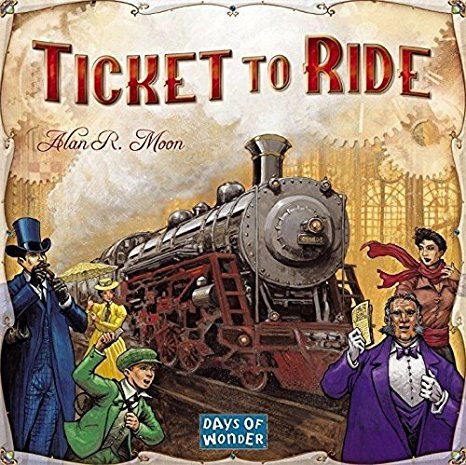
All three people in my household agree with each other that I’m addicted to the Ticket to Ride app on my phone. It’s the only game application that I have downloaded. It’s my secret pleasure, though it isn’t such a secret, when I tell them that I’ll be in the house as soon as my game is over. I sit in the car while Jody, Juan and Crystel unload themselves and make their way into the house.

I’m not convinced that I’m addicted. Though, one day I did cancel the app three times only to download it again.

Ticket to Ride, has brought me to a new understanding of teenage boys and why they like electronic games.

I’m totally sucked in when I’m playing. Voices in the house are just that—voices. Time drifts away. Once in awhile, I hear Crystel above the din saying, “Language, mom. Language.”

It is true that my vocabulary has grown since playing Ticket to Ride.

At times, Jody will think that I’m talking to her until she realizes that I’m having a conversation with my phone and these unseen people who I’m playing against.

Once another player (there are 3 other players—all anonymous) typed, “edigrazia sucks.” I had intentionally blocked their train route to gain advantage. I flinched. After the game, I quickly changed my profile name, edigrazia to just numbers. I felt more hidden, more anonymous. Currently, my profile name is juegodetren (playthetrain). I told Juan and Crystel that now the other players think I’m Hispanic. I even went on Google translate to get the spelling right.

“Oh, mom,” they said, shaking their heads.

Jody recently sent me a picture of a grandma gamer. “Maybe it’s good for your brain,” she said.

I think she was attempting to come to peace with my gaming, although she got upset the other day.

In our driveway she sat in the police car waiting for me. We were volunteering that evening for Police Reserves. I joined her in the front seat but asked her not to leave the driveway until I was done with my game. Sometimes, a quick change in web address will kick you off the game. And, I had an edge. I thought I might win this one.

Jody logged us into the police computer. I didn’t observe her because I was focused on my game. She pulled out of the driveway and it happened. I was kicked off.

Later that evening, dispatch was calling 2662 to respond to a complaint of a barking dog. We didn’t pay any attention because our call sign is 2552. There was a bit of confusion with dispatch and the sergeant. After some checking we realized that we were signed in as 2662.

Fortunately, being a police reserve officer is a volunteer position. You can’t fire a volunteer…or can you?

All because of juego de tren?


What Work Would I Do if I Were an Immigrant?

Olga*, 42, was an architect in the Ukraine and now she is a homemaker. Gina, 28, was a civil engineer in Venezuela and now she is a server. Deqa, 32, was an accountant in Somalia and now she works as an assembler. When I tutor these adult English Language Learners, I often consider what it would be like if the situation were reversed and I were the immigrant. What work could I do?

I’ve made my living as a writer and a teacher—work that requires a good command of the language, both written and spoken. As a marketing communication writer, understanding connotation (e.g., ‘cheap’ vs. ‘inexpensive’) and nuance (e.g., the perspective of suburban mothers vs. that of urban mothers) were key to being persuasive. Since project management was a big part of my work, I developed schedules and budgets and coordinated the efforts of several other team members.

As a teacher, I’ve needed to use clear, simple wording and examples that would help someone comprehend a word or concept. I’ve had to be quick with alternative explanations, too. When I tutor immigrants, I am also teaching American culture as well as English language so I must remember not to make assumptions about anybody’s worldview or beliefs.

If I lived in Ukraine, Venezuela, Somalia, Mexico, Thailand, Ethiopia, Vietnam, or any of the other places my students come from, I wouldn’t know those languages and cultures well enough to make a living as a teacher or writer. My M.A. in English would be irrelevant, just as Olga’s, Gina’s, and Deqa’s degrees are.

When I review my non-language-based skills, my list is short and sounds like the work my students do: cooking, cleaning, factory work, or stocking merchandise in a store. With time and a bit more knowledge of language and culture, I could take care of children or infirm adults. As my language improved, perhaps I could be a sales clerk, wait tables, or drive a cab.

But professional work in which I use my communication, analytical, and organizational skills would be closed to me. What also would be lost to me is the respect that goes with having a professional career. If I were an immigrant with poor language skills, most people would assume I was stupid and uneducated—nothing more than the cleaner or babysitter I appeared to be.

If I were an immigrant, I wouldn’t want to be pitied for the challenges of learning a new language and culture (and neither do my students). I would have chosen to emigrate. Or maybe I’d be a refugee who didn’t want to leave but needed a safe place to start over. Either way, before I moved, I would have been aware that it’s hard to learn a new language and work in a foreign country—the bare minimum needed to survive. If I missed my homeland, was lonely, felt disrespected, or experienced outright hostility, it would be mine to deal with. In time, I could hope that safety, security, and a better quality of life would come.

When I work with student immigrants, I keep in mind that it’s hard to do what they do, even though they chose it. I admire their grit, persistence, ability to work toward long term goals, and overall resilience. I wonder if I would have the same qualities if I were starting over in a new country?

*All names have been changed to protect student privacy.

Are You My Mother?

In the classic children’s picture book Are You My Mother? a newly hatched bird falls from its nest and wanders about asking that question of a kitten, a hen, a dog, and a few inanimate objects. He is clueless about his own identity and terribly lost.

You may have been nurtured by a mother possessing all the perfection of Caroline Ingalls or struggled through childhood with a parent who took lessons from Hamlet’s Queen Gertrude. For most people growing up in Mom’s kitchen fell in a more safe and boring middle ground with measured opportunities to learn about yourself and the world. A place where Mom, trusted adults, books, television and other kids helped answer questions whether insignificant or intense.

The maker of peanut butter sandwiches, enforcer of daily tooth brushing, comforter of physical or emotional injuries, was just a woman who happened to be older than you. She wasn’t gifted by the gods with amazing knowledge, a graduate of a secret parenting program, or anywhere near perfect. She didn’t know why 9/11 happened, how to stop social injustice, who to call about global warming. Her job was to make sure you felt loved and protected, often difficult work in an imperfect world.

Discovering that your mother has a masters in labor economics, hides a bag of bodice busters in the closet, holds strong feelings about mutual funds versus annuities, was married before she met your father suggests a richness in this woman’s life that has nothing to do with your existence. This is the school where she learned the mirepoix that flavored every scold, joke or counsel.

Even when the person who mothered you becomes too old or fragile to cook a really good dinner or read a favorite author without help, there will still be unknowns to explore in the woman who taught you to fake burp, to connect cables on a sound system, to ask your boss for more responsibility, to speak in many voices so your child giggles as you read Are You My Mother?.


Reprinted from cynthiakraack.com May 9, 2015