
It Happened Like This …

Crystel and Tio Scott Photo by Tia Anna

Fortunately, or unfortunately, depending on how I choose to look at it, I have many personal examples when I hold employee meetings or talk with my children regarding undesirable behavior.

This past week I met with employees in Grand Forks, North Dakota to discuss profanity in the workplace. In meetings, I first try to establish that I’m not much different from who they are. My position today as a Human Resources Manager was not where I started. I began my career more than thirty years ago, running an inserting machine on the night shift, was promoted to lead person, then Supervisor.

I told the employees that when I was a supervisor, I would say,“What did you f..k up now?” when I dealt with a challenging employee who was constantly making mistakes. My boss informed me that my language was not appropriateEven so, the next night before I even knew it, before I could stop myself, I said the exact same thing to the exact same employee who once again had screwed up. This time, my boss made it clear that I would be fired if it happened again.

I had heard that profanity was a sign of a limited vocabulary. Whether that’s true or not, I don’t know. What I do know is that it took me concerted effort to stop swearing. It certainly was embedded behavior.
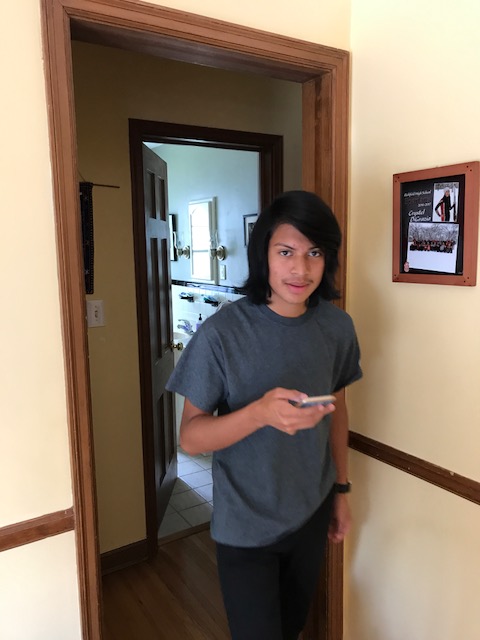
Juan Jose

Recently, our employee meeting was focused on hygiene in the workplace. Our manufacturing plants are Safe Quality Food certified, meaning that we are held to a high standard when it comes to conditions on our manufacturing floor. I used the example of my father coming to one of my brother’s football games without changing from his farm clothes. They laughed watching my face turn red at the memory. “Whatever you are doing before you come to work, change into your work uniform and your work shoes. Don’t bring the dirt from the fields in here.

“It happened like this,” I said, to Juan Jose and Crystel, when I was teaching them about why bullying was wrong. I began by telling them how I bullied a kid mercilessly and often was in fights in middle school. “Did you ever run away from home?” Juan asked. “Once,” I said. “I was going to hop a train. I can’t imagine you or Crystel ever running away. Even parents want to be adopted by me and Mama Jody.” I paused. Well, unless it’s drugs, alcohol, or sex, I thought but didn’t say. Then again, if that happens, we’ll deal. I’ve got examples of that too.  


16 ½ Things I Love About Summer

1. Early morning walks around the neighborhood (a.k.a. my own tour of gardens).

2. Strawberries, peaches, and cucumbers with dill in sour cream. Burgers/brats/shish kabobs on the grill. Homegrown tomatoes and sweet corn in August.

2 1/2.  Picking fresh herbs from my patio pots: basil for caprese salad, fresh mint for mojitos, and cilantro for quesadillas.

3. Waking up to birdsong at 5:30. Being awake and refreshed when hardly anybody else is up. Adding that extra hour to my day.

Mears Park, St. Paul

4. Cutting through Mears Park, along the man-made stream on the way to the St. Paul Farmer’s Market on weekends.

5. Walking to get an ice cream cone from the Grand Old Creamery.

6. Feeling bathroom tile that’s pleasantly cool to my bare feet—not frigid—so I don’t have to hop from one throw rug to the next.

7. Sunning with a book and swimming at Schulze Lake in Lebanon Hills Park.

8. Grabbing Wednesday night supper from the food trucks at the Nokomis Farmer’s Market.

9. Fireflies in late June.

10. L o o o n n g days that stay light past 9:30 p.m.

11. Heat lightning.

12. Road trips—leaving early with a sack full of snacks and a cooler packed with cold drinks. Passing rippling fields of impossibly green corn and soybeans. Pink, purple, yellow, and white wildflowers tumbling across ditches.

13. Drinking wine and reading after dark on the front porch.

Powderhorn Art Fair, Minneapolis

14. Art fairs bursting with jewelry to adorn me and artwork to adorn our home.

15. Outdoor dining at area restaurants—in hidden shady gardens, improvised patios framed by flower pots, or even at tables three feet away from traffic.

16. Drinking beer (don’t tell the park rangers) around the campfire we don’t really need and seeing a breathtaking number of stars come out overhead.

It Wasn’t My Finest Moment

“It wasn’t my finest moment,” I told the kids. Juan and Crystel were eating at our kitchen island.

Juan looked up briefly. “I was thinking about that,” he said.

Crystel just smiled. She likes a faulty mother.

Jody was gone for the weekend.

Our family volunteers at Loaves and Fishes at Wood Lake Lutheran church once month. Loaves and Fishes is a free meal program that has served those in need across Minnesota since 1981. We’ve been volunteering once a month for three years. “It’s our church,” I tell the kids. For various reasons, we haven’t found a traditional home church. “Church is about giving and receiving, and this is what our family does,” I further explained.

The evening before was our ‘church’ night. When we arrived to volunteer, I was disheartened to see that the cook had changed. I don’t know why that would surprise me. It’s less turnover then I have at work. This would have only been the third cook in three years. That’s not so bad. I just wasn’t ready for it. The cook is a non-profit hired chef. The chef plans menus, orders food and manages the volunteers, who sign up online as I did.

Juan, Crystel, and I put on our aprons and hairnets. I asked the twenty-something cook what he’d like us to do.

Juan turned to me and said, “What did he say?”

“We are going to serve coffee.”

His eyes lit up. “All three of us?” His voice was full of hope.

The last time we were at ‘church’, I let Juan skip out and go home to finish a homework assignment. Wood Lake Lutheran Church is only three blocks from our home. There was plenty of volunteers and he wasn’t being particularly helpful that evening. Tonight, I had told them before we arrived that if anyone left early, this time it would be Crystel. It was her turn. That was my mistake. Allowing Juan and Crystel to leave early. After all, this was church. We were here for the sermon.

Most times there is a shortage of volunteers and there isn’t even a question of leaving early. Everyone has a job. Everyone is needed. I often had pointed this out to Juan and Crystel, “What if we wouldn’t have come tonight? Who would have helped with dishes? Or served? Or cleaned up?”

Juan knew what it meant if three of us were going to serve coffee.

“You know,” he started. “I know it’s Crystel’s turn to leave early and I’m okay with that. But maybe, just maybe, you could serve coffee by yourself?”

“We’ll see,” I said.

A finer moment.

There were five servers on the line and one person in back to wash dishes. I left Juan and Crystel to serve coffee while I went in back to dry dishes. After a flood of people went through the line to be served, I came back to check on Juan and Crystel.

Crystel raised her eyebrows. “Just wait,” I said. “I’m going to have something to eat and we’ll see.”

I regarded the five volunteers on the serving line standing with a utensil in hand or using the counter as support. I got my tray and sat down.

“Okay, Crystel,” I said. “You can leave.”

She jumped up and was gone.

“What about me?” Juan asked. “Look, they’re not doing anything.” He nodded to the servers.

I had already noticed them and it was starting to irritate me. The young people on the line were probably fulfilling a service learning requirement for college. They weren’t real volunteers … like us. They needed to be here. They were getting something out of it.

“Go ahead.”

From where I sat, I watched the clean dishes pile up because there wasn’t anyone drying and putting away. I served the occasional person who wanted coffee, milk, or water. The pile of dishes continued to grow. It occurred to me that if I wouldn’t have let Juan and Crystel leave that I could have been back there helping. Now I was bound to my station.

When I got home, I startled the children. They looked at the time.

“You’re done early?” They both said at once.

“No. I left.”

“What?!?”

“I left.” Even as I said it, I was wondering, who does that? Who leaves a job they volunteered for just because they got mad that people weren’t helping? If you’re a volunteer, aren’t you a volunteer because you love giving back? Because you love to be of service?

“Volunteers were just standing there, and dishes were piling up in back and I decided that I wasn’t going to dry them. I just left.”

Juan and Crystel didn’t say anything.

It took me twenty-four hours, but I realized that we had gotten away from the message, the spirit of volunteering, of giving back.

“Guys, no one goes home early anymore. No matter how many volunteers come,” I said. “It’s what it is. It’s our church.”

Inventing a Life

During recent conversations with friends, I realized that each of us is considering how to reinvent our lives. One is widowed at 65. Another’s ailing father recently died, ending her time-consuming caretaking responsibilities. A third friend is trying to understand what retirement will look like. I’m contemplating how my life will change when my oldest son moves to the West Coast in a few weeks.

The widow said, “What do I do with all of the expectations I had?” Unspoken is how devastating her loss is. Her best friend is gone. Her children live out of town. This is not what she imagined for her life.

The friend whose father died now has the ability think about how she wants to use her free time. She said, “Now is the time to enlarge my circle of friends and activities. I’m going to need them as I get older.” Unspoken was the awareness that some friends might move away—to warmer climates or to be closer to grandkids—and some will get sick or die. During the next 30 years, the ranks will thin out. Better to cast a wider net.

My semi-retired friend is also considering how to enrich her next 30 years. She already has a full life—plenty of friends, her writing projects, yoga, biking and more. She asked, “What experiences do I still want to have?”

I don’t have answers for my friends, but I do understand the questions. Numerous times, I’ve had to re-envision my life.

Sometimes I’ve embraced the need for a major life change, like when my husband and I decided to downsize and move from the suburbs to the city. We eagerly searched for a new house and tried to picture ourselves in a variety of neighborhoods. We were seeking a new lifestyle, and I was excited about the possibilities.

Other major changes were thrust on me, like family illnesses. When my younger son severely injured his knee and needed to rehab with my husband and me, we all had to figure out the new dynamics.

How odd he must have felt to move into one of our spare bedrooms at 25. He’d been on his own and managing well since he was 19. While he was bedridden, we cooked for him and helped him wash up. He could make his own health care and financial decisions, but little else was under his control at first. When he wanted privacy, he even had to ask someone else to close his door.

Seeing him grimacing in pain and knowing that I couldn’t fix that was hard for me. I also had to walk the line between suitable caretaking like fetching ice packs or water and fussing too much. None of us knew what the next day or next week would bring, but I knew we’d figure it out. And we did.

Image taken by Daniel Schwen. Made available through Wikimedia Commons.

Some big changes are mixed blessings, like my oldest son moving out west. He and his significant other have dreamed about new opportunities for him and a well-regarded medical residency program for her. After months of uncertainty, their life is unfolding as they had hoped. I’m excited for them and think the Bay area will be fun to visit. But I’ll really miss them and know our time together will work differently. We won’t have the impromptu dinners and walks we all love. Instead, our future visits will be planned well in advance. We will need to create different rituals for birthdays and holidays. Inevitably, he’ll be far away and miss out on some events, like going for a beer with his brother, hearing my husband’s band perform, or attending one of my publication readings.

Whenever I’ve undergone a major life change, I’ve had to invent a life that better fits my new circumstances. That requires emotional energy, and sometimes that’s hard to find. But I’ve been separated from family before. My husband and I moved away from my Ohio family nearly 30 years ago. I know a lot about maintaining strong long distance connections.

So I’ve begun thinking about how we can use phone calls and FaceTime to maintain close ties with my son after he moves. I’ve checked out airfares. Bit by bit I’m inventing the new shape of my life.