The Makings of an Extraordinary Pie

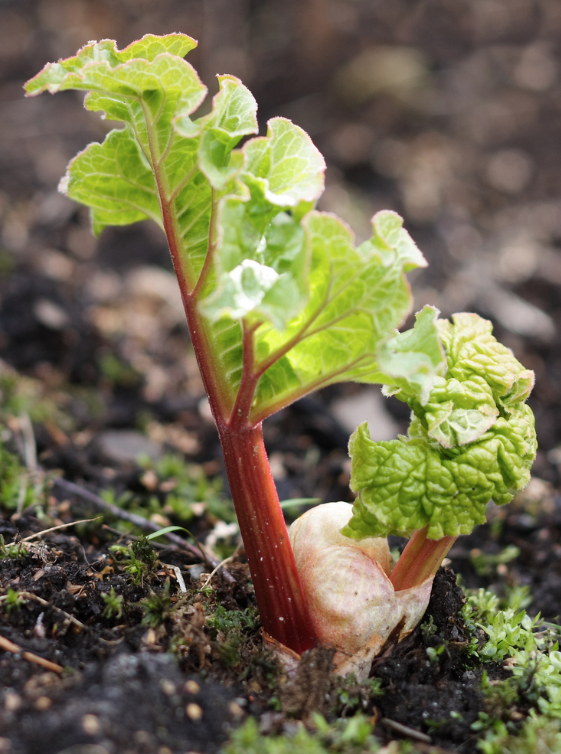
Photo by Miika Silfverberg - originally posted to Flickr as Young rhubarb

Photo by Miika Silfverberg – originally posted to Flickr as Young rhubarb

It was the sure sign of spring—those first green tufts of rhubarb pushing their way through a patch of the garden that may just a month earlier still have been covered with snow. After seeing the rhubarb, we knew the growing season would soon follow and the garden would once again be full of green and growing things. With their agrarian roots, my parents both tended the garden, but it was my mother who found a use for the rhubarb.

She showed my siblings and me how to tame its tartness by dipping the stalks into a cup of sugar. I imagine that her mother may have shown her this on the Iowa farm where she started her life. Picking the pinkest stalk available, I would dip one end into a cup of sugar so it was completely covered with the miniscule crystals of sweetness, the juice from the cut end of the stalk leaving just enough moisture for the sugar to stick to; I’d bite off the coated end and immediately taste a tart and sweet mixture of flavors that made my mouth pucker in delight.

Screen Shot 2015-08-27 at 10.53.59 AMOf course, rhubarb is the perfect conduit for sugar, as proven by one bite of my mom’s rhubarb pie, a particular favorite. My mother and I would pick a variety of stalks—the ruby red ones, the ones that were both pink and green, and then a few that were perhaps a little too green. But mixed with flour, sugar, and butter, the mixture would meld together into a tangy, sweet concoction that tasted perfect between the layers of a flaky pie crust.

Admittedly, rhubarb is not the most popular of vegetables. I believe the reason we may have had it was because it was a food that the earth could provide, and in my parents’ upbringing, no food went unused. Even a vegetable that needed a great deal of sugar to make it palatable. Now as I see rhubarb come back in my garden, spring after spring, I am reminded of that some things will always be.

But in truth, I let this harbinger of summer go to waste. I get excited about its growth, but don’t pick the stalks when I should, always thinking that I don’t have enough time for pie or muffins or even a simple rhubarb sauce. Soon their leaves start to turn yellow and their stalks shrivel, as if shaming me. I think of my parents and their disdain for waste. I look at the waning crop and admonish myself to be a better steward of this steadfast plant. Perhaps I should be gentler with myself, remembering that my mother baked pie when she was off from teaching school in the summer and had more time to show me all the steps to baking a pie—from mixing the filling, to rolling out the pie crust, and knowing when the filling was bubbling up just enough to tell us it was done.

***

After my mother had moved out of my childhood home with its massive garden, we went for one last look before the closing sale. Surveying the garden, which was overrun with weeds, I asked my mom, “Do you want anything from the garden?”

“Will you see if there is any rhubarb?” she asks. Sure. And there is, among the stinging nettle, wild daisies, and bindweed. Of course there is rhubarb. There always has been. I gingerly make my way through the weeds and begin breaking stalks off. “How much do you want?” I call up to my mom, who’s watching from the deck. “Oh, I don’t know, a few stalks,” she answers.

I pick a fistful of stalks, and not eager to stop, I get a few more, knowing that this rhubarb, the last that we will pick from this garden, will make an extraordinary pie.

The Little Free Library Saved My Camping Trip

At 11 p.m., the tent, sleeping bags, lantern, bin of dry food, and bug spray were in the car. Early the next morning, we were driving to northern Wisconsin for a four-day tent camping trip. But wait! What was I going to read? All of my books were on my iPad and it would be pretty hard to recharge it while camping.

As a reading addict, I get panicky at the thought not having at least three books to read when I go on a trip. Barnes & Noble wouldn’t be open before we left. Amazon couldn’t help me.

For many people, being without books during a camping trip is no problem. There’s hiking. Swimming. Sitting by the fire. Eating s’mores. Stargazing. And we do all of that.

Lack of old-fashioned paper books would really put a damper on the trip.

I love losing myself in a story and there are lots of opportunities to read during a leisurely trip like camping. When the birds wake up the campground at 5:30 a.m., I like to burrow into my sleeping bag and read for a while before wrestling into clothes and walking down the road to heed nature’s call. For me, swimming really means reading on the beach and jumping into the lake occasionally to cool off. In the late afternoon, it’s nice to have a beer and read before we make dinner. After the dishes are done and we’ve gathered kindling for the fire, I’ll read a little more before the light fades.

If we delayed the trip for several hours until the bookstore opened, we would arrive too late to have lunch with a friend who lives near the campground.

Inspiration struck—I could borrow books from the Little Free Library!

IMG_1344The libraries dot my Minneapolis neighborhood. A Little Free Library steward makes or buys a house-shaped box, stocks it with books, and erects it in the yard. Patrons can take book or leave a book anytime. If the steward registers the library, it will appear on the world map the Little Free Library organization maintains on its website.

Little Free Library is a grassroots movement begun in 2009 by Todd Bol of nearby Hudson, Wisconsin. He and Rick Brooks, of the University of Wisconsin-Madison, saw the opportunity to build community and share a love of reading. Initially, they and other volunteers donated time and materials and the movement grew within the region. Word-of-mouth, as well as regional and national media, helped spread the idea, and by the end 2011, there were nearly 400 Little Free Libraries across the U.S. In 2012, the Little Free Library became a nonprofit corporation. In early 2015, nearly 25,000 Little Free Libraries were registered across the world.

Screen Shot 2015-08-14 at 10.08.38 AMA Mystery, a Memoir and a Novel

Within blocks of my house, there are eight Little Free Libraries. I visited two and came away with three books to devour on my camping trip: a bestselling mystery, an historical novel, and a memoir I’d read but enjoyed enough to reread. Crisis averted!

After we returned, I put the books back in circulation and added several more from home. It’s inspiring to see how a grassroots organization can do so much to support a love of reading and foster a sense of community.

A 12-Year-Old Girl Following Her Dreams

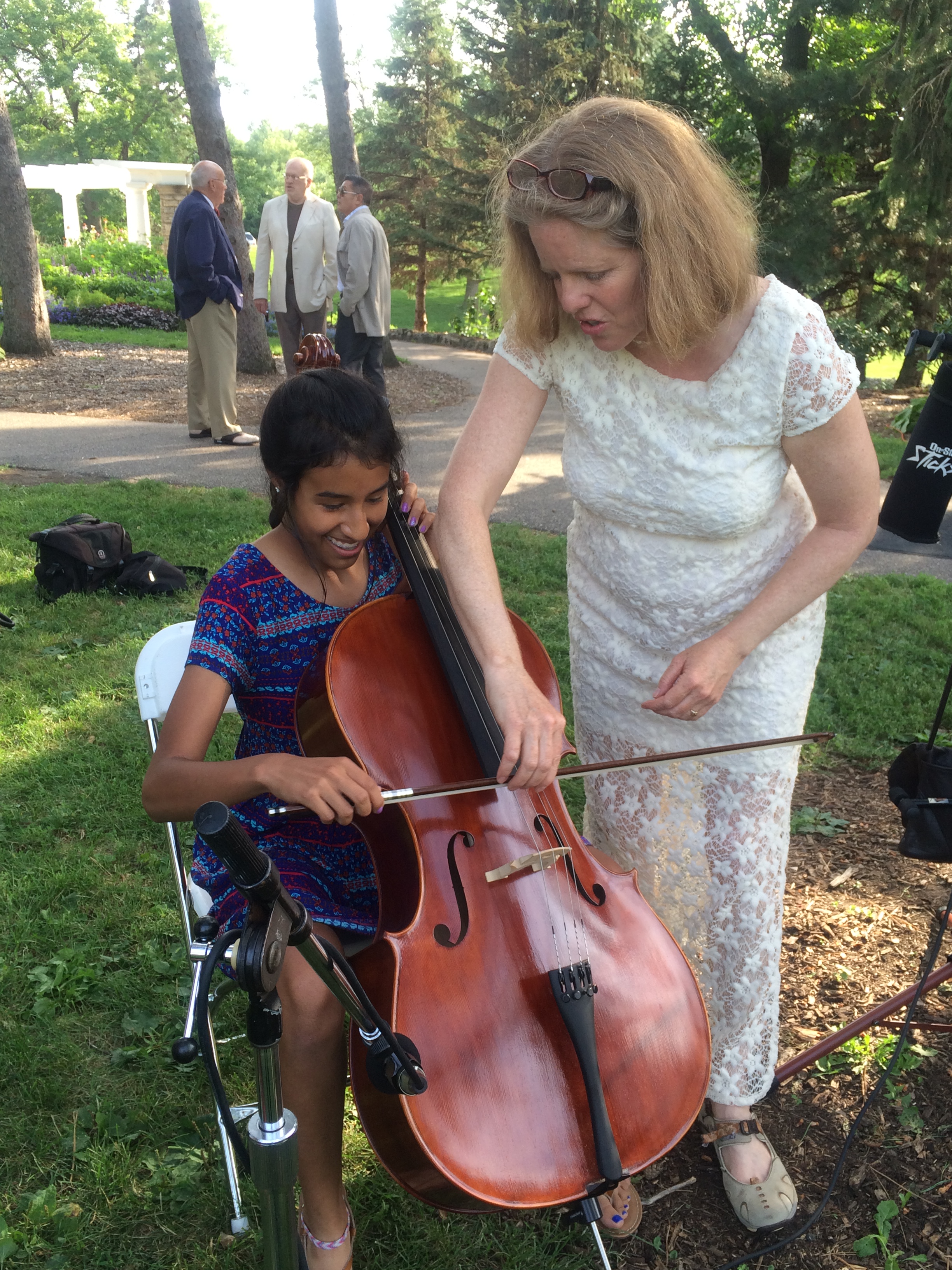
At the Wedding. Touching a Cello for the first time.

At the Wedding. Touching a Cello for the first time.

She says she’s going to Juilliard. Who am I to say she isn’t? Right now she’s in her bedroom playing cello for the second time in her life. The first time was last night at a wedding. She approached the cello player, who then invited her to sit down, and showed Crystel how to hold the stringed instrument. Within minutes she had Crystel strumming, Twinkle, Twinkle Little Star.

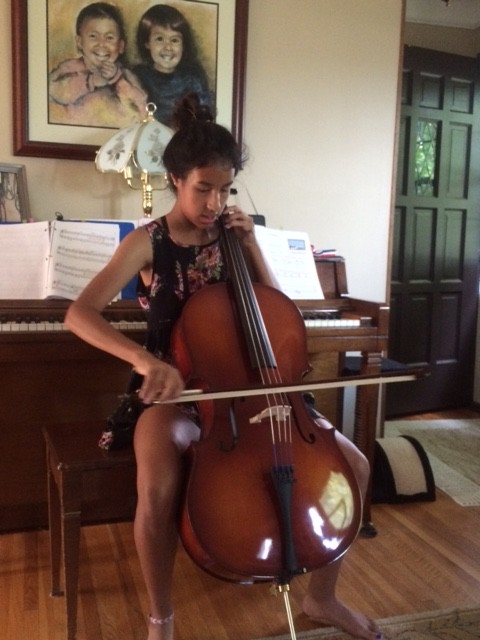
Today, within an hour of bringing home the cello from Schmitt’s, I recognize Amazing Grace coming from her bedroom.

Crystel has wanted to play the cello for eight months. She’s played piano for five years and flute for one. Sometimes, I’m not sure how serious she is about an endeavor or if she is just trying to be the only one doing something. There is no cello player at Richfield Middle School. Her mother (me) doesn’t even know how to pronounce the instrument correctly.

To gauge her seriousness Crystel had to do at least three things. Stop wearing her socks outside without shoes. Figure out the cost of renting a cello and taking lessons. Decide where that money was going to come from.

Being sized at Schmitt's.

Being sized at Schmitt’s.

“You know what I see, Crystel?” I’d say, when I’d see her outside, once again, wearing only her socks.

“What?” She’d respond with a blank look.

I’d nod at her feet. “A nice looking sello.”

“Chel-oh, Mom, chel-oh. Not sello.”

I explained to her that it wasn’t about the socks. It’s that her parents told her time and time again that shoes outside was important to them and that she continued to disregard our request. “How can we know that you can take care of a sello …. ah … I mean, chello, if you can’t follow a simple request?”

After learning the cost for renting a cello and getting lessons, it didn’t bother me about the socks. I’d think, “That’s right, just keep wearing them outside, girlfriend.”

All the while, Crystel has continued to play piano and take lessons. National Piano Playing Auditions gave her a superior rating. Her distinction was Top-Talent Circle rating which means that she could appear before any audience anywhere. Right now, she plays once a month at a soup kitchen.

ah, my cello

ah, my cello

I know she is passionate about piano because Jody and I never have to ask her to practice. On many occasions, the piano is the last thing she touches before leaving the house. We can hear her rushing out a melody while we are waiting for her in the car. It’s like she has to have a tune in her head to carry her to her next activity.

A few months ago, I started noticing that she was putting shoes on before going outside. They were MY shoes but they were shoes nevertheless.

Is she going to go to Julliard? I don’t know. But, one thing I learned about my daughter, is that when she’s decided that she’s going to do something, she does it. At 3-years-old she couldn’t speak intelligibly. Only Antonio knew what she was saying. She went on to become fluent in several languages: English, Spanish, and music.

Grammar Insecurity Is Alive and Well

While visiting with my former neighbors, one of them asked me to explain how to use semicolons. As a writer and former writing teacher, I’ve got that one covered. However, her question opened the floodgates. It turns out that the majority of these smart, well-educated people harbor a secret fear of embarrassing themselves, because they aren’t well versed in some fine point of grammar, punctuation, or word choice.

How does grammar insecurity get started?

I picture some picky 7th grade English teacher or stern editor shaming writers so they feel incompetent. I’m not immune to that fear either—people expect more of you when you write for a living. Although I like correct grammar, punctuation, spelling, and word choice, I’m philosophical about the inevitable errors.

Screen Shot 2015-08-05 at 10.05.02 PMHere’s a secret—the experts don’t agree on the rules.

For example, the rules about comma use depend on what style is being used. If you’re a journalist who follows the Associated Press Stylebook, you omit the comma before “and” when punctuating a list or series. But if you’re an English teacher who teaches the Modern Language Association Style Guide or a journalist taught to follow the Chicago Manual of Style, you would use the serial comma (also known as the Oxford comma). No wonder people get confused about commas!

I’m a big fan of the Oxford comma. This example from Captain Grammar Pants illustrates why I prefer it:

This book is dedicated to my parents, Ayn Rand and God.

(It’s unlikely the author meant that his or her parents are Ayn Rand and God,                          but without a comma after Rand, the meaning isn’t clear.)

This book is dedicated to my parents, Ayn Rand, and God.

(Better! Now all I’m wondering about is why the author is enamored of Any Rand . . .)

The next example isn’t about serial commas, but it’s too much fun to resist:

Let’s eat Grandma!

(How’d Grandma get on the menu?!?)

Let’s eat, Grandma!

(Oh, thank goodness—she’s just being called to dinner.)

The Comma Queen at The New Yorker provides even more insights about commas.

Even when the experts agree on the rules, the rules change. Languages evolve over time.

When I was in grade school, I’d get marked down for splitting an infinitive (the “to be” form of the verb):

To boldly go (OMG—a split infinitive!)

To go boldly (This version keeps both parts of the verb together but it sounds stupid.)

These days few editors concern themselves with split infinitives. English has evolved. Old English turned into Middle English, which gave way to Shakespearean English and was eventually followed by Contemporary English. When was the last time you used “cozening” when you meant “cheating” (Shakespearean English) or “anon” when you meant “soon” (Old English)?

Sharp-eyed readers may notice several errors in this blog. Yeah, I know. I was just testing you!