Everything That Rises Must Converge

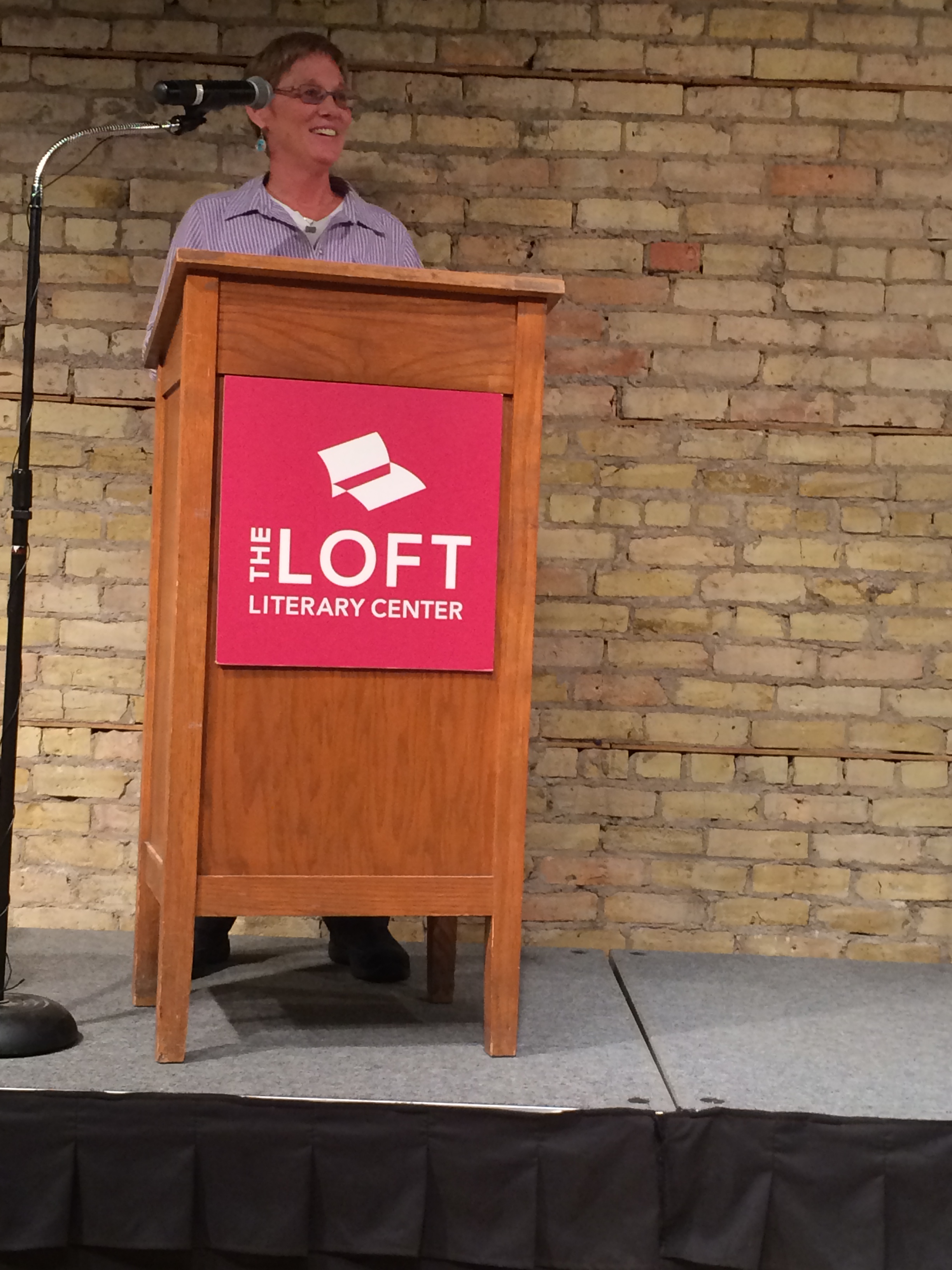
405My experience as a Loft Mentor Series speaker.

It had been going on for some time before I noticed. My daughter was choosing an adult out of the people milling about at the Loft Literary Center after the Mentor Series Reading, taking him or her by the hand, and leading the person to open floor space. Once there she generated a dance routine for the adult to follow. After their two-minute routine was complete, she released the adult back into the gathering and chose a new person. Each person learned and performed a never-done-before dance routine. My son followed along videotaping each jig.

Who is this girl? And what magnetism does she possess that adult men and women will willingly leave the fold (and food) to dance with her? Even Jerald Walker and Mark Anthony Rolo, acclaimed authors and mentors, followed her as did many others.
All I could do was stare and see if anyone needed saving. They didn’t. They were enjoying the girl.

At three-years old, this girl could not talk intelligibly. Part 3 of my memoir, House of Fire, speaks to this. Thank God for the goat, it begins. During one of our camping trips, both my partner Jody and I thought that the other person had the girl. When I understood that neither one of us did all I could think was, The girl can’t tell anyone her name, where she lives, or who her moms are. We sprinted back to the the animal pens, which was the last place we saw her. She and the white double-bearded goat stood in companionable silence, the goat chewing her cud, the little girl waiting for her mothers to return.

The girl was diagnosed with articulation disorder and on two occasions we were asked by the school district to have her tested for autism. Jody and I refused. We were afraid she’d be mislabeled.

I mentioned this to a fellow mentee on Friday night, told her that I was in awe of the girl. She said that the girl just needed the right fertilizer and that Jody and I provided it for her.

I think she’s right.

I thought about myself. How my life’s work has been to be visible, to stand and speak my truth.

All this love, this fertilizer, brought the very best out of the girl and me on Friday night, the night of my Loft mentorship reading.

I recalled a quote,

“Remain true to yourself, but move ever upward toward greater consciousness and greater love! At the summit you will find yourselves united with all those who, from every direction, have made the same ascent. For everything that rises must converge.” Pierre Teilhard de Chardin

Yellow tulips flowers. (3)[1]I did the only thing that I could do when we got home. I presented the girl with a bouquet of tulips that I was given. After all, she gave quite a performance.

Celebrating the Gift of American Citizenship

Sometimes I get discouraged about trends in American culture and politics. But recently, I was privileged to be a part of a U.S. citizenship celebration that pierced my cynical armor and helped me remember that it is good to be an American.

Arwa, a middle-aged Jordanian immigrant, brought a feast to the adult English language learners’ (ELL) class where I tutor. She had just passed her American citizenship test, and she wanted to celebrate with her classmates and teachers.Screen Shot 2014-04-17 at 10.53.18 AM

Learning English is hard. Every time students open their mouths, they’re likely to mispronounce a word, mix up the tense of a verb (I has a cold), mangle an idiomatic expression (We make party for my son), or be misunderstood because their accents are so heavy. They’re subject to constant corrections. To succeed, students have to be thick-skinned and persistent.

Steve, who teaches the class where I volunteer, sets a supportive tone. He leads the students in cheering and clapping for each other. They understand each other’s embarrassment, so they are encouraging and kind—no mocking.

We are teaching American culture as well as language, so we try to foster acceptance of other people’s customs, too. Steve sets up teams so African, Central American, Asian, Middle Eastern and Eastern European students must interact with each other and take part in playful competitions.

So when Arwa passed her citizenship test, it was natural for her to celebrate with her classmates. The other students know how hard it is to persist. Everyone is far from home and misses their family, their food and customs from home, and the ready access to people who understand their worldview. They understand what it means to let go of allegiance to a homeland and embrace a new country.

Sharing food is the language we all understand, so Arwa brought chicken shawarma, homemade hummus, lemon yogurt from scratch, little buns with a Middle Eastern version of pesto, salad, brown bread, and banana chocolate chip bread. She also had chunks of ham, salami and bologna as well corn chips, snack crackers, flour tortillas and soda.

I worried briefly about how her classmates would respond to the food. Some eat meat, some don’t. Some eat pork, some don’t. The only hiccup was that we didn’t have forks. I watched Arwa spoon yogurt onto the bread so I put a dollop of yogurt onto a piece of tortilla. Soon the other students caught on and did the same. The North Africans (from Liberia, Somalia, Kenya, Egypt) recognized and relished the food. The Thai and Hmong students sampled more carefully, but were complimentary. The Hispanic students (from Mexico, Cuba, and Ecuador) spooned food into the tortillas and rolled them up. Everyone complimented Arwa on the food and thanked her. We all clapped and cheered for her because she is a citizen now.

Throughout the spontaneous party, Arwa beamed. She is so proud to be an American citizen. I don’t know whether economic opportunity, war, love, or religious freedom (Islam is the majority religion in Jordan and she wears a necklace with a silver cross) brought her here with her husband and two children. It’s not the sort of thing we ask about in class.

One time I helped her study for the citizenship test. I’m sure many native-born Americans would struggle with the test, and at times, I wasn’t always sure of the answers. She told me that she’d been studying for three years—that’s almost enough for a college degree. How many native-born Americans would work that hard to belong here?

Arwa is so pleased and grateful to be an American. Perhaps she values it more because she worked to hard to achieve it. In the face of her accomplishment and pride, my cynicism about America’s shortcomings fell away, and my faith in the American dream was renewed.

Come for the job. Stay for the walk.

Today it is 71 degrees in Hastings, MN. Over my lunch hour, I can head in any direction for an uplifting three mile walk with a good chance of spotting an eagle.

The Mississippi River and the Vermillion River run parallel to one another and are separated by a 17-by-2.5-mile tract of floodplain forest.

I’m within walking distance of Vermillion Falls. A paved walking/biking trail follows the river in both directions.

Last fall during one walk I found myself at Mill Ruins at Old Mill Park and felt just like I had when I used to skip high school. Happy. The path to Old Mill Park also leads to Adams Park and Bullfrog Pond and to the rest of the 15 mile trail system that loops around town.

Mill Ruins

Mill Ruins

If I head behind the manufacturing plant where I’m a Human Resources Manager, I am in Veterans Athletic Complex and can take a right to follow a paved trail past a plowed field down a hill overlooking a valley.

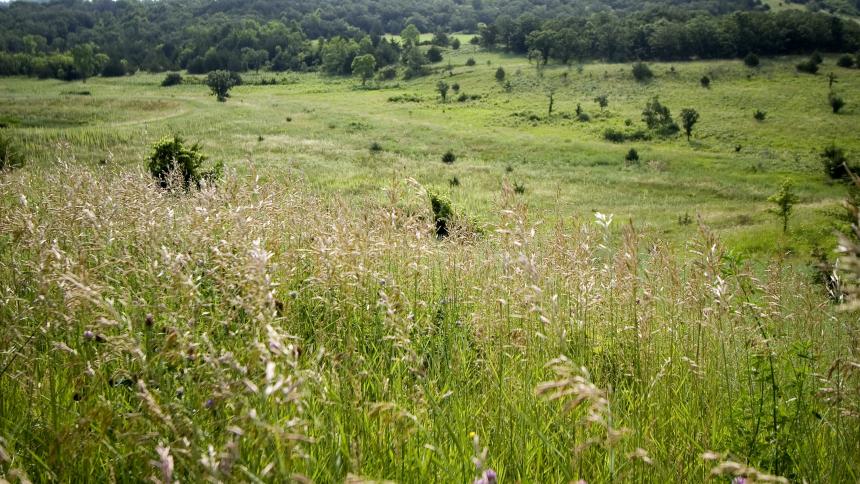
Walking south takes me to Hastings Sand Coulee identified as one of the most biologically important sites in Dakota County. I came upon it all of a sudden. The 2.5 mile long coulee is a former

Hastings Sand Coulee

Hastings Sand Coulee

glacial stream valley. It is registered as a Scientific Natural Area. I walked a grass path that ended at an old cemetery that sits on top of the western bluff. 69 bird species have been recorded at this site.


Recently I started using Runkeeper during my walks. Runkeeper is a free app for your iphone that 28 million people are already using. Track your runs, walks, bike rides, hikes and more using the GPS in your iPhone.

I like the Runkeeper so much – It’s so EASY, so I’ve been using that instead of the pedometer I’m in charge of introducing to our employees next Monday.

Whatever your activity is today – Get Out and Enjoy.

What’s Behind the Wage Gap Between Women and Men?

Recently, my son mentioned that he’s decided to ask for a raise. My immediate (but unspoken) reaction was caution: Don’t rock the boat. Look what a great learning opportunity you have. In this economy just be grateful to have such a good job. That mindset exemplifies a gender difference—women often are afraid to ask for a raise or insist on a promotion.

When I think about my son’s situation more objectively, I realize he’s right. For the last nine months, he has been doing a product manager’s job without the official title or the additional money a product manager would make. Higher-ups in the organization have publicly recognized his efforts, so it is a good time to ask for a raise.

I was surprised to realize how ingrained my caution is. Because I’m aware of women’s tendency to be self-effacing, I thought that mindset no longer had power over me. And yet, I can recall times that I’ve devalued my contributions. I know that women worry about being disliked if they advocate for themselves—I’ve done that, too.

Reluctance to rock the boat is one of the reasons why women’s salaries continue to lag behind men’s.

The pay gap figure that’s often used is that the median earnings of full-time female workers are 77 percent of the median earnings of full-time male workers (Bureau of Labor Statistics).

Often women aren’t confident, effective negotiators. Many times women feel grateful for the job—lucky to have it at all—instead of recognizing the value we contribute. Or women want to be liked and worry that pushing for what we’re due will be seen as being aggressive. There are good reasons for women’s concerns.

A recent New York Times article describes research that validates the persistent, and often unconscious, perception that women who ask for raises and promotions are unfeminine and demanding.

Linda C. Babcock, one of the researchers the article cites, addresses the “apples to apples” argument in her book Women Don’t Ask. When comparing the salaries and negotiating experiences of single men and women who had just earned MBAs, she asked, “When you got your offer, did you attempt to negotiate?” She found that about 7 percent of women attempted to negotiate, while 57 percent of men did. Of those people who negotiated, they were able to increase their salary by over 7 percent.

There are other systemic reasons for the wage earnings gap. Here are some of the common counter arguments rationalizing it:

Women often take more time off – They are more likely to interrupt their careers when they become parents, and they are more likely to be the default caregivers for sick children and parents.

Although I couldn’t find evidence to conclusively confirm or disprove it, this assertion feels true. The trend is certainly true of the women I know. Obviously, if a woman works fewer hours and/or her family leave is unpaid, she will make less money in a year when she has heavy caretaking responsibilities (whether or not she should be responsible for more of the caretaking is a different issue).

But it doesn’t make sense for women to be penalized long-term for shouldering that responsibility. For example, 10 years’ experience should be 10 years’ experience, whether the employee is a man or a woman. If a woman works full-time for five years, then takes off for five years to be with her children, then brings her skills up to speed and returns to full-time work for an additional five years, her pay should be that of a person who has 10 years’ experience. The interruption shouldn’t have a lasting effect, but often it does.

Women often enter lower paying professions such as teaching, nursing and food preparation, and that’s why they earn less.

The low-paying profession argument deserves a closer look. Female elementary school teachers make 90.9 percent of what men make and female nurses make 85.6 percent of what their male counterparts make (Institute for Women’s Policy Research IWPR #C350a). That’s still a wage gap.

Women in high-paying industries also lag behind men. Female physicians and surgeons earn 71 percent of what males in those fields earn. Female lawyers earn 77.1 percent of what male lawyers make.

The size of the gap may vary, but the fact of a persistent wage gap is undeniable.

The gap grows during the span of a woman’s career. If a woman doesn’t make the same salary as a man at the beginning of her career, she is very likely to be playing catch-up at her next job. The lag will compound over the course of her career.

What makes pay equity even more challenging is that employees don’t know the salary range for their positions. Many employers have spoken or unspoken rules that forbid inquiring about coworkers’ salaries, so employees can’t ask without fear of retaliation. The Paycheck Fairness Act 2014 is intended to make it easier for women to know what their counterparts are being paid and give women the data as well as the legal clout to insist on equal pay. But even if salary transparency were legal, discussing income is nearly taboo in our culture.

As history and other anti-discrimination laws have taught us, changing hearts, minds and cultures is even harder than changing laws. Addressing women’s reluctance to negotiate and employers’ subtle bias against women who do seek raises and promotions are the real challenges.