Sewing Lessons

Cicadas have begun their whining buzz. Summer is nearly over, and I’m not ready for it to end. But the Minnesota State Fair helps ease me into fall. One of my favorite parts of the fair is the Creative Activities building, especially the displays of quilts, embroidery and homemade clothing. I love looking at all the clothes, especially the women and girls’ clothes.
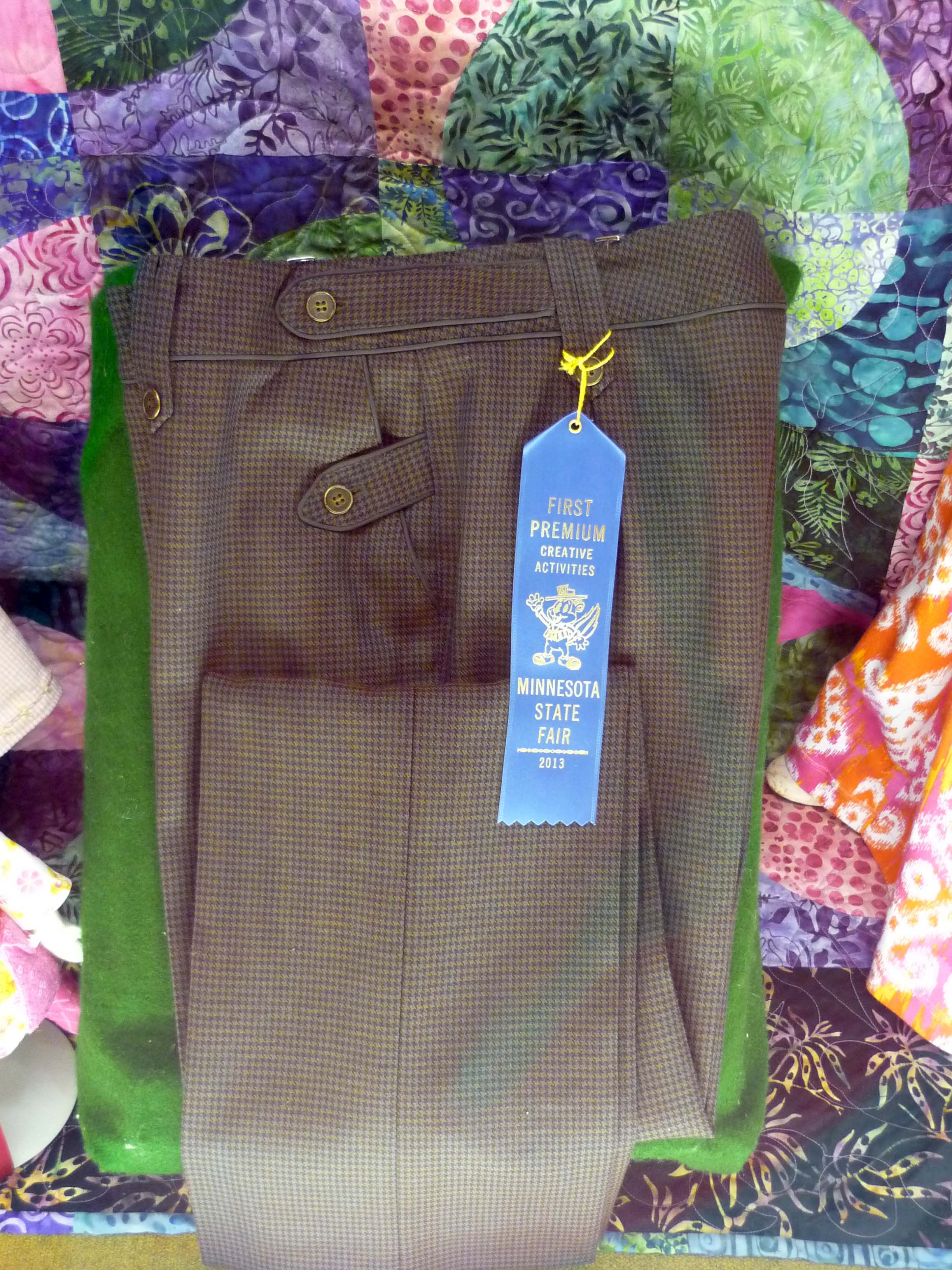
checked pants

Some are so well crafted that they are worthy of designer labels. But others have ambitious designs that are not fully realized. The seamstress (and it is almost always a she) may have chosen a fabric that was too thin and cheap—broadcloth where a challis would have draped better. Or perhaps the topstitching widens gradually instead of being even and regular. Maybe the fabric is an odd choice for a tailored suit. These are my favorite pieces.

Satin Dress

I understand the excitement the seamstress felt when she first envisioned the clothing. Her belief—that if she sewed carefully enough, she could make something worthy of a ribbon at the State Fair—resonates with me.

Green dress

The gap between her vision and the items in front of me doesn’t matter. Perhaps the seamstress feels drop-dead gorgeous when she wears her outfit. Or maybe she simply took pleasure in working with the color, texture and design, just as I did when I was learned to sew in as a girl in Ohio.

The summer I was 10 years old, I rode my fat-tired blue bike to sewing class at the Singer store for eight weeks. It was hot and there was no shade. My bag of jumbled fabric and pattern pieces banged against my leg as I pedaled and sweated block after block for a mile and a half.

Inside, the icy cold store had a cotton sizing smell, like a shirt that’s just been ironed. Unwinding and unwieldy bolts of fabric tilted into the crowded aisles, a feast of color and texture. Shimmery pastel polyester. Dark floral challis. Fine woolen houndstooth checks. Lush jewel tone velvets. Rustling moiré taffeta with its woodgrain texture. Beyond the fabric were the arcane supplies called notions. Stamped tin needle threaders. Rickrack, lace and ribbons. And row after row of buttons—plastic Scottie dogs, domed brass buttons, and sparking rhinestones.

At the back of the store were pattern books and possibilities. Looking over my shoulder, my sewing instructor directed me to the “Very Easy” patterns at the back of the book.  Her pointy fingernail tapped at a V-neck jumper and a simple sailor dress. “Why don’t you write down some of these pattern numbers, and your Mom can help you decide when you come to buy fabric?”

By the time I returned with my mother, I was in love with my vision. I’d spent days imagining the possibilities for the sailor dress pattern I’d chosen: white with jaunty red trim or dusty yellow with navy accents or maybe red with red, white and blue trim. I finally chose tomato red kettle cloth for the dress with white for the collar and red, white and blue ribbon as an accent. For the first time in my life, I was caught up in a rush of creativity and self-expression as heady as that of any artist.

In class, I chafed at the exacting requirements: sewing 5/8”seams that didn’t drift to 3/4” or 1/2”. In the pattern, the darts in the bodice were pictured as sharp narrow angles turned into triangles with a line of stitching, but my first attempt was more like a lightening bolt than a straight fearless line. I was also surprised at how hard it was to sew the back darts, gradually tapering both of them into slender matching crescents. Every thread had to be knotted off tightly and neatly trimmed. But I was determined to master the craft of sewing, so I could bring my vision into being.

Though my head ached from concentration, the armhole facings for my sleeveless dress were still lumpy and irregular, instead of the smooth ovals they were meant to be. My zipper had to be ripped out and re-done three times. I got discouraged as my vision of the dress dimmed in face of the rumpled panels I guided under the presser foot and flashing needle. The dress I imagined was just out of reach, stylish and perfect in my mind’s eye.

One afternoon when the dress was nearly done I was particularly dejected. I knew my dress looked childish and stupid. I was overwhelmed by its imperfections. My teacher noticed my expression and said, “All you need to do is wash this and press it. It will look great.” I wasn’t sure that was true, but I wanted to believe her.

I washed and pressed my dress for the end-of-class style show, and she was right: you could hardly see the mistakes. As I walked across the stage, my dress’s crooked interfacing seams no longer mattered. I felt as chic and self-assured—everything I’d envisioned.

As a city kid, entering clothing for a ribbon at the Ohio State Fair wasn’t part of my experience—I’d never even been to the state fair, since it was three hours away in Columbus. But I didn’t need a ribbon. I was already proud of my achievement. So it wasn’t long before I was planning my next dress. Skirts, long vests, and other dresses followed. My sewing grew more accomplished, but never would have been considered professional.

In high school, I didn’t have as much time for sewing, and I had begun to make enough money babysitting that I could buy most of my clothes. Though my interest in sewing my own clothes had dwindled, my enjoyment of the creative process flourished. During college, I transferred my love of color, texture and design to pottery and jewelry making. In my 20s, I sewed curtains, pillows covers and bedspreads to furnish my various apartments.

Through the years, my interest in making things has not waned. My home is filled with imperfectly rendered projects: a quilt that was too ambitious for my design skills, though it has appealing colors and fabric. Stoneware bowls that are a little heavy. The porch pillows whose pattern was too busy for the loveseat they were on. Halloween costumes that were only basted together and would fall apart if my boys got too rough with them. The small watercolors that were fun to do but just seem amateurish now that I’m done. I don’t mind that these projects turned out pretty well instead of perfect. I enjoyed the rush of inspiration I felt when I first imagined them and the pleasure I took in creating them.

In the Creative Activities Building, I look over this year’s award-winning projects along with the others that like mine, fell short of their maker’s original vision. I hope those optimistic seamstresses discover, as I have, that the thrill of the creative process is the point.
Don’t Ever Give Up!

I was a Loft Mentor Series finalist four times.

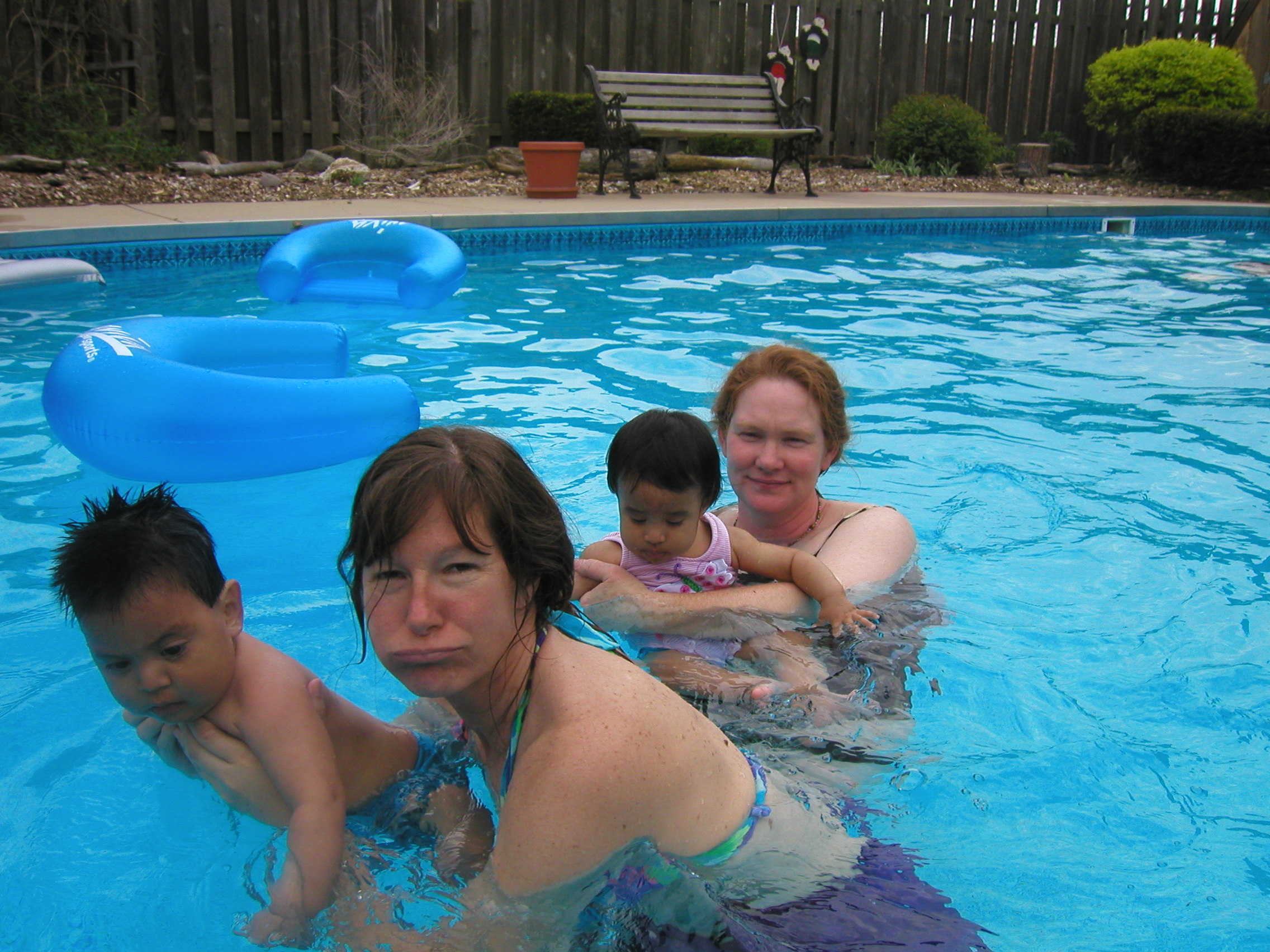
Antonio and Crystel, May 2003 Graduation Party

Antonio and Crystel, May 2003 Graduation Party

This doesn’t count the many times that I submitted to the Loft Mentor Series and wasn’t a finalist.

Because I had been in the finalist circle I knew that I had ‘something’ readers liked. And, that gave me the gumption to keep submitting. I also believed in the Loft Mentor Series and the possibilities that came with winning. (The Loft Mentor Series in Poetry and Creative Prose offers twelve emerging Minnesota writers the opportunity to work intensively with six nationally acclaimed writers of prose and poetry.)

I graduated from Hamline University with an MFA in 2003, the same year that Antonio and Crystel came home. To have the infants at my graduation was important to me. I was birthing an MFA and a created family.

In 2003, I was a Loft Mentor Series finalist in poetry and nonfiction. Ten years later, I’ve become a winner.

Nephew Dan and I cutting our joint Graduation cake

Nephew Dan and I cutting our joint Graduation cake

In those ten years I honed my submission over and over finally landing on “The Trip.” The trip is an essay that speaks of my relationship with Jody, our trip to Guatemala to see Crystel and to bring Antonio home, and our challenges as a same-sex couple who were creating a family. This past year for the mentor series, I added a 4-page chapter, “Fire,” that I revised after taking a workshop with Mary Carroll Moore. The story illustrated family dynamics after I burned my back and required hospitalization when I was fifteen-years-old. In essence, I had scourge and rebirth side by side.

You can have the finest essay and never be a winner in the Loft Mentor Series because you have to be chosen by two mentors, who are stating by choosing you that they want to work with your material.

Jerald Walker

Jerald Walker

Each year that I submitted, I’d research who the mentors were and I’d always wonder if I would be chosen. Jerald Walker and Mark Anthony Rolo  are the non-fiction mentors for 2013. Part way through reading Jerald Walker’s memoir, I thought maybe, just maybe he might pick me. Something resonated with me in his words and though our histories are different, there are also similarities in the odds that we faced in climbing out of our circumstances and that our past didn’t determine our life. Mark Anthony Rolo’s first

Mark Anthony Rolo

Mark Anthony Rolo

chapter describes his mother entering a burning house to save her children (who were not in the house), and how she was badly burned in the process. Fierce love and deprivation was being described in the same sentence. Whoa, I thought. Maybe, just maybe.

Thankfully, my mentors never gave up.

And they chose me.

A week when everyone looks like you

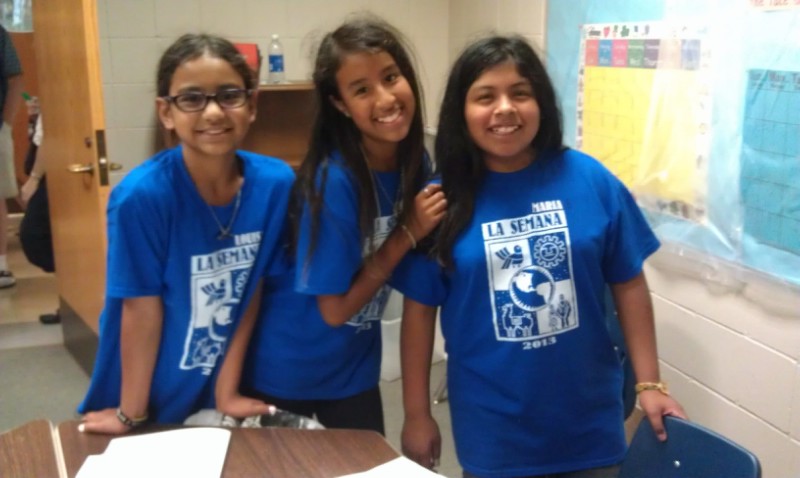
La Semana 2010 Crystel 8 years old

La Semana 2010 Crystel 8 years old

I know even before I get to the high school for the fiesta that I am going to cry at some point during the evening. Antonio and Crystel have been attending La Semana Cultural Camp for a week every summer since they were in first grade. Now fifth graders, they are going to join 450 other children born in over 20 different countries and perform the Latin American dance that they had learned during the week. There would be 25 dances, put on by everyone from first graders to Ayudantes (adoptees who recently graduated high school).  Except when we travel in Guatemala, Latin American Cultural Camp is the only place that I could lose Antonio and Crystel in a crowd. . .  because here everyone looks like them.

Antonio and amigo 2013

Antonio and amigo 2013

If this is my experience as an adult, imagine what it would be for a child to be surrounded by his or her own ethnic origin if only for one week a year. To top that off, all the children are adopted. For the first time, a child doesn’t have to explain him or herself to a new friend. There are no questions. Everyone is adopted.

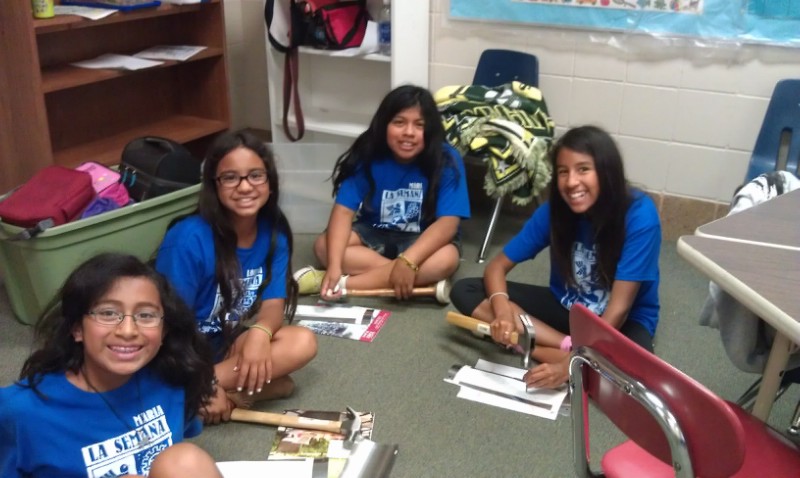
Families travel from 14 different states and Canada to attend La Semana. The adoptees learn Latin American crafts and dances, try Latin American foods, hear Latin American music, and are exposed to written and spoken Spanish. The children also take a class that focuses on age-appropriate topics related to adoption. Most importantly, they just get to be kids with other kids like them.

Crystel and friends up to no good. 2013

Crystel and friends up to no good. 2013

Every year, La Semana, focuses on a country. This year it is Paraguay. Throughout the week, campers explore the culture of Paraguay. Through video and games they get an overview of Paraguay’s food, music, geography, sports teams and animals. At a Paraguayan market and fiesta, campers taste food and drink, create with beads and clay, and play traditional holiday games.

Jody has been at La Semana all week volunteering her time in the craft department. La Semana is successful due to the volunteer efforts of the families of children attending camp. All camp programs are planned and executed by the families involved. There are fewer than seven paid teachers for more than 450 campers. To encourage participation, La Semana requires a parent of kindergarten through tenth grade campers to volunteer in some capacity.

Chicas

Chicas

Jody is already inside Lakeville High School having saved our seat hours ago for the fiesta in the gymnasium. Tears start welling up in my eyes as I see parents streaming through the school entrance holding hands with their young children. The fiesta is a time for the campers to show off their ‘stuff.’ Inside the dressing room, they will be transformed as they put on traditional dress, and the girls adorn themselves with red lipstick, blue eye shadow, and blush.

Crafts are the best!

Crafts are the best!

Jody texts to see if I want to sit and wait for the dances to start. But I don’t. I want to stay in the gathering area and watch everybody. This unnerves Antonio and Crystel to no end because I often do this no matter where we are. “Mom, quit staring,” they will say. Unfortunately, it will be their cross to bear.

This afternoon, I have an opportunity to observe over a hundred Latin American teens and young adults. I witness what Antonio and Crystel will look like in a few years and start to cry. They’re beautiful.

Mammo Whammy

I hate going to the Breast Center. I steel myself and try to be as matter-of-fact as if I’m getting my teeth cleaned or doing some other unpleasant medical chore.

Everyone there is nice. The décor features soft colors and flowery prints hang on the wall. I’m shown to a dressing room and instructed to put on a gown with the opening in the front.

But the presence of too many women, who are scared out of their wits, wondering what will become of themselves and their families, weighs on me.

I change into the raspberry gown and stash my clothes in the locker.

As I wait to be called, I wonder about the other women. Who will be lucky today? Who is waiting for a second mammogram because the radiologist found something suspicious? I avoid looking my companions in the eye. I have no wisdom and very little comfort to offer.

Inside the mammo room, the technician is pleasant and professional. But the whole process—baring myself, pushing my breast on the metal and plastic plate, allowing her to pull and stretch it into place as if it isn’t one of the most intimate parts of me—is dehumanizing.

I hold my breath, wait for the eye-watering mechanical squeeze. Then we repeat the process and I’m done. She says they’ll call if there’s a problem.

I nod and smile and pretend that I’m OK. I try not to let my mind form the sentence, “What if my luck has run out? What if this time is IT?”

The spirits of the women I’ve known with breast cancer travel with me as I get dressed, walk to the parking ramp and try hard not to think about the three biopsies I’ve already had.

I teeter on the brink of fear, but push that feeling as far back in my mind as possible. I know from experience that worrying won’t help.

I hate going to the Breast Center. But I think of Kim, Jane, Lisa and especially Kathy, and so I go. I’ve got a life to live and people to love. I can’t afford not to.

Slouching Toward Retirement

I’m not ready to retire yet.  But if I squint I can see it from here. And I don’t like how it looks.

womanondock Baby Boomer To Do List

1. Figure out a retirement that I want to be a part of.

2. Invent a new approach to assisted living/aging in place.

3. Think up better ways to volunteer/give back.

4. Consider my legacy—what it is and how I can help others understand and value it.

5. Resist irrelevancy, crankiness, and being set in my ways.

1. Figure out a retirement that I want to be a part of. 

Trend specialists are always predicting that Baby Boomers will change the face of retirement, just as we have changed so many other institutions (the workplace, motherhood, marriage, etc.)  I sure hope so. Living in a retirement community where golf and bingo are the main attractions does not appeal to me.

Boomers tend to think we’re pretty interesting, and we assume we’ll remain so in retirement. In fact, being cool is probably our birthright! Of course, we’ll invent a better version of retirement.

But I wonder how excited we’ll be about riding our Harleys across the country, when our backs ache and our knees are going . . . . And that assumes we’ll even be retiring. Financial necessity will motivate a lot of Boomers to keep working past age 65. And who will be taking care of our elderly parents and the kids that might not be fully launched?

OK, OK. That’s WAY too much reality. Retirement is years away. Let me get back to creatively daydreaming about how I want retirement to look.

I want it to look like less work, more fun. I want a smaller place (less cleaning, less stuff), but I still want to have a postage stamp-sized yard so I can garden on a smaller scale. I hope to resume some hobbies I set aside for lack of time – pottery, for example. I’d like to learn how to do raku. Making stuff from paper—cards, collages and so forth. Jewelry and stained glass. Quilting and sewing. Maybe I’ll take up canning. Indulge my foodie self a bit more. Start a gourmet dinner group.

Travel. Maybe I can learn enough Italian so I could teach English in Italy while my husband learns the secrets of Italian cooking. Or perhaps I can study abroad (can grown-ups do that, too?), Sounds expensive. Wait, wait. No reality.  I’m daydreaming here.

Be more random and spontaneous. Take back roads and visit antique stores and cafes in little towns instead of always taking the interstate. Go to movies, concerts, plays, art galleries that I’ve never heard of. Decide on a Thursday to visit an airline fare sale city on Saturday—just to see what’s there.

I’ll definitely keep on writing whether or not I get paid. I’ve got a lot more stories to tell and perspectives to share. Besides, I’m a writer to the bone—I can’t stop even if I want to.

Keep thinking and learning. I’ve never understood how you retire your mind.  I’m way too curious and I love learning new things. I hope to audit college classes, take workshops, and read voraciously.

I intend to continue volunteering, but perhaps in different ways (more to come about #3).

I plan to keep active and healthy, but I don’t want to be obsessed with it. I’m unlikely to spend more than an hour per day on keeping fit.

I want to help my kids fix up their homes when they buy them and play with their kids if they have some.

Oh yeah, I’m still hoping to have some lasting impact on the world. I figure I’ve got at least 20 more good years. I ought to be able to change the world in that amount of time, right? I know, I know. Tick tock.

Well, except for the last one, these are pretty modest retirement goals. Sounds like a life I could live.

What do you hope to be doing?