• Plan A Do-It-Yourself Writing Retreat

    Many writers daydream about getting away from it all so they can spend focused time writing—no interruptions, no responsibilities—just writing for hours at a time. Often making that daydream a reality seems hard:

    • That memoir workshop in Ireland sounds wonderful, but who has that kind of money?
    • Places like Ragdale have a rigorous juried application process. Most writers won’t be awarded a residency.
    • Getting away for a week isn’t realistic for writers with day jobs and/or significant family responsibilities.
    • Attending professionally run writers workshop and retreats can trigger an attack of insecurity (I’m not as talented as all of those other writers. What if the people are cliquish and pretentious and I don’t fit in?)
    What a writers retreat looks like in my daydreams
    What a writers retreat looks like in my daydreams

    Invent the Retreat That Fits Your Life

    Several months ago, the writers group I belong to began brainstorming how we could put together our own writers retreat, and we had the following criteria:

    • We wanted a long weekend away instead of week-long retreat.
    • The location had to be affordable.
    • We wanted a place within an hour or two of the Twin Cities, so we wouldn’t spend too much of our precious time driving there and back.
    • Each of us wanted her own room, and ideally, the place would have a kitchen and some communal areas. Staying in your room all day and all night could get claustrophobic. Having a place to walk would also be good.
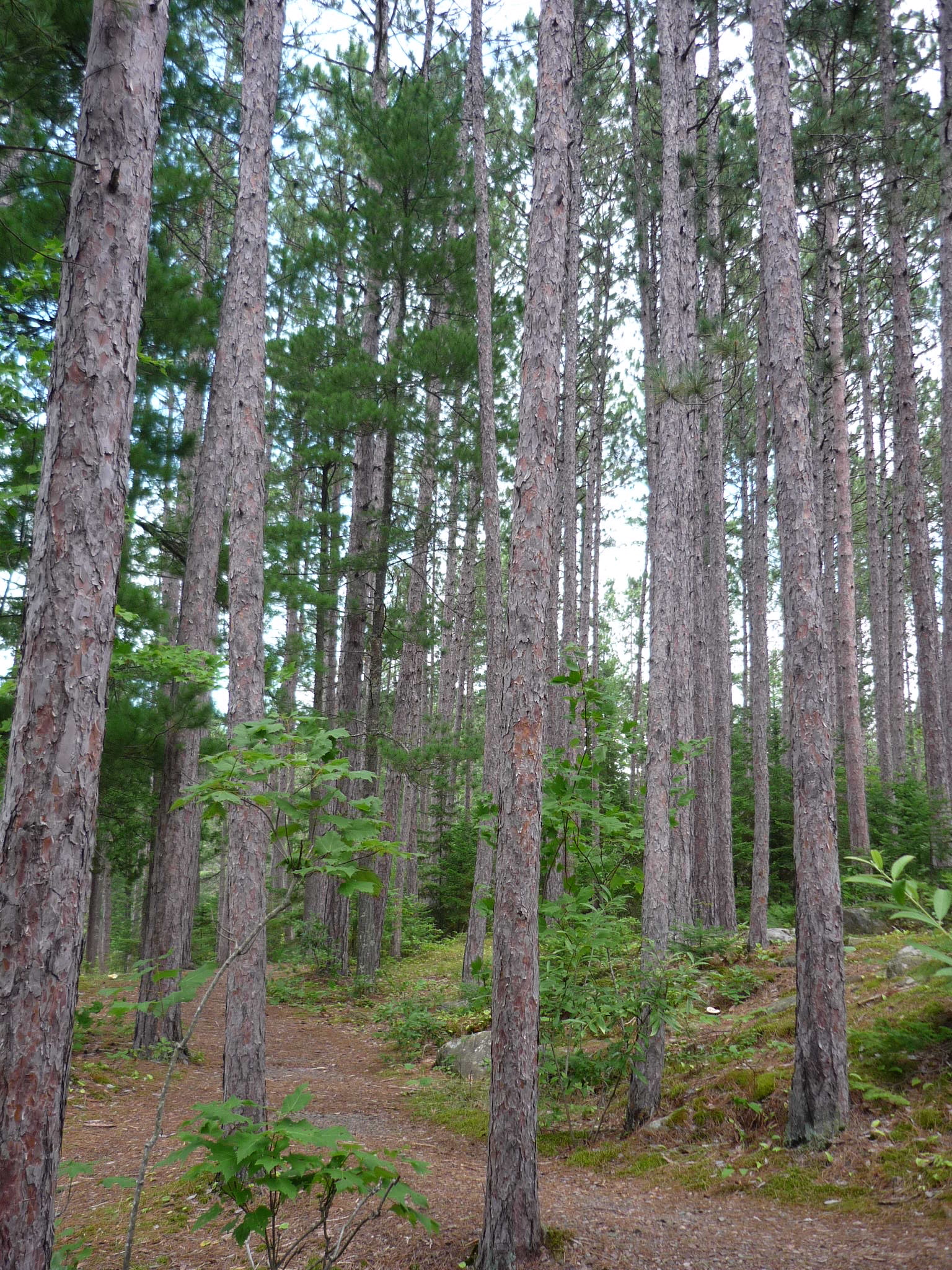
    The contemplative walk I envisioned
    The contemplative walk I envisioned

    After doing some Internet research, we found that retreat centers would be better than motels or condos, because they are more peaceful, less expensive, and often have kitchens. The Anderson Center in Red Wing, Minnesota met our specs and had an opening on one of the weekends we wanted to get away.

    What our retreat location actually looks like . . .
    What our retreat location actually looks like . . .

    Talk About Expectations and Set Ground Rules

    We have been part of the same group for more than a decade. We like and respect each other, but we wanted to avoid some obvious pitfalls if we could. Our discussions led to these guidelines:

    • This is NOT a girls’ weekend. If we’re too social, it will defeat the purpose of being on a retreat—getting the solitude to be creative.
    • We’ll eat dinner together both nights, but aside from that, there’s no need to socialize.
    • Each woman will set her own goals, which could be writing, revising, napping, reading, walking, daydreaming—whatever each person needs.
    • We’ll go out for dinner one night and cook one night. For breakfast and lunch, you’re on your own.
      That contemplative walk will actually look more like this
      That contemplative walk will actually look more like this


    We’re excited, but we’ve never tried this before. Wish us luck!


    , ,

    8 responses to “Plan A Do-It-Yourself Writing Retreat”

    1. Johanna Avatar
      Johanna

      Sounds fun. Hope you are productive on your retreat

      1. Ellen Shriner Avatar

        Thanks! I kinda can’t lose–writing and relative solitude–they’re both good

    2. bbachel Avatar
      bbachel

      I look forward to hearing all about it. And to following in your footsteps some day. P.S. Love the revised title of your memoir.

      1. Ellen Shriner Avatar

        Thanks for the feedback about the title and your support–you always give me a boost!

    3. Kevin Avatar

      Sounds awesome! Heck, I’m just happy to get away from my family for a few hours! Hmm, maybe that is what sleep is for? Have a great time and write!!!!

      1. Ellen Shriner Avatar

        Thanks for the support!

    4. wendyaskinner Avatar

      Oh, this sounds lovely and much deserved for a great group of women writers! Have an excellent time in Red Wing!

      1. Ellen Shriner Avatar

        Thanks! We’re really excited.

  • “You can choose to shave. But you have to brush your teeth.”

    IMG_3147The day came, two weeks ago, when I had his and her electric and regular razors, cream hair remover, his and her shaving cream – foamy and creamy, post shave balm, and aftershave on the bathroom counter.

    His on one side. Hers on the other.

    I let the essentials rest there for a few days, wanting to normalize the fact that, yes, 12-year-olds do grow hair and yes, some 12-year-olds would like it to disappear.

    I had brought up shaving to Antonio a couple of years ago. I am very cognizant that Antonio is the only male in our house so he often is inundated with information before its time. With Crystel, I wait for a cue.

    Our neighbor, Lynda, works at Bella Salon and Spa. It was natural to call and make an appointment for a lip and brow wax for Crystel, brow wax for me, and a lip wax for Jody.

    I mean, if it’s a cue, it’s a cue, right?

    With Antonio away on a school trip, we made it a girls’ night out.

    Antonio had already let me know about how he felt about his mustache. His Uncle Marty was over for a visit, and even though I reminded Antonio a number of times, of what a great opportunity this was (Crystel was away on a school trip), what great timing, how serendipitous, he just couldn’t get a scissors and open the packaging that held his electric shaver and all those cool attachments.

    He just dropped his voice as low as he could. “Nope.”

    We three girls tried our electric shaver first. Crystel found out very quickly that she didn’t enjoy having her hair pulled and cut by a million tweezers. Soon we were on to the razors, each of us with a leg in the bathtub.

    Hmmm. Now, there. There is possibility.

    Her choice.

    But the brushing of teeth? Nope. That’s not a choice. (Said in a Mom’s voice).

    , ,

    One response to ““You can choose to shave. But you have to brush your teeth.””

    1. Eliza Waters Avatar

      Rites of passage – each in their own good time!

  • Dealing with a Dry Spell: Perspective for Writers

    Often my writing struggles concern wanting more time to write. Lately, I’ve had enough time, but I’m writing less—the words aren’t flowing. I’m still writing, but much less enthusiastic about what I’m coming up with. I’ve learned some ways to cope with a writing dry spell.

    FullSizeRender

    1. Don’t freak out. “Dry spell.” “Writer’s block.” “Just feeling off your game.” Whatever you call it, it’s like insomnia. The more you fret, “OMG! I have to get up in an hour-and-a-half. I’ve GOT to get more sleep!” the less likely you are to fall asleep. Similarly, if you tell yourself, “I’ve been sitting here 45 minutes and everything I’m writing sounds stupid. Why do I even bother?” you’re guaranteed to shut down your creative energy.

    2. Trust yourself. I know. I know. Easy for me to say. But after 25+ years writing advertising and marketing, I’ve learned that the words and ideas will come back.

    Countless times, I had two hours to come with an ad concept. The graphic designer and I tossed out ideas, drew, played with words that had a ring to them, and described possible visuals. At first, most of what we brainstormed was weak, clichéd, off the topic, or all three.

    We could have let ourselves panic, but we pushed away that feeling and kept going. Part way through the process, something shifted and the better ideas began to flow. I learned to get comfortable with spinning my wheels mentally. Sooner or later, my brain would engage and we’d have several viable concepts.

    As long as I trusted myself to think up something, I would. Writing essays, blogs, and memoir take deeper thinking and more sustained effort—they’re harder—but the approach is the same. Trust yourself.

    3. You can’t stop being a writer, so you might as well keep going. Haven’t you sworn off being a writer at least once? Haven’t you told yourself, “I don’t have any talent. No one is going to be interested in what I’m writing. I should quit fooling myself. Etc. Etc.”?

    How’d that work out for you? You must still think of yourself as a writer or you wouldn’t be reading this! Whether you like it or not, your writer’s sensibility continues to notice and mentally record the funny conversations you overhear at the coffee shop. The writer in you searches for the right words to describe the colors of grasses in autumn or the texture of a beat-up sofa—even if you’re just relaying a funny story to friends. You might not be writing much right this minute, but you’re still hardwired to be a writer.

    Since you can’t eradicate writing from your life, keep writing. Although there are different theories about this, I personally think it’s better to keep writing regularly, even if you only write a little bit, because it keeps you limber.

    But be gentle with yourself. Don’t expect as much. For example, set a goal of doing 20 minutes per session. Let the measure of success be that you did it, not that the writing was great. Perfection is not required.

    4. Trick yourself into continuing. Quite often, I’m not excited about what I’m writing, so I’m not eager to start work. Or I have no idea what to write, but I still have a blog due. Both situations lead to creative procrastination. I may feel a sudden urgent need to answer emails, switch loads of laundry, or even pay bills (and I hate to pay bills). However, I’ve promised myself I’d sit at my computer and try to write, so after a few distractions, I settle down and try again.

    Occasionally, rereading what I wrote last time pulls me in. I start to see things I want to add or change. Other times I fuss with making minor edits or researching some factoids. While I occupy the front of my mind with busywork, the back of my mind begins framing new sentences. Then all I need is the good sense to stop editing and start writing down the new words forming in my head.

    Another trick is to work with a writing prompts. Poets & Writers is a good resource for prompts. Evocative photos can also help you access the creative part of your brain that’s being so elusive.

    Most of all, trust yourself. The words will come.

    What helps you when you’re in a dry spell?

    , , ,

    7 responses to “Dealing with a Dry Spell: Perspective for Writers”

    1. How to Be a Better Writer: Be an Ant - Write Right Avatar

      […] be afraid when it occurs. Dry spells happen to every writer. They get lost; the words dry up. They question what they’re doing and […]

    2. Eliza Waters Avatar

      I enjoyed reading this, Ellen. Self talk is probably the biggest boon or obstacle to writing. Set the head and the rest follows!

      1. Ellen Shriner Avatar

        You’re right about self talk–easy to get turned around, but with experience you see the pitfalls. I appreciate your faithful readership!

    3. Pam Avatar
      Pam

      Thanks for the pep talk! It makes sense to keep the faith and trust the past — thanks for reminding us.

      1. Ellen Shriner Avatar

        Thanks, Gary. Glad you found something useful. I’m not sure what my next big project will be. It’s hard to stay motivated, but I’m trying to trust myself.

      2. Ellen Shriner Avatar

        I love to know that you’re out there reading!

    4. Gary Smith Avatar
      Gary Smith

      Wonderful! I know I go through dry spells after I’ve just finished a novel. I question whether I can continue… did I just run out of ideas? Time is always the answer. I liked when you pointed out how “giving it up” is useless. You’re still a writer no matter what, so just give it time. Nice piece, Ellen!


Recent Posts

  • Borrowed Time

    Rain hammered the passenger van, rattling the metal like gravel tossed against a tin roof. Each burst sounded closer, louder, as if the storm were trying to break its way in. Why today, of all days, when Juan was visiting his birth family? We had planned it so carefully. We’d even had a kind of…

  • From Minneapolis

    …they have cost children the life of their mother….

  • A Few of My Favorite Things

    When I feel world-weary, I actively try to turn away from the world’s troubles and focus on the many good things in my life. In addition to my family and friends, here are some things I enjoyed this past year—art, books, nature. Sorry, no raindrops on roses! When I saw this painting I wanted to…