Category: Perspective

  • Seen and Heard

    Recently, I was reminded that seemingly small moments can have a lasting impact. My mother-in-law told me about her visit with a local librarian. They got to know each other, and now the librarian chooses books for her as part of a library outreach program for people who don’t drive. Although the librarian came only once, her visit meant a lot to my mother-in-law.

    Every now and again, acquaintances tell me about a time when something I said or did came at exactly the right time. Often, I’m surprised because I don’t remember the moment and wasn’t aware that I’d had any special impact. With that in mind, I try to be gracious when someone I don’t know well wants to talk. Maybe they need to be heard.

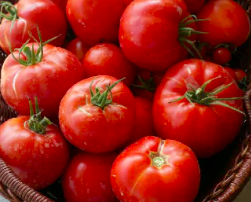
    I love good tomatoes and there’s one vendor I look for at the St. Paul Farmer’s Market, because his tomatoes are consistently good. We have a nodding acquaintance—we know each other’s faces, but not each other’s names.

    The last time I saw him, he asked me if I liked the Tennessee Ernie Ford song that the market’s musical entertainer had just played. I agreed that it was a good oldie and recalled that a neighbor friend’s mother used to play it on the stereo.

    Then the tomato vendor told me he loves to sing, and he sang a little of the song in a surprisingly rich bass. I complimented him, and he explained that when he was young, a voice teacher taught him to breathe properly. Now he shows the guys in his church choir how to breathe so they won’t strain their voices when they try to sing bass.

    As I walked away, I realized that after our longer-than-expected conversation, I had a fuller sense of him as a person. I don’t know if the conversation meant anything to him or not. Maybe he needed to be seen, wanted someone to know that tomato farming was just one dimension of his life. Or maybe he was just bored and feeling chatty.

    Either way, I’m glad I listened. There’s a gift to me in that.

  • After the Fireworks

    We sat under the hazy sky in the cooling humid air, scented with bug spray. All around us were clusters of people: young parents taking family photos of their daughter in the near dark. A group of young women to our left talking loudly about their lives and shrieking with laughter. Two young couples sharing a blanket behind us, speaking Spanish and laughing about what a weird word “fireworks” is—why “works” one asked. An extended family in lawn chairs in front of us whose father was telling a lengthy story. To the right of us, a bored preteen plugged into his phone on a blanket with his family, who appeared to be of Indian descent. Each group was self-contained, distinct. Not unfriendly but joined only by clapping to hurry up the show and later in appreciation.

    I wondered what the day meant for each of us.

    For me, it was a more thoughtful day than usual. I love this country but also am deeply troubled by so much of what is going on. For the first time, I wondered if or how the America I believe in will survive. But I set my worries aside and immersed myself in the spectacle of fireworks and enjoyed the magic. I don’t know if the people surrounding me attended to express their patriotism and commitment to our country, or if like me, it was mostly something traditional and fun to do on a hot summer night. What was remarkable was the ordinariness—the fact our mingled heritages sitting together peacefully at the fireworks.


  • What Work Would I Do if I Were an Immigrant?

    Olga*, 42, was an architect in the Ukraine and now she is a homemaker. Gina, 28, was a civil engineer in Venezuela and now she is a server. Deqa, 32, was an accountant in Somalia and now she works as an assembler. When I tutor these adult English Language Learners, I often consider what it would be like if the situation were reversed and I were the immigrant. What work could I do?

    I’ve made my living as a writer and a teacher—work that requires a good command of the language, both written and spoken. As a marketing communication writer, understanding connotation (e.g., ‘cheap’ vs. ‘inexpensive’) and nuance (e.g., the perspective of suburban mothers vs. that of urban mothers) were key to being persuasive. Since project management was a big part of my work, I developed schedules and budgets and coordinated the efforts of several other team members.

    As a teacher, I’ve needed to use clear, simple wording and examples that would help someone comprehend a word or concept. I’ve had to be quick with alternative explanations, too. When I tutor immigrants, I am also teaching American culture as well as English language so I must remember not to make assumptions about anybody’s worldview or beliefs.

    If I lived in Ukraine, Venezuela, Somalia, Mexico, Thailand, Ethiopia, Vietnam, or any of the other places my students come from, I wouldn’t know those languages and cultures well enough to make a living as a teacher or writer. My M.A. in English would be irrelevant, just as Olga’s, Gina’s, and Deqa’s degrees are.

    When I review my non-language-based skills, my list is short and sounds like the work my students do: cooking, cleaning, factory work, or stocking merchandise in a store. With time and a bit more knowledge of language and culture, I could take care of children or infirm adults. As my language improved, perhaps I could be a sales clerk, wait tables, or drive a cab.

    But professional work in which I use my communication, analytical, and organizational skills would be closed to me. What also would be lost to me is the respect that goes with having a professional career. If I were an immigrant with poor language skills, most people would assume I was stupid and uneducated—nothing more than the cleaner or babysitter I appeared to be.

    If I were an immigrant, I wouldn’t want to be pitied for the challenges of learning a new language and culture (and neither do my students). I would have chosen to emigrate. Or maybe I’d be a refugee who didn’t want to leave but needed a safe place to start over. Either way, before I moved, I would have been aware that it’s hard to learn a new language and work in a foreign country—the bare minimum needed to survive. If I missed my homeland, was lonely, felt disrespected, or experienced outright hostility, it would be mine to deal with. In time, I could hope that safety, security, and a better quality of life would come.

    When I work with student immigrants, I keep in mind that it’s hard to do what they do, even though they chose it. I admire their grit, persistence, ability to work toward long term goals, and overall resilience. I wonder if I would have the same qualities if I were starting over in a new country?

    *All names have been changed to protect student privacy.