Category: Perspective

  • Je M’appelle Frisque

    My grandparents’ families came from places like Walhain-St. Paul, Incourt, Nievelles, Tourinne-St. Lambert, and Huldenberg in Walloon Brabant, Belgium. Impacted by the same potato famine that brought many Irish to the United States, the Belgians made their way to Wisconsin communities with names like Brussels, Tonet, Namur, Luxemburg, and Walhain. The homes they left had been clustered in an area about forty miles wide. The farm towns they carved out of tree-covered land, almost four thousand miles across an ocean and half a continent, were about the same distance apart.

    When I was a child I spoke some Walloon, a nearly forgotten language, with my Belgian-American great-grandmother and her friends as they quilted in our living room. We ate Belgian farm food like jut, a boiled cabbage side dish, stoemp, a mashed potato and cabbage dish, trippe, a bratwurst-type sausage, booyah, a chicken-based soup with many ingredients, and Belgian pie, a sweet dough tart filled with prunes and a cream cheese style top. Our Catholic church held a Kermis celebration in autumn. Beyond jokes about how much Belgians sweat or drank or were short, maybe stout, that’s about what I knew of our heritage. All the amazing accomplishments of the Belgians or their art or chocolates were from a different socio-economic part of the country.

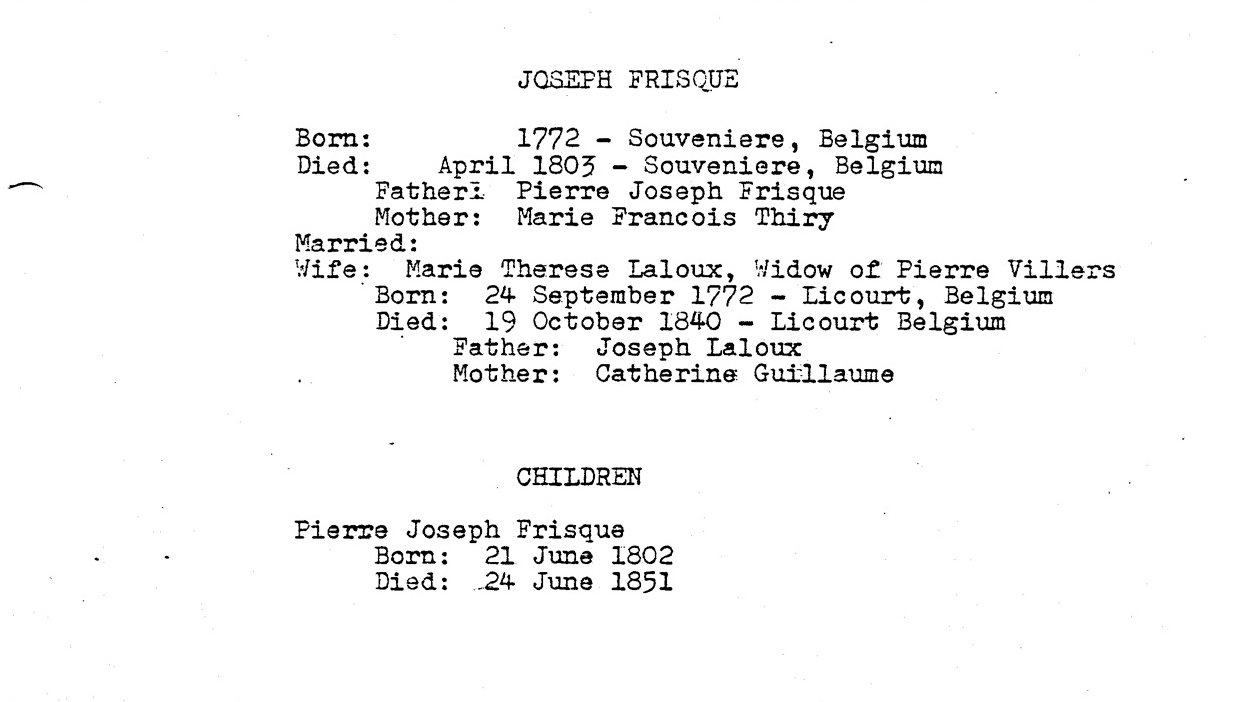
    My mother’s cousin and my father’s cousin researched family trees. Through the Frisque genealogy I discovered that my family was related to many, many people in Luxemburg, Wisconsin, the small town where my father grew up and we lived through part of my childhood. The Nockaert family information uncovered that my mother was mostly Belgian although she believed she was German. Names, dates, locations, relations fill pages. That’s it. The Belgian Heritage Center in Namur, Wisconsin may provide information to further the cousins’ research.

    The histories of these people, who permanently left all they knew for 40 acres of land and a better future, are probably lost forever. But this summer we are going to visit Belgium, specifically Walloon Brabant, and trace what is left of our Cravillion, Frisque, Nockaert, and VanderKelen ancestors. They were all small farmers who left Belgium in the mid 1850s so there is probably little left of their lives beyond cemetery headstones.

    We have nothing physical from their lives in Belgium and little expectation of connecting with other great-great-great grandchildren of the original immigrants. But one can always hope.
    Genealogy


  • Still Winter (Don’t Read This Cranky Blog)

    Let’s see. It’s still winter. I’m done with it, but it’s not done with us. No use complaining (but that’s not stopping me). Weather isn’t personal. The same rain/snow/slush falls on all of us. The same ice clumps chunk off our tires. We drive the same roads that are scabby with ice or as slippery as Crisco.

    Impeachment rages on and on. We know how this will end but the players must follow the script anyway.

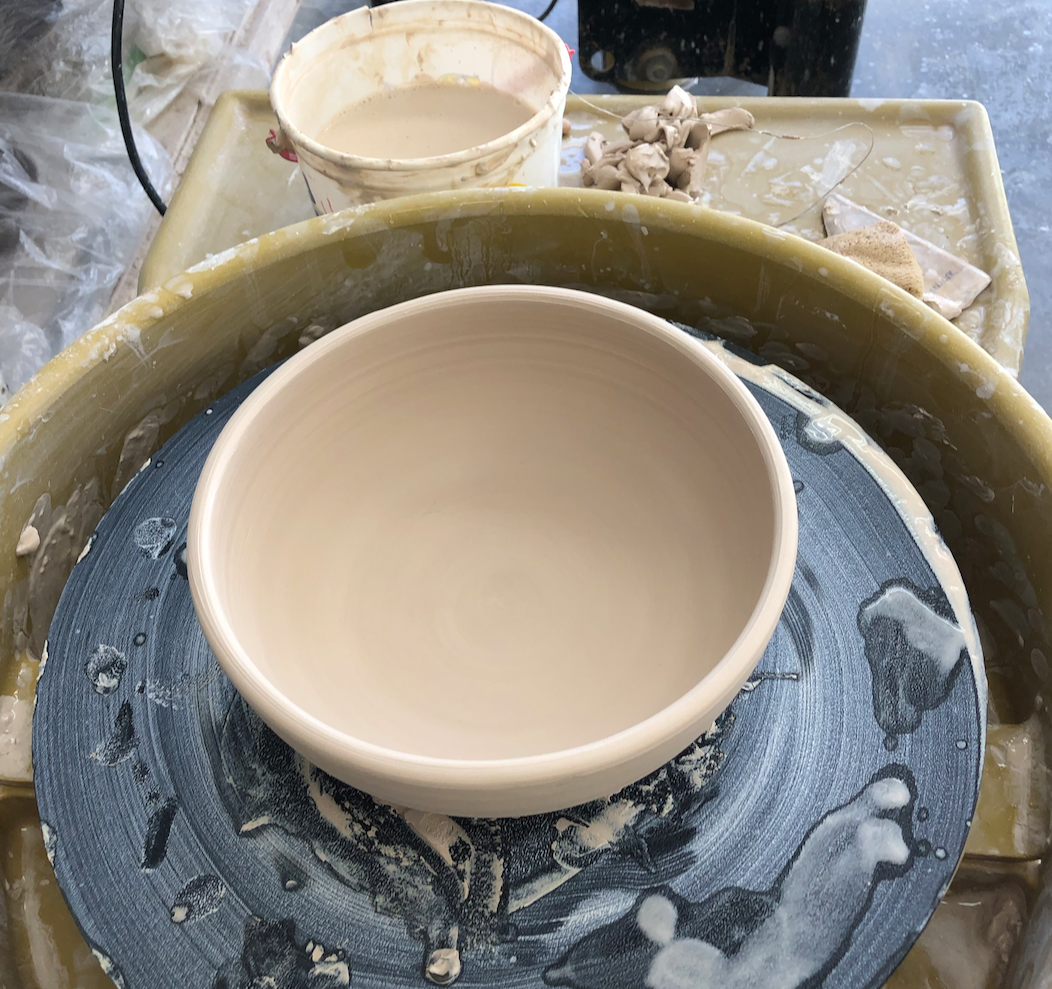
    No wonder I obsess about clay. I revel in the small personal thrill of throwing porcelain for the first time in years. Voilà! A small vessel I hope to make into an old-fashioned perfume bottle. Not to hold perfume. Just because I like the idea of them.

    Maybe I’ll make stoneware wine goblets next. The sturdy kind without stems. Or stoneware tumblers for iced tea and mojitos with fresh mint. Mint that I’ll pinch from a plant in next summer’s garden.

    Why not stoneware flower pots? That’s genius! When I’m not a potter, I’m a gardener. I could bring together two of my passions.

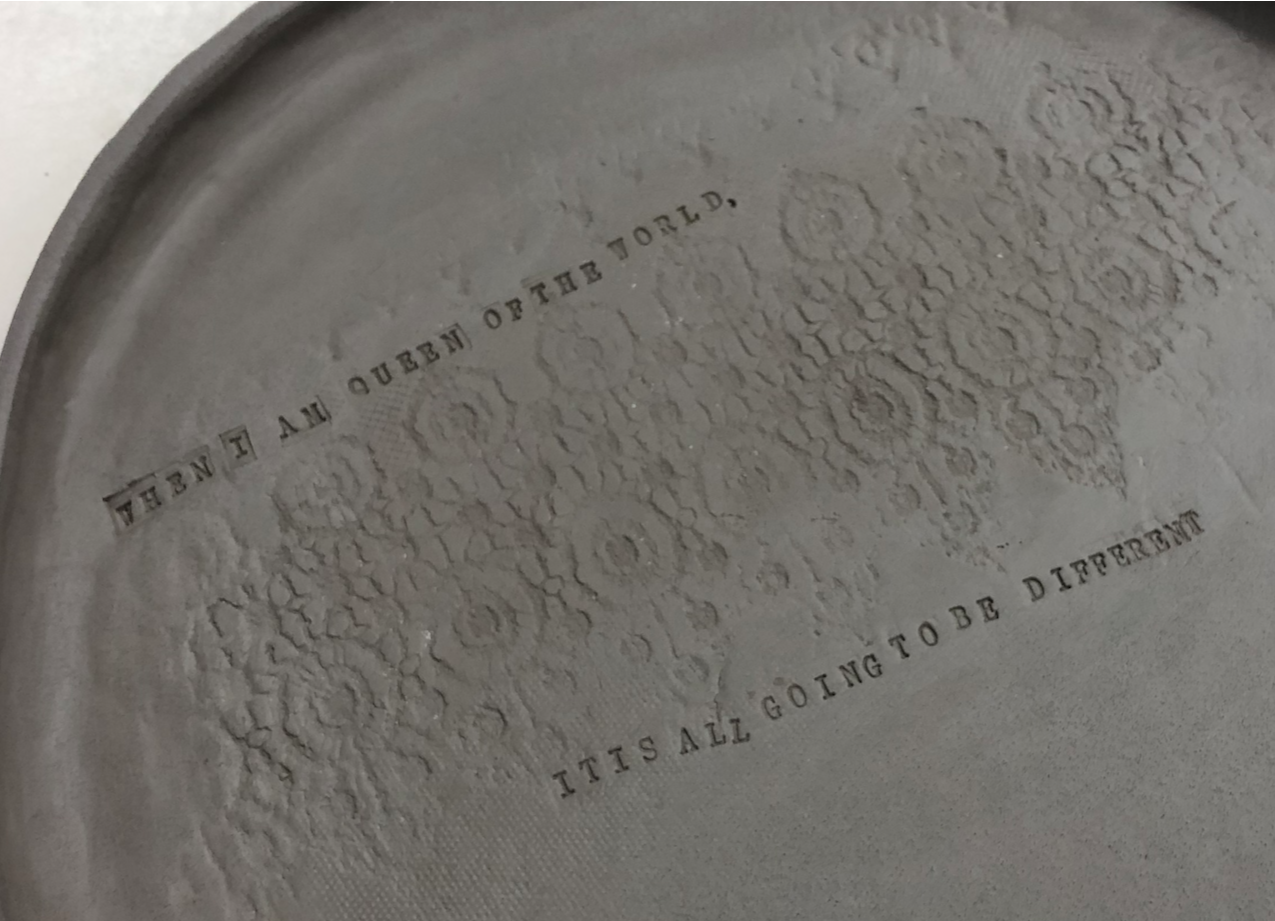
    What about platters and bowls with sayings? Hmmm. I hate art that exhorts me to Live! Love! Laugh! Shut up, I think, even though I do want to live, love, and laugh. Isn’t stamping Ellen-isms into clay at odds with that? Too bad. I’m doing it.


    I’ve been holed up in the pottery studio with my potter’s wheel spinning fast. It corkscrews my focus tighter and tighter until all I see is the lump of clay that I’m forcing to be centered. Even though it resists, throwing off stray blobs and splashes of watery clay.

    Hours pass. My back and shoulders ache.

    Weeks pass.

    Now when I leave the studio at 5:15, it’s light out. The big wheel of the seasons is also turning. Slowly, slowly, but turning. Bringing me back to center.


  • All those ecstatic exclamation points!!!

    Recently, I exchanged a series of texts about possible places to have a celebratory dinner. Because I was hurrying, I didn’t choose my words carefully and typed, “X café sounds O.K.” Without meaning to I conveyed an underwhelmed reaction, which then required clarifying texts. I actually agreed with the suggested restaurant, but my reply didn’t sound like it. Sigh.

    Electronic communication lacks the cues that tone of voice offers in a phone call or body language expresses in person. Emojis help, but not enough. Often the exact tone I’m looking for doesn’t come in an emoji.

    These days, when I receive an ordinary text like, “I’ll pick you up at 6:00,” or “I sent the package,” I’m likely to reply, “Great!” There’s nothing extraordinary, wonderful, or truly great about the moment. I feel completely neutral—no excitement, no elevated enthusiasm—I’m just trying to acknowledge the message in a pleasant way.

    Used to be, exclamation points signaled excitement or surprise. The writing professors I had urged caution—use exclamation points sparingly. I took their advice and rarely used them. Now, I regularly disregard those guidelines when I’m texting and emailing.

    “Great!” has become the equivalent of “O.K.”—what I would have said by phone, because my warm tone would make my reaction clear.

    Now that innocuous word can be freighted with an unintentionally cranky or passive-aggressive tone (Typing These Two Letters Will Scare Your Young Co-Workers: Everything was O.K. until you wrote “O.K.”)

    “O.K.,” can be construed as flat and potentially unhappy. It seems similar to the irritated “Fine.” You know— “Fine” said in the tone which means sonot fine. “Fine” as in I won’t argue now, but we’re not done. Fighting words.

    I wish texts were only used for simple, neutral messages like schedules, grocery lists, or where to meet. But I’ve bowed to the reality that for many people, texts are their default communication, even when the subject matter is emotion-laden and would be better handled in person or in a phone call. There would be less chance of confusion or hurt feelings. So in the interest of good communication, I’m inflating my word choice and punctuation.

    And that’s O.K., er, Great!!!