Category: Personal Growth

  • Mom’s Inspiration

    For years, my mom had a clipping stuck on her refrigerator with a magnet.
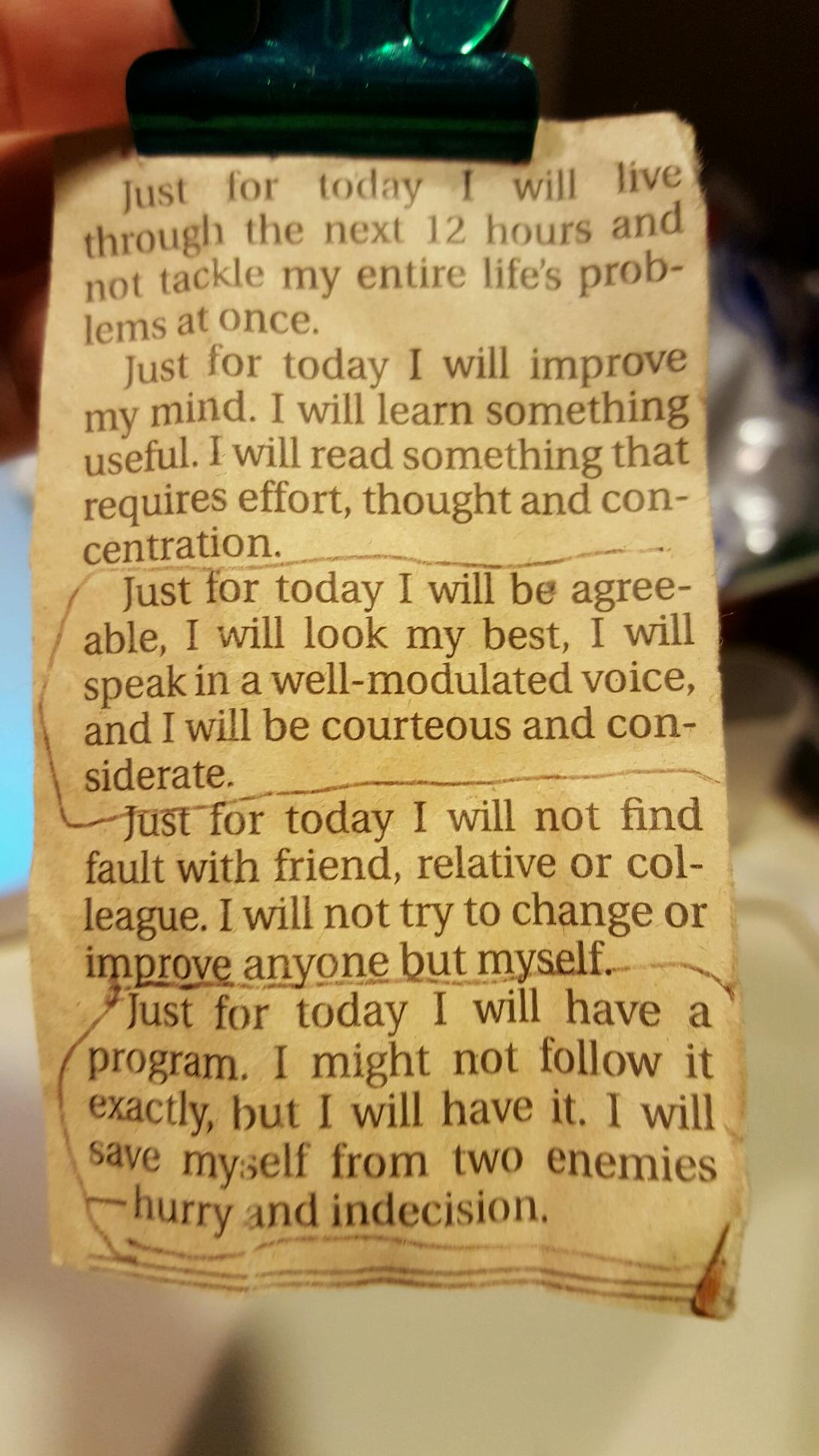
    moms-resolution

    Although it was in a semi-public place, the clipping was a private message for her, not a directive for the family and friends who might see it.

    Mom knew she’d be in and out of the refrigerator numerous times a day. She probably hoped that by putting the clipping right there she’d be forced to notice it. At least once a day, she’d really see the words and be reminded of her intentions. Every day, she could rededicate herself to the effort of becoming her best self.

    As a visitor, I saw it often but never thought too hard about it. They were her goals, not mine, and Mom wasn’t in the habit of preaching about her values or goals.

    But when the clipping turned up in a box of Mom’s things that my sister had saved, I realized how much her example has influenced me. I, too, regularly rededicate myself to the effort of being my better self.

    I make New Year’s resolutions (often the same ones about health and writing – they’re still good, because I frequently stray from my goals). Throughout the year, I also take stock and evaluate whether or not I’m living the life I want to live. For example, I might ask myself: Am I too bizzy with household tasks that don’t matter? Am I letting other people’s agendas overtake my own? Can I be more tolerant and easygoing and let go of irritation faster? Am I pushing myself creatively? And more.

    My refrigerator is bare. Unlike Mom, I keep my resolutions and inspirations in journals or in the Notes app on my phone where I see them often. When I reread my intentions, I’m pleased to see that I’ve followed through on some. Others, not so much. But I’m easy with myself – effort counts. I’m a work in progress and I just need to keep trying.

    Mom’s clipping lists five goals. I love that she circled the two that were most meaningful to her. As her daughter, I can tell you that most days, she nailed them.
  • Back To School Blues

    For 22 years—first as a student and later as a college instructor—the school year framed my days. Consequently, the first day of school still evokes strong feelings.

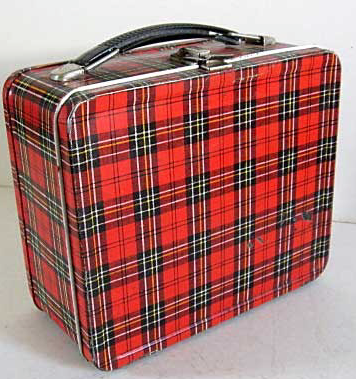
    red-plaid-lunch-boxWhen I was younger, heading back to school touched off a prowling anxiety. Worries stalked me at odd moments—What if I can’t find my room? What if none of my friends are in my class? What if the teacher is picky and mean? Once classes were underway, anxiety gave way to feeling trapped. Oh God, I’m stuck in school for months on end. Lectures, homework, tests. Somewhere between Day 1 and Day 2, I accepted my fate and began to acknowledge bright spots—a teacher who liked to joke, Oreos in my plaid lunchbox, or a book I didn’t mind reading.


    When I began teaching college English, I discovered teachers often dread the start of school, too. For me, it was a sinking feeling that began several weeks before school started. Oh, God, I need to make a syllabus, which means I have to decide exactly what I’m covering: choose readings, dream up in-class exercises, and plan the assignments. What if I get a handful of surly students? They could completely undermine the class dynamic for 10 weeks. tan-brief-bag

    My anxiety culminated in a night-before-the-first-day-of-class nightmare. Every quarter, I dreamed a variation of this dream: I’m 20 minutes late to class. I’m walking down an endless corridor and can’t find the room I’m supposed to be in. I finally arrive only to realize that I’m in my pink chenille bathrobe and the students have given up on me. Some of them are already in the English department office complaining about me. My stomach would be roiling when I woke up. As I stuffed my leather briefbag with mimeographed syllabi, lecture notes, and my grade book, I laughed at how ludicrous the nightmare was.


    This fall, on the first day of class, I was surprised to again feel a frisson of nerves. What if I got lost or showed up late? Just to be sure, I double checked the transit routes and downloaded a campus map. What if the professor thinks retirees are cranky know-it-alls? Do I really want to show up twice a week and sit through lectures?

    Wait. Yeah, I do. Anxiety about the first day of school may be deep-seated, but it no longer makes sense. I’m only auditing a history class at the University of Minnesota. There’s no pressure to perform as a teacher or as a student. In the rush of those habitual feelings, I’d nearly forgotten that the beginning of school also sparks an invigorating sense of a fresh start.

    backpackI loaded up my backpack with the three heavy textbooks—ooof—and set off.

  • The Magic of Keeping a Journal

    Recently, a request for volunteers to decorate personal journals caught my eye. The organization requesting help—The Family Partnership—says journaling is helpful to their counseling clients. I’ve kept a personal journal off and on since I was a teenager, and it certainly improves my mental health. Journaling also provides useful material for my writing projects.

    Writers are always advised to keep journals. In high school, when I first realized I wanted to be a writer, I drafted poems and stories in spiral-bound stenographer’s notebooks. In graduate school, I made notes about some of the encounters I had as an ER clerk.

    One of my early journals
    One of my early journals

    From the beginning, my journals also included impassioned blurts—here’s what’s bothering me and why. Finding words for my surging feelings made them concrete and more manageable. The process of writing calmed me. Often I felt like, “There. Now I understand what upset me and I feel better, so I can move on.” I thought the insights might be useful someday. If I ever feel so concerned about XYZ again, I can return to this hard-won insight and get feeling better, faster.

    That’s funny now. I’m never going to be 19 again. Why would I need to look up the entry about fighting with my parents?


    The journals became historical as well as therapeutic.

    Journaling reminds me about how I got to this place in life, and that’s useful. I’m not still a heartbroken 24-year-old graduate student or an overwhelmed 34-year-old mother. Seeing that I’ve grown and changed is reassuring. I do figure things out. Things do get better.

    Asking why and wondering about the meaning of certain events, comes naturally to me and is central to the essays, memoirs, and blogs that I write. I’m making sense of the big world as well as my own world.

    A friend hand made this journal, which I used while teaching at UMM
    A friend hand made this journal, which I used while teaching at UMM

    When I was in my late 30’s and early 40’s, I began writing essays and memoir in earnest. Then the old journals offered valuable documentation about what happened when I was 24 or 27 and what I thought of it.

    Rereading passages from old journals can be cringe-inducing. When skimming old journals, I understand why some people view them as the height of self-involved navel-gazing. Who is that whiny awful person? But that’s the magic of keeping a journal—within its pages, I can be my worst self on my worst day and spare the rest of the world a lot of my angst, anger, depression, and tedious analysis.

    That’s also the danger of keeping a journal. The words and feelings included there would necessarily be taken out of context by anyone reading them. I journal when I’m confused or distressed. Good times don’t require explanation and analysis. I want to keep the journals for my use, but at some point I will need to get rid of them, since I won’t always be around to say, “I was having a bad day when I wrote that. I don’t still think that.”

    My recent journals are much smaller-- 5x7, in this case
    My recent journals are much smaller– 5×7, in this case

    But the writer and philosopher in me resists. I’ve been writing about my life for 20 years. There might be some good material in there. I hate to dump it now!

    If you keep a journal, how do you use it? Will you get rid of them at some point?