Category: Personal Growth

  • Another Reason to Love Reading

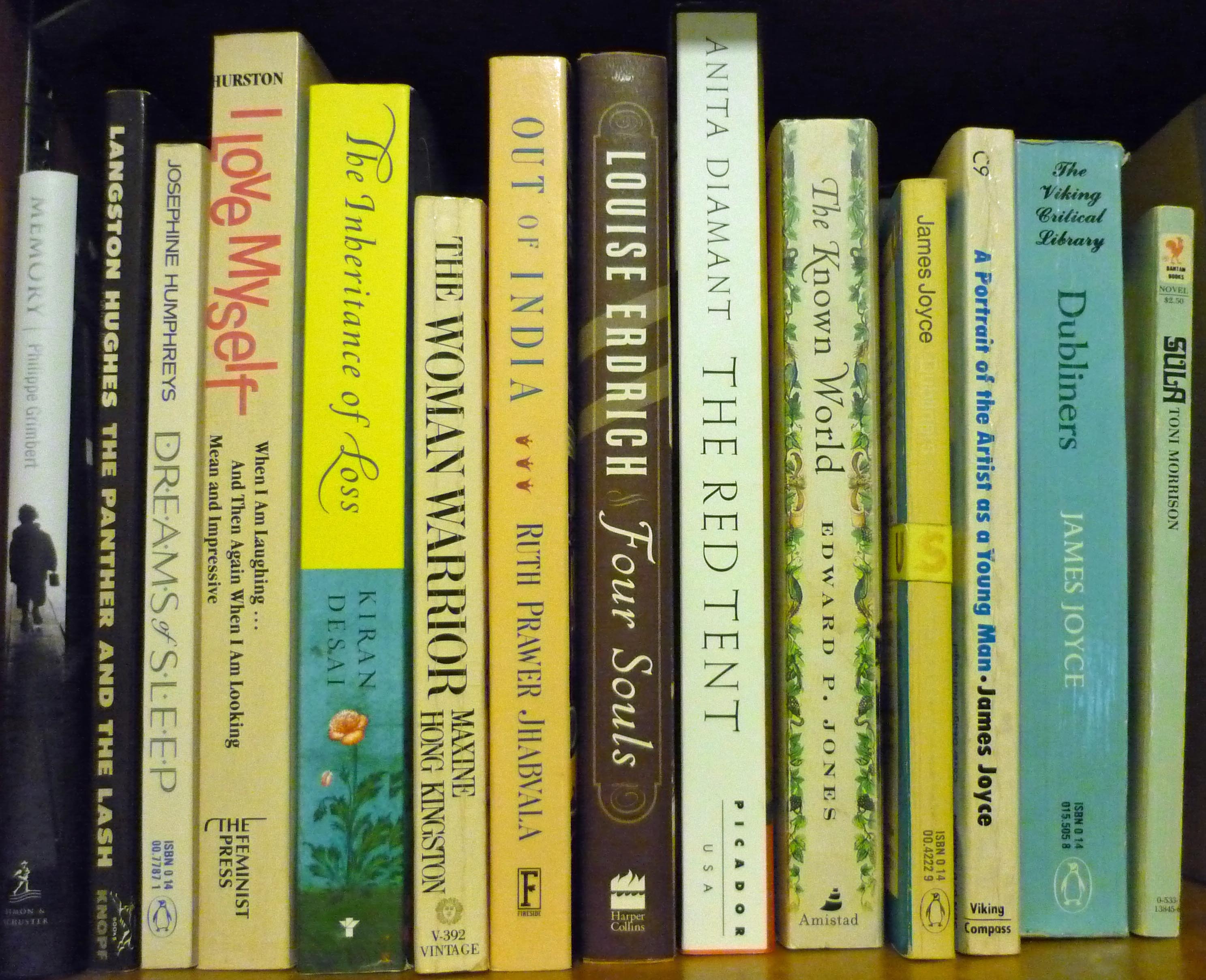
    Ever since I learned how to read, I have loved books. Through novels, I’ve traveled to medieval Europe, ancient Israel, Ireland in the early 1900’s, Appalachia in the 1930’s, New England in the mid-1800’s and many other times and places. Books have given me a glimpse into life on a Native American reservation, what it might mean to be a Chinese courtesan or a Japanese American during WWII, to grow up black in America 200 years ago or now, to live on a tea plantation in India or be a first-generation Indian American.

    P1030718

    I have long believed that reading literature has given me gifts of insight and empathy. Obviously, reading about a culture is not the same as living in it, but now there’s evidence that reading literature helps people develop empathy and the skills that psychologists call “theory of mind”—the ability to intuitively understand and predict other people’s feelings, beliefs, and intentions.

    In a recent article in the Star Tribune, Robert M. Sapolsky, a professor of neuroscience at Stanford University and the author of “A Primate’s Memoir,” describes research about how theory of the mind develops, “Subjects who read literary fiction, which for purposes of this study meant fiction that had won or been nominated for an important literary prize, performed significantly better in all those domains—exactly the type of skills associated with theory of mind—than subjects who read other things  or nothing at all.” He characterized “other things” as nonfiction magazine articles or popular fiction.

    So next time someone tries to characterize my desire to read literary novels as “not really doing anything,” I can smugly (but very empathetically) think, “I’m improving my intuitive skills and exercising my abilities to understand other people’s thoughts and experiences!”

  • Loud, Proud and Golden

    Why would anybody practice from 8:00 in the morning to 10:00 at night for 11 days in sweltering August heat before school starts (practice music, field drills, practice music, field drills, practice music, field drills, eat, sleep, and do it again the next day)?

    Why would you lug around a heavy instrument—sometimes running, sometimes marching, a lot of times dancing—two hours a day, five days a week, and eight hours on game days?

    Half-time
    Half-time

    Why would you get up at 4:30 a.m. on a Saturday so you can practice at 6:00 a.m.; perform in the parking lot for a dozen tailgaters at 8:30; join 319 of your best friends to sing, dance and play in front of a couple hundred people at 10:20; perform again in front of a thousand or so football fans at 10:40; play, march, and dance some more for a crowd that isn’t paying attention because half of them are leaving the stands to get a beer and a hot dog; and then take the field again at the end of the game to sing and play music while the fans are leaving?

    Post-game--still going strong
    Post-game–still going strong

    Why would you wear an itchy wool suit with short pants and a goofy hat with a plume when it’s 60/88/33 degrees and sunny/humid/sleeting and chant stuff like, “Eat ‘em raw. Eat up the (opposing team name goes here). Eat up the guts. Spit out the bones. March on.”

    Because of the sheer joy of playing music you like with people you like.

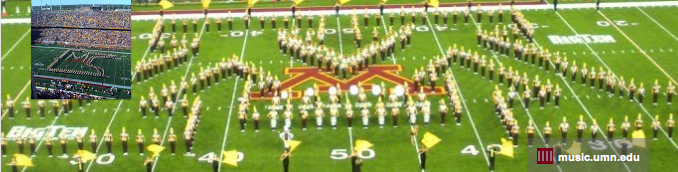
    Because of the pleasure of getting 320 souls to move in unison and perfectly pivot a giant University of Minnesota “M” on a fake grass field.Screen Shot 2013-09-26 at 9.30.51 PM

    Because it feels good to be part of something bigger than yourself.

    Being in marching band isn’t exactly about school spirit, although that plays a role.

    My favorite band geek
    My favorite band geek

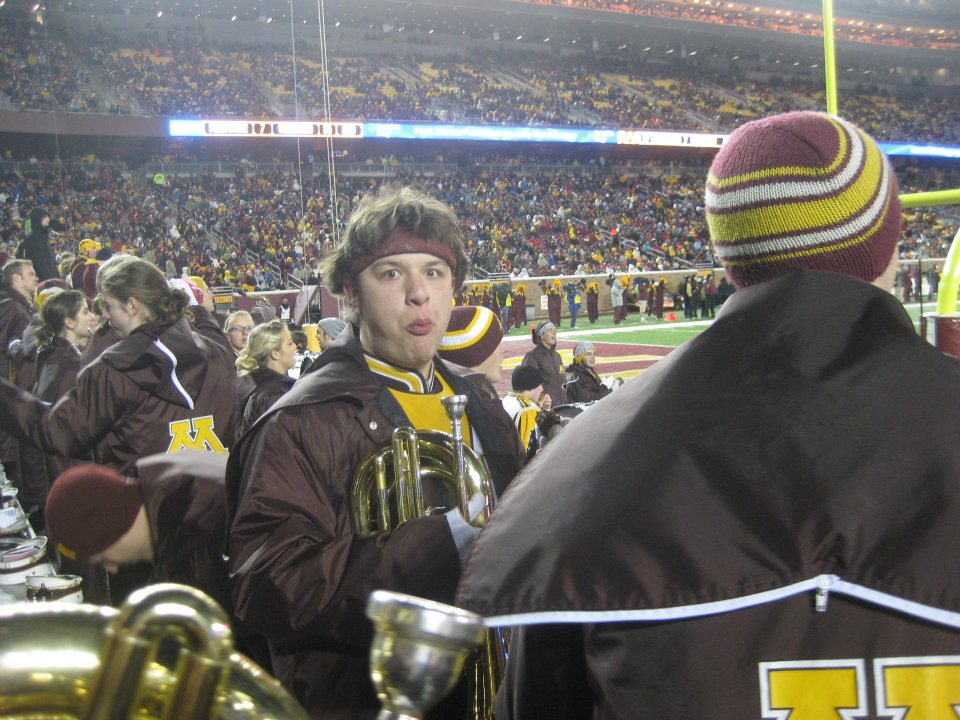
    My favorite marching band geek tells me that after spending 500 hours a season with these people (marching, playing, hanging out, sharing a house, marching, playing) they’re your family. You may not like every one of them all of the time (and a few you won’t like ever, at all) but you love and depend on them. You’ve been through spat camp and freezing post-Thanksgiving games and bowl game trips with them. You’ve learned countless life lessons in band. He says, “There’s very little in life that’s quite the same as band and very little that will give me as much as this band has given me.”

  • Slouching Toward Retirement

    I’m not ready to retire yet.  But if I squint I can see it from here. And I don’t like how it looks.

    womanondock Baby Boomer To Do List

    1. Figure out a retirement that I want to be a part of.

    2. Invent a new approach to assisted living/aging in place.

    3. Think up better ways to volunteer/give back.

    4. Consider my legacy—what it is and how I can help others understand and value it.

    5. Resist irrelevancy, crankiness, and being set in my ways.

    1. Figure out a retirement that I want to be a part of. 

    Trend specialists are always predicting that Baby Boomers will change the face of retirement, just as we have changed so many other institutions (the workplace, motherhood, marriage, etc.)  I sure hope so. Living in a retirement community where golf and bingo are the main attractions does not appeal to me.

    Boomers tend to think we’re pretty interesting, and we assume we’ll remain so in retirement. In fact, being cool is probably our birthright! Of course, we’ll invent a better version of retirement.

    But I wonder how excited we’ll be about riding our Harleys across the country, when our backs ache and our knees are going . . . . And that assumes we’ll even be retiring. Financial necessity will motivate a lot of Boomers to keep working past age 65. And who will be taking care of our elderly parents and the kids that might not be fully launched?

    OK, OK. That’s WAY too much reality. Retirement is years away. Let me get back to creatively daydreaming about how I want retirement to look.

    I want it to look like less work, more fun. I want a smaller place (less cleaning, less stuff), but I still want to have a postage stamp-sized yard so I can garden on a smaller scale. I hope to resume some hobbies I set aside for lack of time – pottery, for example. I’d like to learn how to do raku. Making stuff from paper—cards, collages and so forth. Jewelry and stained glass. Quilting and sewing. Maybe I’ll take up canning. Indulge my foodie self a bit more. Start a gourmet dinner group.

    Travel. Maybe I can learn enough Italian so I could teach English in Italy while my husband learns the secrets of Italian cooking. Or perhaps I can study abroad (can grown-ups do that, too?), Sounds expensive. Wait, wait. No reality.  I’m daydreaming here.

    Be more random and spontaneous. Take back roads and visit antique stores and cafes in little towns instead of always taking the interstate. Go to movies, concerts, plays, art galleries that I’ve never heard of. Decide on a Thursday to visit an airline fare sale city on Saturday—just to see what’s there.

    I’ll definitely keep on writing whether or not I get paid. I’ve got a lot more stories to tell and perspectives to share. Besides, I’m a writer to the bone—I can’t stop even if I want to.

    Keep thinking and learning. I’ve never understood how you retire your mind.  I’m way too curious and I love learning new things. I hope to audit college classes, take workshops, and read voraciously.

    I intend to continue volunteering, but perhaps in different ways (more to come about #3).

    I plan to keep active and healthy, but I don’t want to be obsessed with it. I’m unlikely to spend more than an hour per day on keeping fit.

    I want to help my kids fix up their homes when they buy them and play with their kids if they have some.

    Oh yeah, I’m still hoping to have some lasting impact on the world. I figure I’ve got at least 20 more good years. I ought to be able to change the world in that amount of time, right? I know, I know. Tick tock.

    Well, except for the last one, these are pretty modest retirement goals. Sounds like a life I could live.

    What do you hope to be doing?