Write Anyway

Every birthday I consider what the past year has brought and what I hope the upcoming year will bring. This year as I entered a new decade, my focus was also tempered by the awareness that my time isn’t unlimited, and I want to use it well. What will the coming days and years consist of? Family and friends, health upkeep, travel, fun and for me, writing. 

At first, asking what role writing will play in my life seems silly. Creative writing isn’t something you have to retire from. I can write as long as the words and ideas come. But the deeper question is—What are my expectations about publication?

Widely published authors like Stephen King and Joyce Carol Oates can continue publishing as long as they care to. It’s a different matter for the writers I know, who have a modest number of publications. Like it or not, the marketplace may decide for them. Because it’s a personal and potentially painful decision, writers don’t always discuss the dilemma.

In the past 20 years, I’ve written two book-length memoirs, but I’m not seeking publication for either of them. I learned what I could about writing books, but it wasn’t enough. The real gift is what I discovered about myself through the writing process. I’m proud of myself for doing the work. I’m at peace with the idea the books won’t be out in the big world. 

Instead, I’m focusing on writing short memoirs, essays and blogs. My talents and skills are better suited to short pieces. Most years I publish one or two. Not a breath-taking record, but enough for me. Knowing my words and ideas find an audience in an anthology, literary journal or blog is plenty. 

Publication plays a small part in my commitment to writing. I write because it helps me make sense of my world.

Two quotes sum up my outlook. The first comes from a blog by Amy Grier who was struggling with her writing and the state of the world in November 2020. Her thoughts are still relevant:

Writing tethers me to the world in a way nothing else does . . . I don’t know who will be president, what’s happening to my country, even what will happen to me. But I’m going to write anyway. It’s my remedy for despair. It’s how I will survive.”

The next comes from an interview with Margaret Atwood, who offered a few rules for writers. After making practical writerly suggestions, she also said this:

“Nobody is making you do this: you chose it, so don’t whine.”

For as long as it pleases me I will honor my creative nature and write anyway.

Seeing Forward and Back

I’ve cared for enough older women in my family to see the frailties I may have in the coming years. I’ve learned to be patient with their slower pace. I accept the extra steps they take to stay in charge of their lives—switching glasses and putting them away carefully and doublechecking locks. I already do that. I’m accustomed to the effort invested in maintaining dignity—looking where I’m walking, dressing comfortably, but well. So far, I’ve managed to avoid the flat bedhead spot so many older women seem unaware of!

Some days I feel exactly how old I am. My hip twinges a little. Or I can’t think of a word and it comes back five minutes later. I have a wealth of experiences and insights but the wisdom to know I should refrain from giving too much unasked-for advice. At this stage of life, my outlook is measured. Realistic.

Other days I feel like I’m fifty. Nothing aches. I’m energetic, ready to tackle big projects, and confident they’ll turn out well. The future is off in the distance and looks bright. I’m optimistic.

My thirties are also vivid—relived through the lives of my daughters-in-law. Revived by their pregnancies and new motherhood. I remember how fascinating my changing body was and how much it mattered to have a few maternity clothes I really liked. 

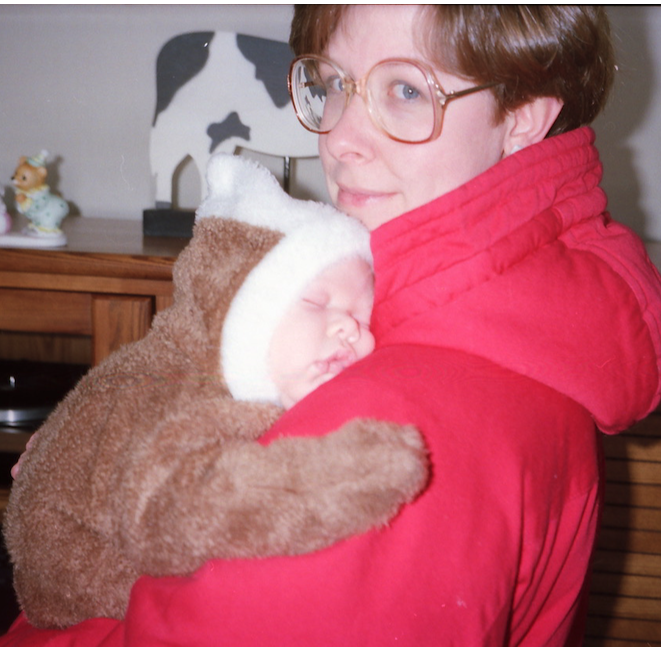
1989

I haven’t forgotten the fog and overwhelm of life with a newborn. How every little thing worries you. I also know you can grow bored by the long repetitive days, no matter how much you love your child. How ready you can be to use your brain for something besides calculating the hours since the last feeding. But the sweetness of cuddling a sleeping baby tempers that restlessness.

When my son hands me his baby, our past, present, and future converge.

The Family Tree

The Bayside Tavern in Fish Creek, Wisconsin has two buck burgers on Mondays during the off season. There’s a choice in seating– high tops, low tables, tiny booths for two, or stools at the bar. Narrow windows keep the inside dim. It is the place to go before the community Christmas tree is lit across the street, before the high school musical, to watch the Packers or Badgers or Brewers play. Maybe the Bears or Cubs for those brave enough to wear such jerseys. If you are a local, or a seasonal local, they probably know your name.

My Dad preferred a booth and ordered fried onions on his burger. He had haunts in Door County including the best places for good food. He knew the parents of people important in the community—the Catholic priest, the sheriff, a few bar owners.

So it was at the Bayside that my cousin Jeff Frisque and I met for lunch, the first time we had ever talked to one another except at family funerals. We connected through Facebook where many of the cousins have friended each other. Taking a risk, Jeff and I moved from responding to postings to trying a direct message.  Jeff’s father and one aunt are the last living siblings.

In my book, The High Cost of Flowers, the eldest sibling comes to the realization that to have the kind of extended family you want can require effort. And as the elders age, the responsibility passes to the children to do something, or to walk away. My husband and I are the elders of our families. That sounds easier to me than embracing the concept of adult orphans. We value the small circles of those connected to us by birth or marriage. Along with those we love, we have developed new traditions to stay close.

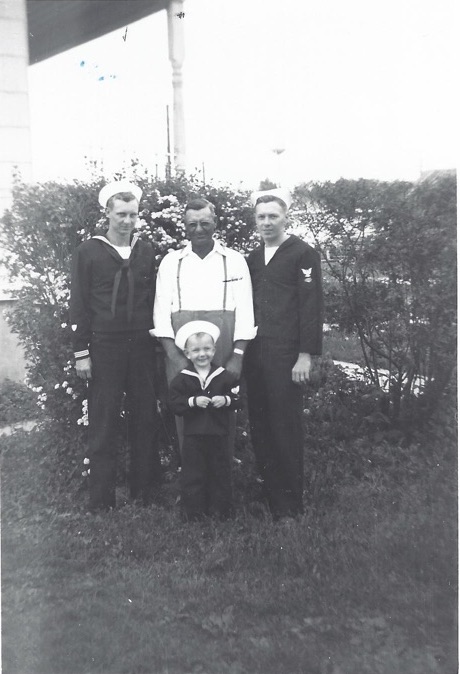
The Bayside Tavern might become a comfortable setting for weaving together the grandchildren of Michael Frisque. In his prime he spent many hours in bars, but I don’t know if he ever sat at this one. I didn’t know my grandfather well enough to say how he felt about his children and grandchildren. None of that was important in sharing lunch with my cousin Jeff.

Jeff is known locally for building and restoring exquisite log homes. We share love for Door County. We both showed up with spouses, a sign of how we value our families and would go to great extremes to protect them. We are not members of the same political parties although we may share a few beliefs. I think we are both tender-hearted about the right stuff. We both love or admire each other’s fathers. We walked away with each other’s email addresses and telephone numbers.

We also both like burgers at the Bayside. Mark that on the family tree.

dad


Resolved: Nothing

Resolutions past and present

This year I didn’t make any New Year’s resolutions. That’s odd, because they have always appealed to me. I cherish the idea of fresh starts, and I have an abiding belief in a person’s ability to change. And it’s not as if I’ve magically become a better person who doesn’t need to improve!

But I’m moving away from this familiar yearly cycle—Wanting to change –>making resolutions –> attacking my goals for a while –> losing energy and focus –> feeling bad –> re-resolving to incorporate the changes.

For example, year after year I have vowed to exercise regularly and to devote more time to writing. I’d start off full of zeal—this is the year! But establishing habits is a daily battle. Oops, I ran out of time. Something came up. Better luck tomorrow. Eventually, my enthusiasm would flag. Hmm. Maybe the fact that I had to renew those intentions yearly was a hint that my approach wasn’t working!

Early last year, I stumbled across a better way to incorporate new habits into my life. The insight came about as a side effect of writing out my weekly calendar. Instead of taking a work-before-pleasure approach, I began identifying blocks of time when I could do the things that matter most to me: writing, volunteering, exercising, connecting with friends and family, and pursuing other creative outlets (e.g., pottery, sewing, trying a new recipe). After I’ve made time for my priorities, I fit in necessary evils like cleaning, laundry, appointments, and shopping.

Writing a detailed calendar may sound fussy and restrictive, but for me, it’s energizing. It’s about scheduling fun. Fulfillment. I’m making time for what I like to do and what I think is important. And that’s a good thing. I rarely do everything I set out to do, but I get around to most of it. Consequently, I have fewer regrets about how I spend my time and less need for the same old resolutions spurred by what I wish I’d done.

I still plan to lose two pounds of cookies and do strength training more consistently. And I will. I still want to be kinder, more patient, less critical, and more grateful. I’ll work on that, too. But this year, I’m saying goodbye to the yearly cycle of regrets and resolutions.

Lock Your Car

October 2008

I’m a Police Reserve Officer for the city of Richfield.

Is that why, I want to shout, “No, Don’t Leave Your Wallet There!” to the lady who has her billfold sitting on the ledge in the coffee shop. Anybody could open the door, grab her billfold, and be gone.

Or, is it because I’ve stolen before?

In my teens, I did a number of things that I am not proud of. At one point, taking blank checks from my parent’s checkbook, signing their name, and then retrieving the cancelled checks from the mailbox. Our life was so chaotic that I got away with it for … awhile.

I want to holler to the woman who is walking to the shower at the YMCA, “NO, don’t leave your iPod sitting on your gym bag. Cover it!”

While still a teen, I opened the back of a car, once, and took the person’s groceries. Not because I was hungry but because it was there and because I could.

I often tell Juan Jose’ and Crystel to care for their belongings, that they could be stolen.

Soon after getting her phone, Crystel left it at our table in the restaurant, while we helped ourselves at the buffet. It wasn’t until we were walking to the car that she realized that it was gone. I saw her startled face. She was stricken. I pulled her phone out of my pocket. Told her that as far as a thief was concerned she had just laid $500 on the table and put a sign out that said, Take Me, when she walked away from the table.

Jody, Coach Marty, Beth

When I first put on a Police Reserve jacket ten years ago, it felt very comfortable. After a moment, I realized why. I had stolen a similar jacket from a river bar when I was seventeen. The bar had live music, dancing, and it was sticky hot. People piled their jackets in a corner. I eyed the pile, picked out a dark blue jacket that I thought might fit me and walked out of the bar. I wore that jacket for a couple of years.

Sunday evening, I was helping Scouts with their personal fitness badge. A billfold and phone were laying in a pile amongst papers and pencils on the ground. “Someone is going to stay here, with their stuff, right?” I asked. The Scouts had walked across the street to a park to run a mile. Still, I was nervous. I reached down and put the billfold and phone in my pocket for safekeeping.

This morning I got a text from our neighbor: FYI: someone rifled through my vehicle (on my driveway) last night. It was unlocked. I think only took some cash. I reported to police. They said at least 5 people from Morgan to Logan area reported the same thing.

I’ve sat in many police reserve trainings, and we discuss car break-ins. We provide a Theft from Auto Prevention Program by conducting a risk survey of unoccupied vehicles, in hopes that drivers will think about what they are leaving behind in their unlocked car. We tuck the result of our inspection under windshield wipers.

I text her back: It happened to us as well. Too embarrassed to report. Jody and I are Police Reserve Officers.

I also use my past as an example that people make mistakes and can change.