Category: Memories

  • Will Our Grandchildren Even Need Bookcases?

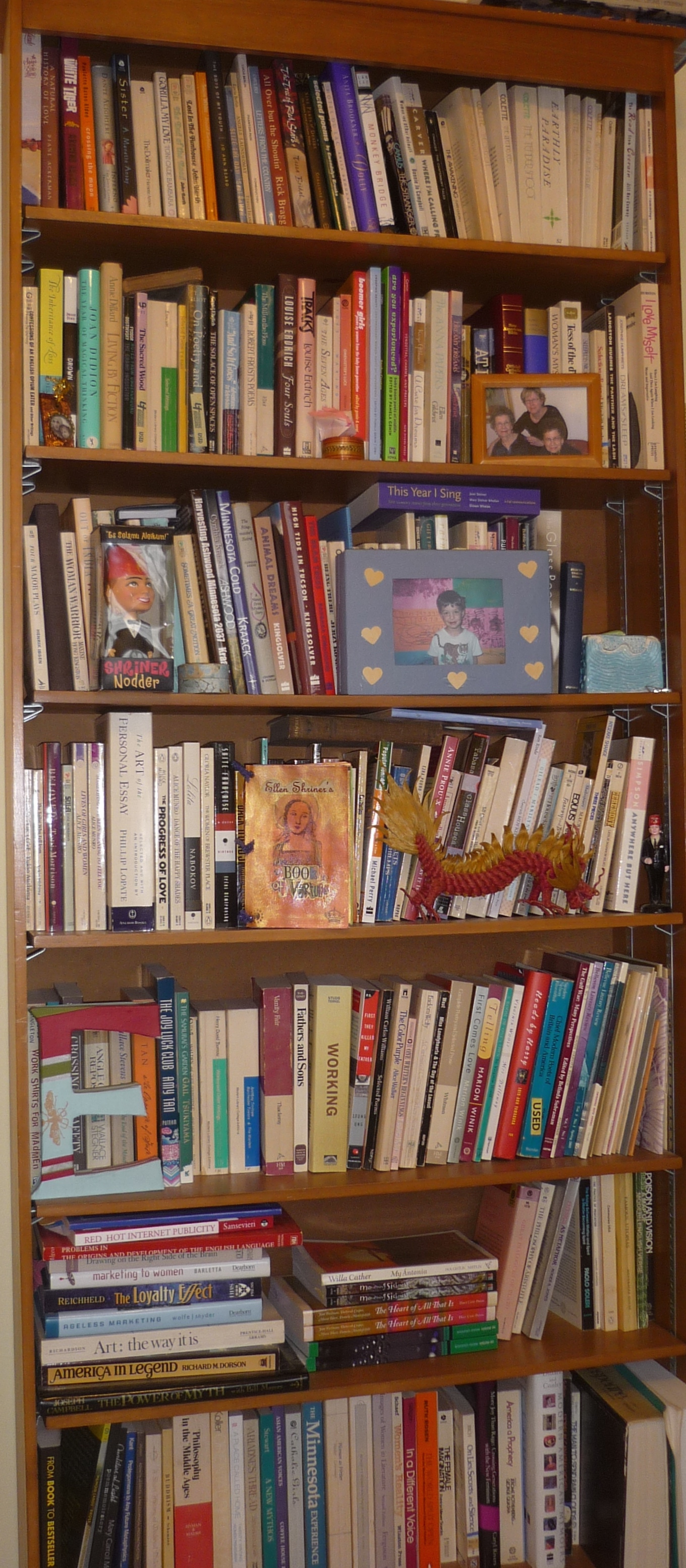
    How much longer will bookcases be prized as places where knowledge and inspiration reside? For hundreds of years people have built everything from simple pine shelves to the finest mahogany and oak bookcases to house their treasured books. But ebooks are replacing paper books. Instead of paging through a book, more of us turn to the Internet for information and open iPads or Kindles for the stories we love. I began pondering this cultural shift when I emptied my bookcases before moving to a smaller home last year.
    P1040180

    Deciding what to discard was difficult. I love my books. No, really. I love my books. When I picked up each one, I felt a tug of recognition and pleasure that quickly turned into a pang of sadness. As the afternoon wore on, I was knee-deep in books and accumulated nostalgia.

    My books represented my intellectual history, and therefore, my own history. The philosophy textbooks and literary classics came from my undergraduate days. During graduate school I added feminist poetry, stories, essays, and novels. Because they were scarce in the late 1970s, my friends and I shared them like contraband. The ideas I found in those pages challenged me to reconsider many of my beliefs.

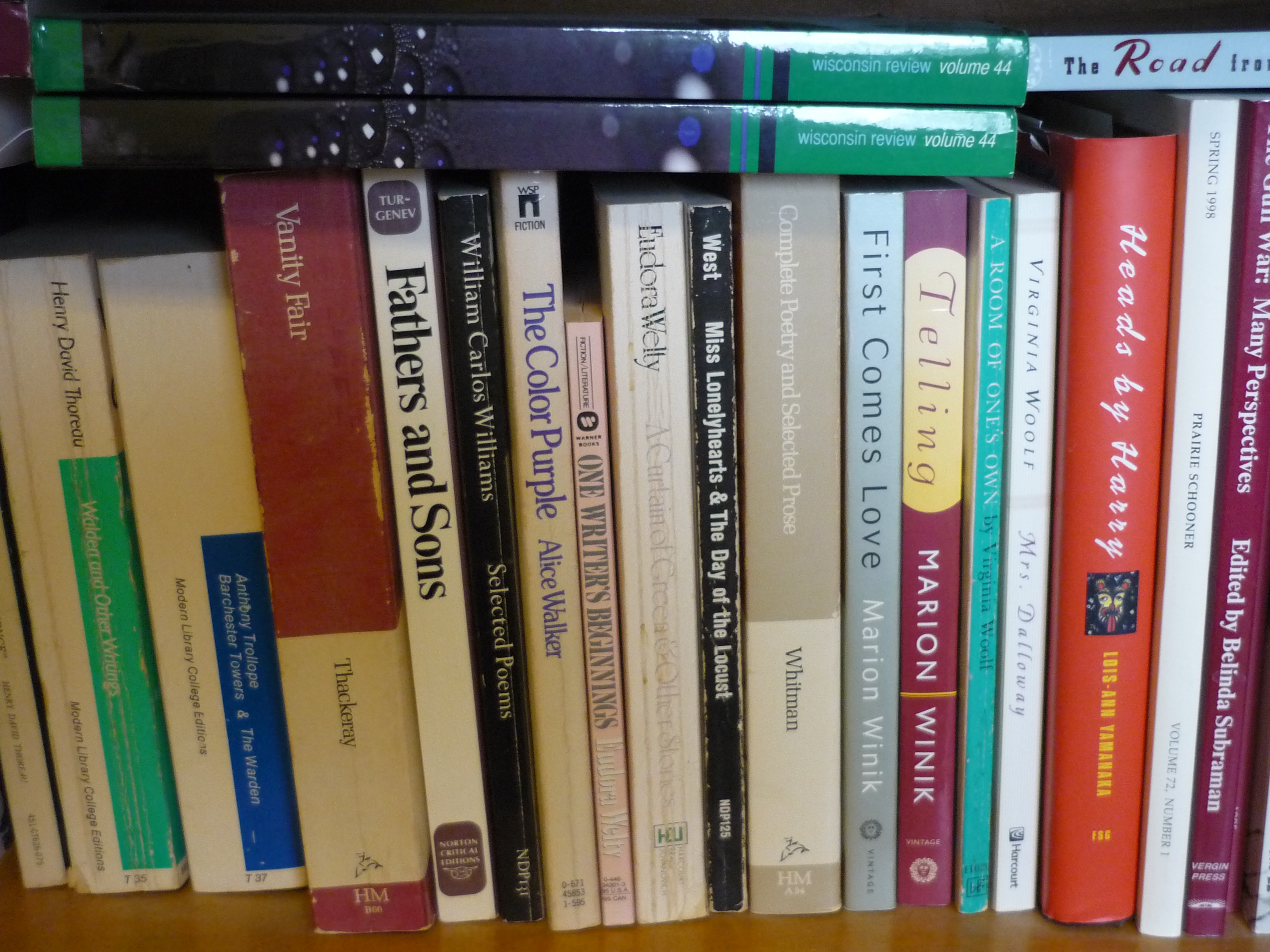
    Some of my books are novels by authors I just love (Lois-Ann Yamanaka, Tim O’Brien, Alice Munro, Toni Morrison, Simon Mawer, Aravind Adiga—I could go on and on). Their stories transported me to other times and cultures and enriched me with insights that I wouldn’t have had any other way. How could I let go of these old friends?
    P1030795

    At least a dozen of the books are by authors I know personally. Pamela Gemin. Cynthia Kraack. George Rabasa. Sherry Roberts. The anthologies that published my essays are also stored there.

    Essay collections by Marion Winik, Ellen Goodman, Barbara Kingsolver, Bailey White and others mark my ongoing effort to learn the craft of writing personal essays.

    I have shelves of books on writing—from the grammar handbook I used in my first teaching job to books about the craft of writing memoir. I have books about how to get published and how to promote a book. P1040205

    After a while, discarding the physical books became easier. I thought about how long it had been since I opened some of them and realized they meant something once, but no longer. I reminded myself that if I needed to reread a certain Wilfred Owen poem, I could find it online.

    I needed to let go of the intellectual fantasy that one day a visiting friend would look at my books and say, “So what do you think of Kant’s The Prolegomena to Any Future Metaphysics?” or ask “How has Adrienne Rich’s On Lies, Secrets and Silence? influenced you?” When friends visit, we hang out in the kitchen—no one but family ever sees my office. And really? I know who I am and what ideas formed me—without these emblems to remind me.

    Besides, there are plenty of books that I love but don’t own. Long ago I realized that I couldn’t possibly own every book I wanted to read. Many of my favorite books belong to the public library or to friends.

    These days, I keep many of my books on my iPad—my own personal and very portable bookcase. So many books in such a small space! I can take them anywhere. I never have to be without a good book.

    At Christmas, when I received hardcover books from my sons I was surprised—I assumed they would give me e-books. I’m delighted with their gifts, but I was startled to realize that my paradigm has shifted.

    Today, I have one foot in the paper world and one foot in the digital world. I’ve pared down my collection of books, and it makes me happy to think of someone else enjoying the ones I gave away. There still are plenty of books I’m not prepared to part with. But going forward, I will have fewer paper books. My future grandchildren may view paper books and wooden bookcases as quaint artifacts and that’s OK.

    I’ve come to realize that what I really love are stories and ideas. They can reside on the page or on the screen.
  • The Makings of an Extraordinary Pie

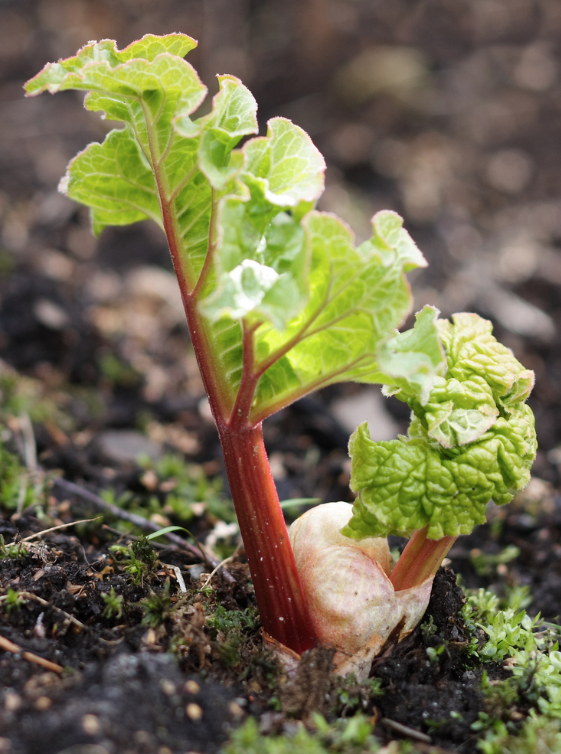
    Photo by Miika Silfverberg - originally posted to Flickr as Young rhubarb
    Photo by Miika Silfverberg – originally posted to Flickr as Young rhubarb

    It was the sure sign of spring—those first green tufts of rhubarb pushing their way through a patch of the garden that may just a month earlier still have been covered with snow. After seeing the rhubarb, we knew the growing season would soon follow and the garden would once again be full of green and growing things. With their agrarian roots, my parents both tended the garden, but it was my mother who found a use for the rhubarb.

    She showed my siblings and me how to tame its tartness by dipping the stalks into a cup of sugar. I imagine that her mother may have shown her this on the Iowa farm where she started her life. Picking the pinkest stalk available, I would dip one end into a cup of sugar so it was completely covered with the miniscule crystals of sweetness, the juice from the cut end of the stalk leaving just enough moisture for the sugar to stick to; I’d bite off the coated end and immediately taste a tart and sweet mixture of flavors that made my mouth pucker in delight.

    Screen Shot 2015-08-27 at 10.53.59 AMOf course, rhubarb is the perfect conduit for sugar, as proven by one bite of my mom’s rhubarb pie, a particular favorite. My mother and I would pick a variety of stalks—the ruby red ones, the ones that were both pink and green, and then a few that were perhaps a little too green. But mixed with flour, sugar, and butter, the mixture would meld together into a tangy, sweet concoction that tasted perfect between the layers of a flaky pie crust.

    Admittedly, rhubarb is not the most popular of vegetables. I believe the reason we may have had it was because it was a food that the earth could provide, and in my parents’ upbringing, no food went unused. Even a vegetable that needed a great deal of sugar to make it palatable. Now as I see rhubarb come back in my garden, spring after spring, I am reminded of that some things will always be.

    But in truth, I let this harbinger of summer go to waste. I get excited about its growth, but don’t pick the stalks when I should, always thinking that I don’t have enough time for pie or muffins or even a simple rhubarb sauce. Soon their leaves start to turn yellow and their stalks shrivel, as if shaming me. I think of my parents and their disdain for waste. I look at the waning crop and admonish myself to be a better steward of this steadfast plant. Perhaps I should be gentler with myself, remembering that my mother baked pie when she was off from teaching school in the summer and had more time to show me all the steps to baking a pie—from mixing the filling, to rolling out the pie crust, and knowing when the filling was bubbling up just enough to tell us it was done.

    ***

    After my mother had moved out of my childhood home with its massive garden, we went for one last look before the closing sale. Surveying the garden, which was overrun with weeds, I asked my mom, “Do you want anything from the garden?”

    “Will you see if there is any rhubarb?” she asks. Sure. And there is, among the stinging nettle, wild daisies, and bindweed. Of course there is rhubarb. There always has been. I gingerly make my way through the weeds and begin breaking stalks off. “How much do you want?” I call up to my mom, who’s watching from the deck. “Oh, I don’t know, a few stalks,” she answers.

    I pick a fistful of stalks, and not eager to stop, I get a few more, knowing that this rhubarb, the last that we will pick from this garden, will make an extraordinary pie.

  • Treasure

    Before we went to Italy I photographed all the jewelry I’d really miss if it were stolen. Some of the pieces have street value, but most of them are keepsakes and their associations are what make them valuable. My childhood charm bracelet with the teeny orange crate. Mom’s matching sweater pins with the blue, rose and yellow rhinestones. A cameo necklace from my grandmother. Rings from my sister and my sons.

    IMG_0447I felt paranoid and silly, but took the photos anyhow. Two friends have had jewelry stolen while they were away from home. Because they didn’t have photos, their insurance companies couldn’t value the items and the police couldn’t identify the jewelry if they found the stolen property.

    If my jewelry were stolen would I be comforted to get it back? Probably not. The simple joy in wearing the earrings, rings, and bracelets is that they’re pretty and I like thinking of the people who gave them to me. If they were returned to me after a theft, that event would distort my feelings about the pieces.

    My impulse to treasure keepsakes is misplaced. Regardless of whether or not I possess the jewelry, I will have the memories of the occasions and the people who gave them to me.

    What I really want is to protect what is irreplaceable. If only the police could show up at my door and return all of the people I lost last year: Mom, Aunt Corinne, Uncle Jim, and Uncle Rocky.

    I am rich in memories but still making payments on how to accept impermanence and loss.