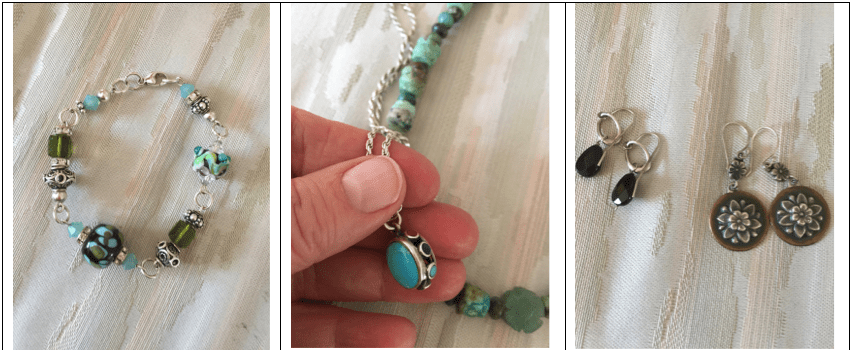
Every morning, I indulge in a small ritual—choosing what jewelry to wear. What I reach for depends on my mood and what clothes I’m wearing. It’s an expression of my taste. But I’m also choosing talismans. The pieces I wear don’t offer magical protection, exactly, but they do offer a tiny bit of power—to keep people close to me.
Many of the earrings, rings, and necklaces I have were gifts. Slipping them on reminds me that I’m loved. Or if I wear something that belonged to my mother, grandmothers or aunts, I am drawing on memories of them to give me strength.
I’m not alone in assigning secret meanings to my jewelry.
When I visited the Victoria & Albert Museum’s Jewelry exhibit in London last fall, I learned that since ancient times, whether jewelry was made from bones and shells or wrought from gold and precious gems, it has had meanings that go beyond adornment and self-expression.
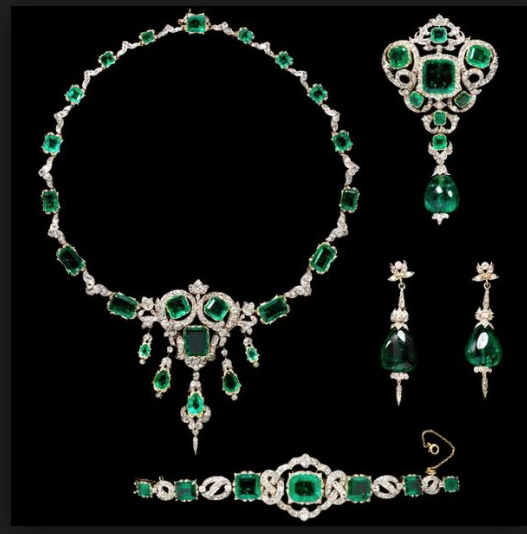
Often the additional meanings are obvious—to show status and wealth (crown jewels), to express love and affection (wedding bands), as a sign of faith (the cross for Christians and the Star of David for Jews). Jewelry is also worn for protection or in remembrance.
The ancients thought certain stones and gems protected the wearer from illness and evil spirits. For example, rubies are supposed to confer health, strength and fearlessness. I didn’t know that when I chose a wedding band with rubies in it. I just liked rubies—I wasn’t hoping to feel more powerful.
Wearing jewelry as keepsakes is the meaning I most relate to.
After my mother died, I began to wear her wedding band on a chain as a way to keep her close. Not every day, but more intentionally, when I specifically want to think of her.
The opal ring my husband gave me, when I was depressed about turning 60, reminds me of his enduring love and how well he understands me.
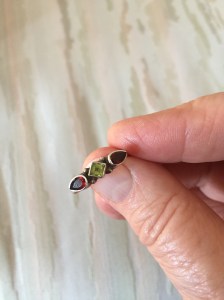
An inexpensive craft fair ring with chips of peridot and garnet in it reminds me of my father and a sunny day when I visited Dad and Mom in Florida. Their health was still good and we were carefree.
The oval garnet ring my sister gave me when I became a mother brings to mind our strong bond.

So many of the pieces I love and wear often—the bracelet my sister-in-law made for me, the necklaces a friend has sent me over the years, and the earrings my sons have given me—remind me of some of the special people in my life. Wearing these gifts is a secret source of joy.