Category: Adjusting

  • Unmasking

    In May, I stopped wearing my KN95 mask. The last time I’d worn masks in earnest was in April at the airport, in museums, and on public transportation in Amsterdam. I was definitely a minority, but I didn’t mind. My goal was to avoid COVID while we vacationed in Europe. For three years I wore or carried a mask with me. Now discontinuing masks feels odd. COVID was a harsh teacher and the early days of the pandemic are still vivid.
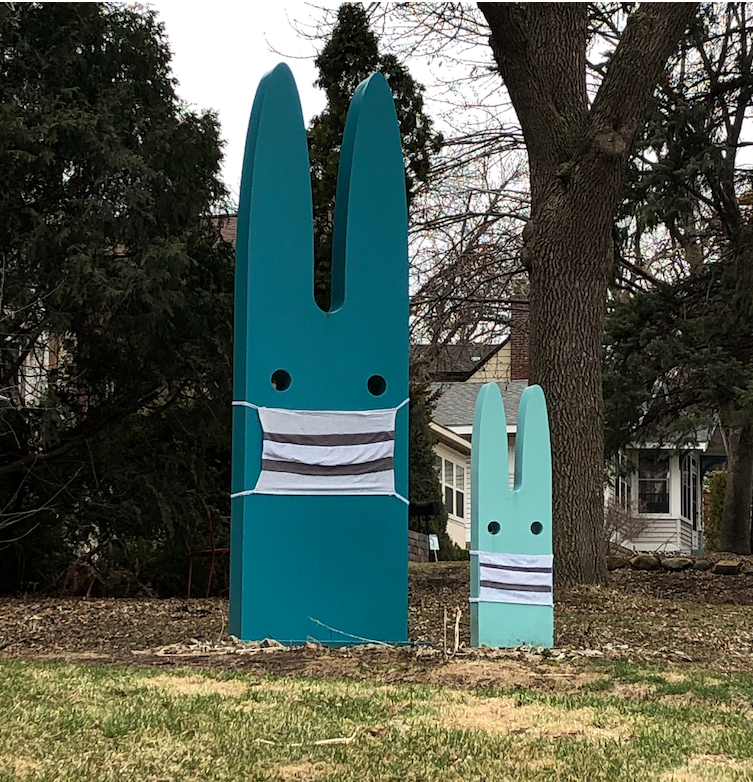
    Like everyone else, I’d heard healthcare and other frontline workers didn’t have enough PPE. Even cloth masks would help. The whole mask-making enterprise felt ludicrous and desperate. I struggled to understand: the government had no coherent plan for a pandemic? We were on our own for protection? The world seemed out of control. Anything could happen.

    A Facebook friend, who’s a physician and quilter, posted a mask pattern and later I found another design online. I had lots of quilt fabric remnants and was willing to sew masks if it would help.

    When Abbott Northwestern Hospital put out a call for homemade masks, I sewed floral fabrics women might like and abstract patterns men wouldn’t mind. I flannel-lined a few for softness before I realized they would be hot.

    On a dark wintery day, the streets and hospital parking lot were eerie and empty when I delivered the masks. I texted the contact and rolled down the passenger window as instructed. A hospital employee took the bagful and thanked me profusely.

    My sister (a respiratory therapist in a respiratory pandemic) asked for some. My homemade masks were a talisman that made her feel loved. At first, she wore a cloth mask over her one and only N95. She was expected to store the N95 in a brown paper bag so she could re-use it. Later she gave the extra cloth masks to her Ohio hospital’s Housekeeping staff, who didn’t have any protection.

    I sent some to my son and future daughter-in-law, a medical resident who treated COVID patients in a Bay area ICU. She had an N95, but she could wear cloth masks away from work.

    My sister suggested I give some to younger relatives who worked at a psychiatric hospital in Illinois. Although the local hospital and my sister had appreciated the homemade masks, I felt self-conscious about sending them. I worried the masks would be cringeworthy (Crazy Aunt Ellen made us these useless masks and she expects us to wear them?) but my relatives were gracious—they understood the sentiment.

    Masking began with a jolt of fear, but unmasking happened gradually. I’d grown accustomed to eating out. My interactions in stores, clinics, and the pottery studio were even more distanced. The CDC’s decision to call off the emergency didn’t really figure into my thoughts. I’d concluded my risk was manageable although COVID is still out there. One day I’ll get it, but I probably won’t be seriously ill and die. Long COVID concerns me, but three years after the pandemic began, that fear no longer haunts my days. 

    A KN95 mask is in my purse, but I think I’ll be OK without it. 

  • One Generation Gives Way to the Next

    When our sons were small, my husband and I invented our own customs for Christmas, because my parents and his lived hundreds of miles away. Making the holiday special was up to us. We missed our extended families, but we were free to do whatever appealed to us—there was no other schedule or tradition to consider.

    A few years ago

    We read “The Night Before Christmas,” filled stockings with candy, assembled big toys like the play kitchen, and added batteries to toy guitars and handheld games. We took a bite out of the cookies left for Santa and scribbled “Thanks!” on the notes our sons wrote (Santa has good manners). 

    As our boys got older and Santa became a sweet memory instead of an actual visitor, our habits changed. The four of us began cooking elaborate meals together—three days of them. Christmas Eve Eve’s dinner would be whatever the group craved—maybe Southern BBQ or cassoulet. An Italian feast (calzones, fagotch*, and homemade pasta) became a required ritual for either Christmas Eve or Christmas Day, and the third meal might be something fancy like Beef Wellington. Later we welcomed our sons’ girlfriends (now wives) into the kitchen.

    When they married, we understood some traditions would have to flex; after all, our daughters-in-law and their families have traditions, too. Changes have already begun. This Christmas the six of us will be together on Christmas Eve. My husband and I will miss our three-day extravaganza, but believe this is the right way forward.

    If we have grandchildren, I envision more changes on the horizon. I’ve watched and learned from friends and family who have married children and grandchildren. They’ve all had to adapt and invent new approaches to holiday gatherings. My brother and sister-in-law spend either Thanksgiving or Christmas with their married child and her family, but not both. Other relatives get together after Christmas, because their child’s divorce means accommodating two separate parents and three sets of grandparents. A friend doesn’t see her children and grandchild until New Year’s Day—scheduling the group at Christmas has gotten too complicated.

    My friends and family don’t relish being alone on Christmas, but they accept the situation and make the best of it. As grandparents, they are no longer the center of holiday celebrations—their adult children and grandchildren are. It’s their turn now.

    I expect changes will continue for my family. As my husband and I age and grandchildren arrive, we’ll adapt again and again. Gracefully, I hope. After all, this is how life is supposed to go. One generation gives way to the next. Inherent in raising children is the assumption they’ll become independent adults, and as a parent, I will be less central. One day, they’ll be responsible for arranging (and cleaning up!) our holiday celebrations, and eventually their children will do the same for them. 

    That’s as it should be.

     *The family’s phonetic spelling for a form of focaccia in which ground meat, tomato paste, fennel seed and other spices are spread on bread dough, rolled up, baked, and sliced into pinwheels.

  • Meditation on Autumn Equinox

    Long before a turning point is evident, tiny shifts lead to change: The last cut of the axe before a tree falls, the gathering force of an avalanche before it lets go, the final few cells piling up to a clot that blocks flow and becomes the stroke, the gradual loosening of a sleepy child’s fingers before the toy slides to the floor, the droop and dangle of a leaf before it drops, the new insight added to insight as a mind is changed. 

    At autumn equinox, a near balance is struck when day and night are almost the same length before the northern hemisphere tilts toward winter. Minutes of daylight have been slipping away since June, and September’s days, though still sunny, are cooler. I don’t welcome the coming darkness, but accept it. And autumn has its compensations: apples, fires, and glorious colors.