Paying Attention: The Importance of Being Present

We live in a world full of distractions. From our smartphones to our busy schedules, it’s easy to get caught up in the hustle and bustle of everyday life. But what happens when we’re so preoccupied that we fail to notice what’s right in front of us?

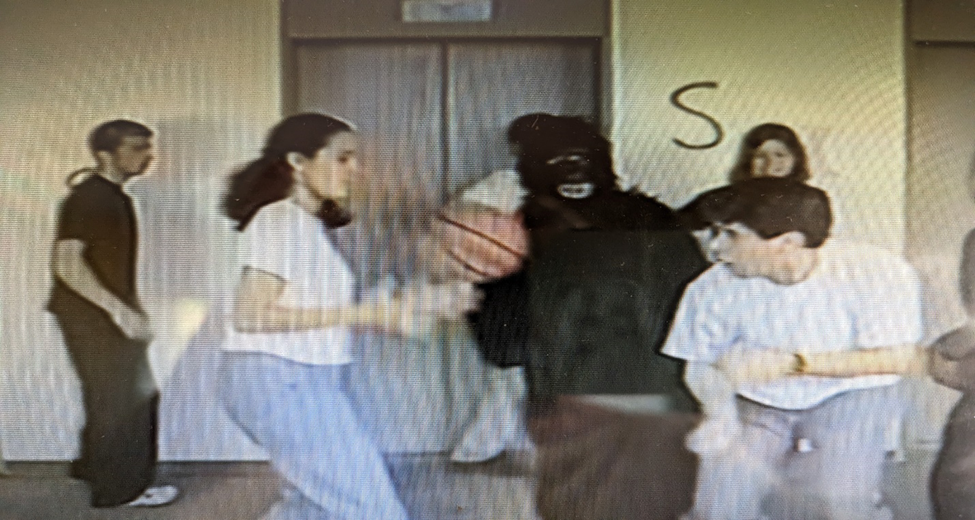
In this now-famous experiment, a group of participants is asked to pass a basketball to one another while counting the number of times they pass it. In the midst of all the action, a person in a gorilla suit walks through the scene, but only a tiny percentage of participants actually notice. Participants were so focused on their assigned tasks, counting the passes, few noticed the gorilla.

The experiment serves as a powerful reminder that we can be so focused on completing our solo tasks, formulating an answer, or on our desire to succeed that we fail to take the opportunity to laugh at the gorilla in the room. The gorilla could just as well have been a child smiling at us, an oriole landing outside our office window. There’s a time to focus and a time to look up and enjoy life and each other.

It’s not just about noticing gorillas, though. Being present and paying attention can have a significant impact on our relationships, our work and our overall well-being. When we’re not fully engaged with the people and things around us, we miss out on opportunities to connect, learn and grow.

So, how can we cultivate a greater sense of presence and awareness in our lives? Here are a few tips my friends and colleagues have found helpful:

  • Put down your phone. We’ve all heard this one before, but it’s worth repeating. Our phones can be a major source of distraction, pulling us away from the present moment, the book we are reading and the people we are with.
  • Be mindful. Even just a few minutes of mindfulness meditation each day can make a big difference in our ability to stay focused and present.
  • Take breaks. It’s easy to get caught up in the go-go-go of modern life, perhaps even easier now that I’m working less than full-time and have a more erratic schedule. But taking a quick walk around the block or spending a few minutes concentrating on my breath makes it easier to pay attention.
  • Embrace life’s transitions. Life is a series of transitions, and that’s especially true as we age. We go from being a student to working full-time, from being single to having kids and grandkids, from being a parent to becoming an empty-nester, from focusing on our work to enjoying retirement.
  • Prioritize self-care. Taking care of ourselves becomes especially important as we age so we need to dedicate time to nurturing our physical, mental and emotional well-being, whether that’s meeting a friend for dinner, taking a bath or spending time in nature.

At the end of the day. Paying attention is about more than just noticing gorillas. It’s about being fully present in our lives in the world around us. When we’re able to do that, we open ourselves up to new experiences, deeper connection and a greater sense of fulfillment. And what could be better than that?

My First Attempt at AI-Powered Writing

Artificial intelligence is all the rage, so I decided to use it to generate my February Word Sisters post.

My request: write a rhyming poem for women 50+ about the joys of aging (though I also briefly considered “the realities of aging”).

First I tried anyword.com, but didn’t love what it generated, so I turned to chatGPT. In less than 30 seconds, here’s what I received.

As we age, we gain wisdom and grace

Our wrinkles are lines that tell our life’s pace

We’ve lived through hardships and moments so sweet

And we’ve learned that life is a journey, not a defeat

We no longer chase fleeting trends

Instead, we embrace our truest friends

Our bodies may change, but our spirits stay strong

And we continue to sing life’s sweetest song

We relish in the simple things

Like watching the sun set, and what the day brings

We find joy in a book or a warm cup of tea

And appreciate the beauty in things we see

We know that time is fleeting and precious

So we take moments to pause and reflect, never reckless

We find beauty in the moments we share

And embrace every opportunity to show we care

So let’s embrace this new chapter with pride

And enjoy the joys of aging with every stride

For we know that with each passing day

We become wiser, kinder, and better in every way

As a career writer, I’m still pondering how I might use AI-powered writing, but there is one thing I do know: I couldn’t have written a poem so quickly. And while I don’t think it’s a great or even a good poem, I do believe there’s value in not having to start with a blank page.

Have you experimented with AI-powered writing? If so, what tools have you used and what’s been your experience?

Reclaiming My Focus

Focus. It’s an ability I used to take for granted. But not anymore. For whatever reason—age, information overload, pandemic-induced anxiety—I’m just not able to concentrate the way I once did.

Is the inability to do so a warning sign of cognitive decline?

After coming across conflicting opinions online, that’s a question I plan to ask at my next physical. In the meantime, I did what I usually do when seeking answers, I found a book to read: Stolen Focus: Why You Can’t Pay Attention and How to Think Deeply Again byJohann Hari.

What I learned—that our attention is being stolen—was disturbing enough but the fact that Facebook and other social media companies have intentionally designed their sites to keep us online and coming back so they can maximize their revenue has prompted me to shy away from logging on.

Despite this, Amazon knows what I’m reading, and Alexa often knows what I’m having for dinner. Google Nest knows if I’m home, and Google Maps knows where I’m at when I’m not.

While there are some positives to this—for instance, I no longer have to look up and then print directions—I don’t like feeling that I’m being surveilled.

So I unplugged Alexa and put her in the basement, and I closed out 60+ accounts I rarely use. I also unsubscribed from dozens of e-letters.

And, after a University of Oregon study found that if we are focusing on something and get interrupted, it takes 23 minutes on average for us to get back to the same state of focus, I’ve turned off the ringer on my phone and no longer leave email open all day.

The goal: to return my focus to what I really want to be paying attention to: my family and friends and the causes I care about.

Anxiety: It Often Gets the Best of Me

I was an anxious kid, an even more anxious teen. So much so that the nuns at my Catholic school let me skip mass each morning because of how often I threw up or fainted. Even in college, I did so now and again. And while it’s been decades since, anxiety once again has become a near-constant companion, in large part due to COVID.

And I’m not the only one who is anxious.

The World Health Organization (WHO) reported that anxiety increased by 25% across the globe in the first year of the pandemic. And this fall, a panel of medical experts recommended for the first time that doctors screen all patients under the age of 65 for anxiety which, involves asking questions about symptoms: How often do you feel nervous, anxious or on edge? Do you have trouble concentrating? Does worry present you from falling or staying asleep?

I’m not sure why I and all the rest of us age 65 and older aren’t covered by the WHO’s recommendation, but I do believe we ought to be. After all, it’s not like anxiety goes away with age. In fact, I and many of my friends and colleagues who are 65+ report an increase in anxiety, in part because we no longer have the self-esteem and support system that came with our jobs. Health issues are also a factor.

Some of us also report an increase in hang-xiety, which is anxiety some people experience after drinking alcohol. I certainly did shortly after the start of the pandemic when I found myself indulging far too often in a second or even third cocktail, which research shows can decrease dopamine, a neurotransmitter that plays an important role in keeping anxiety under control.

It’s one reason why I reluctantly gave up drinking this year. It’s also why I’m doing other things as well:  

Journaling

Setting reasonable goals

Striving for progress, not perfection

Asking for help and support

Trying eye movement desensitization and reprocessing (EMDR) therapy

I’m also admitting that I’m struggling. Doing so has been tough for me but it’s getting easier thanks to the love and support of family, friends and my fellow writers/Word Sisters.

Learning a New Language: Love

“Every household has a first language, a kind of language of the home,” says Alex Kalman in The Art of Noticing: 131 Ways to Spark Creativity, Find Inspiration and Discover Joy in the Everyday.

If that’s true, the language of the home I grew up in was chaos.

My dad worked long hours in a Honeywell factory, assembling parts for our nation’s space program.

Sometimes he came home after his 12-hour shift. Often, he went out drinking. Sometimes he got drunk. Occasionally bad things happened. Like the time a buddy who was driving plowed into the back of a parked car, sending my dad through the windshield and to the emergency room to have his scalp stitched back together.

I learned about that the next morning when my mom sent me into my parents’ bedroom to wake my dad. I was in sixth grade at the time and, nearly 60 years later, can still picture his dried blood on my parents’ white sheets and the rows of stitches that ran up my dad’s forehead and into his balding scalp.

There was also the time my dad drove his car off the road and into a house. And the many times he just didn’t come home. By then, he owned a neighborhood bar where he and his favorite customers often stayed drinking until the wee hours of the morning.

And, no surprise, there were the frequent fights his drinking caused, fights he often didn’t remember but that I still find hard to forget.

Although there’s a lot about our COVID-induced isolation that I resent, one thing I do appreciate is that it’s given me the time and space to think more deeply about the patterns of behavior I grew up with and which ones no longer serve me.

Therapy and a supportive partner are a big help. So is Dr. Gary Chapman, whose work centers on helping people learn what he refers to as the five “love languages”:

  1. Affirming with words
  2. Giving gifts
  3. Offering physical touch
  4. Performing acts of service
  5. Spending quality time together

Although I wish the language of my home would have been different when I was growing up, I’m working hard to make love its language–and mine–now.