Tag: nature

  • Lazy, Crazy, Days of Summer

    So, this is summer. We all began daydreaming about this time of year during the February/March doldrums. Longer days, more time to bike, read in a comfy outdoor chair, walks with friends or family, cookouts, maybe swim, possibly attend a local festival or even a trip to the state fair or a getaway.  Don’t think about bugs, grass cutting, watering the gardens, traffic, crowds, bored kids, very hot days, house maintenance at your place or a relative’s, ants in the kitchen, work that doesn’t diminish or go away, higher food costs or utility bills. Just roll out the lazy days. Really?

    For each of us with plans for a long weekend, there is a scheduler or boss with post it notes from a few of our peers for the same time off and calendars needing additional worker hours. Caregivers are scrambling to fit in dentist appointments, physicals, and eye tests and all required before the last week of August. And don’t forget finding drivers’ ed if there is an appropriate age kid in the house.

    What is it about our easy-going collective summer fantasy? Planted in our rhythms by school calendars built around agricultural and/or weather limitations centuries ago. Perpetuated by advertisers and businesses. Lots of people work their longest hours in warm weather. For them summer means more bucks to stretch through slow times. Or those extra summer jobs pay for the extra summer expenses. 

    What we share in our summer dreams across many parts of the United States are the simple pleasures of walking outside without a coat or gloves, not slipping on ice, seeing neighbors or friends while casually walking, sitting on a public bench sipping a cup of coffee or slushy. There are flowers to admire, fresh vegetables and fruit available that taste better, sunlight more hours instead of porch and garage lights. After staying inside during sunlight-starved months of cold, this is worth the wait. Wasps, bees, flies, mosquitos and ticks: please give us a break.
  • The Ducks Will Return Without Us

    The Ducks Will Return Without Us

    Every spring, the shout goes up.

    “Ducks are back!”

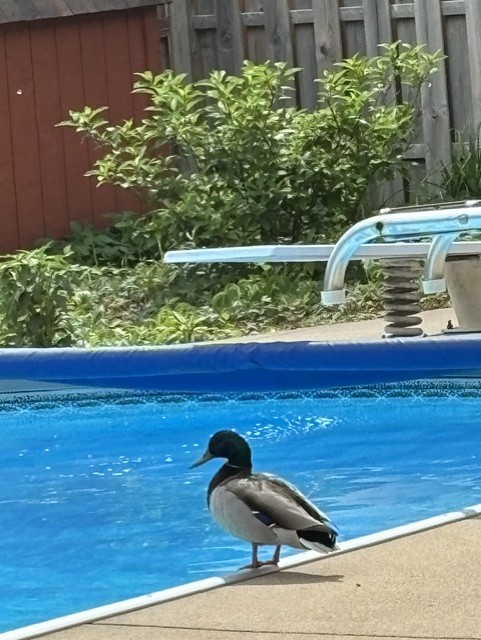
    For thirty years, this has been a constant. Snowmelt pooled on the pool cover before spring fully arrived, and the mallards landing there every season, trusting this small temporary pond the way we trusted the house.

    It could be startling, sitting quietly on the deck, reading or meditating. Then the silence would break: quacking, the whuff-whuff-whuff of cupped wings slowing descent, ducks materializing out of the sky in a downward swoop. Sharp orange feet skittering across the wet cover — slap, slap, slap, scrrrch. Splashing and rippling. Finally, the settling sounds: little shakes, bills dipping into water, softer quacks, even a low gurgle from the mother duck.

    Most often it was a pair, though this year we’ve seen as many as four drakes in the pool with no hens in sight. Lately it’s been just one drake returning, again and again, during the day and evening.

    I wonder if he, too, feels the pull of change.

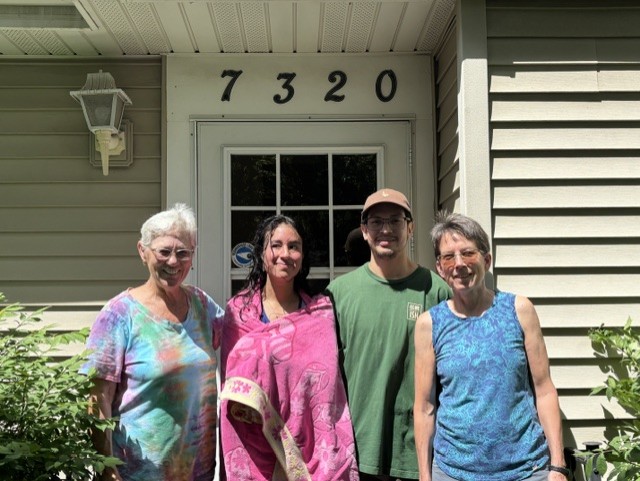
    This year, their return feels especially poignant because it is our last spring here. Our house has sold. All the rooms are empty except Crystel’s. Last in, last out, I tease her. She’ll dawdle with the ducks as long as she can until it’s time for both of them to move on.

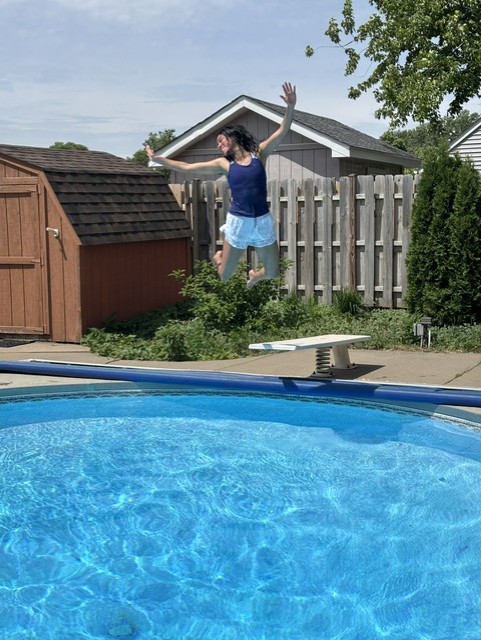
    With the cover peeled back, open for swimming, the ducks still come. Gliding across the open water, bathing, napping, resting. There will be an ending or a moving forward for us. A final day. A final jump in the pool.

    Our house has a heartbeat. It is not just wood, walls, windows, and yard. Its heartbeat has been the four of us. Jody and I brought Juan and Crystel here when they were babies. We built a nest. We raised them. They pulled themselves up. Took their first steps. For twenty-four years, this house held us through changes, noise, laughter, growing up, letting go.

    The house has been saying goodbye to us, too. The lilacs bloomed their fragrant light purple. The flowering crabapple tree burst open in dark pink blooms. White blossoms on the back apple tree were in full regale during the open house. Peonies bloomed in time, as if giving us one last gift.

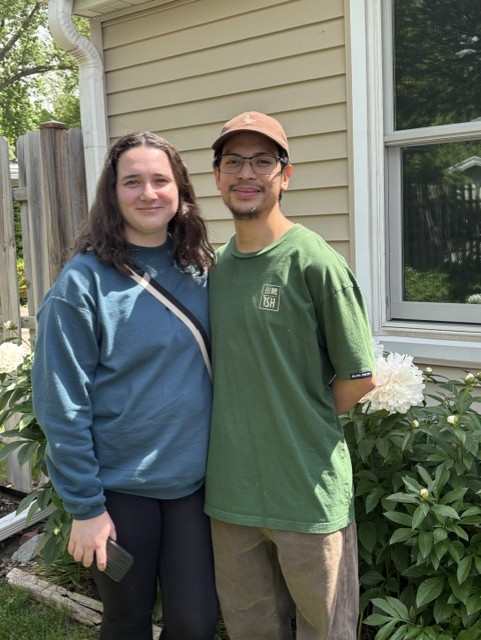
    Juan and Aryanna

    I am writing this under the shade of the apple tree in the backyard. I hear the schoolchildren next door, the birds singing, the quiet drift of clouds overhead. So much is the same, even as everything is changing.

    In a few days, we will close the door on making more memories here. But this is not really goodbye. The house will go on. It was alive when we came, and we have been good stewards. We filled it with love, with children, dogs and cats, hamsters, fish, and an indoor playground. Many projects were completed. Many dreams realized.

    What I will miss most is not the house, the landscaped yard, or even the pool. I will miss the four people we were here: Jody, Juan, Crystel, and me. We were the pulse. The collective heartbeat.

    The house will look different in thirty years. New voices will fill it. A different timbre will shout, “The ducks are back!” But the ducks will keep returning. The lilacs will bloom. The trees will flower. The house will keep beating.

    And so will we.

    Like the ducks we will shift to the next stage the season asks of us. We will circle back to each other, returning again and again.

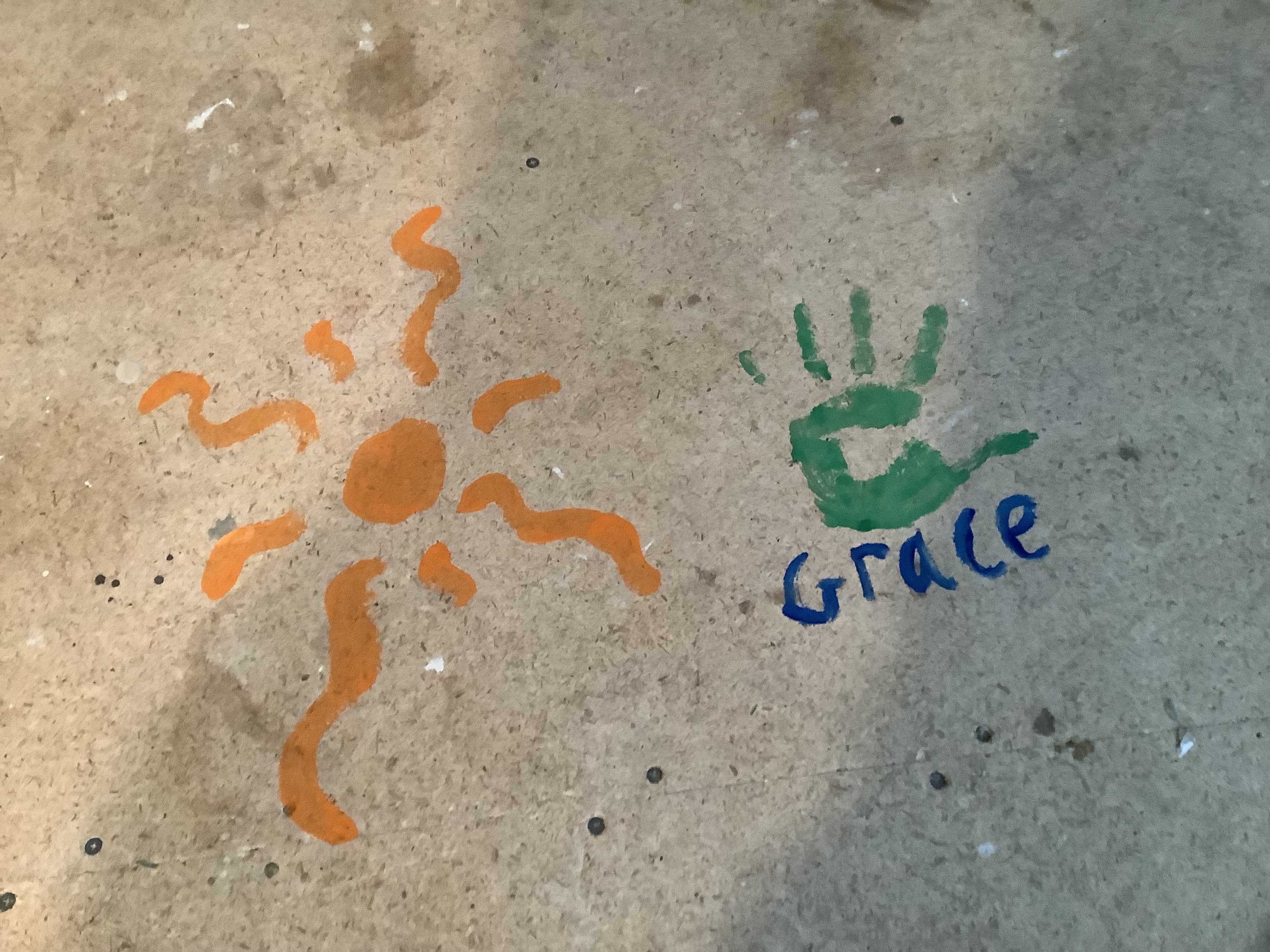
    Crystel's final jump
    Crystel’s final jump!

  • Forty Gallons into One

    Quality sleep generally suffers when serious, worrisome, or sad things press on daily life. And here we are with a horrible cacophony of such news screaming across the media, in grocery store lines, and casual conversations as friends and family look for some tiny assurance that the world, our country, or at least a personal circle could be okay.

    Driving through rural areas in late winter, bags hang from trees ready to tap maple sap. Other trees might also be tapped, but maple trees are the largest producers. Tubing might zig-zag through a larger tree stand instead to gather sap into larger lines and run to collection tanks. For a small syrup maker, the sap will fill bags or pails which will be collected then carried to the sugar house location.

    Forty gallons of sap are needed to make one gallon of maple syrup. The sap is boiled over an open flame until extra fluid is gone, then foam is removed and the syrup filtered. The process is time consuming with possibilities for accidents like burns and back strains. 

    Some syrup seasons snow still stands in the woods. As kids we filled small bowls with snow then bothered adults until syrup was poured over it. We learned how putting the maple candy in your mouth too quickly could painfully burn a tongue and how hot maple syrup splatter hurt on bare flesh. Regardless of age, we walked around the tubing, hot fires or equipment. No running for so many reasons.

    If weather affects trees or harvest happens too late, the sap might be cloudy or bitter wrecking a season. If sap is undercooked or overcooked the syrup will be of lower quality. If deer and bears mess with piping the sap may drain onto the ground instead of filling the collection tank. Many things can reduce production from 20 gallons to a few or nothing.

    The world seems to operate with the similar equations as maple syrup. A whole lot of good raw material or information may be required to produce a small amount of awesome happiness. There are many ways to interfere with delivery of the good and deliver serious, worrisome, or sad results. Maybe when sleep is disrupted, the thought of breakfast including fresh maple syrup can sweeten dreams or at least make the night hours pass easier. Forty gallons of springtime sap into a few tablespoons of delight.