Category: Reflection

  • The Fierce Urge to Tell Our Stories

    Anne Frank was a vivacious teenager and a keen observer of human nature. She wrote well and her diary often includes deft characterizations of schoolmates, family, and the other people in hiding with her family. When I recently reread her famous diary in preparation for visiting her family’s hiding place in Amsterdam, I was impressed by her lively mind.
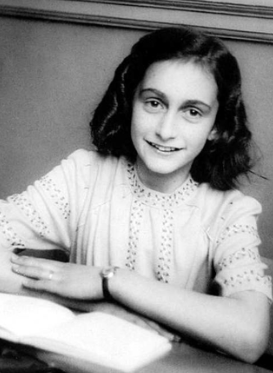
    Initially, she wrote to sort out her feelings—the same impulse that has prompted me to keep a journal off and on since I was a teenager. Putting my feelings into words helps me understand them. Airing out something on the page calms me and enables me to move on. 

    At first, Anne Frank meant her diary to be private. When she was 15, she heard a radio broadcast about a Dutch official who wanted to collect war stories and experiences, so she edited her diary in hopes it might be published one day. Unlike Anne Frank, I don’t want my journals shared with others. They’re histories of cranky confusion, and without context, they would likely distress family or friends once I’m gone and can’t explain.

    After her family went into hiding, her diary also served as a record of how they lived—what their space looked like, what their meals were, and what their daily schedule was. As the war intensified, she recorded bombing raids and news updates.

    Shortly after I finished the Anne Frank book, my sister asked me to refresh her memory about our great great grandmother—Katherine O’Tanney Feeley who emigrated from Ireland in the late 1800’s. To answer, I searched handwritten notes from my mother and father—a story here, a date and detail there. Some of the notes are sketchy and incomplete, but I decided I would make sense of them in a Word document so others in my family will have a record.
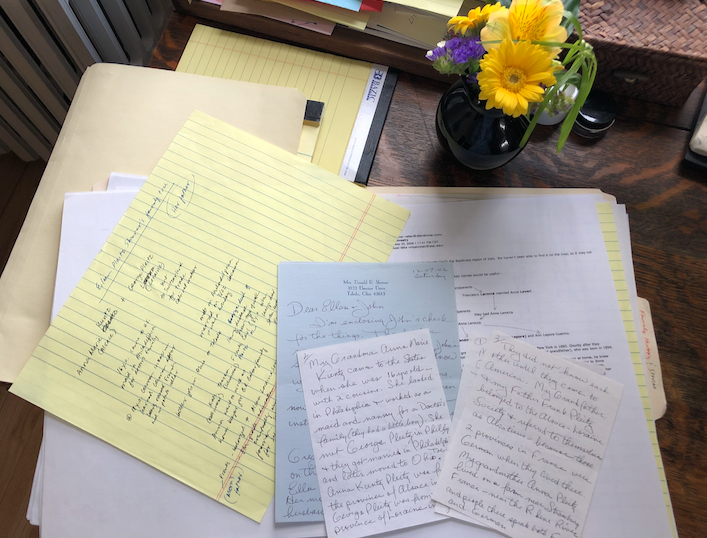
    Anne Frank’s story has touched millions all over the world in the decades since she wrote it. I have no such expectation for the family record I’m assembling. All I have are snippets of stories, not much to go on. Perhaps a few family members will have a mild interest. Hearing about people you never knew (even if they’re related to you) can be boring. 

    I’m fascinated by the urge to write journals and record family histories. Beyond that is the widespread wish to share the content of our days on social media or like I’m doing with this blog. People across all eras and cultures have felt this fierce need to tell our stories and understand who we are and who we came from. Sometimes we’re saying, “Here’s what happened.” Other times the wish to share is a way of saying, “I’m here. I matter.”

    Anne Frank could not have imagined how much her story would matter or how many readers would be touched by her words.

    Although my intentions and hopes for my writing differ from Anne Frank’s, I feel a kinship with that young woman born almost a century ago. 

  • One Generation Gives Way to the Next

    When our sons were small, my husband and I invented our own customs for Christmas, because my parents and his lived hundreds of miles away. Making the holiday special was up to us. We missed our extended families, but we were free to do whatever appealed to us—there was no other schedule or tradition to consider.

    A few years ago

    We read “The Night Before Christmas,” filled stockings with candy, assembled big toys like the play kitchen, and added batteries to toy guitars and handheld games. We took a bite out of the cookies left for Santa and scribbled “Thanks!” on the notes our sons wrote (Santa has good manners). 

    As our boys got older and Santa became a sweet memory instead of an actual visitor, our habits changed. The four of us began cooking elaborate meals together—three days of them. Christmas Eve Eve’s dinner would be whatever the group craved—maybe Southern BBQ or cassoulet. An Italian feast (calzones, fagotch*, and homemade pasta) became a required ritual for either Christmas Eve or Christmas Day, and the third meal might be something fancy like Beef Wellington. Later we welcomed our sons’ girlfriends (now wives) into the kitchen.

    When they married, we understood some traditions would have to flex; after all, our daughters-in-law and their families have traditions, too. Changes have already begun. This Christmas the six of us will be together on Christmas Eve. My husband and I will miss our three-day extravaganza, but believe this is the right way forward.

    If we have grandchildren, I envision more changes on the horizon. I’ve watched and learned from friends and family who have married children and grandchildren. They’ve all had to adapt and invent new approaches to holiday gatherings. My brother and sister-in-law spend either Thanksgiving or Christmas with their married child and her family, but not both. Other relatives get together after Christmas, because their child’s divorce means accommodating two separate parents and three sets of grandparents. A friend doesn’t see her children and grandchild until New Year’s Day—scheduling the group at Christmas has gotten too complicated.

    My friends and family don’t relish being alone on Christmas, but they accept the situation and make the best of it. As grandparents, they are no longer the center of holiday celebrations—their adult children and grandchildren are. It’s their turn now.

    I expect changes will continue for my family. As my husband and I age and grandchildren arrive, we’ll adapt again and again. Gracefully, I hope. After all, this is how life is supposed to go. One generation gives way to the next. Inherent in raising children is the assumption they’ll become independent adults, and as a parent, I will be less central. One day, they’ll be responsible for arranging (and cleaning up!) our holiday celebrations, and eventually their children will do the same for them. 

    That’s as it should be.

     *The family’s phonetic spelling for a form of focaccia in which ground meat, tomato paste, fennel seed and other spices are spread on bread dough, rolled up, baked, and sliced into pinwheels.

  • In Praise of Older Women

    Most days I’m fine with donning my invisibility cloak (the uniform of people 60 years and older) and going about my days. I’m content to fly under the radar, doing what I love. However, recently I’ve been reminded that too often the world doesn’t see older women and when it does, it’s with a lot of inaccurate assumptions—supposedly we aren’t good with computers or cell phones, we’re frail, we’re clueless about financial matters and the workplace, and so forth.

    Except those caricatures don’t resemble any of the women I know.

    I’m 68 and have friends ranging from 60-78. A quick review of approximately twenty women I know turned up a more realistic and positive profile—

    • Several friends are still working although most have retired from paid work.
    • Some volunteer as nonprofit board members (helping run the world for free). 
    • Many of my acquaintances volunteer in other ways—at a blood bank, rescuing abandoned dogs, tutoring, at homeless shelters, doing environmental projects, and more.
    • The women I know do some or all of these activities: biking, camping, kayaking, hiking, yoga, pickle ball, walking, lifting weights, and swimming.
    • Some of my friends are childless. Others are mothers and inspired grandmothers. Although they enjoy grandmothering, it’s just one aspect of their lives.
    • Most of us have traveled extensively. Some are probably planning their next adventure right now.
    • We are smart, capable people who know how to get stuff done. 
    • Several have published books and many have published shorter work.
    • We enjoy learning new things—maybe tap dancing, a craft like rosemaling, a Coursera class on the psychology of purchase behavior—whatever.
    • We know the pros and cons of long-term care insurance, how to time starting Social Security, how to roll over IRAs, write living wills, etc.
    • We are fun-loving but not carefree. We have plenty to worry about, but try not to let it swamp us.
    • Most of us read several newspapers online and are well-informed about political issues.
    • We are philosophical about aches and pains, but doing our best to hold the line and stay healthy.
    • We are sympathetic, kind, and good listeners. We have lots of loving advice for each other, but we try to resist dispensing unasked for advice to younger people. Mixed results, there!
    • We have good senses of humor, but get tired of being underestimated and don’t suffer fools gladly.

    There isn’t a helpless, clueless woman in the bunch.While these women are all wonderful, they aren’t rare exceptions. They’re typical. I wish more people saw us for who we really are—strong, smart, capable, and fun.