Category: Raising children

  • “Go On, Git”

    “Go On, Git”

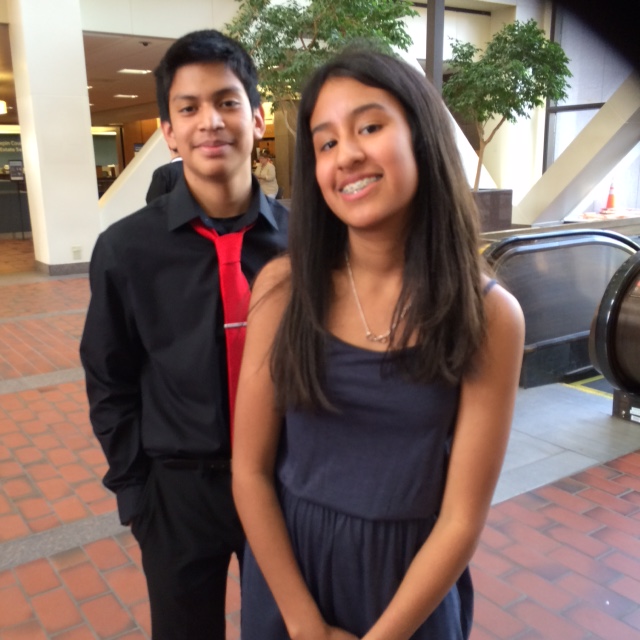
    I’m excited about Juan Jose’ and Crystel growing up. Each milestone they have, I celebrate.

    Sometimes, I’m ready before they are.

    I couldn’t wait for Juan Jose’ to learn how to ride his bike without training wheels. Crystel had been riding for months. Finally, I convinced him to give it a try. We went to a grassy knoll at our nearby park. Along with his bike helmet, he insisted on wearing knee, elbow and wrist pads. If he could have figured out how to bungee a pillow around his waist, I’m sure that he would have.

    With a push, I launched him. At high speed, he sailed down the rise, pedaled when he hit the flat field, and after he biked as far as he could, he fell.

    From that moment, he had enough confidence to bike on his own.

    Some parents lament time passing too quickly for their children. I’m loving it. It can’t come quick enough for me. Is this because I’m an older parent? I’m 58-years old with two 14-year olds. I want to be present for all of their firsts.

    Or, is it because I was numb as a teenager? I thought I’d be dead by the time I was 25.

    Through Juan Jose’ and Crystel, I experience their thrills, their excitement, and their fear. I get to see what being alive looks like.
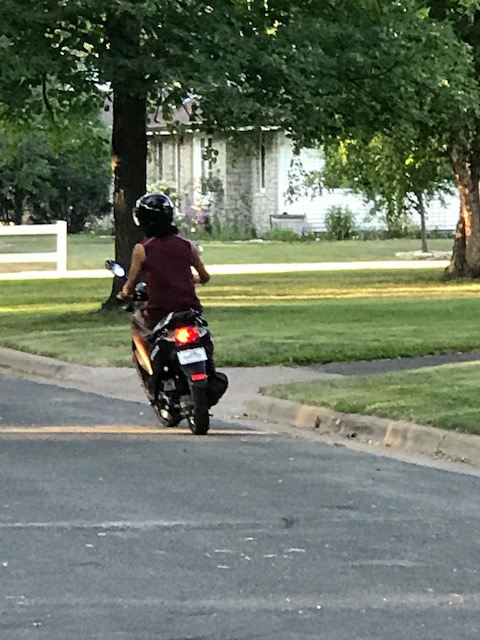
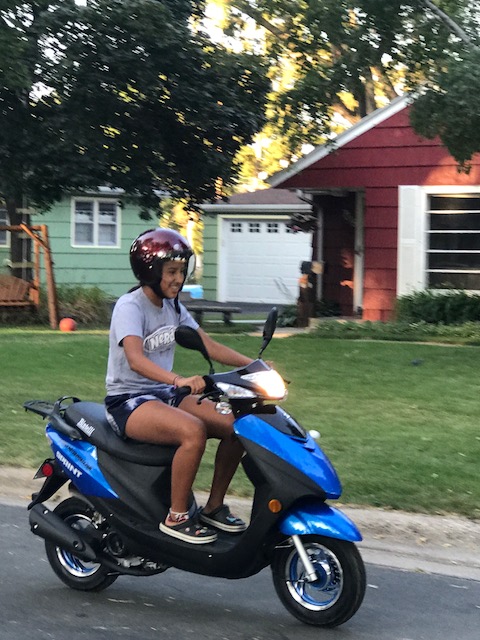
    Recently, Juan Jose’, Crystel, and a friend attended a moped driving class. I expected there to be other 14-year-olds in the classroom. When I opened the door, I was surprised. There were adults with tattoos, mustaches, beards, muscle shirts, and bulking biceps sitting at desks.

    I pushed the children into the classroom without any protective gear. All of a sudden, they were surrounded by a classroom of grownups. They were launched.

    I told the teacher, “I found these folks looking for the moped class.” Now, they are learning to drive.

     

  • Pomp, Circumstance, and the Power of Possibility

    Hearing “Pomp and Circumstance” always makes my eyes water a little. The music cues a range of emotions—often a bittersweet sense of endings and fresh starts and occasionally, inspiration.

    graduation-clip-art-9cRa8j7ce

    High school graduations carry the most emotional freight.

    Between 14 and 18, teenagers learn and change so much in the intense, sometimes toxic, sometimes wonderful environment of high school.

    If asked how they feel about leaving high school, many seniors would speak of boredom and escape: Can’t. Wait. To. Get. Out. Of. Here.

    Often sadness is also mixed in, especially for students who thrived in high school. Their friends are scattering. The jokes, heartaches, and triumphs they shared in the classroom, on stage, in sports, during study hall, and in the lunchroom will never happen again in quite the same way.

    Whether or not they admit it, most graduating seniors are also uncertain about what’s next. They may talk the talk, “I’m going to the U in the fall,” or “I’m looking for work,” or “I’m enlisting,” but deep down they’re scared of the unknown even if they welcome the change.

    These emotions are common and expected, but no less important because they are familiar.

    Every year, there are people for whom high school graduation means even more.

    I recently read about a student in Florida who graduated at the top of his class in 2014, despite being homeless much of his senior year. His mother died of leukemia when he was 6, and he, his father and older brother were frequently homeless. Despite that, he was determined to succeed

    I am also reminded of a student at my youngest son’s high school graduation. The evening was stormy, so his class of nearly 900 and their families crammed into the school. My husband and I were exhausted after being up most of the night with my elderly parents, who’d fallen and injured themselves the prior evening.

    The gym was hot and we were sweaty. “Pomp and Circumstance” played over and over and over as wave after wave of graduates crossed the stage. I was proud of our son but also preoccupied with my parents’ health. Getting to the “S’s” took a long while. I tried to keep my eyes open.

    Shortly after our son got his diploma, a roar went up in the crowd. I focused my grainy eyes to find the source of the commotion. A dark-haired boy who had always used a wheelchair stood up and walked across the stage unassisted. I didn’t know him, but his determination and accomplishment brought tears to my eyes.

    These stories have such sweetness and power to inspire. Whenever I hear the first notes of “Pomp and Circumstance,” I’m reminded of the power of possibility.

  • The Birth of Juan Jose’

    The Birth of Juan Jose’

    Juan Jose' and Crystel
    Juan Jose’ and Crystel

    The best part of Antonio’s name change was when Crystel stood up in the courtroom and said, “I want each of you to tell me something you like about me.” She stood confidently, her hand resting on the bar that divided the gallery from the well of the courtroom. She faced the nine people, including Antonio, who came to support his name change. Aunts, Uncles, Antonio and his girlfriend, were sitting with their back against the wall. She pointed to her Aunt Kathy. “Start there.”

    This surprised and delighted me. She was asking for what she needed. And, in this moment what she needed was to know that she was as important as Antonio who within minutes would legally be named Juan Jose’.

    She didn’t share his need to change her name. Her Guatemalan birth mother had told her that she named her Crystel.


    Waiting for the judge.
    Waiting for the judge.

    The birth search and visit report that Jody and I had done in 2011 when her and Antonio were 9 years old said, Mayra (her birth mom) remembered exactly the date of Crystel’s birth. Most birth mothers do not, not for lack of interest but because dates are usually not important in Guatemala. She named her Crystel Rocio. Crystel because:  “I felt she was a little fragile thing as crystal, and Rocio (dew in English), because as I was walking the day I gave birth to her, it was cloudy and it had rained during the night, and I saw the leaves with drops of dew on them”.

    When Jody and I adopted our children, we felt it was important that we keep the names that they were given at birth. We wanted to honor the birth mothers. At the time we didn’t know what their birth names would be and I fretted if I would be able to pronounce their Guatemalan given names. I refused to name my baby boy even though my social worker said that I could. I didn’t want to give him, one more thing that could be taken away from him. He was already losing his mother.

    IMG_0425A few months later, we received the results of Antonio’s birth search. His birth mom, Rosa, was asked if she named Antonio. She said no, that she wanted to name him Juan Jose’ (Juan to honor her father and Jose’ to honor her grandfather), but the adoption people named him Antonio. Her father Juan died in 1982 during the Guatemalan Civil War. It is estimated that at least

    5, 000 Mayans in the Rabinal area were massacred in 1981-1982. Rosa is indigenous and belongs to the Mayan Achi ethnia.

    Ever since Antonio learned that Rosa wanted to name him Juan Jose’, he felt that was his real name.

    Jody and I supported Antonio’s name change, nudged him even. We wanted to honor his heritage and his birth mother. We understood how central a name can be to a person’s identity. Both of us have changed our names.

    A door opened. “All rise. This court is now in session. The honorable Judge Bernhardson, presiding.”

    Just minutes before, Crystel had each person, including her brother and his girlfriend say something they liked about her.

    What I witnessed that afternoon was two 13-year-olds asking for what they needed.

    They’ll do well in the world, I thought. If a person can identify and then ask for what they need, they can navigate the road ahead of them. Jody and I have taught our children well.