Category: Perspective

  • Dear Dr. Rajender . . .

    Dear Dr. Shyamala Rajender,

    The University of Minnesota and the Rajender Consent Decree are probably far from your thoughts. Most of the time they are far from mine, too. However, recently I realized that it’s been 40 years since the decree bearing your name helped me.

    I’m writing to thank you.

    Your courage fighting gender discrimination changed my perceptions of the world and set me on a feminist path that informed the rest of my life—how I see myself and thought about my career, how my marriage works, and how I raised my sons.

    Forty years ago, I was a Freshman Composition instructor at the University of Minnesota-Morris, my first professional job. In the spring of 1980, I got in trouble with the all-male senior faculty in the English department, because I wanted to present a noncredit lecture about women’s literature for a Continuing Education series.

    Several of the senior faculty reacted with a policy that stated, “. . . instructors in English should not participate in off-campus events, either formal instruction or informal presentations, which, in effect, call for a person who has been judged expert in the teaching of English literature.” In other words, I wasn’t supposed to talk about literature even though I had an M.A. in English Literature. The policy was odd and confusing. Several of the literature professors at UMM had been tenured with only a Master’s degree. But my credentials—which were the same as what some of them had—were suspect.

    At first, I was more scared than angry (anger came later). The Continuing Education director and the EEOC officer knew I was afraid I’d damage my career by fighting the policy, so they informed the academic dean about my dilemma. The dean and others were aware of your gender bias case against the Chemistry department on the main campus. Consequently, the dean insisted the English department rescind their policy, and I was allowed to give the lecture.

    Later that year, a number of faculty members, including me, received a $2,000 raise as a result of the Rajender Consent Decree. It’s hard to imagine now, but increasing my salary from $12,000 to $14,000 per year was a meaningful raise then. In general, it’s hard to convey to younger people just how crazy the late 1970s and early 1980s were for professional women.

    Your decision to fight the University of Minnesota had a lasting impact on my life.

    At 25, I learned gender discrimination was as real and insidious as the fatherly men in the English department, who didn’t see me as their equal and wanted to limit my opportunities. That experience didn’t drive me away from academia, but like you, I left the academic world several years later.

    Your career was exemplary (first a Ph.D. in Chemistry, later a law degree). Mine was much more ordinary, but I was always aware of the example I set as a woman in the workplace. Your determination to fight gender bias had a far-reaching effect on me and so many other women. I want to acknowledge your heroic contributions.

    Thank you again for your courage.

    Sincerely,

    Ellen Shriner
  • Avoca, Wisconsin – July 2019

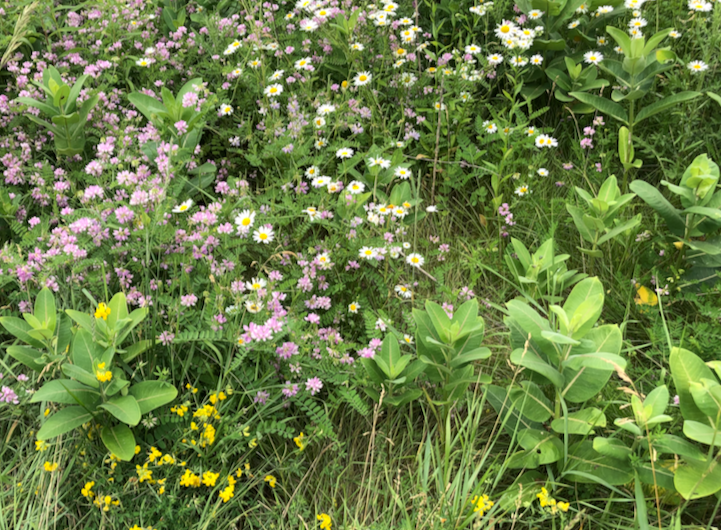
    The Avoca summer house backs into a hill on one side. On the other side, the deck juts into oak tree tops. A friend and I are eye level with squirrels. Equals. As if tree tops are our place as much as theirs. Given a chance though, Nature would push down the house and reclaim the landscape.

    I don’t know the deep rhythms of the natural world, but for a few days, I’m immersed. Midwestern summers speak to me. Lush green cornfields exhaling. White daisies, purple crown vetch, and yellow bird’s foot trefoil cascading down hillsides and overflowing ditches. Ponds greening. Humming flies diving toward my head again and again. Gnats’ silent pestering.

    At dusk, the day has barely cooled. Humidity blankets everything. The air is still. Near the edge of the gravel road, a doe startles then bounds off through a cornfield. Birds begin their call and response. When evening deepens to inky black, fireflies as bright as falling stars flash: Find me. Find me.

    Nature’s abundance and persistence energizes and soothes. I know all is not right with the world, but for the moment it feels like it.

  • Uncertainty Is Its Own Trouble

    This week, I expected to write about a reunion in Ohio with a handful of my graduate school friends. I haven’t visited with them in more than 20 years, because we live in five different states. I was eagerly anticipating seeing them in person. We would have unearthed long forgotten stories, laughed about our younger selves, and discovered who each of us is now. Last week, during the days we intended to gather, we emailed and expressed our disappointment along with our hope that we’ll be able to meet in the fall.

    Uncertainty is its own trouble. Especially for a person like me, who thrives on planning and likes to take charge of my life. It’s even harder for people who are missing out on milestone events: canceled study abroad programs, postponed weddings, and trips of a lifetime on hold. For certain dreams, there’s no do-over.

    I feel for anyone whose major life event has been short circuited by the pandemic. Those disappointments pale in the face of death from coronavirus, but it’s understandable to be depressed and frustrated by the loss.

    Reading and watching shows about life during WWII is surprisingly comforting. From day to day, people in Great Britain and Europe didn’t know if they or someone they loved would be bombed, arrested, dead, or alive. Many days, just carrying on with ordinary life would be all anyone could manage. No doubt, some people couldn’t spare the emotional energy for dreaming of a happy future. But others projected all of their hopes to when the war was over and things got back to normal. The same way we do now.

    These days, I remain hopeful for the future, but am learning to accept how much is out of my control. And always was. Tamping down my expectations is one of the lessons of the pandemic. I’m not planning too far into the future, not counting on anything unless it’s something that I alone can make happen, like writing, reading, laying out a new vegetable garden, or making a strawberry pie. I’m more at peace than I have ever been with taking each day as it comes.

    Will I get together with my grad school friends in the fall? I hope so. If we can’t meet then, we’ll try again for next spring or summer.