Category: Perspective

  • Artifacts

    I’m at an odd intersection. The familiar objects from my childhood look like history to the rest of the world.

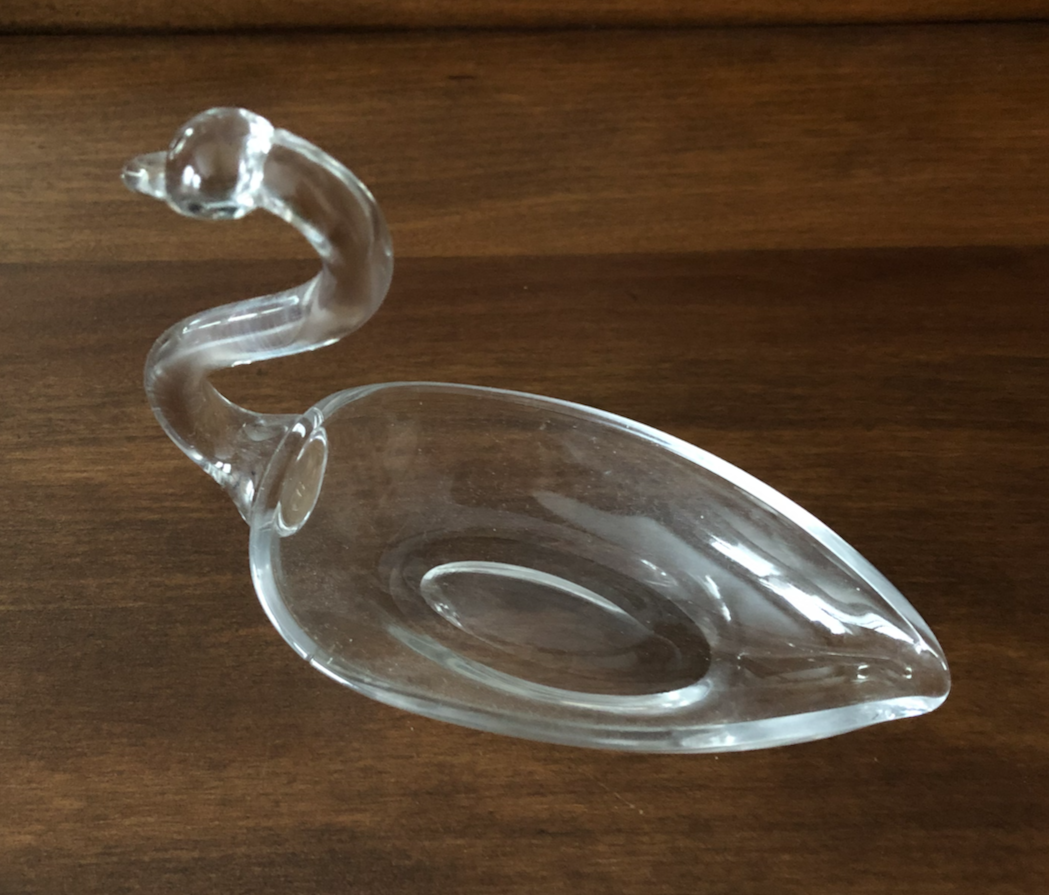
    In the Before times when I casually shopped, I’d spot artifacts from my childhood at antique stores. Huh?!? Toys like Barbies and transistor radios, kitchen items like Pyrex bowl sets and milk glass spice jars, decorations like ashtrays and the glass swan currently on my buffet are . . . old enough to be collectible. Antiques. 
    More startling was the realization that the purpose of those childhood objects will soon be obscure. Who fills decorative jars with spices anymore? When I was growing up, most homes had several ashtrays. Now they’re rare. 

    I value antiques from my grandmothers like Depression glass decanters, silver trays, cut glass salt cellars, aprons, and dresser scarves (what I prefer to think of as ‘true’ antiques). Their quaintness and the memories they call up appeal to me, but I rarely use them because they are so high maintenance. If I want younger family members to appreciate those antiques, I’d have to explain their purpose and tell stories about people they’ve never met. 

    Bringing the objects and the people who used them to life is hard, but here goes.

    Last week I made a pecan pie from scratch using my grandmother’s old wooden rolling pin. Although I never made pie with her, she was the one who liked to bake, so I feel that connection when I use it. I floured an old embroidered linen towel and rolled out the crust on it, which brought to mind one of my grandmother Mimmie’s housekeeping tips.

    She was from an era when women were expected to embroider towels, pillowcases, and dresser scarves (pretty cloths that covered up a lot of a dresser top to protect the wood—a lot of energy went into protecting furniture in her day). She or one of her sisters embroidered the towel which also had to be starched and ironed so it would look nice while hanging in the kitchen. 

    As a girl, I wondered how I was supposed to use such a fancy towel. Mimmie showed me her secret: dry your hands on the part that doesn’t show—the part that hangs closest to the wall on the towel rack. That way the pretty ironed front would stay nice for a few days. No surprise that I use terrycloth towels in my kitchen!

    Beyond the ‘antiques’ in my life is the realization that my lived experiences are also the stuff of history, but that’s a story for a different day! 

    What’s the oldest thing in your house? Does anyone besides you know what to do with it or why it matters?

  • Keeping Track

    I come from people who keep track of everything: groceries to get, bills to pay, upcoming events, the day’s experiences, and past events.

    As a young woman, my mom kept a diary that noted what mattered in her days: starting a novena and that a guy she was dating was kind of full of himself (they were happily married for 67 years anyhow). WE’RE AT WAR! she wrote in December 1941. Later in life, she recorded the weather daily on small pads of paper she kept next to the sofa. At her funeral, my cousins told me my uncle (her brother) had also kept meticulous notes—some about his garden, others about the weather. We marveled at the shared habit.

    When my mother-in-law recently moved, at least 20 years’ worth of journals turned up. I was aware of her habit because she often asked how to spell something we’d served for dinner. Cioppino or ratatouille. She enjoyed keeping notes about what we ate and did during visits.

    I’ve gotten an extra measure of documenting genes. Off and on since high school, I’ve kept personal journals in which I work out confusing feelings. I also make entries in a gratitude journal to remind myself of what’s good and right in my world despite the pandemic and trying political times. I document garden plans—what’s planted where and ideas for next year’s garden. I have lists of books I want to read along with books I’ve already read and what I thought of them. When dieting, I keep track of my exercise and meals.

    I’m not alone in those habits, but for me, it doesn’t stop there. I have a ridiculous number of notes in my phone app. Supposedly 194 of them, but that can’t be right! Poems I like, blog ideas, writing tips, ideas for pottery projects, a list of lawn chemicals that won’t harm birds and pollinators, the steps for starting the snow blower. The notes go on and on!

    My reasons can be practical. I want to remember something or find it quickly, and my phone is always with me. I tell myself I’m being efficient and orderly . . . but maybe ‘obsessive’ would be more accurate! Other times, keeping track is an emotional impulse. My personal and gratitude journals help me maintain equilibrium.

    The habit of keeping track intrigues me. I think there’s something universal, something beyond the practicality of grocery lists, receipts, and calendars. The same impulse that leads people to document their lives on Instagram or Facebook, keeps me writing extensive notes and ongoing journals. It’s what caused my relatives to make daily diary entries.

    As far as I know, my mom didn’t consult her weather notes after the fact. My uncle might have looked up which kind of tomatoes did well. I don’t know if my mother-in-law refers to her notes to remind herself of a previous year’s Christmas dinner. I suspect she doesn’t.

    I believe the impulse to keep track is a way of saying, “I was here. My life matters. To me.”

    What do you keep track of?

  • Parallel Reality

    Guest blogger Rosemary Ann Davis is a memoirist, poet, travel writer, photographer, and member of the original WordSisters writing group. 

    It started with a cough.

    As the numbers of those sick and dying from Covid 19 mount, I continue to have flashbacks to a different time. Forty years ago, another health crisis was just beginning in America and I found myself drawn to the chaos and denial. Having just left San Francisco, I began to hear about a “gay cancer,” and started warning my men friends back in the Bay Area to be careful.

    The panic I felt that morning reading the sketchy details about HIV AIDS in the Star Tribune is similar to the disturbing feelings I had when going into quarantine for the coronavirus this past March in Minneapolis. The similarities don’t end. 

    While uncertainty gripped me in the early 1980s; I learned more about HIV AIDS with time, and many visits back out West. As I learned how HIV was spread, I modified my sexual behavior; and now in 2020, I wear a mask, wash my hands, and keep 6 feet of distance.

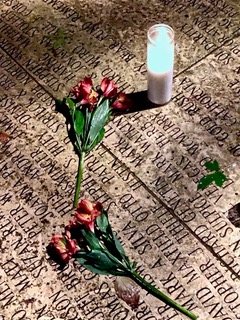
    Protests then and now have echoes of familiarity. Current marches around the world about government responses to Covid 19 remind me of San Francisco and D.C. marches in the states long ago. Dr. Fauci was in a key leadership position both times, now putting his AIDS work on hold to wrestle with the coronavirus. I remember AIDS marches where the doctor was vilified because the science wasn’t working fast enough for a cure. At one point I flew to Washington, D.C. to participate in a die-in at the White House. Laying on that hard ground surrounded by like-minded folks from across the country gave me a safe place to reflect on and mourn the one thousand young men who had died in my San Francisco neighborhood in one year.

    People dying in both health emergencies remained isolated. AIDS patients were abandoned by parents in droves because of their gayness, while Covid patients’ friends and relatives are kept out of hospitals to avoid infection. If they were lucky, people with AIDS were taken care of by their lovers’ mothers, the ones who were accepting. These days, some dying of the current virus can speak on the phone or other electronic media with their family members if medical people have the time to accommodate them.

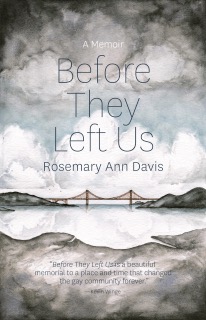
    I’m still grieving my friends who have died, and wrote a book, Before They Left Usto honor them and those times before and after AIDS took them. Although there have been many improvements in the fight against AIDS, I still donate to the cause, attend memorial events, and deliver food on the holidays some 40 years later. My friends are still with me, whenever I visit the Bay Area, am back in the Midwest, or wherever I am. That’s the kind of effect the AIDS crisis had and continues to have on me.


    While we are now nearing 175,000 dead of the pandemic in the U.S., I’m sure that these losses will also affect the surviving families for years to come. Grandparents, middle-aged parents, even children, have all died from this. What changed the direction of my life and turned me into an AIDS activist, perhaps will change theirs as well. Loss can do that to you.

    Our federal government has been at odds with its citizens during both of these epidemics. In the 80s, the President wouldn’t even say the word “AIDS,” much less address it. Now, it feels as if we are being told it is more important to get the economy going than to concentrate on lowering the infection and death rates.  What good will the economy be if hundreds of thousands of us are dead?

    So, what can we learn from all of this? To a large extent it is up to us to change our behavior to avoid getting the infection and transmitting it. We can also encourage others to do the same. Speaking truth to power—whether it be engaging in conversations or protesting in the streets, can be a form of influence.  Most importantly, we can show compassion particularly to those with the virus, those who are grieving, those who want to honor the dead, those who are working towards a just and healthy society, and even those who are not.