Category: Perspective

  • In Praise of the Moderately Interesting Job

    During recent conversations with a 22-year-old, a 30-year-old, and several mothers of millennial and Gen Z adults, I’ve become aware of a phenomenon affecting many young adults: dismay, disappointment, and a persistent sense of failure at not having a job they’re passionate about.

    I’ve heard hints of this from the millennials in my life, but Anne Helen Peterson’s book, Can’t Even: How Millennials Became the Burnout Generation, crystalized my understanding, especially her chapter, “Do What You Love and You’ll Still Work Every Day for the Rest of Your Life.” Her book discusses in depth how cultural definitions of success and workplace expectations have become impossible to achieve, which leads to burnout.

    I’ve zeroed in on one of her observations—the fallacy that if you work hard, go to a good college, engage in lots of extracurriculars and internships, and are passionate about your work, you’ll land a wonderful satisfying job. What too many people are discovering is that fulfilling jobs you can be passionate about are rare. Unfortunately, American culture has made “being passionate about work” seem like a realistic goal. In short, young adults have been conned. 

    When faced with the realization they aren’t passionate about their jobs and can’t even imagine a job they would be passionate about, they feel like losers. Hidden in the language of “passionate about work” is the warped premise that you are your job. This frustrates and saddens me. Why have we foisted ridiculous standards like “Do what you love and you’ll never work another day in your life” and “Don’t settle for less” on workers? 

    I liked the work I did and occasionally I was passionate about a project, but most of the time my work as a marketing communications copywriter could be called a Moderately Interesting Job. My passions (insofar as I’d use the overblown word, “passion” to describe anything I do) lie elsewhere. Some people are passionate about their work and I applaud them, but far more people are not. Work is just work, and that’s a totally valid view.

    I’m definitely NOT advocating that people should aspire to crummy jobs in which the pay is low, the schedule is erratic, there’s no opportunity to advance, and benefits are nonexistent. For decades, too many American employers have gotten away with treating employees poorly. I have a great deal of sympathy and respect for people who are walking away from that work.

    But if I were queen of the world, I’d characterize work as one potentially fulfilling aspect of your life, a necessity, but not what defines a person’s worth. Often what people are passionate about exists away from the job. You can’t make a living being a sports fan, enjoying the outdoors, or spending time with family and friends. If those activities make you happy, they’re a success—they don’t have to be lucrative. 

    If I could, I’d retool American culture’s expectations about work. To me, Moderately Interesting Work or Uninspiring Work with Fun Coworkers or The Job You Don’t Mind Doing are worthy goals. Achievable. Feel free to find your passion elsewhere!

  • Immortalized

    I don’t know the women who crocheted this lace doily and antimacassar, but I think I understand something about them.

    A century ago, maybe she saw a doily pattern with a wheat motif in a magazine and made it on a lark—the same impulse that has led me to make a quilted pin cushion, add a mosaic to a small box, decorate a shirt with reverse embroidery, and so many other projects. I was curious about the process and making stuff is fun. Most of the time I’m only trying to please myself, so it doesn’t matter if my creative ventures are one-and-done. 

    Whoever made the antimacassar might have been more invested. Perhaps she spent weeks one winter, creating the elaborate design, a piece she’d be proud of. She could have spread a towel across the back of a chair to keep off her husband’s macassar hair oil when he leaned back for a snooze. Instead, she made something pretty. I understand the impulse—if you’re going to see it every day, why not have something pleasing? Maybe detailed crochet was her art form, like pottery and quilting are mine. 

    When I told a friend about a minor project to machine embroider some muslin towels, she said, “You’re so creative.” I balked, “There are so many people who are wildly creative and talented. I’m a dabbler.” She insisted, “Say yes. And thank you.” My friend is right about me, but sometimes it’s hard to own this urge. Easy to downplay or dismiss creativity that’s expressed everyday things. 

    I squint into the future and imagine someone picking up a quilt or ceramic bowl I’ve made. She or he might find a different purpose for it—cut the quilt into placemats, hammer the bowl into bits for a mosaic, or some other project I can’t even imagine. If my things get repurposed, I won’t feel disrespected at all. They were fun to make. They pleased me. They don’t have to last or be cherished like museum pieces. Maybe like me, this future creator will wonder about the person who originated it.

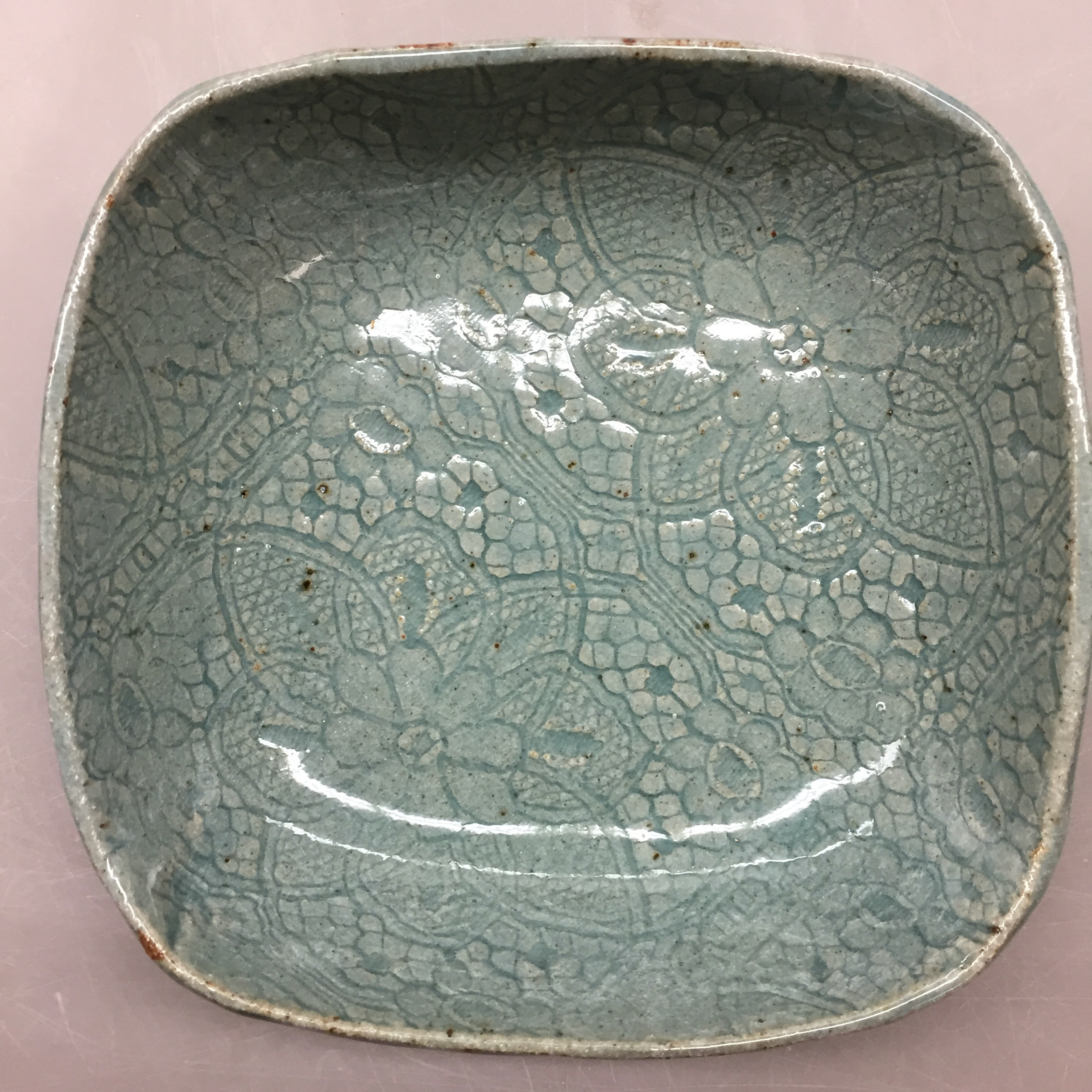
    In the pottery studio, when I spread the doily and antimacassar onto clay and transfer the lacy patterns with a rolling pin, I’ll admire the craftsmanship, patience, and skill needed to make them. Those women and their work will be acknowledged and celebrated in mine. Immortalized.

    A dish I made with another doily
  • Beyond Peshtigo

    The Great Chicago Fire began October 8, 1871. More than 100,000 residents were left homeless and 300 lost their lives. Help flowed in nationally and internationally to rebuild the city.

    North of Chicago, the largest and deadliest forest fire in United States history took place the same day in Peshtigo, Wisconsin. Over 1,200,000 acres (1,875 square miles) burned. The number of people killed can only be estimated because church and government records burned in the fire. Some of the 1,500 to 2,500 men, women and children would never be identified. The fires were so intense that some victims were totally incinerated. 

    Many of the Peshtigo fire victims were immigrant farmers and small-town dwellers. Belgian and German settlers bought acres of cheap land to farm only to discover thick forests covered the area. Along with the railroads and timber industry, farmers slashed through the trees and left much wood on the ground. It was not unusual to see several small fires burning. Even ships in Green Bay and Lake Michigan experienced visibility problems from smoke. In 1871 drought dried fields and wood waste. October 8 a cold front moved in and whipped flames from many small fires into a giant firestorm with temperatures of about 2,000 degrees Fahrenheit.

    People who hid in their wells or storm cellars died. People who tried to outrun the flames in their wagons or buggies died. Some burned, some suffocated. Others drowned while seeking refuge in rivers or ponds. The flames formed a tornado of fire that tossed buildings into the air. Peshtigo was burned to the ground with only two buildings remaining. Fires burned on both side of Green Bay touching Marinette and stopping short of Sturgeon Bay.

    The Belgian Heritage Center remembers the fire each October and the dramatic impact it had on its community. Thick wooded lands were transformed into barren acres. Wooden farmhouses were replaced by red brick buildings. Roadside chapels stood near many homes. 

    My Belgian ancestors lived in the Peshtigo fire area. This year I find a strange comfort in the reality that awful fires are not a modern experience but have devastated parts of our country before. Instead of seeing our current wildfires as one more sign that we are heading toward doom, history is reminding me that there can be more living on the other side of disaster. Learning from the disaster to make the rebuilding smarter is the challenge.