Category: Perspective

  • The Fierce Urge to Tell Our Stories

    Anne Frank was a vivacious teenager and a keen observer of human nature. She wrote well and her diary often includes deft characterizations of schoolmates, family, and the other people in hiding with her family. When I recently reread her famous diary in preparation for visiting her family’s hiding place in Amsterdam, I was impressed by her lively mind.
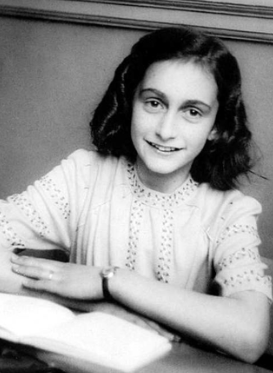
    Initially, she wrote to sort out her feelings—the same impulse that has prompted me to keep a journal off and on since I was a teenager. Putting my feelings into words helps me understand them. Airing out something on the page calms me and enables me to move on. 

    At first, Anne Frank meant her diary to be private. When she was 15, she heard a radio broadcast about a Dutch official who wanted to collect war stories and experiences, so she edited her diary in hopes it might be published one day. Unlike Anne Frank, I don’t want my journals shared with others. They’re histories of cranky confusion, and without context, they would likely distress family or friends once I’m gone and can’t explain.

    After her family went into hiding, her diary also served as a record of how they lived—what their space looked like, what their meals were, and what their daily schedule was. As the war intensified, she recorded bombing raids and news updates.

    Shortly after I finished the Anne Frank book, my sister asked me to refresh her memory about our great great grandmother—Katherine O’Tanney Feeley who emigrated from Ireland in the late 1800’s. To answer, I searched handwritten notes from my mother and father—a story here, a date and detail there. Some of the notes are sketchy and incomplete, but I decided I would make sense of them in a Word document so others in my family will have a record.
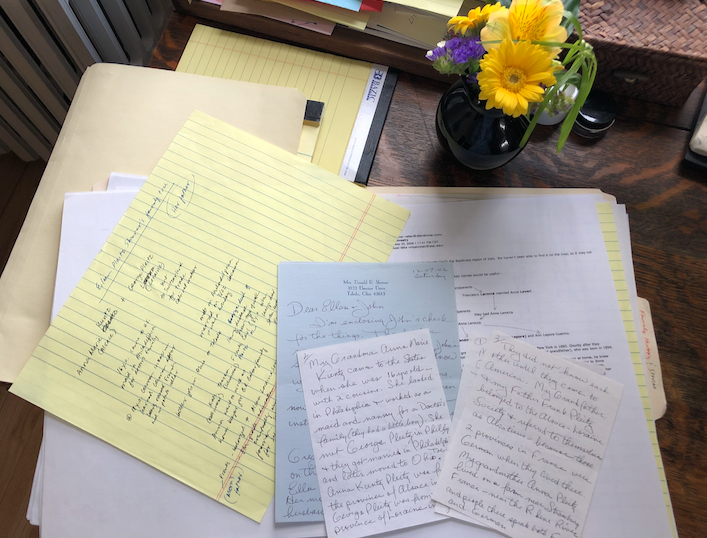
    Anne Frank’s story has touched millions all over the world in the decades since she wrote it. I have no such expectation for the family record I’m assembling. All I have are snippets of stories, not much to go on. Perhaps a few family members will have a mild interest. Hearing about people you never knew (even if they’re related to you) can be boring. 

    I’m fascinated by the urge to write journals and record family histories. Beyond that is the widespread wish to share the content of our days on social media or like I’m doing with this blog. People across all eras and cultures have felt this fierce need to tell our stories and understand who we are and who we came from. Sometimes we’re saying, “Here’s what happened.” Other times the wish to share is a way of saying, “I’m here. I matter.”

    Anne Frank could not have imagined how much her story would matter or how many readers would be touched by her words.

    Although my intentions and hopes for my writing differ from Anne Frank’s, I feel a kinship with that young woman born almost a century ago. 

  • On the Day after International Women’s Day—Recent Immigrants’ Thoughts about Gender Inequality

    Yesterday, the adult immigrants I tutor were discussing an article about pay inequality and education disparities in some countries. The article stated, “In the US, women can expect to earn about 80% of their male counterparts’ salaries.” After a quick online search, I found the specifics in a Government Accountability Office report. In 2021, women working full-time had an estimated median pay that ranged from $0.69 to $0.85 for every dollar earned by men. The pay range depended on what sector women worked in.

    Other countries have different cultural dynamics and economic opportunities, so the students offered a variety of views. I silently noted the range of perspectives could also be found among people born in the U.S. Here’s a cross-section of what the students said:

    “In my home country, women get paid less than men, but I didn’t think that happened in the U.S. Are you sure?”

    “Men need to make more money since they’re supporting a family, and the women take care of the children and the house.”

    “School isn’t free in my home country. My parents had a big family and couldn’t pay school fees for all of them. So they paid for the boys’ schooling, since they’ll have to support a family.”

    “I know pay differences between men and women happened in the past. You’re telling me it’s still going on?”

    “In my culture, mothers and daughters are supposed to cook, clean, and take care of children. Fathers and sons don’t. They earn the money.”

    “My mother wasn’t educated because her family didn’t have the money. My grandfather thought she didn’t need an education since she’d marry and have a husband taking care of her. But my father became disabled, and it was hard for my mother to support eight kids.”

    “International Women’s Day? What—we only get one day?”

  • Thoughts on Aunthood

    Many families are close-knit with aunts and uncles living nearby who attend every birthday party, soccer match, school play, and graduation. But I’ve always been the aunt who lived hundreds of miles away from my nieces and nephews. I wasn’t around so they haven’t known me well, but I knew more about them than they realized (after all, brothers and sisters do talk).

    My side of the family 2022

    I used to regret living too far away to actively participate in their lives, but lately I’ve realized getting to know each other as adults is good. I can see them for who they are now. The adult version. Minus the endless stories of their youthful foibles to trip us up. We visit in-person once or twice a year and supplement our ties with social media posts and occasional texts.

    During visits, I ask about their work or whatever is most important to them. When several of my nieces became mothers, we talked about their experiences. I validated their challenges—sometimes caring for tiny people is monotonous. Breastfeeding can be hard—do what’s best for your situation. A couple of nieces have expressed their thoughts about relationships, and I’ve supported whatever approach works for them. I happened to be around when one nephew was having a bad week and he shared his feelings with me. Conversations with another nephew might cover philosophy or food. 

    No doubt there are other older people in their lives—coworkers, in-laws—but as the sister or sister-in-law to their parents, I have a special perspective. I can share history and insights about their parents and other family members, rounding out what they know. I’m free to appreciate and accept them without the judgment a parent brings. Sometimes I offer different views than their parents’, but my nieces and nephews are old enough to draw their own conclusions. If nothing else, I’m an additional older person who likes and supports them.

    In the moment, I think they appreciate my efforts. I don’t expect too much though, especially when I recall how little I knew my aunts and uncles when I was younger. They were kindly presences but largely peripheral, or so I thought. Now, I understand how aware aunts are, even if we remain behind the scenes.

    My interactions with my nieces and nephews are brief—not much to go on—but they mean a lot to me. I always knew being an aunt was important, but I didn’t always know why. Finally, it’s this—they add to my life and I hope I add to theirs.

    My husband’s side of the family 2018