In response to queries about what I might like as a holiday or upcoming birthday present, I am wondering if I have hit “that age” or developed a stronger sense of being part of the universe?
With the evil spreading in our country that has stripped families apart or made the simple costs of food, shelter and other necessities too expensive for others, how can I want anything? If I need to think about creating a list for days, I think I know the answer
First, my deepest wishes: food, safe shelter, healthcare and education to be accessible in our country. People with compassion, wisdom, morals, the ability to use real language when talking, willingness to listen, commitment to collaborative decisions to lead government at all levels, in all nations. Narcissistic strong men be removed from positions of influence or power.
On the personal level: A giant gift would be securing my family’s futures so that those of us aging don’t burden the younger, the middle generation continue to live the modestly comfortable lives they have achieved, the children reach maturity in a country that has found its way back to peace and prosperity while honoring the Statue of Liberty‘s invitation. It would be grand to find a small house for our last decades and free our family home for a family.
But if my stumbling over the gift question is about approaching “that age” and actual physical items must be named, my gift list is simple: warm socks, two books, a box of English Toffee, framed photos, individual time with each family member in the coming year, donations made to food shelves.
Add new pajamas and a couple of white long sleeve polo shirts, this might have been my father’s list twenty years ago when he was the age I am now. And he is a good reminder of what holiday presents should include. He was someone who gave to others at holidays: food boxes we packed, a canned ham, cookies we baked, wrapped toys, sweaters and pajamas for others’ children, cash in a card, and because it was Wisconsin sometimes a bottle of brandy.
There may have been times in my life where I’ve wished for more friends, but surveying the landscape of the years, I’ve been pleasantly surprised at the growing richness of friendship around me. These friendships are both comforting and surprising. As a lifelong introvert and a bit of a loner, it’s taken me a while to find my footing with my friends.
I’m surprised, perhaps, because sometimes I’ve taken friendships for granted or maybe even realized that I may not always have been the best friend. I have forgotten birthdays, or let too much time go between phone calls, or even missed responding to texts. My well-crafted reply to an email or text often gets lost in my head. This does not reflect my affections. When I think of my friends, I smile internally recalling ways that I’ve met people, our histories and ways we’ve time we spent together, even if it was a long time ago.
When I was young, I had visions of popularity, thinking that popular people had the most friends, and who doesn’t want a lot of friends? I quickly learned that my quiet, introverted nature often set me apart as being shy or just too withdrawn to make easy connections with others. I longed for real connections and conversations, but didn’t know how to get there.
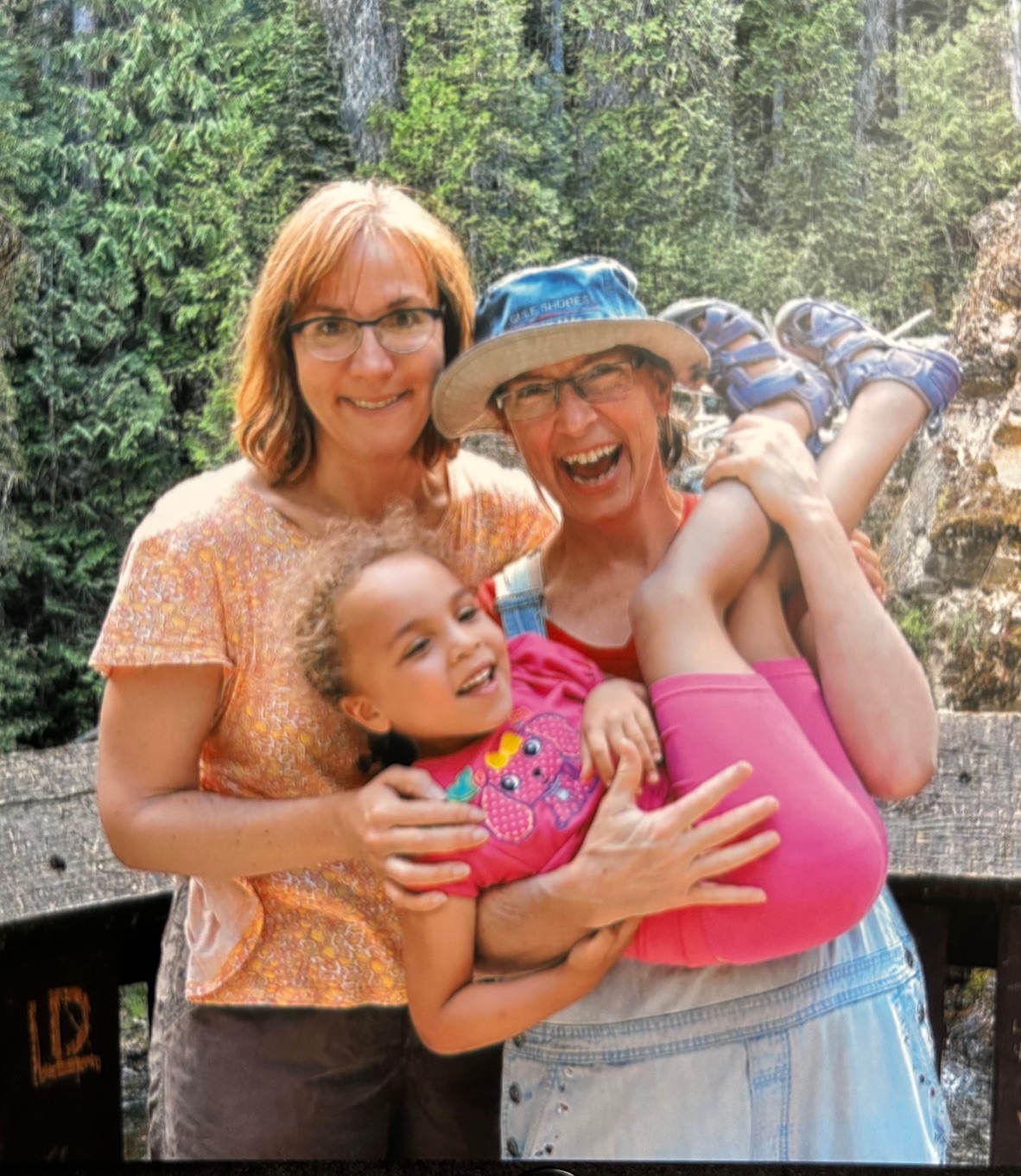
The author with her daughter and former roommate (and friend of 30+ years).
The insecurity of adolescence has annoyingly stuck with me, although it’s less of an issue now than it used to be. But it is still a force that keeps me in the shadows more than it should.
In my 50s now, I still want to connect with people and find that I can still get in my own way when I worry about whether someone will like me or when I feel self-conscious. It is all too easy to pull into myself when faced with a group of people I don’t know very well.
When I do make a friend, it usually sticks. I’ve been fortunate to make meaningful connections with people through the years, and despite my occasional inattentiveness, somehow those connections have lasted. Often those friendships unfolded over time and with a shared history; other times my connection was immediate and easy.
I’ve been lucky to be a part of a writing group that has been going for 20 years, where we’ve grown to know each other in unique and vulnerable ways through our writing voices and so much more. I’ve been equally fortunate to be part of a knitting group that has been meeting for even longer, bonding over knitting, conversation, and laughter. And I’ve made individual connections with people here and there: A friend I used to work with who shares my love of reading and always laughs at my jokes. A former roommate who saw me through some tough times and is the one that still generates loud and frequent laughter in me. Another friend I met at a neighborhood park when our kids were preschoolers. Other friends I’ve made through my daughter.
Writing Besties: Brenda, Ellen, Jill, and Elizabeth
I haven’t always had the time or energy to maintain friendships over the years. One of my sisters has friendships from elementary school, and she regularly sees others from her high school days. I can date my longest friendship to a friend I made in college, when we met in journalism school and quickly connected over books and writing. Blessedly, we are still connected despite being separated by more than a thousand miles and one time zone.
Developing and maintaining friendships takes time and intention, and it’s something I’ve found harder to do in my middle age years. Marrying in my mid-thirties and then becoming a mother in my early 40s put me out of sync with many of my peers. Early motherhood was often fraught with anxiety, and I found myself wishing for more connection. And then the pressures of working and caring for family made it harder to carve out time for friendship. I can still find myself feeling lonely at times, as my daughter grows more independent and will soon be out of the house.
I think the answer to that is to lean into the friendships that I have and nurture them a bit more. So, if you are my friend, please forgive me for missing your birthday or not calling more often. Know that you still hold a place in my heart. And expect to hear from me soon.
An enthusiastic three-year-old ran craft materials to the kitchen table. She had a project in mind, a puzzle to build out of tongue depressors.
I was not enthusiastic about the project which, as many projects, would lead to painting which might lead to painting herself. In fact, I was tired and working hard to be gentle as she taped sticks together. When a washcloth became necessary, I got it damp at the sink, looking at her head bent over a row of painted wooden sticks.
The oak table where she worked on a protected area was made in 1902 when Louis Cravillion married Octavia Orde, my paternal great grandparents. How I miss my Grandma Tavy. My grandmother died following childbirth, so Octavia cared for her grandson. As a woman of the age, I am now, she cared for me. I sat on one of these chairs while she braided my hair, ate meals she cooked, or colored. My mother worked in town.
After my great-grandfather died, we had moved in with her. My parents remodeled the kitchen and dining area storing this oak table for a new Formica and metal model. Eventually an apartment was finished upstairs so she would have her own place. The table returned. Eating breakfast in my designated chair, it was possible to watch everyone come to the new post office across Main Street. Patterns were cut to make clothes, cookie dough rolled out, homework completed.
After her death, the table was refinished and set up as my parent’s game table. As they downsized, it came to be mine. Our children ate and did homework and projects on a glass surface that protected the oak. Today’s artist is one of their children.
Stories of six generations of my family have been exchanged here. Men have returned from wars to a first home meal, baptisms and weddings celebrated, hard decisions made, children loved. Great grandma’s quiet and calm presence participated in half of its history. I see her hands now show in mine; her brown eyes look back from our mirrors. I can only hope I carry some of her wisdom to those who sit at this table, her blood mixed in their veins. I am not so tired.