Category: Legacy

  • Dear Dr. Rajender . . .

    Dear Dr. Shyamala Rajender,

    The University of Minnesota and the Rajender Consent Decree are probably far from your thoughts. Most of the time they are far from mine, too. However, recently I realized that it’s been 40 years since the decree bearing your name helped me.

    I’m writing to thank you.

    Your courage fighting gender discrimination changed my perceptions of the world and set me on a feminist path that informed the rest of my life—how I see myself and thought about my career, how my marriage works, and how I raised my sons.

    Forty years ago, I was a Freshman Composition instructor at the University of Minnesota-Morris, my first professional job. In the spring of 1980, I got in trouble with the all-male senior faculty in the English department, because I wanted to present a noncredit lecture about women’s literature for a Continuing Education series.

    Several of the senior faculty reacted with a policy that stated, “. . . instructors in English should not participate in off-campus events, either formal instruction or informal presentations, which, in effect, call for a person who has been judged expert in the teaching of English literature.” In other words, I wasn’t supposed to talk about literature even though I had an M.A. in English Literature. The policy was odd and confusing. Several of the literature professors at UMM had been tenured with only a Master’s degree. But my credentials—which were the same as what some of them had—were suspect.

    At first, I was more scared than angry (anger came later). The Continuing Education director and the EEOC officer knew I was afraid I’d damage my career by fighting the policy, so they informed the academic dean about my dilemma. The dean and others were aware of your gender bias case against the Chemistry department on the main campus. Consequently, the dean insisted the English department rescind their policy, and I was allowed to give the lecture.

    Later that year, a number of faculty members, including me, received a $2,000 raise as a result of the Rajender Consent Decree. It’s hard to imagine now, but increasing my salary from $12,000 to $14,000 per year was a meaningful raise then. In general, it’s hard to convey to younger people just how crazy the late 1970s and early 1980s were for professional women.

    Your decision to fight the University of Minnesota had a lasting impact on my life.

    At 25, I learned gender discrimination was as real and insidious as the fatherly men in the English department, who didn’t see me as their equal and wanted to limit my opportunities. That experience didn’t drive me away from academia, but like you, I left the academic world several years later.

    Your career was exemplary (first a Ph.D. in Chemistry, later a law degree). Mine was much more ordinary, but I was always aware of the example I set as a woman in the workplace. Your determination to fight gender bias had a far-reaching effect on me and so many other women. I want to acknowledge your heroic contributions.

    Thank you again for your courage.

    Sincerely,

    Ellen Shriner

  • Honoring WWII Heroes

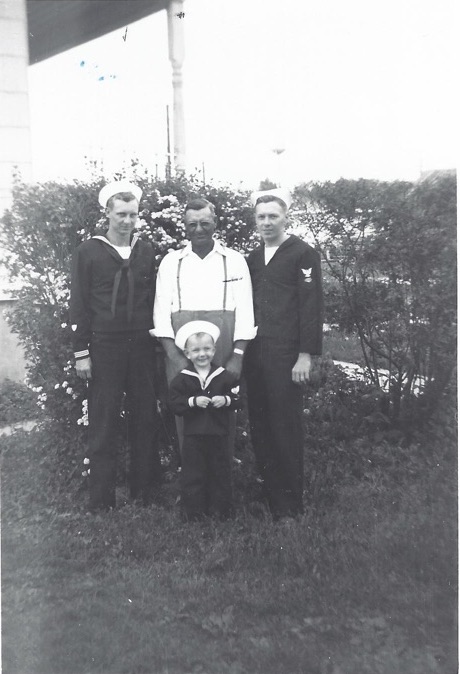
    My father never talked about his experiences in the Navy during WWII until late in life. He was in his 80s when I learned he’d been on a destroyer off the coast of Normandy during D-Day and that his ship, the USS O’Brien, had been hit by a kamikaze pilot when the war shifted to the Pacific. He never glorified war or his role. Like so many men who served in WWII, he said that he hadn’t done anything special—he was just doing his job like everybody else.

    WordSister Cynthia Kraack coauthored 40 Thieves on Saipan with Joseph Tachovsky, whose father Lieutenant Frank Tachovsky, led the elite Marine Scout-Sniper platoon known as the “40 Thieves.” The younger Tachovsky didn’t know the incredible scope of his father’s role until his father’s funeral, which sent him on a quest to learn more. In 2016, he came to Cynthia with hours of interviews with surviving platoon members, letters, and military research that he’d gathered.

    During an informal interview with Cynthia I asked, “What was the story you wanted to tell?” She explained, “The book is a fairly accurate capture of the story I wanted to tell. Understandably, the old men he interviewed found it easier to talk about the lighter side of their Marine service—the jokes, the pranks, the exploits. They said a situation was tense without describing the conditions. Joe wanted to pay tribute to the men and we focused on a line of his father’s: ‘War makes men out of boys and old men out of young men.’ The 18-year-old who went to church with his family and had a last Sunday dinner at home before reporting for training would never come home. The man who came home would need time to rebuild his connection to living outside of war. I also found myself wanting to write a book that would help women understand war’s imprint on the men in their world.”

    Last fall, I visited Omaha Beach and other sites associated with the D-Day invasion. Part of me understood that although I was hoping for a glimmer of Dad’s experience, I wouldn’t find it. There’s no way I could possibly understand what he went through. Maybe a soldier or sailor could, but not me.

    I sensed that longing in Joe and Cynthia, whose father also served in the Navy in the Pacific Theater during WWII. As coauthors, their main focus in writing the book was to remember and honor the men known as the 40 Thieves. Ultimately, their work was personal, too. They hoped to gain insight into their fathers, access those younger men, honor and remember what they did. As coauthors, they have.

  • The Family Tree

    The Bayside Tavern in Fish Creek, Wisconsin has two buck burgers on Mondays during the off season. There’s a choice in seating– high tops, low tables, tiny booths for two, or stools at the bar. Narrow windows keep the inside dim. It is the place to go before the community Christmas tree is lit across the street, before the high school musical, to watch the Packers or Badgers or Brewers play. Maybe the Bears or Cubs for those brave enough to wear such jerseys. If you are a local, or a seasonal local, they probably know your name.

    My Dad preferred a booth and ordered fried onions on his burger. He had haunts in Door County including the best places for good food. He knew the parents of people important in the community—the Catholic priest, the sheriff, a few bar owners.

    So it was at the Bayside that my cousin Jeff Frisque and I met for lunch, the first time we had ever talked to one another except at family funerals. We connected through Facebook where many of the cousins have friended each other. Taking a risk, Jeff and I moved from responding to postings to trying a direct message.  Jeff’s father and one aunt are the last living siblings.

    In my book, The High Cost of Flowers, the eldest sibling comes to the realization that to have the kind of extended family you want can require effort. And as the elders age, the responsibility passes to the children to do something, or to walk away. My husband and I are the elders of our families. That sounds easier to me than embracing the concept of adult orphans. We value the small circles of those connected to us by birth or marriage. Along with those we love, we have developed new traditions to stay close.

    The Bayside Tavern might become a comfortable setting for weaving together the grandchildren of Michael Frisque. In his prime he spent many hours in bars, but I don’t know if he ever sat at this one. I didn’t know my grandfather well enough to say how he felt about his children and grandchildren. None of that was important in sharing lunch with my cousin Jeff.

    Jeff is known locally for building and restoring exquisite log homes. We share love for Door County. We both showed up with spouses, a sign of how we value our families and would go to great extremes to protect them. We are not members of the same political parties although we may share a few beliefs. I think we are both tender-hearted about the right stuff. We both love or admire each other’s fathers. We walked away with each other’s email addresses and telephone numbers.

    We also both like burgers at the Bayside. Mark that on the family tree.

    dad