Category: Legacy

  • The Fierce Urge to Tell Our Stories

    Anne Frank was a vivacious teenager and a keen observer of human nature. She wrote well and her diary often includes deft characterizations of schoolmates, family, and the other people in hiding with her family. When I recently reread her famous diary in preparation for visiting her family’s hiding place in Amsterdam, I was impressed by her lively mind.
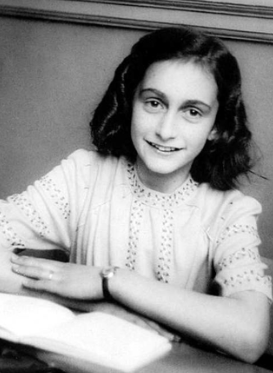
    Initially, she wrote to sort out her feelings—the same impulse that has prompted me to keep a journal off and on since I was a teenager. Putting my feelings into words helps me understand them. Airing out something on the page calms me and enables me to move on. 

    At first, Anne Frank meant her diary to be private. When she was 15, she heard a radio broadcast about a Dutch official who wanted to collect war stories and experiences, so she edited her diary in hopes it might be published one day. Unlike Anne Frank, I don’t want my journals shared with others. They’re histories of cranky confusion, and without context, they would likely distress family or friends once I’m gone and can’t explain.

    After her family went into hiding, her diary also served as a record of how they lived—what their space looked like, what their meals were, and what their daily schedule was. As the war intensified, she recorded bombing raids and news updates.

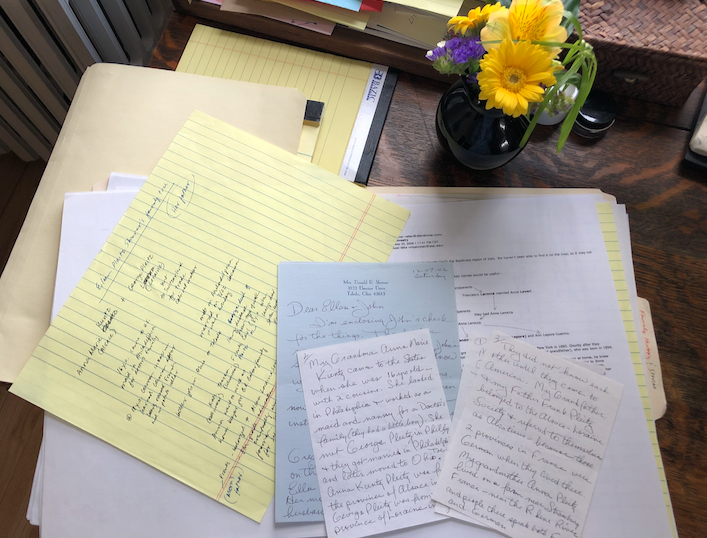
    Shortly after I finished the Anne Frank book, my sister asked me to refresh her memory about our great great grandmother—Katherine O’Tanney Feeley who emigrated from Ireland in the late 1800’s. To answer, I searched handwritten notes from my mother and father—a story here, a date and detail there. Some of the notes are sketchy and incomplete, but I decided I would make sense of them in a Word document so others in my family will have a record.
    Anne Frank’s story has touched millions all over the world in the decades since she wrote it. I have no such expectation for the family record I’m assembling. All I have are snippets of stories, not much to go on. Perhaps a few family members will have a mild interest. Hearing about people you never knew (even if they’re related to you) can be boring. 

    I’m fascinated by the urge to write journals and record family histories. Beyond that is the widespread wish to share the content of our days on social media or like I’m doing with this blog. People across all eras and cultures have felt this fierce need to tell our stories and understand who we are and who we came from. Sometimes we’re saying, “Here’s what happened.” Other times the wish to share is a way of saying, “I’m here. I matter.”

    Anne Frank could not have imagined how much her story would matter or how many readers would be touched by her words.

    Although my intentions and hopes for my writing differ from Anne Frank’s, I feel a kinship with that young woman born almost a century ago. 

  • Hiding Out

    Porcelain, cardboard, tin, and plastic Jack o’ lanterns grin from a ledge in the laundry room. I moved them to the basement the morning after Halloween along with candy corn lights and a gauzy witch that cackles when someone walks past. Here’s my sad secret, Halloween is nowhere near my favorite holiday. I find it kind of scary for other reasons.

    In Luxemburg, WI there was no trick or treating. We wore our costumes to school and at night a parade happened on Main Street. Candy and substantial treats were thrown from the town’s firetrucks. Many of the town’s 400 or so residents, including many who drove in from their farms, stood on the sidewalk to collect the goodies.  Then everyone joined the parade for about a six block walk to where a bonfire burned at the fairgrounds. Adults and kids partied and danced way after a school night’s normal bedtime.

    When we moved to Milwaukee my mother declared her children were not going to ring strangers’ doorbells to beg for candy. She called the city’s Halloween traditions dangerous. And she wasn’t going to encourage others to ring our doorbell. So instead of a parade or walking the neighborhood with other kids, our parents took us to a shopping mall for the special treat of dinner out. If stores offered a treat bag, we were allowed to accept. 

    My brother managed to weasel out of the family outing after a couple of years. He claimed he was going to help a friend distribute candy so the parents could walk with younger siblings. I snuck out one year with a girlfriend whose mother called to invite me to a sleepover party. It was a ruse because they felt so bad that I had not experienced the joy of running around in the dark with a pillowcase to collect candy. 

    Only I didn’t really find it all that fun. I heard my mother’s disgust with kids begging for candy and caution about the city’s danger. I was kind of afraid of scary costumes and decorations. I worried my parents would drive around the neighborhood and recognize a cheerleader wearing white tennis shoes as their daughter. By high school Halloween parties frequently included booze or pot which weren’t my thing.

    Fortunately, I was great at disguising my fear of Halloween from our children who adored the holiday. A granddaughter’s enthusiastic participation in anything connected to Halloween is awesome. I still decorate and usually keep a treat bowl filled, but I’m more comfortable spending Halloween in the basement reading a book.  

  • Life in Reverse

    Life in Reverse

    I’ve never been super orderly or systematic, but for years, filing papers seemed like the responsible thing to do. Before computers and the Internet, you needed hard copies of financial, health, and school records. Digital wasn’t an option. Sometimes the only convenient way to access a how-to lore was to keep a photocopy of it. As part of an office redo, I’ve been sorting, tossing, and shredding old paper files. Although some of what I saved makes sense, a lot of it is baffling. 

    1972 – High school diploma from the pre-digital age when paper was the only valid proof.

    1976  Where’s my college diploma? Good thing I don’t have to prove that anymore.

    1979  Graduate school grade reports. Why?? And inexplicably, grade slips from three management classes my father took.

    1978 – A photocopy of copyright information (pre-Internet). I suspect I hoped to publish something worthy of a copyright. 

    1984-85 – Wedding catering quotes. I truly don’t know why I kept these. Maybe I thought the information would be helpful when my sister married. Years after our wedding, when I rediscovered the file, I kept it for its entertainment value: Miss Lucille’s Catering: hot buffet with two meats, one kind of potato, one vegetable, a salad, and dinner rolls for $4.75 per person. Plus $1.50 for china, silverware and linen service. Despite the reasonable prices, we went with another caterer, but I didn’t keep that!

    1988 and 1991 – Proposals to work remotely after our sons were born. WAY before corporations were flexible with working mothers. I outlined a plan to return to full-time work after my maternity leave. I would work mornings at home and afternoons in the office for several months. I’m still surprised and grateful I got to do it. Twice.

    1992 – Landscape plans for our old house. We haven’t lived there for 5+ years. Why’d I keep them? Maybe because I put a ton of sweat and love into those gardens, a passion that developed after our second son was born in 1991. Gardening was a creative outlet that didn’t require a babysitter.

    1995  2006 – Vendor contracts and confidentiality agreements. I was in business from 1992 – 2010, but either companies didn’t require agreements or I quit saving them.

    2005 – Records from breast biopsy #2 and #3 – stereotactic then excisional. I don’t know why I kept the details from this painful time. Maybe to remind myself how lucky I’d been?

    2008 – Adjunct teaching contract from St. Thomas University’s Master of Business Communications program. One class, one semester: $4050. Even then, it wasn’t much money.

    2013 – Yellowed copy of a Star Tribune review of an anthology in which I had an essay.

    This ephemera maps some of what I thought was valuable, but I wasn’t saving the right stuff.

    The real treasures are the snapshots from the 1920s and 1940s tucked in with some of my mother’s Medicare records. I also found four thin files of family history written by my parents, sister, and me. 

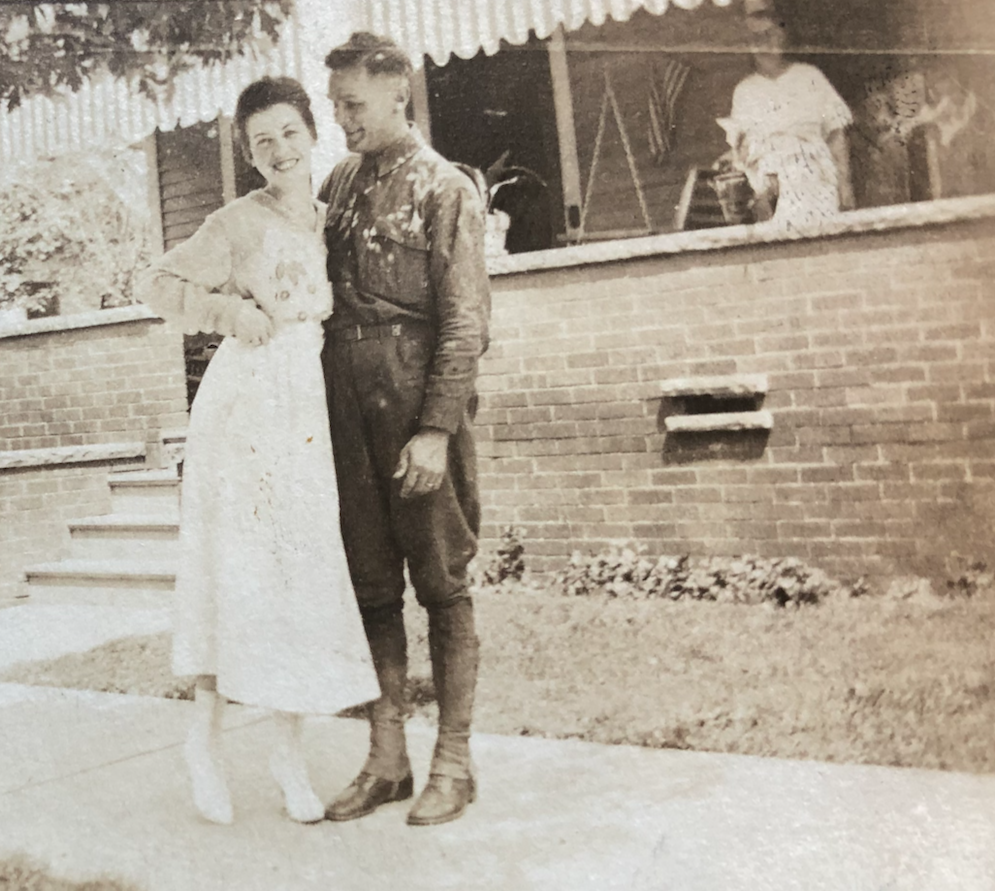
    My grandma and grandpa. I’m guessing from their big smiles, he
    was returning from WWI. On the porch is my great grandma, a woman I never met.

    If only my file drawers held more of what’s precious—my parents’ belief in education. The hopeful start of my parents’ and grandparents’ loving marriages. Irreplaceable stories about immigrant ancestors. 

    My parents’ wedding in 1944 during WWII–Aunt Corinne, Mom, Dad, Grandma & Grandpa
    (also shown above).