Category: Family

  • The Makings of an Extraordinary Pie

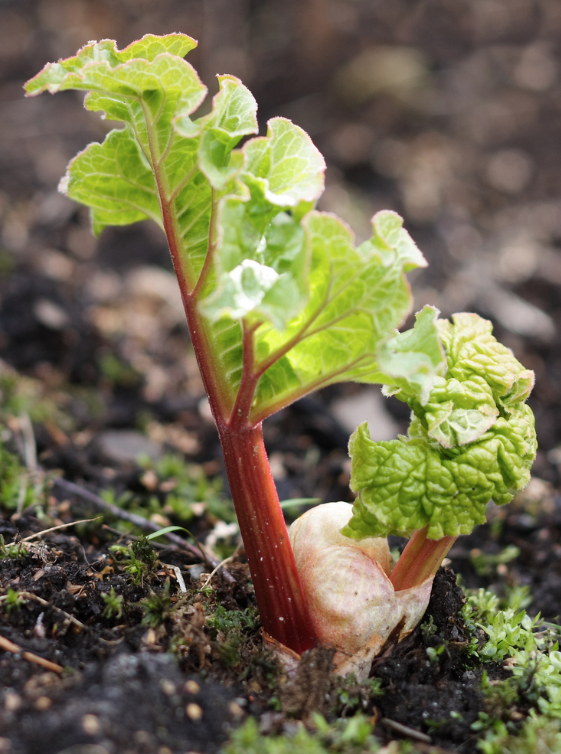
    Photo by Miika Silfverberg - originally posted to Flickr as Young rhubarb
    Photo by Miika Silfverberg – originally posted to Flickr as Young rhubarb

    It was the sure sign of spring—those first green tufts of rhubarb pushing their way through a patch of the garden that may just a month earlier still have been covered with snow. After seeing the rhubarb, we knew the growing season would soon follow and the garden would once again be full of green and growing things. With their agrarian roots, my parents both tended the garden, but it was my mother who found a use for the rhubarb.

    She showed my siblings and me how to tame its tartness by dipping the stalks into a cup of sugar. I imagine that her mother may have shown her this on the Iowa farm where she started her life. Picking the pinkest stalk available, I would dip one end into a cup of sugar so it was completely covered with the miniscule crystals of sweetness, the juice from the cut end of the stalk leaving just enough moisture for the sugar to stick to; I’d bite off the coated end and immediately taste a tart and sweet mixture of flavors that made my mouth pucker in delight.

    Screen Shot 2015-08-27 at 10.53.59 AMOf course, rhubarb is the perfect conduit for sugar, as proven by one bite of my mom’s rhubarb pie, a particular favorite. My mother and I would pick a variety of stalks—the ruby red ones, the ones that were both pink and green, and then a few that were perhaps a little too green. But mixed with flour, sugar, and butter, the mixture would meld together into a tangy, sweet concoction that tasted perfect between the layers of a flaky pie crust.

    Admittedly, rhubarb is not the most popular of vegetables. I believe the reason we may have had it was because it was a food that the earth could provide, and in my parents’ upbringing, no food went unused. Even a vegetable that needed a great deal of sugar to make it palatable. Now as I see rhubarb come back in my garden, spring after spring, I am reminded of that some things will always be.

    But in truth, I let this harbinger of summer go to waste. I get excited about its growth, but don’t pick the stalks when I should, always thinking that I don’t have enough time for pie or muffins or even a simple rhubarb sauce. Soon their leaves start to turn yellow and their stalks shrivel, as if shaming me. I think of my parents and their disdain for waste. I look at the waning crop and admonish myself to be a better steward of this steadfast plant. Perhaps I should be gentler with myself, remembering that my mother baked pie when she was off from teaching school in the summer and had more time to show me all the steps to baking a pie—from mixing the filling, to rolling out the pie crust, and knowing when the filling was bubbling up just enough to tell us it was done.

    ***

    After my mother had moved out of my childhood home with its massive garden, we went for one last look before the closing sale. Surveying the garden, which was overrun with weeds, I asked my mom, “Do you want anything from the garden?”

    “Will you see if there is any rhubarb?” she asks. Sure. And there is, among the stinging nettle, wild daisies, and bindweed. Of course there is rhubarb. There always has been. I gingerly make my way through the weeds and begin breaking stalks off. “How much do you want?” I call up to my mom, who’s watching from the deck. “Oh, I don’t know, a few stalks,” she answers.

    I pick a fistful of stalks, and not eager to stop, I get a few more, knowing that this rhubarb, the last that we will pick from this garden, will make an extraordinary pie.

  • Where Were Josh Duggar’s Parents?

    Where Were Josh Duggar’s Parents?

    The responsibility for what occurred in the Duggar household belongs first and foremost to the parents.

    Where were you? I want to ask them. Where were you before your son molested his sisters? I can imagine that they were cooking dinner, reading a book, or having a glass of wine.

    They were busy.

    I can assure you that they weren’t present for their children. I can assure you that they didn’t teach their son and daughters about boundaries, privacy, and the right to say no. I can assure you that the children didn’t feel that they would be loved and protected by their parents if they reported their brother.

    I told my mother when I was nine-years old that my brother touched me. This occurred while my eight other siblings and parents were at Sunday mass celebrating first communion for our seven-year old brother. I was staying home to take care of the baby. She was number ten in our family. Number eleven and twelve weren’t born yet.

    Forest of Yellow Leaves[1]It started as a game, my twelve-year-old brother and I running around the house until he wrestled me to the ground and he put his hand under my shorts. “I’m going to tell, Mom, if you don’t stop I told him.” He did stop after a minute. Even so, I was afraid. I had three other older brothers and I knew that soon it would be all of them, all of the time.

    There had been warning signs. The game in the haymow when I was eight. You could do whatever you wanted to the one that was caught. It soon occurred to me that I was the only one getting caught.

    Until that time, my brothers were my best friends. Their behavior irrevocably changed my relationship with them. Gone was the feeling of safety in their presence. Instead came suspicion and fear when they wanted to be alone with me.

    I warmed the infant’s bottle in the pan of hot water just as my mother showed me. Squirted the formula on my forearm to make sure it wasn’t too hot. I crawled up into the dry sink that we used for a crib, sat cross-legged, and cradled the baby in my arms. My body shook. I ran it in my mind over and over how I would tell my mother that my brother touched me. Up to that point that was the hardest thing I had ever done. Taking care of babies was easy.

    I waited until my mother was alone. She was spreading frosting on the cake. I sidled up to her. “Mom, Patrick touched me,” I said. “While you were at church.” She turned to me. “I told you not to mess with Patrick while I was gone. You were supposed to take care of the house. You can’t have the frosting bowl.” Her words stung. I swore that I’d never tell her again. No matter how bad it got.

    I didn’t tell her again until I was nineteen. I was afraid for my three sisters still at home.

    My brothers weren’t taught boundaries, privacy, and don’t touch your sisters. We didn’t have locks on doors. My mother’s words when I was nine told me that me and my sisters were responsible for how our brothers acted.

    Using the same word that Josh Duggar used, what my parents did was inexcusable. Their parenting was inexcusable. They stole my best friends from me. The incest didn’t start as an act of violence. It was an act of not being taught that touching others was wrong.

    Before my mother died of cancer she told me that she was sorry for the incest. She said that she was overwhelmed. With ten children, two more babies still to come, and an alcoholic husband, who wouldn’t be? Still, I didn’t tell her that she was forgiven.

    Parents of Josh Duggar, where were you, what lessons have you taught your children, and most importantly will they forgive you?

  • Being Friends Is Not Natural

    Being Friends Is Not Natural

    FullSizeRenderI drive past Richfield Middle School and spot Antonio and Crystel a block away. The 12-year olds are walking home from school. Backpacks slung over their shoulder. Track bags dangling at their side. Walking shoulder to shoulder. My heart warms. I’ve always wanted them to be friends. To be proud to call each other brother and sister.

    I don’t believe that sibling friendship comes naturally. Friendships among siblings need to be nurtured.

    What comes natural is comparison, competition, and mine, mine, mine.

    Years ago, when I was the stay at home mom, Santa brought Antonio a Disney princess doll set and Crystel Spiderman pajamas. Santa was attempting to even the score that the four-year olds were keeping.

    Why does he have a different laundry basket than me?
    Do I get three licorice?
    Does Crissy get a timeout too?
    Can I help? Crissy got to use the mop last time.
    Why did the tooth fairy bring him ….
    I took a bath first last time.
    I’m growing, Crystel’s not.
    How come I don’t get no cars?

    Antonio and Crystel looked to the other to see how they were doing.

    1132To nurture a friendship between the two I sought out opportunities for them to be nice to each other. This could be in the form of passing a dessert, opening a door, saying a kind word, buying the other a birthday or Christmas present, or letting the other be first.

    To enrich their friendship I noticed when someone’s heart was hurt and insisted the children make amends to each other. This could be a hug or saying something they liked about the other. Later when they were older it meant putting the words into writing, which they taped to their bedroom wall.

    Even now on Crystel’s wall is a letter to her from six-year old Antonio that says:

    1. hes the bes. (She’s the best)
    2. hes fune. (Shes’s fun)
    3. hes cule. (She’s cute)
    4. ses sow moch fun to plau weht (She’s so much fun to play with)

    On the other side of the letter is a picture of Raikou Pokemon that he drew for her.

    DSCN0725It’s also allowing the children to take space from each other, especially when a sign shows up on a bedroom door that says, NO BOYS! This means you Antonio!

    It’s teaching the children that privacy is good and respect for each other is a must.

    It’s reminding them that the other was there for them when they met their birth mom and siblings and now it’s their turn to be supportive.

    It’s celebrating their strengths and having compassion for their weaknesses.

    One will always be faster. “I’ll wait for you, Cissy.”
    One will always be braver. “You first, Cissy.”

    OLYMPUS DIGITAL CAMERAIt’s letting them know that the world is a big place and that the Richfield Cross Country team is big enough for both of them. They both can choose running as their ‘thing’.

    And, in the Spring when it comes time for sixth grade track and one doesn’t want to join because they don’t know anybody on the team and they don’t want to be a loner, they can count on the other one to look out for them and save them a place on the grass.

    I pull the car over to the curb. Antonio and Crystel recognize me. Antonio opens the front passenger door and tosses his bags in. Then he opens the back door and slides in next to Crystel.

    I smile at them. “I’m glad you’re friends.”

    OLYMPUS DIGITAL CAMERAJust like when they were little, they look at each other and laugh.