Category: death

  • Rest in Peace, Patty C.

    I first met Patty in 1978. We were both English majors at Drake University in Des Moines. I was in my early 20s, she in her mid-30s.

    We didn’t have a lot in common.

    I lived with a roommate I didn’t like in a campus dorm. She lived with her husband and young son in a four-bedroom house about 15 minutes away. I was a poor college junior who spent my weekends drinking beer that cost $1 a pitcher. She spent her weekends with her parents, swimming in their indoor swimming pool and sipping cocktails graced with fruit from their lemon and lime trees.

    Both English majors, Patty and I were paired up on a class paper we worked diligently on to earn an A. I no longer recall what grade we received, but we became good friends in the process. She enjoyed hearing my stories about dorm life, and I liked hearing stories about her parents’ home and lavish lifestyle.  

    Looking back, what I think we enjoyed most was sharing our hopes and dreams with someone who not only truly listened, often for hours on end, but also believed in our ability to achieve those dreams.

    A year later, in December of 1979, I graduated and moved back to Minneapolis where I went to work for the Minnesota Senate, first as a page and then as an intern researching DWI legislation.

    In mid-August of 1980, out of the blue, I received a letter from Drake University’s English department offering me a graduate-school fellowship. In exchange for teaching two sections of freshman English and working 10 hours each week in the school’s writing lab, I would earn a master’s degree in English.

    I wanted to accept the school’s offer, but I’d already spent all my savings getting my undergrad degree. And having been raised by a dad whose mantra was, “If you can’t pay cash, don’t buy it,” I was reluctant to take on more student debt.

    But then Patty invited me to come live with her. And suddenly my dream of earning a master’s became a reality.

    The rules for living at Patty’s were simple: two dos and two don’ts. Do empty the dishwasher each morning and do grocery shopping with her once a week. Don’t smoke pot in the house and don’t have sex with her husband (she’d once found him in bed with one of her best friends).

    We quickly settled into a routine. Her husband dropped me off on campus on his way to work each morning, and Patty drove me home each afternoon after we had both finished our classes.

    We read books and wrote papers, and spent our free time penning bad poetry, drinking beer (her husband worked at Coors) and frying ourselves in the sun.

    We also talked a lot about our hopes and dreams. Mine started out modest, but she encouraged me to dream bigger and set goals. It was her encouragement that led me to set a goal of someday writing a book. (Decades later, thanks in large part to her, I did: a book on goalsetting that’s been translated into five languages and is helping young people around the globe set their own goals.)

    I liked being part of Patty’s family. Quiet early mornings at the kitchen table sipping coffee and writing in our journals. Afternoons playing catch with her son or helping him with his homework. Weekends hanging out with her parents or her husband’s colleagues.

    After 18 months, with classes complete, I moved back to Minneapolis.

    For years, Patty and I talked often, regularly exchanged long stream-of-consciousness letters, some of which held our deepest desires and our darkest fears and visited one another now and again.

    Eventually she and her husband divorced, and she moved to Arkansas. She also got sick: first with a mysterious disease that was never diagnosed, then with tuberculosis followed by heart disease. Along the way, she made me promise that I’d be at her funeral—no matter when or where—and that I’d make sure Lynyrd Skynyrd’s Free Bird was played.

    But as the years passed, our letters got less frequent. And although we did come close to getting together in person a few years ago when I vacationed about 50 miles from her home, we never did as she’d woken up that day not feeling well and had to cancel.

    I still wrote a couple of times a year. Sometimes I heard back, sometimes I didn’t. Then, I sent several letters that went unanswered. I wasn’t worried at first, but then sent a letter asking if I’d said or done something to upset her. When I still didn’t hear back, I wrote to her sister who called me immediately to tell me Patty had died several months earlier, most likely from a massive heart attack. Patty’s sister and son had wanted to tell me but didn’t know how to reach me.

    There was no funeral. I’m glad, as I would have felt terrible missing it.

    But I did download Free Bird to my phone. In honor of our friendship, I play it now and again, always with a heart full of gratitude to a forever friend who made a huge difference in my own life, not only by encouraging my early hopes and dreams but also by being the first friend who truly believed I could achieve them.
  • In Memory

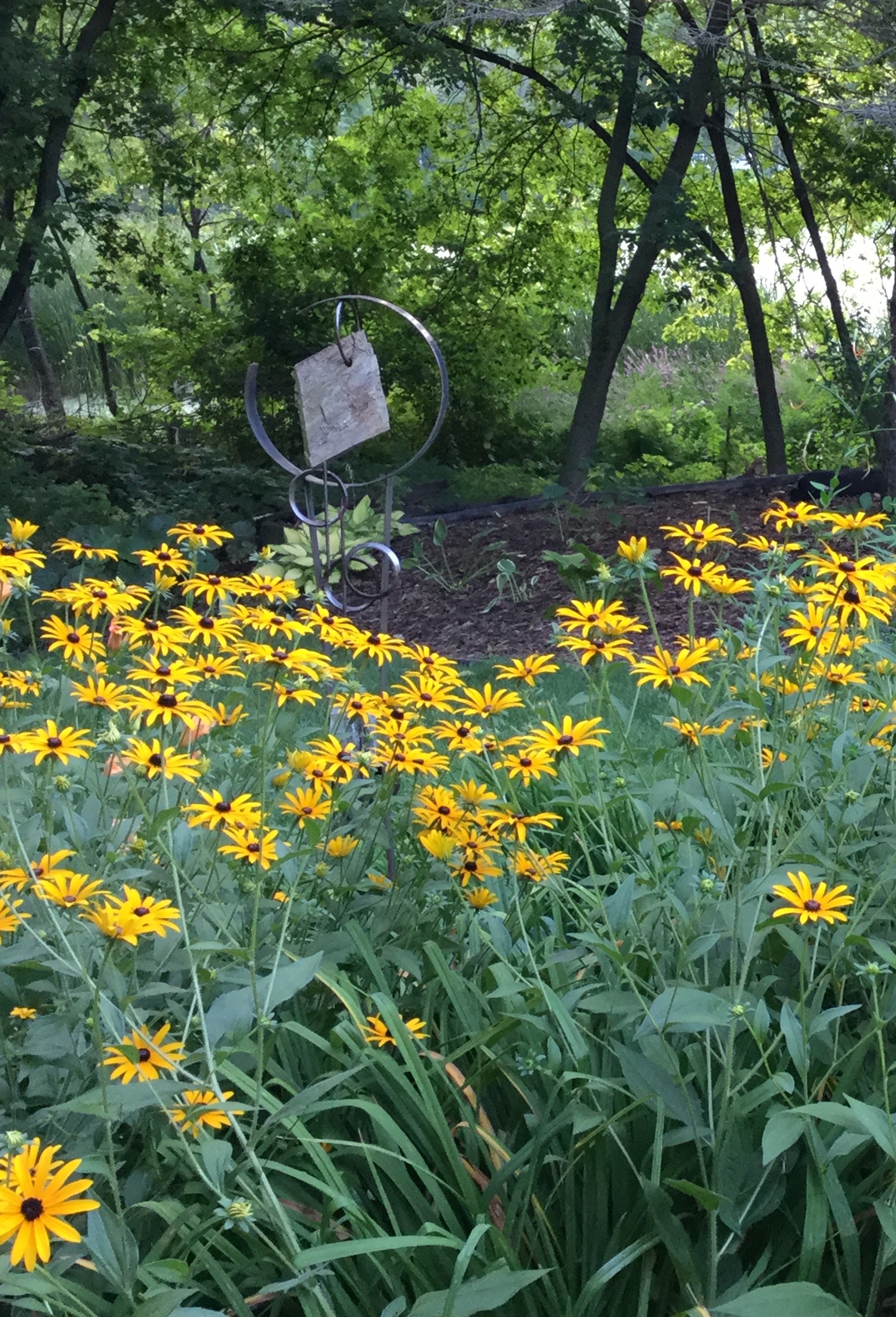
    Door County, WI: Sunsets are earlier. Black-eyed Susan dominates gardens as hydrangea fade. Squirrels fearlessly dart across sidewalks, decks and paths to grab early acorns. Field mice and chipmunks are in the same race for food stores.

    Trees are beginning to change. Yellowing leaves increase in numbers each day. Kids still run on beaches and play wherever a swing set is not closed. Young people gather with cases of beer, many without masks. More cautious folks crowd outdoor dining places. Multi-generational families wander about as if it were August 1, not September 1. COVID has changed the normal rhythms of summer while Mother Nature delivers heat and humidity where houses didn’t need air conditioning ten years earlier. Lake Michigan pushes beyond its all-time high water mark, devouring docks and houses’ front yards.

    When it already feels as if the stars are out of synch, COVID has taken the fathers of three friends or relatives. Three members of the Greatest Generation, living in three different states, in congregate facilities for three very different reasons. Friends and family called them Jim, Dom, and Marlin. They had eleven adult children among them plus almost four dozen grandchildren or great-grandchildren. Two were veterans and one farmed his entire life. Family photos show them joking with great, tall grandsons, sitting with the newest grandbaby resting on an arm, in wheelchairs by Christmas trees. These were men who loved and were loved.

    Thanks to COVID, they died comforted by staff members as their families were mostly kept away. In the heat of August, sons and daughters mourned the once strong fathers who built businesses, walked fields, fixed tractors, painted houses, taught them to throw a ball, sang next to them in church, made the final journey of life without endangering family.

    The Greatest Generation is disappearing as COVID ignites within our communities. They fought for our country’s freedom, raised families, built the cars and houses and machines of the 20th century USA, fed the world. In turn COVID has left us unable to protect them, not even gather for proper farewells.

    As summer sneaks away, as our elderly pass in the settings meant to keep them safe, as our days of small social gatherings and playing games outdoors with our grandchildren are numbered, COVID is like the spreading black-eyed Susan which left unchecked threatens to obliterate the beauty of other blooms.

    In honor of James Armstrong, Dominic St. Peter, and Marlin Hunt. With sympathy to their families and to all who have lost loved ones to this pandemic. Friends, please help friends stay healthy and strong.

    Black-eyed Susan

  • A Larger Force

    Healthy exercise respecting social distance in the neighborhood appeared difficult with a cluster of kids playing soccer, family groups stretching across walks and streets, dog walking people following the direction of their pets. We drove to the quiet side of a nature preserve where trails are seldom used on weekends. One car stood empty in the parking lot. Parents with a preschool child exited a different car.

    We waited for them, but as shoe tying and other preparations continued we made our way to the trail map. The youngster, possibly unaware of social distancing, ran to join us and told her parents that she wanted to be lifted to read the map. Offering her their hands, they assured her they knew the way. We backed away as the child threw a hissy complete with screaming, stomping, and slapping. The right trail choice was any that would create space from the unhappy kid.

    As grandparents we’ve learned about giving young children time to make wise choices instead of forcing action on them. Children of privilege are supported in making choices many times daily from choosing to wear clothes to daycare through patient questioning of resistance at bedtime twelve hours later. Family, friends, complete strangers, might be expected to wait while a child tests the limits or can’t choose. It takes a village after all.

    Then comes COVID-19—no negotiations, no children making choices, no endangering strangers by ignoring social distance guidelines. The village has been forced into change.

    From closed schools, to prohibited playgrounds that look the same as open playgrounds, to stores asking only one family member do household chores; parenting has pivoted in answer to the dual wham of pandemic and economic storms. Parental instincts to keep things normal for the kids are strained as jobs are lost, employers demand long work hours in the family’s home, distance learning replaces classrooms, and being homebound stretches. Hugs of grandparents, cousins and close friends disappeared with no known date of return. Parents have had little time to concentrate on adapting to new burdens, to problem solve, to explore their personal fears or worries.

    Experts say our kids experience anxiety of this crisis just like adults. Some will lose a loved one or friend. The soundtrack of childhood has been interrupted to never play in quite the same way. COVID-19 is drawing new lines on the future maps of kids’ adulthood. Our six-year-old family member misses her classmates, her neighborhood friends, going places with her parents. She understands that the sickness means she can’t ride her bike with other kids, climb or swing at the park, be physically present with her friends. The sickness is beyond her parents’ control. She can make good decisions about a snack or activity, but bigger forces now set the limits beyond the front door.

    Technology gives us time to talk, play games, be with family. A plate or two on the table and tiny faces on a screen may be how we celebrate this spring’s holiday and holy day traditions with those we love. Better than no connection, a card or a phone call. COVID-19 denies us the powerful comfort of each other’s warmth, smell, physical presence whether around the dining table, at a special event, at a hospital bedside. Some of us will stay healthy. Some of us will die in the company of strangers. No screaming, stomping or slapping can change what we have to keep doing. We will gather to celebrate or grieve in the future. God willing.

    Stay home. Stay safe. Keep others safe. May your holy day traditions provide comfort.

    GIFIjEQkRfGDZbThEEbPgw