Category: cultural shift

  • The New Peer Group

    Recently I joined the YMCA, tried a yoga/Pilate combo class then attended the orientation session required before a personal trainer consultation. I made my reservation, studied group offerings, and put together a few questions.

    What I missed was the message that this meeting existed for adults fifty-five and over, complete with handouts and a discussion of course offerings that didn’t require doing anything on the floor. During introductions I shared my interests and mentioned an interval training course I thought might be a challenge. Chair yoga, gentle stretching, and a couple of special aqua classes were presented along with a building tour and treadmill demonstration.

    Bundling all adults over fifty-five into one peer group makes as much sense as organizing only one social activity for school children between ages five and eighteen. The year my mother turned fifty-five she decided it was time to sell the house and move into a building built just for their peer group. They were in the prime of their working years, still building retirement accounts, dancing and traveling.  She believed the developer’s advertising about making new friends who were also unencumbered by children and building a rich social life.

    My father noted the assistance bars in the bathroom, the lack of entertainment space in each unit, people my grandparents’ ages in the lobby. He refused to move into a senior citizen facility called something more attractive. And continued refusing for the next quarter century.img_5048

    It appears that decades after my mother’s attraction to the advertising of an over fifty-five condo, marketers are still lazy about how to identify the needs of those who check the last box in the age question. How about adding a few more boxes? I am glad to be beyond tampon days but am not ready for Depends. I just wanted to know if a personal trainer would think that the interval course was going to be too much of a challenge.
  • The Half-Life of Family Heirlooms

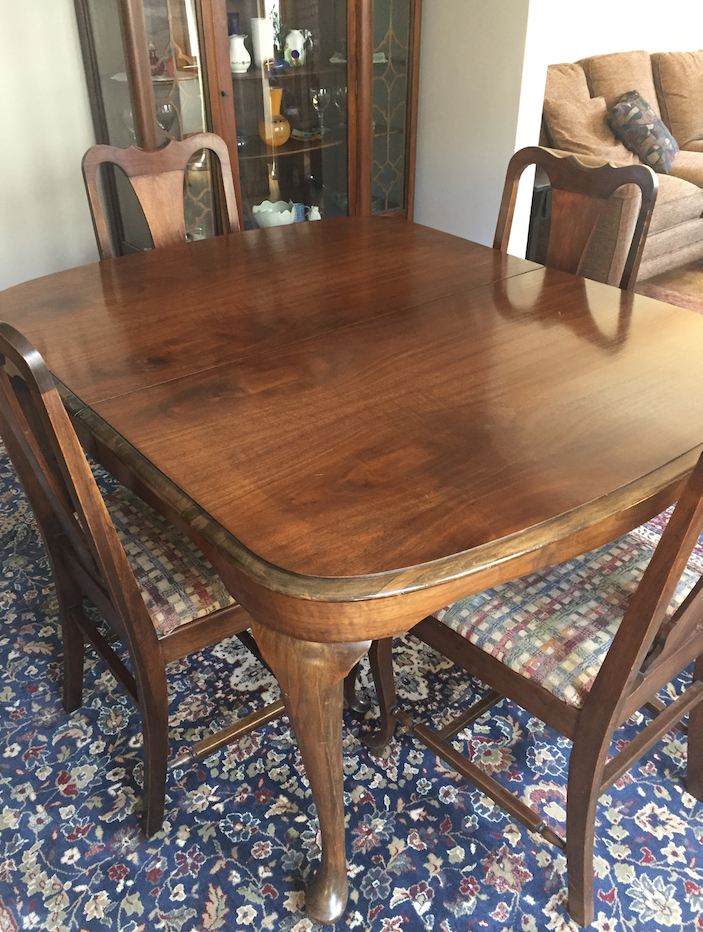
    Recently, when I served dessert to women friends around my grandmother’s dining room table, we described our uneasy relationship with the objects the women of our families treasured.

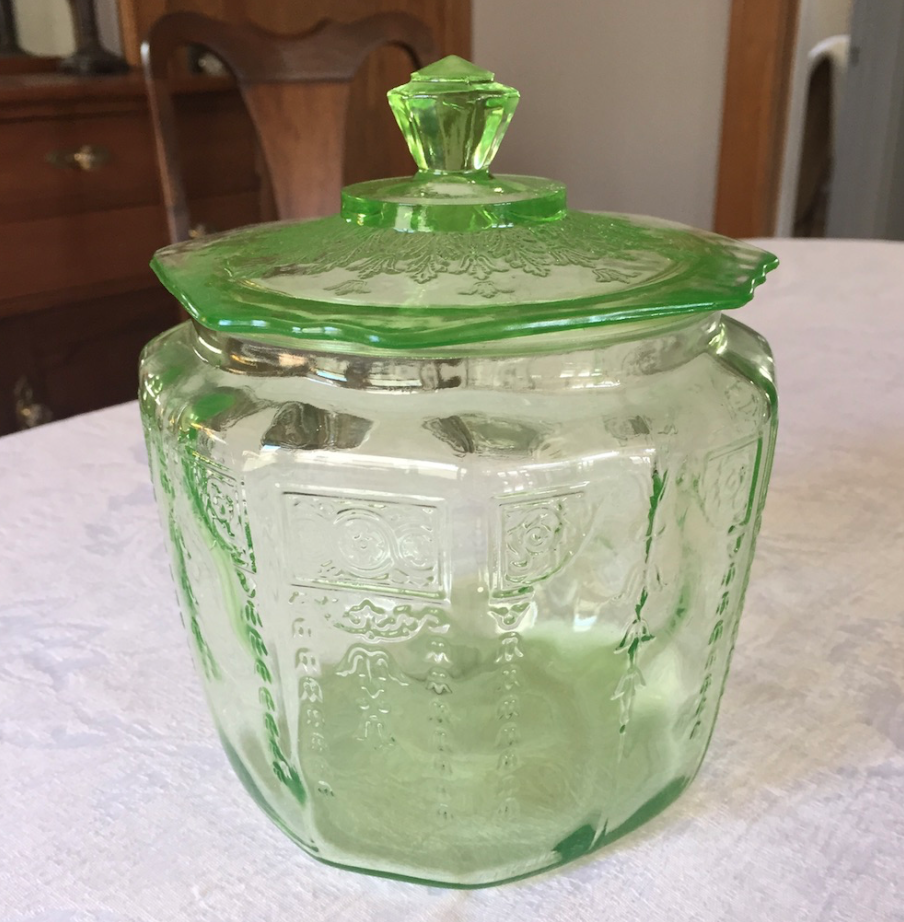
    Now when we have homemade cookies, we store them in Mimmie Shriner’s Depression glass instead of saving it for good.

    Women of the Greatest Generation, like my mother, cared about “good” china, crystal, and real silverware. They hoped to get full sets of it as wedding presents, and they cherished their mother’s and grandmother’s things. For them, the hope chest tradition was alive and well. They collected china and linens before they married and instilled that value in my Baby Boom friends and me. But our Millennial kids don’t want to fuss with handwashing goblets or ironing tablecloths. Not that I blame them. I don’t either. Nonetheless, my friends and I are distressed about what to do with the tableware and linens we’ve inherited. Let alone the quilts, furniture, and photographs.

    We were brought up to value them, but the tableware really doesn’t make much sense in our lives. Where do you keep it between holidays? Wouldn’t holiday meals be less work if all your dishes could go in the dishwasher? And yet, this stuff mattered so much to our mothers. How can we just donate it to charity? But people do—Goodwill is full of 12-piece place settings with dainty floral borders. I’ve seen Waterford crystal goblets there too.

    Articles like,No One Wants Your Stuffhave taught me to rethink my assumptions. The popularity of books like The Gentle Art of Swedish Death Cleaningand The Life-Changing Magic of Tidying Up make clear that either I can purge my stuff or my kids will.

    Mimmie Shriner’s table where she served her out-of-work relatives on Sundays during the Depression

    I’m becoming reconciled to the half-life of memories. When my siblings, first cousins, and I—the last people to remember Mimmie Shriner or Grandma Pleitz—are gone, my grandmothers will become “ancestors” instead of the vivid people they are in my head. Mimmie’s dining room table will just be an antique table, and Grandma Pleitz’s crystal goblets will just be wine glasses. Their significance is in my memories; my sons and any future daughters-in-law don’t have those associations—they never knew my grandmothers.

    Many evenings, I sip wine from one of Grandma Pleitz’s eight goblets.

    Yet the objects are a visible reminder of past generations—hardworking, loving women who wanted pretty things in their lives. How can I honor the memory of these women without feeling burdened by their stuff? One way I’ve chosen is to use the good crystal and china even if it isn’t a holiday. When it chips or breaks, I throw it out. That way my grandmothers come to mind and are more present in my life. If their tablecloths get shrunk or stained—so be it. At least they got used and enjoyed. Likewise, I honor my grandmothers by keeping a few things I really like so I can look at them often. Finally, I remind myself that heritage doesn’t reside in the objects alone. It’s also passed down through our family’s recipes, traditions, stories, and values.

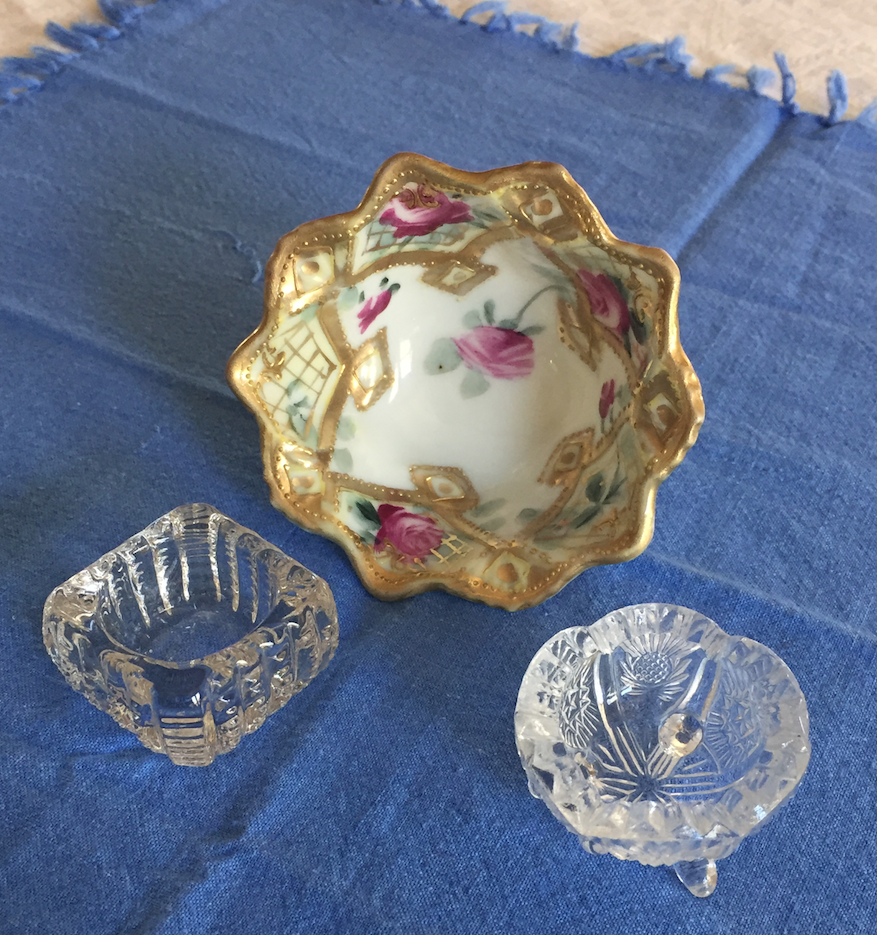
    Mimmie put hairpins in this small handpainted dish. I never put salt Grandma Pletiz’s salt cellars, but I still like them.

    I accept that my sons and future daughters-in-law may not care about my stuff—whether inherited or chosen during 30+ years of marriage. If they do, they will have different memories than mine. I hope they only keep what they care about.

  • Shopping? Let Me Grab My Laptop!

    When I received a gift of money recently, my first impulse was to grab my laptop and shop online. Maybe there are some summer tops on sale. Wait. What? I’m going to shop online despite having a stack of 30% off and $10 off coupons from local department stores? Even though I might have to pay shipping charges? Um, yeah. For me, online clothes shopping is more fun than in-store shopping.


    It wasn’t always this way. A long time ago, in a land far away, when my sister and I accompanied my mother on shopping trips to department stores, it was a fun excursion (for us, anyway). We all had to change out of our grubby around-the-house clothes and into something more presentable. There was a saleslady and cash register in every department. She’d help you find another color and bring the item to your dressing room—so my mother didn’t have to get completely dressed again or send my sister and me on a mission to fetch another size. Sometimes Mom would treat us to Cokes in the store’s coffee shop, while she had a cup of coffee.

    Fast forward to today. On the rare occasion when I shop in-store at places like Macy’s, Kohl’s, JCPenney, or Herberger’s, my chances of finding a sales clerk are slim. Plenty of times, I’ve zigzagged through the store before I spot one several departments away. And this bored underpaid person doesn’t look too happy to see me with my question about another size.

    To be fair, I have an uneasy relationship with sales clerks. The ones I remember from my girlhood often looked down their nose at me and my teenaged girlfriends as we flipped through the racks. When I was older and clearly a serious shopper, often a saleslady’s “help” turned into pushy upsell.

    Today, if I want a snack to fuel my shopping, I can buy bottled water and a candy bar at the checkout. Not exactly the same as sipping a leisurely Coke while spinning on stools at the counter with my sister and mom.

    I do get that customers like me helped change the retail experience. We don’t come because it’s no fun, and it’s no fun because we don’t come.

    Nevertheless, if I want to shop for clothes these days, I’m most likely to be sprawled on my bed in my nightgown. There I can happily scroll through several store websites at once, checking for clearance items and considering the possibilities. Maybe the blue patterned one. No wait, what about the green one? And my coffee’s near at hand.