Category: Baby Boomers

  • The Care Giver Relay

    Baby Boomers ran the first relay race known as working and maintaining families without help or comprehensive policies from our government.  Day care, sick child care, after school care, elder care. Home or facility based? Who takes the call when the plan falls apart? Who helps the cared one feel comfortable?

    I’ve run all legs of that relay using strategies that worked in the moment for our kids, ourselves, our parents. We had wonderful experiences, and days I hope no one remembers. The cry of a toddler dealing with separation anxiety, a sick child asking a parent to stay with them, the whine of a school kid not wanting a babysitter, all disappear as a family matures.

    The set of sounds that haunt me is a fragile parent demanding you stay, forgetting anything else exists in your world because they are anxious, the suggestions of hired caregivers that maybe dad would feel better if you walked out of a work meeting to come spend an hour. When you are carrying the heaviest responsibilities of a job that provides for the family you created, those calls tilt the world. Different, but equally difficult if you live miles away or states away.

    Our local newspaper is running a series of stories about family elder care providers, also known as adult children. Just like searching for quality child care decades ago, individuals quickly discover there is no safety net or logical system to access when an elder family member needs help. It isn’t there so don’t do an online search. Network, know the finances of the person depending on you as well as their needs, then do the best you can. And do it right now. The hospital plans to discharge the individual tomorrow afternoon.

    It isn’t an employer’s responsibility to expect less of you because an ill spouse or parent has doctor appointments, physical restrictions, emotional insecurity or a string of emergencies. Increased longevity does not equal decades of quality living. Without a safety net, it will be you standing on one foot balancing too many glass balls.

    Elder care was the most difficult leg of the relay. Unlike an expected due date, elder + care can become part of your life any day or in a few months or years. That relay leg is run on a special course with more rocks than cushion. The vulnerable one can have physical needs but be capable intellectually and aware that they have become a burden. The vulnerable one may be physically capable but wandering in dementia. There is no known end. Your loved one will not enter kindergarten in twenty months. This part of life has no schedule for the refrigerator. You will have days that vaguely resemble television commercials where adult children chat with a professional provider and mother is wearing pearls. There will be more days that you lift a fragile loved one off the toilet in a bathroom that could use a better cleaning. You do the best you can.

    No need to continue. Many of us have run the race and placed somewhere in the standings. Some finish their caregiving with shaky finances, some with high blood pressure and anxiety of their own, some with a scrapbook of treasured memories. As a Baby Boomer, I fear the end of life years for many reasons. Not the least that there is no national forethought about caring for the coming gray tsunami. Maybe like the baby boomlet of the 1980s, we’ll just let the Gen Xers and Millennials stumble through working long hours, raising their own children, dealing with deep debt, and caring for a couple of vulnerable elderly parents.

    It isn’t going to be pretty.
     

    fullsizeoutput_12d6


  • The Half-Life of Family Heirlooms

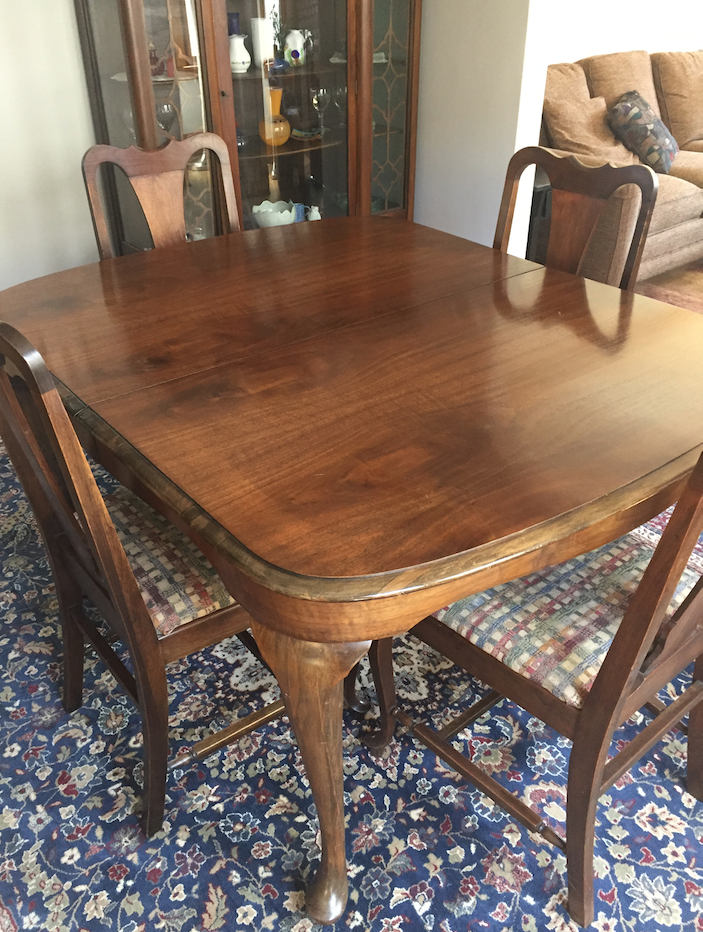
    Recently, when I served dessert to women friends around my grandmother’s dining room table, we described our uneasy relationship with the objects the women of our families treasured.

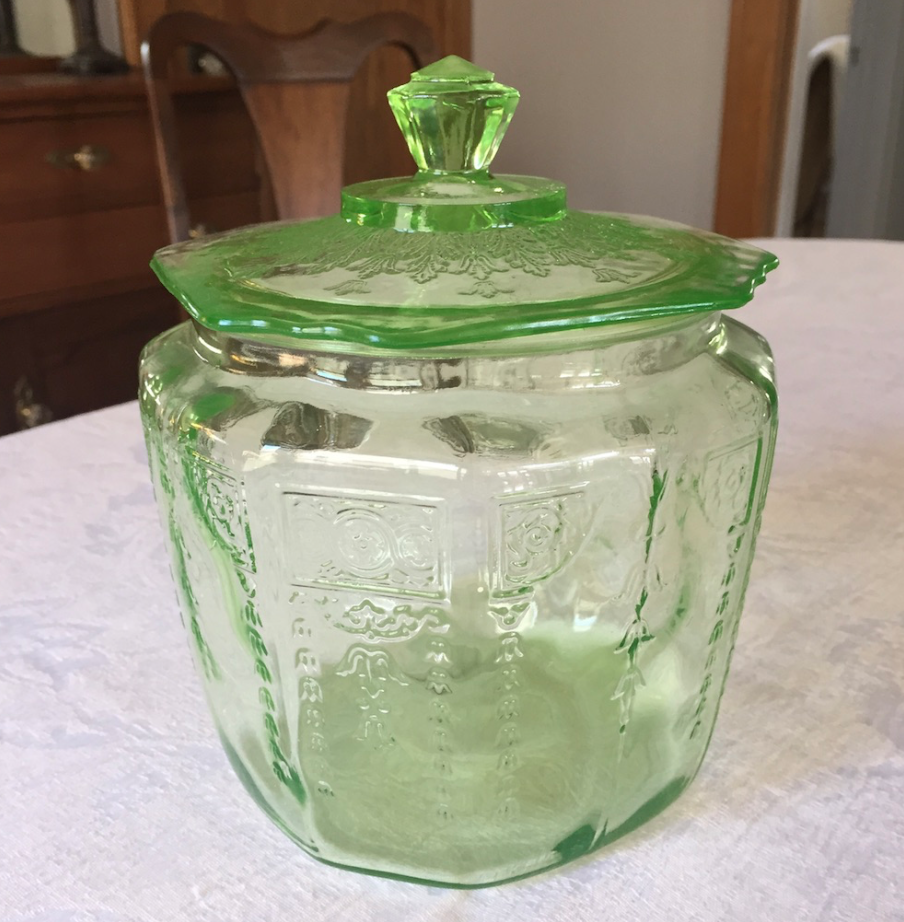
    Now when we have homemade cookies, we store them in Mimmie Shriner’s Depression glass instead of saving it for good.

    Women of the Greatest Generation, like my mother, cared about “good” china, crystal, and real silverware. They hoped to get full sets of it as wedding presents, and they cherished their mother’s and grandmother’s things. For them, the hope chest tradition was alive and well. They collected china and linens before they married and instilled that value in my Baby Boom friends and me. But our Millennial kids don’t want to fuss with handwashing goblets or ironing tablecloths. Not that I blame them. I don’t either. Nonetheless, my friends and I are distressed about what to do with the tableware and linens we’ve inherited. Let alone the quilts, furniture, and photographs.

    We were brought up to value them, but the tableware really doesn’t make much sense in our lives. Where do you keep it between holidays? Wouldn’t holiday meals be less work if all your dishes could go in the dishwasher? And yet, this stuff mattered so much to our mothers. How can we just donate it to charity? But people do—Goodwill is full of 12-piece place settings with dainty floral borders. I’ve seen Waterford crystal goblets there too.

    Articles like,No One Wants Your Stuffhave taught me to rethink my assumptions. The popularity of books like The Gentle Art of Swedish Death Cleaningand The Life-Changing Magic of Tidying Up make clear that either I can purge my stuff or my kids will.

    Mimmie Shriner’s table where she served her out-of-work relatives on Sundays during the Depression

    I’m becoming reconciled to the half-life of memories. When my siblings, first cousins, and I—the last people to remember Mimmie Shriner or Grandma Pleitz—are gone, my grandmothers will become “ancestors” instead of the vivid people they are in my head. Mimmie’s dining room table will just be an antique table, and Grandma Pleitz’s crystal goblets will just be wine glasses. Their significance is in my memories; my sons and any future daughters-in-law don’t have those associations—they never knew my grandmothers.

    Many evenings, I sip wine from one of Grandma Pleitz’s eight goblets.

    Yet the objects are a visible reminder of past generations—hardworking, loving women who wanted pretty things in their lives. How can I honor the memory of these women without feeling burdened by their stuff? One way I’ve chosen is to use the good crystal and china even if it isn’t a holiday. When it chips or breaks, I throw it out. That way my grandmothers come to mind and are more present in my life. If their tablecloths get shrunk or stained—so be it. At least they got used and enjoyed. Likewise, I honor my grandmothers by keeping a few things I really like so I can look at them often. Finally, I remind myself that heritage doesn’t reside in the objects alone. It’s also passed down through our family’s recipes, traditions, stories, and values.

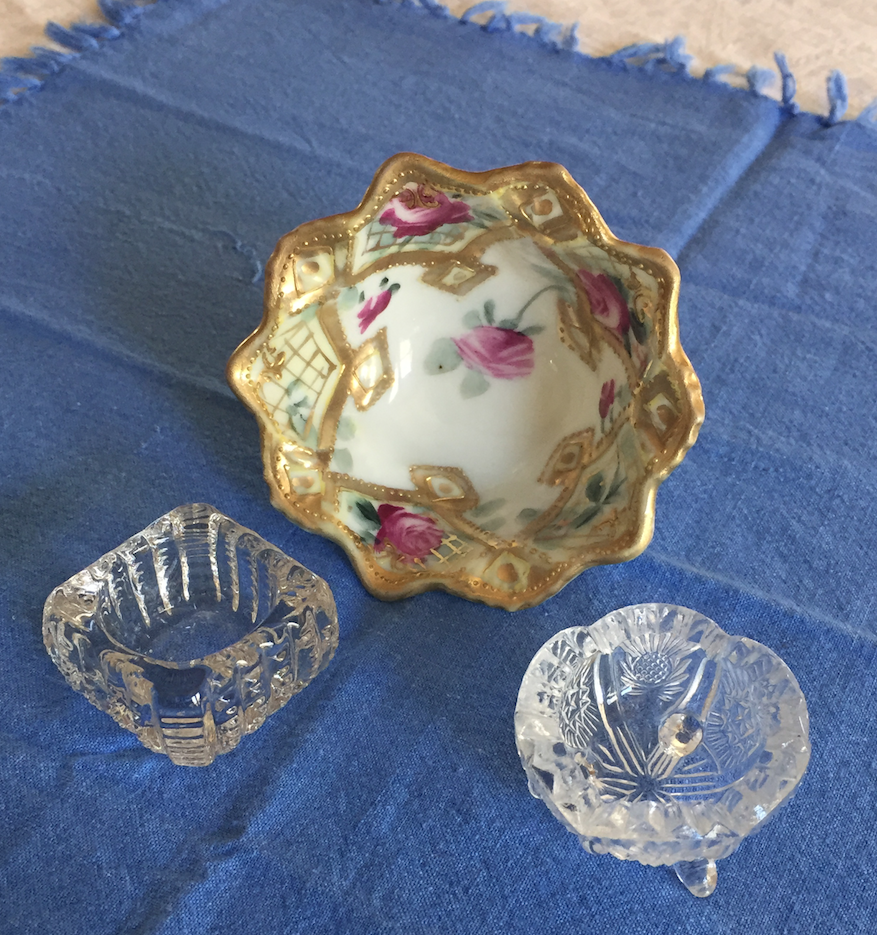
    Mimmie put hairpins in this small handpainted dish. I never put salt Grandma Pletiz’s salt cellars, but I still like them.

    I accept that my sons and future daughters-in-law may not care about my stuff—whether inherited or chosen during 30+ years of marriage. If they do, they will have different memories than mine. I hope they only keep what they care about.

  • Chemical Factory Body

    Influenza B beat out my early season flu shot. The fourth day of a common cold morphed into a significant fever and body aches between morning coffee with a friend and dinner. The doctor’s nurse suggested I come in the next day to rule out a recurrence of walking pneumonia.

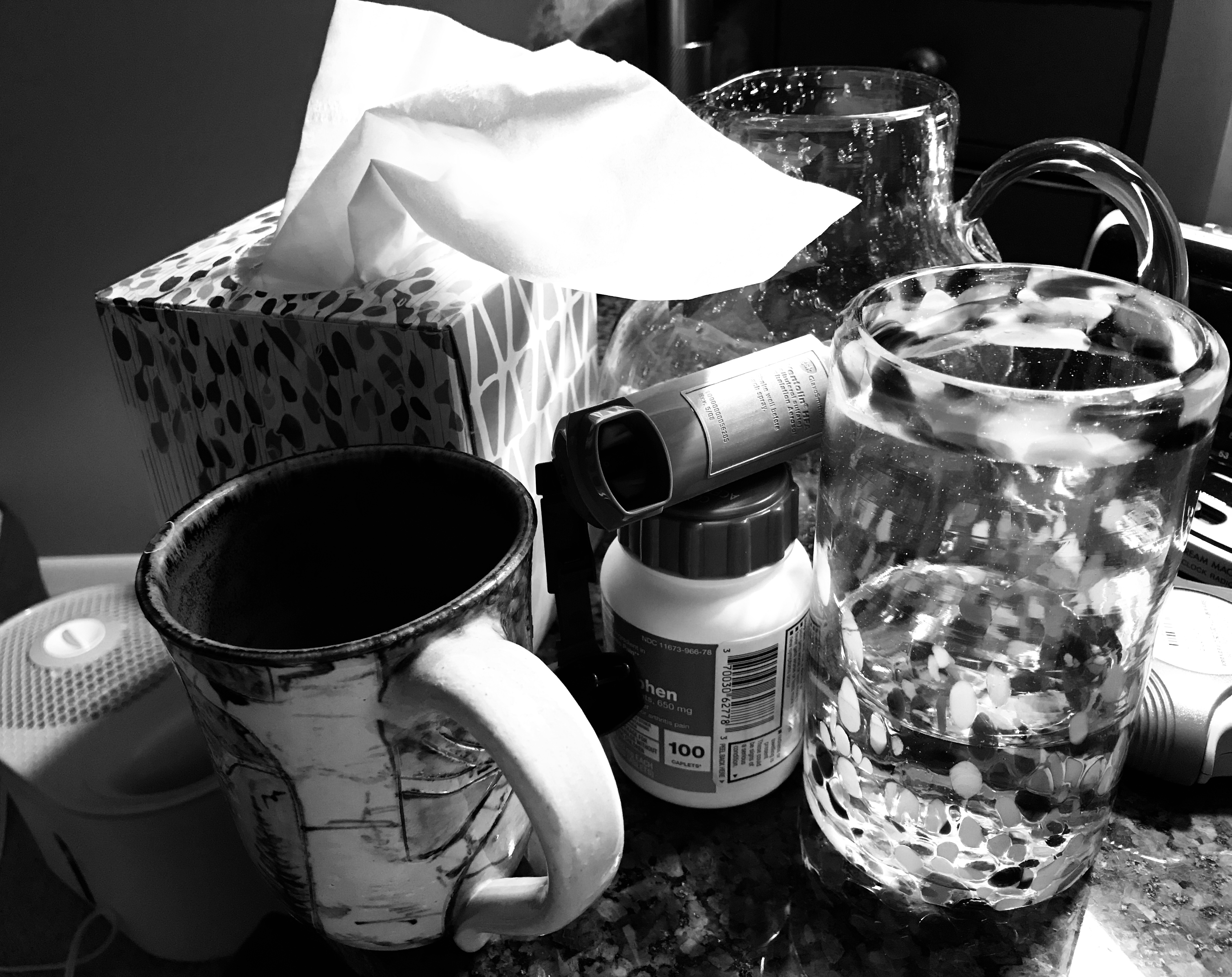
    Results of a nasty nasal swab changed the visit to treatment planning for flu and asthma management. On the way home prescriptions were picked up at the drug store along with creature comforts such as soft tissues, flavored water and ice cream. Not many creature comforts because the cost of these meds, even with insurance, was triple our weekly grocery bill.

    Instructions on the boxes for taking the medications are clear. The patient information booklets packed inside suggested I was doomed to suffer whether I used the meds or just muddled through the flu with the generic acetaminophen, cool drinks and a few good movies. With the expense of hundreds of dollars in meds on my conscience I behaved like a good patient.

    It is now one in the morning. All the steroids in the asthma meds are doing a nice job of easing my breathing and the flu med must be starting its work. The garbage basket next to me is filling with used tissues; there are a number of empty water glasses or teacups on the bathroom counter. Unfortunately all these miracle cures list sleeplessness as a possible reaction and that is my fate.

    Sleep is a treasured state because I’m not always successful in claiming six successive hours. An old IT band injury occasionally flares. I didn’t outgrow a childhood pattern of nightmares. My brain can get busy, but when do you need sleep more than when sick?

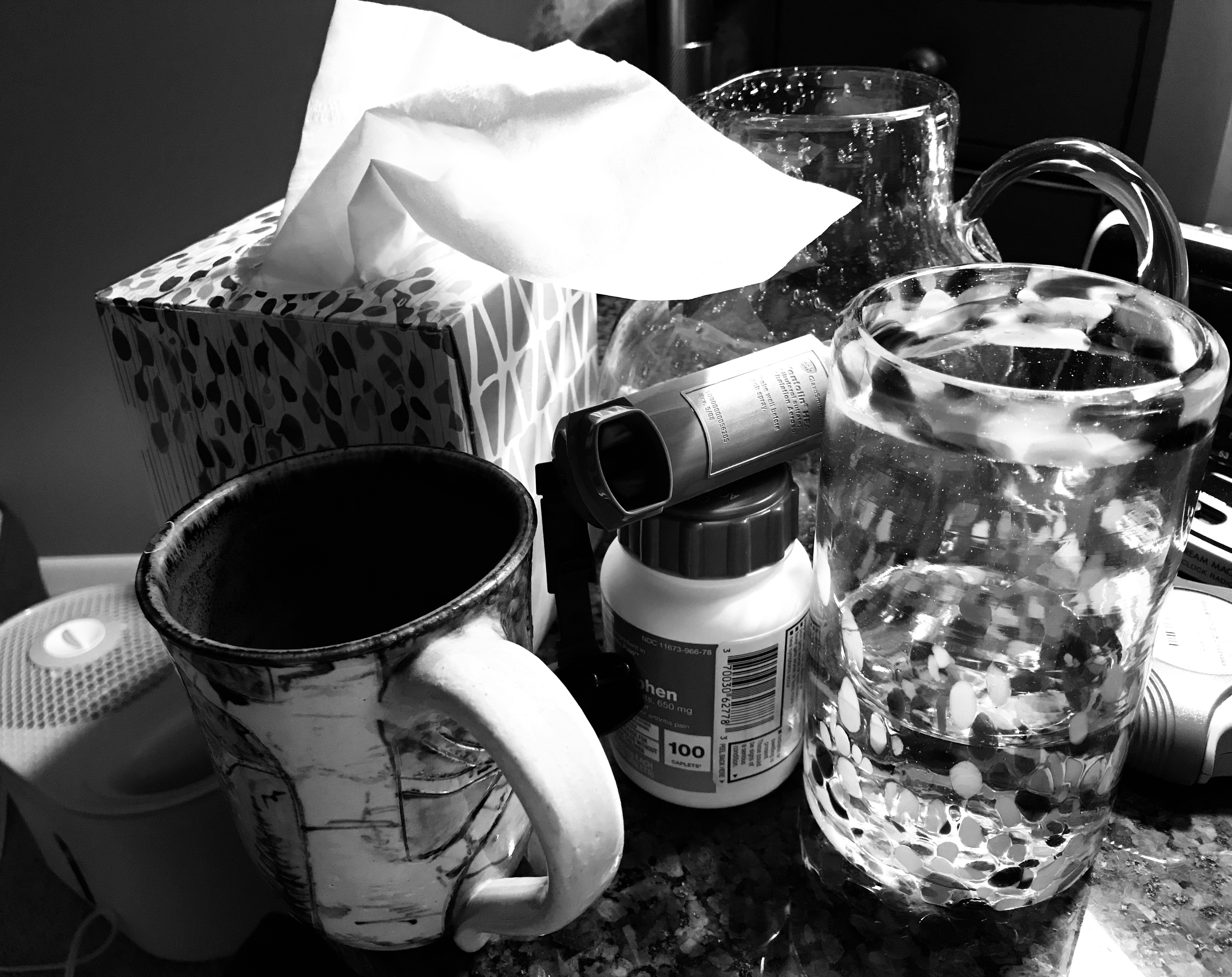
    Which makes me think of how my brother and I would tease my parents that their teams of doctors kept them healthy by turning their bodies into perfect chemical factories. At one in the morning with two inhaled meds and four pills fighting the bad flu stuff I wonder how many nights they dealt with similar internal disruptions. The joke isn’t quite as light when the medical arsenal is lined up on your bedside table.

    IMG_5306