Author: Elizabeth di Grazia

  • Living with Brown People

    DSCN0210I don’t think about it mostly.

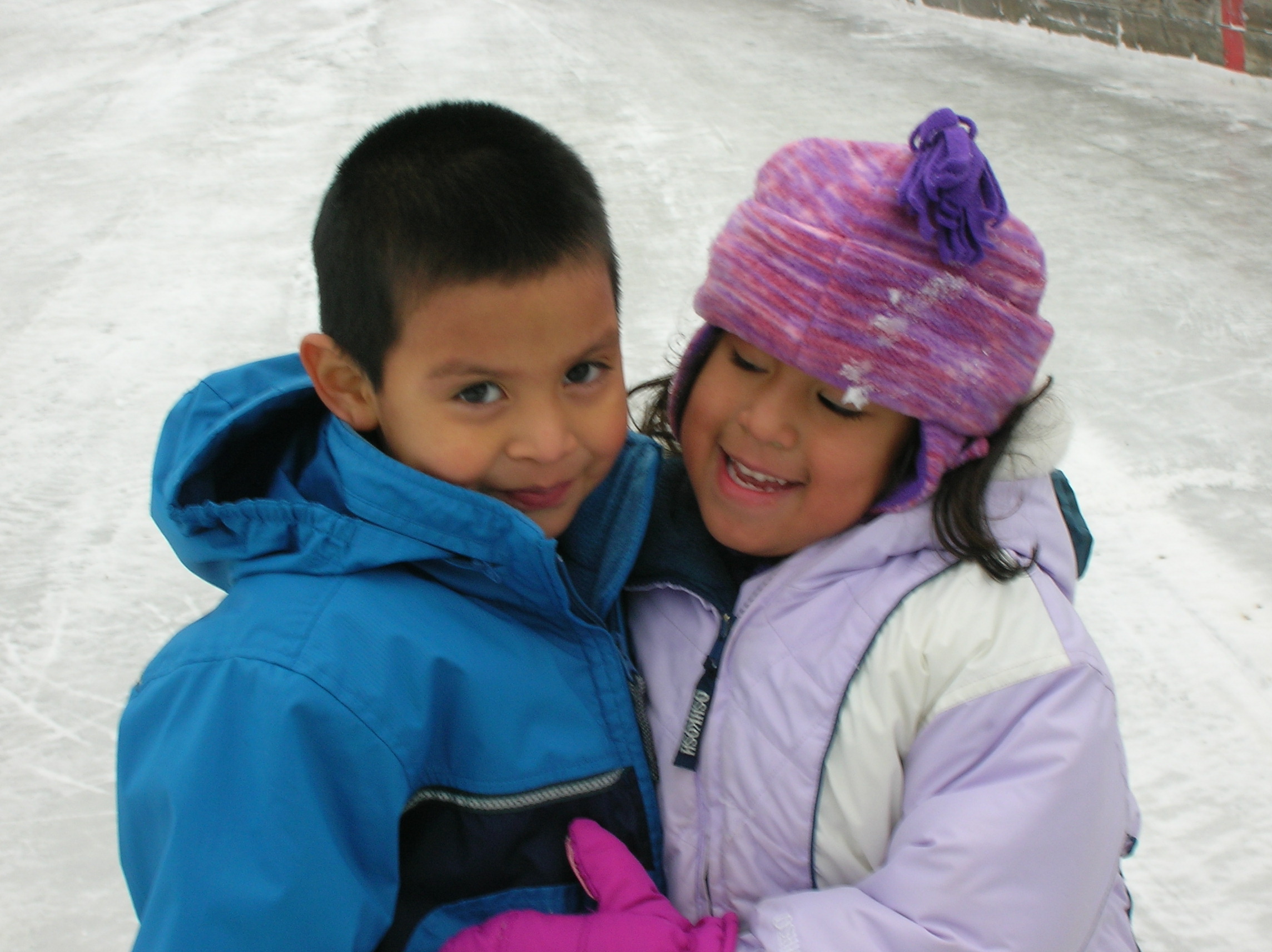
    When Juan and Crystel were little I used to think I was brown. Brown was all I saw. It was reflected back to me in their brown skin, their dark-brown eyes set above strong cheekbones, and their wide smiles. They looked just like me, or so I thought.

    Except when we traveled to Guatemala, their birth country. While packing for our trips, I would suddenly realize that I wasn’t brown, and would worry that the United States would think that I stole the children.  When I packed to return to the United States, I would worry that the Guatemalans would think that I stole the children.

    I carried a variety of documents to combat this worry: Passports, citizenship papers, Social Security cards, birth certificates, even family pictures.

    On our last trip a few weeks ago, Juan and Crystel were 13 years old. I didn’t have to pull out any documents at all besides the passports. I realized that I wasn’t even worried. Maybe the authorities figured since they are teenagers they have a voice. And, I tell you, they have a voice.

    IMG_0673 (1)I don’t think I’m brown any more. The children aren’t around enough for the mirror reflection. Now they are off playing the flute in parades, running cross country practice, even trying to find that darn Pokemon that’s floating around who knows where.

    I’m white. These days, my conversations with my daughter lean towards – whether or not her tan foot and ankle will match her brown leg if she hangs it out the car. My son wants to know if he can have a girl over to do his eyebrows.

    When I see my daughter in the parade I’m struck with how brown she is. She is so much browner than the other band members. All long slender legs and graceful arms. My son’s smile can stop me in my tracks. He’s so handsome.

    Take care of them, won’t you?

    They are my children.

  • When Differences Become Normal

    When Differences Become Normal

    Guatemalan women washing clothes at a creek.
    Guatemalan women washing clothes at a creek.

    By far, my most cherished moments in my recent trip to Guatemala were observing my children’s happiness. Seeing them smile, listening to their laughter, and seeing how at ease they were in their own skin.

    This was our fourth trip back to their birth country. Our first trip was June of 2010 when they were 7. Sitting high on our horses, we walked through villages put together with sheets of tin, boards, paper, and straw. The front and back yards were dirt. Hoses were strung and used for bathing children in a tub. To the dismay of Juan and Crystel, I waved and hollered, “Hola.” They shushed me. “People live there,” I’d say in reply pointing to another shelter. “We know. Ssssh.”

    On that first trip, every time I saw a boy with a load of wood on his back, walking barefoot, or planting in the field, I wanted to poke Juan and  Crystel. Wake them up to make sure they didn’t miss what I was seeing. The importance of it all. The women carrying heavy baskets on their head, the girls with a baby or small child strapped to their back, meat hanging in the open market, the bright orange lava flowing down the side of Volcano Pacaya.

    A man carrying boards up a trail to the next village.
    A man carrying boards up a trail to the next village.

    They seemed to want to run away from the sights.

    We were all startled. On our return to the United States, the four of us would have kissed the ground under the Welcome to Houston sign if we weren’t running north as quickly as we could.

    Two years later when they were nine, we returned to Guatemala to meet Juan and Crystel’s birth families and to travel to Lake Atitlan.

    At Lake Atitlan we had young Guatemalan men as guides.

    Knowledgeable about their country and heritage, they answered our questions and shared their stories. It was with Juan and Crystel, that they had a different purpose—to show them that they should be proud to be Guatemalan.

    IMG_0518 (1)During this fourth trip, I was even more aware of the relationship that our guide, Alex, had with Juan and Crystel. He had endeared himself to them as well as to Jody and me. He welcomed us and our friends, Pat and Mary, into his home. His family took a day trip with us to Hot Springs Fuenta Georginas, outside of the Mayan Village of Zunil, Guatemala. By sharing his family, his wife and two children, he provided us all with another experience—being around a Guatemalan family in Guatemala and seeing him as a loving father.

    Our trips changed me. I no longer felt as if I needed to elbow the children.

    This time, I heard Juan say, “Did you see that boy with the three cement blocks?” The Guatemalan boy had stopped to take a rest. The blocks must have matched his weight.

    Crystel poked me and held out a fresh sprig of basil for me to smell.

    Bringing home firewood for cooking.
    Bringing home firewood for cooking.

    I can still surprise my children. I gave a loud two handed whistle and hollered to let our friends know that the public boat we were on was coming to their dock. I surprised the other Guatemalans as well. This time instead of being shushed, Crystel told me that I needed to teach her how to whistle like that.

    My experience is that when difference becomes normal the world is pretty darn awesome.

    Thanks to Nancy Hoffman of Guatemala Reservations for introducing my family to Lee and Elaine Beal. We have stayed at Los Elementos Adventure Center on Santa Cruz la Laguna on our last 3 trips to Lake Atitlan. Juan and Crystel would have it no other way. Thanks to the Beal’s for training guides like Alex Vincente Lopez for us who come to learn the heritage of Guatemalans and to see the beauty of the country.

  • Two Moms, A Sister, and a Boy Scout

    Two Moms, A Sister, and a Boy Scout

    Taking the dental supplies to the clinic through the streets of Anitqua, Guatemala
    Taking the dental supplies to the clinic through the streets of Antiqua

    When Juan Jose was ten, he was dumped in the Brule River not once, but twice when I was at the helm of our canoe. Without help from strangers, we would not have made it to the landing.

    He’s almost 14, and he recently completed a comprehensive water-based safety course that involved practicing self-rescue and rescuing other kayakers with his Boy Scout troop in Lake Superior. These are necessary skills for the wilderness cold water kayaking that he’ll be doing in Alaska with the Scouts this August.

    Juan didn’t join Scouts to learn how to navigate water. He joined Scouts to learn what his two moms and sister couldn’t teach him.

    I became a Cub Scout leader by default. He wouldn’t let me drop him off while I ran errands for an hour.

    Dentist Hugo, Juan Jose, Hygenist
    Dentist Hugo, Juan Jose, Hygienist

    When it was time for him to cross over to Boy Scouts, he decided to stay in scouting. This surprised me. I was preparing myself for a free evening. Instead, I trained to be an assistant Boy Scout leader. He still wasn’t ready for a parent to drop and run.

    Juan was pulling away from me though. I no longer went to all of his campouts. When I did go, he was caught up in the flow of scouts running from one event to another.

    Today, he completed his Eagle Scout project in Guatemala. He raised funds for children to receive dental care, and he collected over 130 lbs. of toothbrushes, toothpaste, floss and dental supplies .

    Juan gave the children sunglasses so they wouldn't be blinded by the light. That's how it is done at his dentist in Richfield.
    Juan gave the children sunglasses so they wouldn’t be blinded by the light. That’s how it is done at his dentist in Richfield.

    The money he raised enabled 14 dental cleanings, 34 extractions, 31 fillings, and 28 sealants. Care that these children would not have received otherwise.

    He gave one suitcase of dental supplies to the dentist and a suitcase of toothbrushes, toothpaste, and floss to De Familia a Familia. This organization is a link between birth and adoptive families. They have over 260 families that they are currently working with.

    Juan couldn’t have done this project without help from relatives, friends, neighbors, and strangers.

    And, his two moms and sister.

    Six teeth extracted and a dental cleaning.
    Six teeth extracted and a dental cleaning.

    Because of all of us, he’s learned to navigate waters and to pull himself back into his kayak.

    Thank you.