Author: Elizabeth di Grazia

  • Your Moms Are Going into The Peace Corps

    Your Moms Are Going into The Peace Corps

    I told the kids that after they graduated from high school that their moms were going into the Peace Corps. Even though it is 4 years from now, I believe in giving plenty of notice. Juan Jose’ has already told us that he isn’t leaving home. He’s going to live here forEVER. It was clear that the moms were going to have to leave to get on with their life.

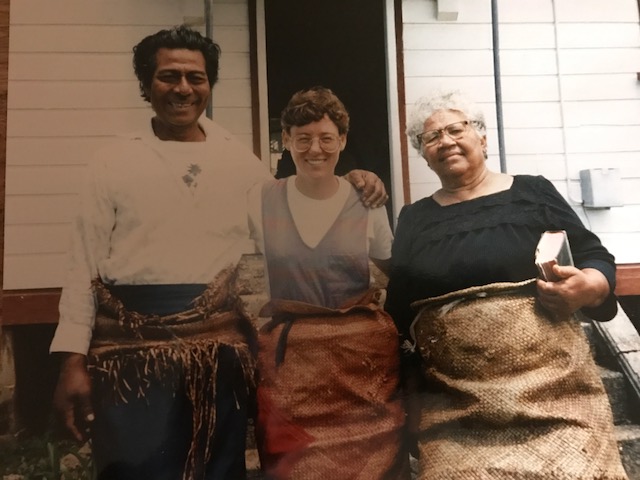
    I had been in the Peace Corps in my early 30’s. After 1½ years, I received a phone call that my mother was dying of cancer. I went home for a 30-day leave, returned to Tonga in the South Pacific where I was stationed, only to learn that I didn’t have the stamina to wait for a call telling me that she had died. Though our relationship was contentious, I needed to be within driving distance when she took her last breath. We never spoke of my decision.

    It has always been in the back of my mind to return to the Peace Corps as a couple. I’m excited that Jody is willing. It will be an adventure we can share.

    I mentioned Fiji, Tonga, and other South Pacific Islands.

    Until now, Crystel had not been verbal about her plans after high school.

    “I’m coming,” she said. I thought about that. Many people do have family members visit during their two-year stint.

    “Yes,” I agreed. “A visit is possible. Maybe you both can even travel to New Zealand and Australia with Mama Jody and me.”

    “No. I’m coming.”

    “Oh, okay.” I had no answer other than that. How does one hide their 18-year-old daughter for two years in a hut? I’m not sure that the Peace Corps allows for extended stays. As her Uncle Scott mentioned, maybe they have a university she can attend.

    When I was in the Peace Corps in 1990, most people went off the island to New Zealand or Australia to get their education.

    Still….

    “Is college important?” asked Juan Jose’.

    Both Jody and I answered him in the affirmative. I wasn’t satisfied with my answer. How do you tell a ninth grader that college is important when he thinks that the stuff he is learning is useless?

    I support the kids doing a gap year and traveling overseas. As a human resources manager, I learned that the most important work strength one can have is knowing how to get along with others. If you can’t get along with others you most likely won’t hold your job long and you’ll be stymied for promotions.

    I thought about the foundry workers, the press and extrusion operators and other laborers at the companies where I’ve worked. All jobs which the kids are familiar with from plant tours that I’ve given them.

    I explained to Juan that the people who do those jobs work much harder than me, but they make less money. “It’s another example of how the world is unfair,” I said. “The hardest working people make less money because they don’t have a college degree.”

    I went on to say that if you get a college education you are more likely to be in a job you want, make more money, and do less work.

    Juan was quiet. I imagined him living at home and attending a community college. “The college you go to is far less important than one would think,” I said. “It’s the 4-year degree that holds the importance.”

    It never occurred to me that Crystel might do her gap year with Jody and me.

    I learned that the University of the South Pacific includes Tonga. Maybe, that will have to be part of the deal if she starts packing her bags and sets them next to ours when we join the Peace Corps. The university is jointly owned by the governments of 12 island countries: Cook Islands, Fiji, Kiribati, Marshall Islands, Nauru, Niue, Solomon Islands, Tokelau, Tonga, Tuvalu, Vanuatu and Western Samoa. All places that she wants to travel.

    Jody and I have our work cut out for us. We have to start teaching Juan Jose’ how to take care of the yard, the house, and the pool. Oh, and to run the dishwasher and throw his socks down the clothes chute. We have four years.


  • Had I Prepared My Daughter?

    Photo by Uncle Scott

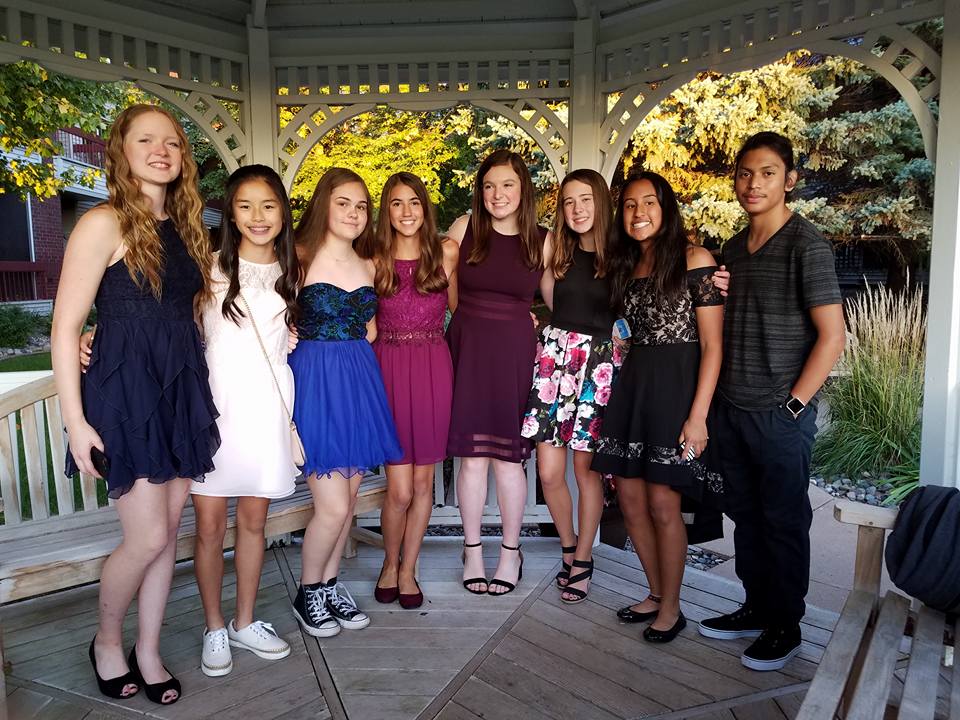
    My 14-year-old daughter was half way to Wisconsin Dells with girlfriends for a birthday party when my gut tightened.

    The party was a sleepover. She’d be gone for a couple of nights.

    Maybe it was the distance that was the source of the fear. Maybe it was because it would be a couple of nights. Maybe it was her age. Maybe it was how beautiful she is. Maybe it was her innocence. Maybe it was her growing independence, her getting out into the world. There would be more days away from home. There would be longer distances.

    Had I prepared her for an unwelcomed glance or touch? Was she prepared if that would happen? How would she respond?

    I could almost hear her nervous giggle.

    What if it became an unwanted advance?

    I put myself in her place. My body froze. That’s what I knew how to do.

    It helped when I thought of how differently Jody and I had raised our daughter from how I was raised. Even from a very young age, she was taught that her body was hers. She was taught that she had every right to expect privacy. She was taught that it was okay to lock the bathroom door. She was taught that it was okay to lock her bedroom door. She was taught that she had every right to expect respect. She was taught to say, “No”.

    This calmed me.

    If my daughter wasn’t respected she would recognize that. She knew what respect was.

    That’s what Jody and I had given her. Her ability to recognize a danger signal by showing her acceptable behavior in our home.

    This calmed me.

    I realized that Jody and I had taught her a lot of things. We taught her love, and therefore she will expect love. We taught her kindness, and empathy, and to be herself. We taught her to dream. We taught her to travel domestically and internationally and to do so safely.

    We’ve also taught her that it is okay to be alone, to feel pain, and sadness.

    Most importantly we’ve taught her she can always come home. We are home.

    She will travel far.


  • What We Don’t See

    First off, my love to Beverly Cory and to those who loved her. I didn’t know Beverly but she could have been my friend or my financial advisor. The financial advisor Jody and I work with is also our dear friend and aunt to our children.

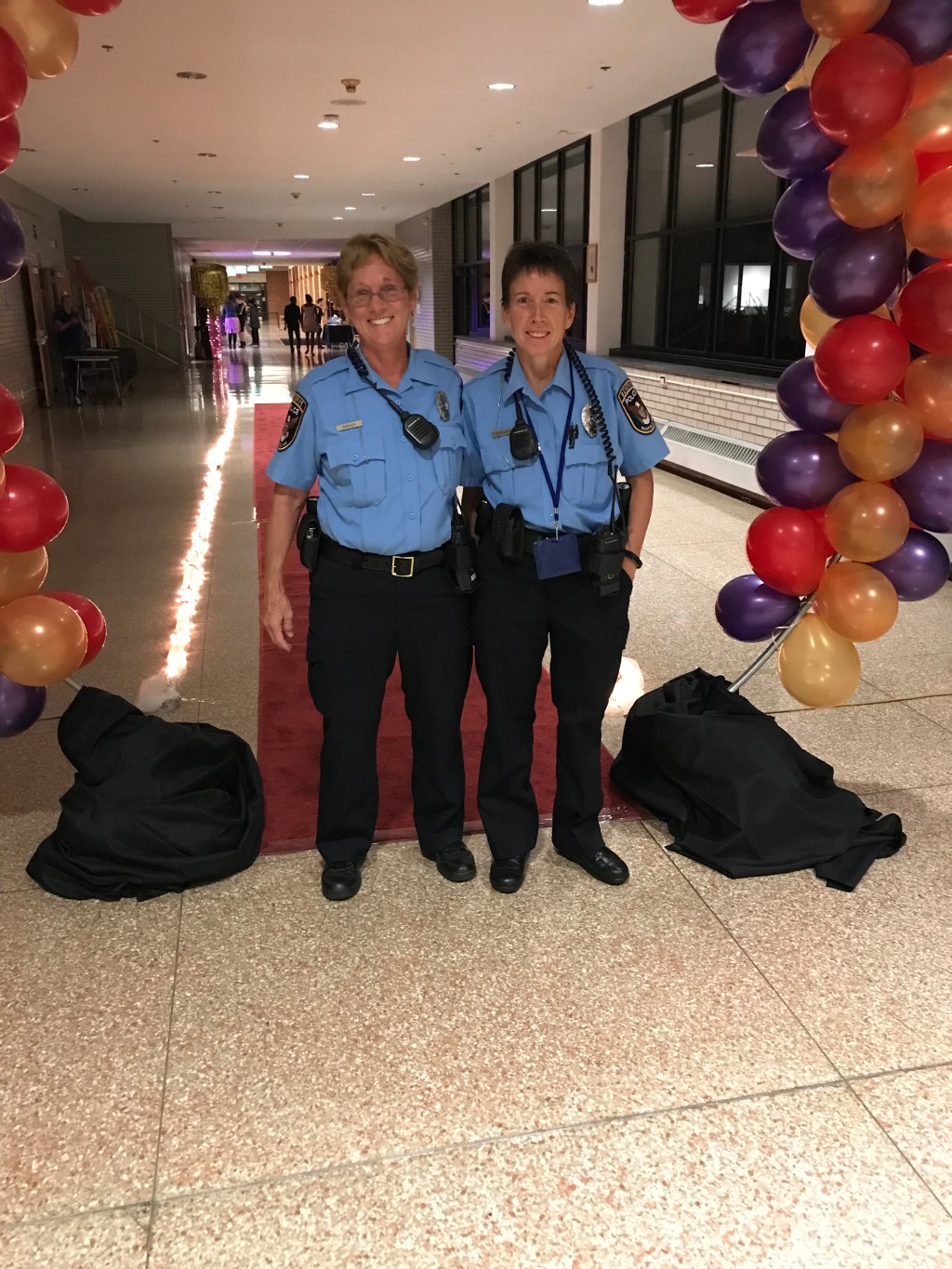
    While volunteering for Richfield Police Reserves, near the 8-mile mark of the Woodlake half marathon, I positioned the police car to block the street. I turned on the squad lights, indicating that the intersection was closed. Half marathon runners could run safely up 71st St E.  Many would shout out some thanks as they went by. I’d wave in acknowledgement.

    With the police car doing most of my work, my mind was on what I was hearing on the police radio.

    The speed of information and the rapid coordination of agencies astounded me.


    A person had been robbed at gunpoint. Police chase ensued. Car crashed into swamp. Man fled into nursing home. Perimeter set up. Command post opened. Swat team deployed. Help requested from nearby agencies. Police dog on scene. Request for another police dog. Photo of suspect received. Witness identified suspect. Snipers placed on roof tops. Squad cars, armoured vehicles, and helicopters surrounded the area. Area on lockdown. Evacuation of White Pine Living Center begun. A methodical door-to-door search of the center. Buses on site for residents and staff.

    Though it was peaceful at my post, with runners yelling their appreciation, my heart rate increased, my blood pressure rose, and my breathing quickened.

    In Mendota Heights, attention had turned to the office building.

    Dispatch continuously fed the command center with information: persons who could possibly still be in the office building, the vehicles they drove, and their physical description.

    Intensity continued at the senior center and at the same time increased at the office building.

    A door-by-door search of the office building begun. A robot deployed. Beverly Cory found. My heart sank.

    Long after I took off my Police Reserve officer uniform, I couldn’t stop thinking of Beverly and what might have transpired in her office. I don’t know what did. When I change into civilian clothes, I become a member of the public. I receive news the same as you.

    One thing that I knew for sure, is that the police would work 24/7, and use all the resources that they had available to catch the murder suspect. I felt safer knowing that. I also knew that the police were doing a job that I could not possibly do.