Author: cmkraack

  • The Care Giver Relay

    Baby Boomers ran the first relay race known as working and maintaining families without help or comprehensive policies from our government.  Day care, sick child care, after school care, elder care. Home or facility based? Who takes the call when the plan falls apart? Who helps the cared one feel comfortable?

    I’ve run all legs of that relay using strategies that worked in the moment for our kids, ourselves, our parents. We had wonderful experiences, and days I hope no one remembers. The cry of a toddler dealing with separation anxiety, a sick child asking a parent to stay with them, the whine of a school kid not wanting a babysitter, all disappear as a family matures.

    The set of sounds that haunt me is a fragile parent demanding you stay, forgetting anything else exists in your world because they are anxious, the suggestions of hired caregivers that maybe dad would feel better if you walked out of a work meeting to come spend an hour. When you are carrying the heaviest responsibilities of a job that provides for the family you created, those calls tilt the world. Different, but equally difficult if you live miles away or states away.

    Our local newspaper is running a series of stories about family elder care providers, also known as adult children. Just like searching for quality child care decades ago, individuals quickly discover there is no safety net or logical system to access when an elder family member needs help. It isn’t there so don’t do an online search. Network, know the finances of the person depending on you as well as their needs, then do the best you can. And do it right now. The hospital plans to discharge the individual tomorrow afternoon.

    It isn’t an employer’s responsibility to expect less of you because an ill spouse or parent has doctor appointments, physical restrictions, emotional insecurity or a string of emergencies. Increased longevity does not equal decades of quality living. Without a safety net, it will be you standing on one foot balancing too many glass balls.

    Elder care was the most difficult leg of the relay. Unlike an expected due date, elder + care can become part of your life any day or in a few months or years. That relay leg is run on a special course with more rocks than cushion. The vulnerable one can have physical needs but be capable intellectually and aware that they have become a burden. The vulnerable one may be physically capable but wandering in dementia. There is no known end. Your loved one will not enter kindergarten in twenty months. This part of life has no schedule for the refrigerator. You will have days that vaguely resemble television commercials where adult children chat with a professional provider and mother is wearing pearls. There will be more days that you lift a fragile loved one off the toilet in a bathroom that could use a better cleaning. You do the best you can.

    No need to continue. Many of us have run the race and placed somewhere in the standings. Some finish their caregiving with shaky finances, some with high blood pressure and anxiety of their own, some with a scrapbook of treasured memories. As a Baby Boomer, I fear the end of life years for many reasons. Not the least that there is no national forethought about caring for the coming gray tsunami. Maybe like the baby boomlet of the 1980s, we’ll just let the Gen Xers and Millennials stumble through working long hours, raising their own children, dealing with deep debt, and caring for a couple of vulnerable elderly parents.

    It isn’t going to be pretty.


    fullsizeoutput_12d6


  • Are You My Mother?

    Are You My Mother?

    In the classic children’s picture book Are You My Mother? a newly hatched bird falls from its nest and wanders about asking that question of a kitten, a hen, a dog, and a few inanimate objects. He is clueless about his own identity and terribly lost.

    You may have been nurtured by a mother possessing all the perfection of Caroline Ingalls or struggled through childhood with a parent who took lessons from Hamlet’s Queen Gertrude. For most people growing up in Mom’s kitchen fell in a more safe and boring middle ground with measured opportunities to learn about yourself and the world. A place where Mom, trusted adults, books, television and other kids helped answer questions whether insignificant or intense.

    The maker of peanut butter sandwiches, enforcer of daily tooth brushing, comforter of physical or emotional injuries, was just a woman who happened to be older than you. She wasn’t gifted by the gods with amazing knowledge, a graduate of a secret parenting program, or anywhere near perfect. She didn’t know why 9/11 happened, how to stop social injustice, who to call about global warming. Her job was to make sure you felt loved and protected, often difficult work in an imperfect world.

    Discovering that your mother has a masters in labor economics, hides a bag of bodice busters in the closet, holds strong feelings about mutual funds versus annuities, was married before she met your father suggests a richness in this woman’s life that has nothing to do with your existence. This is the school where she learned the mirepoix that flavored every scold, joke or counsel.

    Even when the person who mothered you becomes too old or fragile to cook a really good dinner or read a favorite author without help, there will still be unknowns to explore in the woman who taught you to fake burp, to connect cables on a sound system, to ask your boss for more responsibility, to speak in many voices so your child giggles as you read Are You My Mother?.


    Reprinted from cynthiakraack.com May 9, 2015

  • Reduced Focus

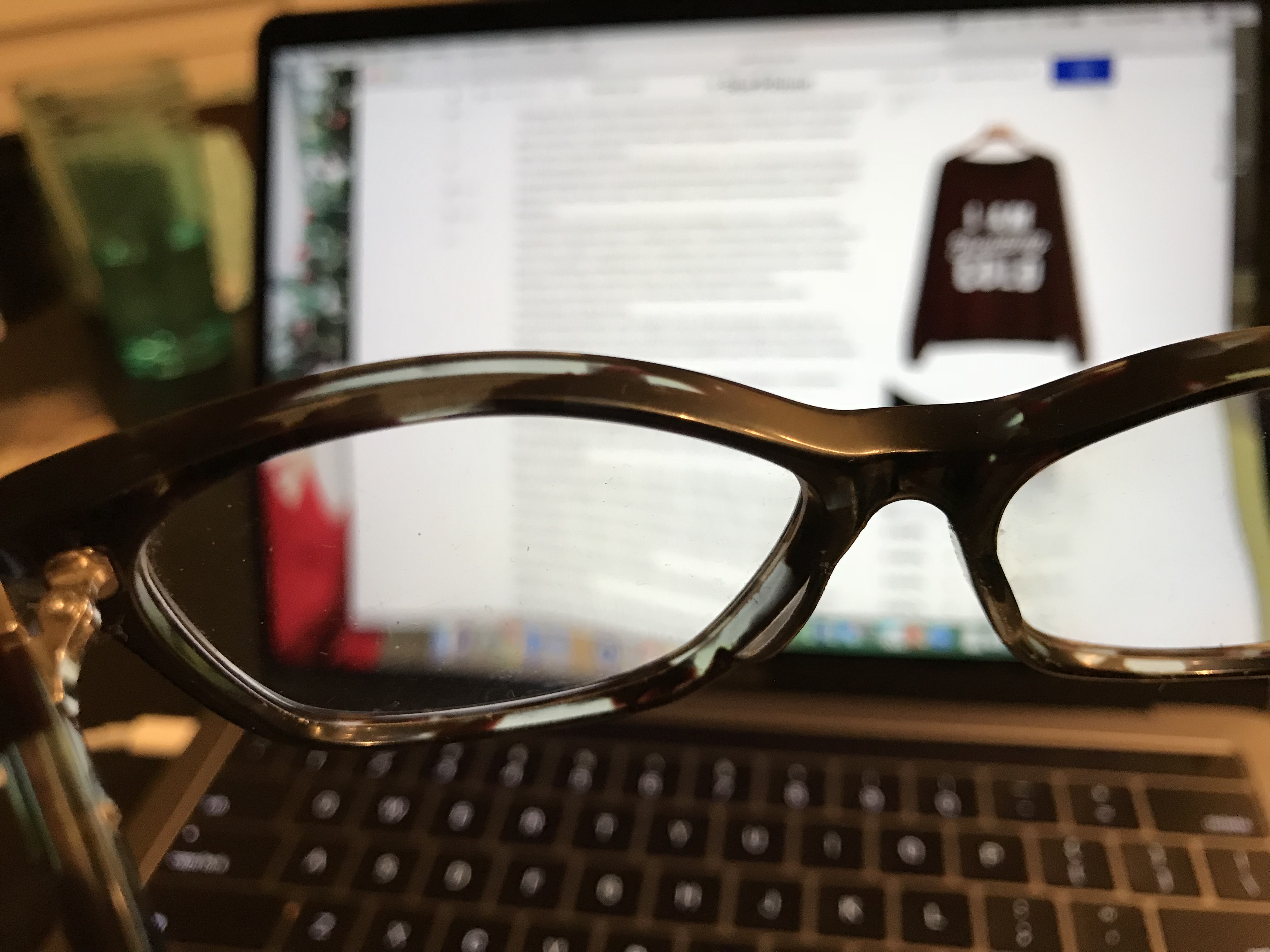
    For the past four years my eye prescription remained relatively unchanged. Unfortunately, my glasses haven’t remained unscarred through an infant’s grabbing hands, a puppy’s curiosity, and life in general.

    I took advantage of a coupon to buy an emergency pair of bifocals for $250. During a recent week of travel I wore that pair. My eyes never adjusted to the left lens, the one the optical tech said was stronger than my old prescription. Each afternoon I found it difficult to zip through messages on my phone, enjoy a book, or read small print on a menu. Headaches started early in the day. I panicked about fulfilling writing obligations and tried to not think that maybe my eyes were in trouble.

    This is the kind of bad decision I made because of a high deductible health insurance policy. The $175 eye exam would be out of pocket so spending $400 for the security of back up glasses felt prohibitive. I shopped around and spent less. Fortunately, my discomfort ended when I returned home and put on the old glasses. Scratches and all, my vision cleared, and the headaches stopped.

    Others are making more difficult decisions—taking the gamble of not purchasing an asthma inhaler for themselves to make it possible to pay for a partner’s insulin, cancelling necessary lab work or tests to pay for their child’s asthma inhaler, not following a physician’s directions in using an expensive medication to stretch its use, staying in a hated job to hold on to health insurance, not replacing bald tires on the family car because of a health emergency.

    Most of my adult experience was in a health maintenance organization. We groused about wait times for appointments, lack of choice in the optical area, going to a hospital across town, but we never faced decisions like today. If we hesitated about taking a child to clinic for a possible ear infection, it was about traffic or workload and not about the $125 bill.

    These decisions are made in all zip codes throughout our wide metropolitan area. Only the very wealthy or very fortunate are exempt. We don’t comment on a good friend’s darkened tooth, push a neighbor to join in a night out, or question why a kid’s wheezy cough doesn’t improve. We’re all too polite to talk about the healthcare monkey choking America’s sense of comfort and scared about what’s coming next.

    IMG_5422