Author: cmkraack

  • Are You My Mother?

    Are You My Mother?

    In the classic children’s picture book Are You My Mother? a newly hatched bird falls from its nest and wanders about asking that question of a kitten, a hen, a dog, and a few inanimate objects. He is clueless about his own identity and terribly lost.

    You may have been nurtured by a mother possessing all the perfection of Caroline Ingalls or struggled through childhood with a parent who took lessons from Hamlet’s Queen Gertrude. For most people growing up in Mom’s kitchen fell in a more safe and boring middle ground with measured opportunities to learn about yourself and the world. A place where Mom, trusted adults, books, television and other kids helped answer questions whether insignificant or intense.

    The maker of peanut butter sandwiches, enforcer of daily tooth brushing, comforter of physical or emotional injuries, was just a woman who happened to be older than you. She wasn’t gifted by the gods with amazing knowledge, a graduate of a secret parenting program, or anywhere near perfect. She didn’t know why 9/11 happened, how to stop social injustice, who to call about global warming. Her job was to make sure you felt loved and protected, often difficult work in an imperfect world.

    Discovering that your mother has a masters in labor economics, hides a bag of bodice busters in the closet, holds strong feelings about mutual funds versus annuities, was married before she met your father suggests a richness in this woman’s life that has nothing to do with your existence. This is the school where she learned the mirepoix that flavored every scold, joke or counsel.

    Even when the person who mothered you becomes too old or fragile to cook a really good dinner or read a favorite author without help, there will still be unknowns to explore in the woman who taught you to fake burp, to connect cables on a sound system, to ask your boss for more responsibility, to speak in many voices so your child giggles as you read Are You My Mother?.


    Reprinted from cynthiakraack.com May 9, 2015

  • Reduced Focus

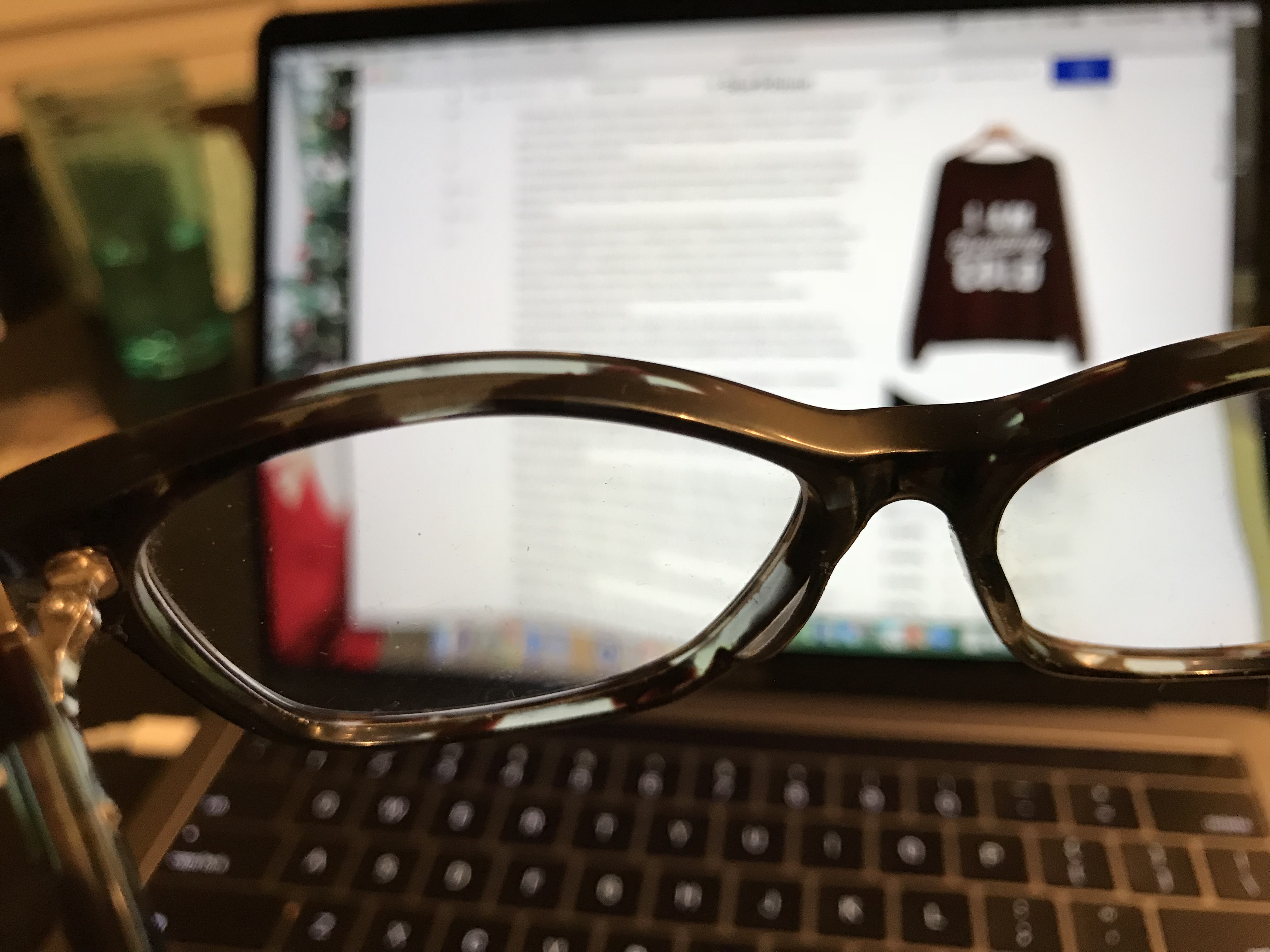
    For the past four years my eye prescription remained relatively unchanged. Unfortunately, my glasses haven’t remained unscarred through an infant’s grabbing hands, a puppy’s curiosity, and life in general.

    I took advantage of a coupon to buy an emergency pair of bifocals for $250. During a recent week of travel I wore that pair. My eyes never adjusted to the left lens, the one the optical tech said was stronger than my old prescription. Each afternoon I found it difficult to zip through messages on my phone, enjoy a book, or read small print on a menu. Headaches started early in the day. I panicked about fulfilling writing obligations and tried to not think that maybe my eyes were in trouble.

    This is the kind of bad decision I made because of a high deductible health insurance policy. The $175 eye exam would be out of pocket so spending $400 for the security of back up glasses felt prohibitive. I shopped around and spent less. Fortunately, my discomfort ended when I returned home and put on the old glasses. Scratches and all, my vision cleared, and the headaches stopped.

    Others are making more difficult decisions—taking the gamble of not purchasing an asthma inhaler for themselves to make it possible to pay for a partner’s insulin, cancelling necessary lab work or tests to pay for their child’s asthma inhaler, not following a physician’s directions in using an expensive medication to stretch its use, staying in a hated job to hold on to health insurance, not replacing bald tires on the family car because of a health emergency.

    Most of my adult experience was in a health maintenance organization. We groused about wait times for appointments, lack of choice in the optical area, going to a hospital across town, but we never faced decisions like today. If we hesitated about taking a child to clinic for a possible ear infection, it was about traffic or workload and not about the $125 bill.

    These decisions are made in all zip codes throughout our wide metropolitan area. Only the very wealthy or very fortunate are exempt. We don’t comment on a good friend’s darkened tooth, push a neighbor to join in a night out, or question why a kid’s wheezy cough doesn’t improve. We’re all too polite to talk about the healthcare monkey choking America’s sense of comfort and scared about what’s coming next.

    IMG_5422

  • Chemical Factory Body

    Influenza B beat out my early season flu shot. The fourth day of a common cold morphed into a significant fever and body aches between morning coffee with a friend and dinner. The doctor’s nurse suggested I come in the next day to rule out a recurrence of walking pneumonia.

    Results of a nasty nasal swab changed the visit to treatment planning for flu and asthma management. On the way home prescriptions were picked up at the drug store along with creature comforts such as soft tissues, flavored water and ice cream. Not many creature comforts because the cost of these meds, even with insurance, was triple our weekly grocery bill.

    Instructions on the boxes for taking the medications are clear. The patient information booklets packed inside suggested I was doomed to suffer whether I used the meds or just muddled through the flu with the generic acetaminophen, cool drinks and a few good movies. With the expense of hundreds of dollars in meds on my conscience I behaved like a good patient.

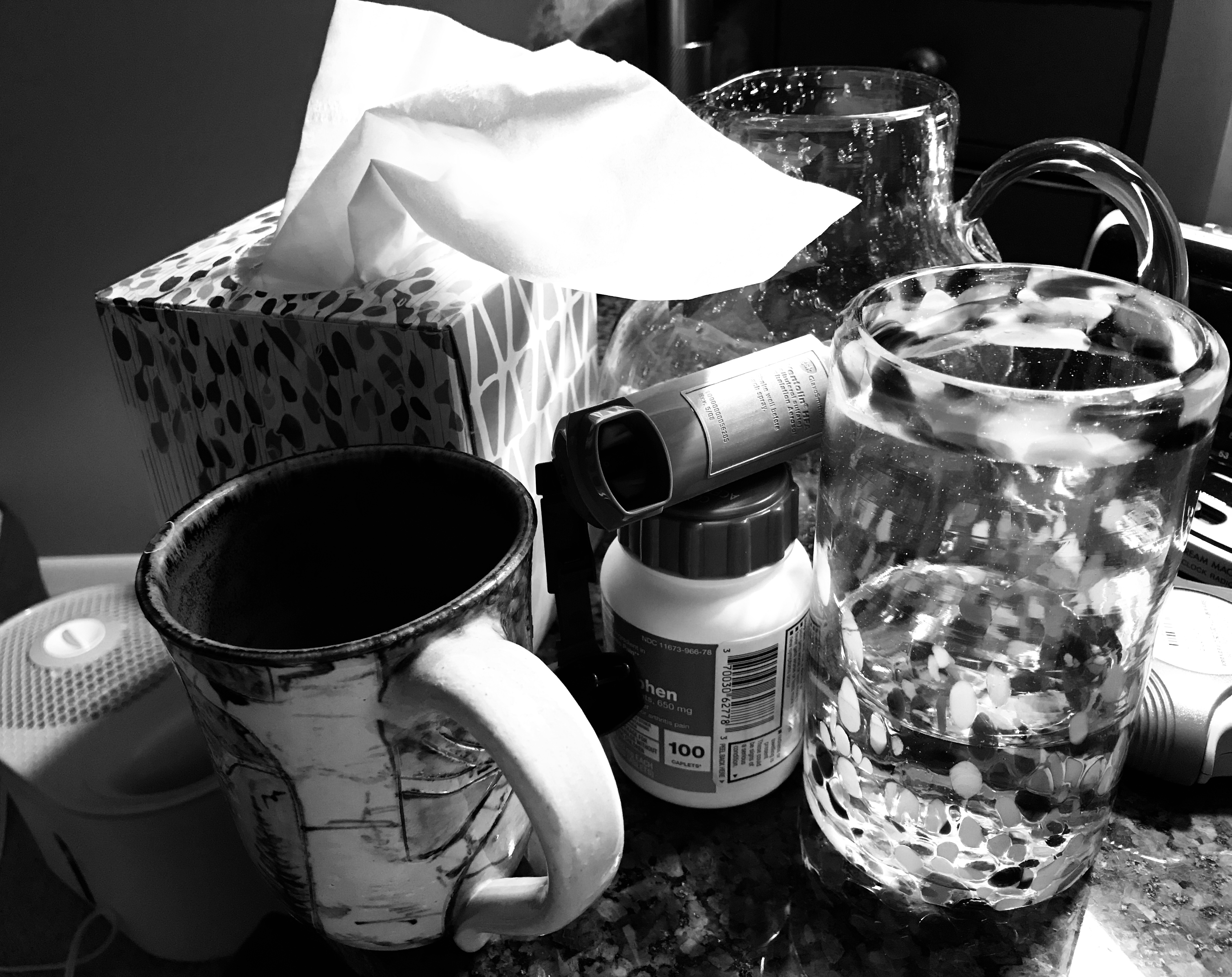
    It is now one in the morning. All the steroids in the asthma meds are doing a nice job of easing my breathing and the flu med must be starting its work. The garbage basket next to me is filling with used tissues; there are a number of empty water glasses or teacups on the bathroom counter. Unfortunately all these miracle cures list sleeplessness as a possible reaction and that is my fate.

    Sleep is a treasured state because I’m not always successful in claiming six successive hours. An old IT band injury occasionally flares. I didn’t outgrow a childhood pattern of nightmares. My brain can get busy, but when do you need sleep more than when sick?

    Which makes me think of how my brother and I would tease my parents that their teams of doctors kept them healthy by turning their bodies into perfect chemical factories. At one in the morning with two inhaled meds and four pills fighting the bad flu stuff I wonder how many nights they dealt with similar internal disruptions. The joke isn’t quite as light when the medical arsenal is lined up on your bedside table.

    IMG_5306