By far, my most cherished moments in my recent trip to Guatemala were observing my children’s happiness. Seeing them smile, listening to their laughter, and seeing how at ease they were in their own skin.
This was our fourth trip back to their birth country. Our first trip was June of 2010 when they were 7. Sitting high on our horses, we walked through villages put together with sheets of tin, boards, paper, and straw. The front and back yards were dirt. Hoses were strung and used for bathing children in a tub. To the dismay of Juan and Crystel, I waved and hollered, “Hola.” They shushed me. “People live there,” I’d say in reply pointing to another shelter. “We know. Ssssh.”
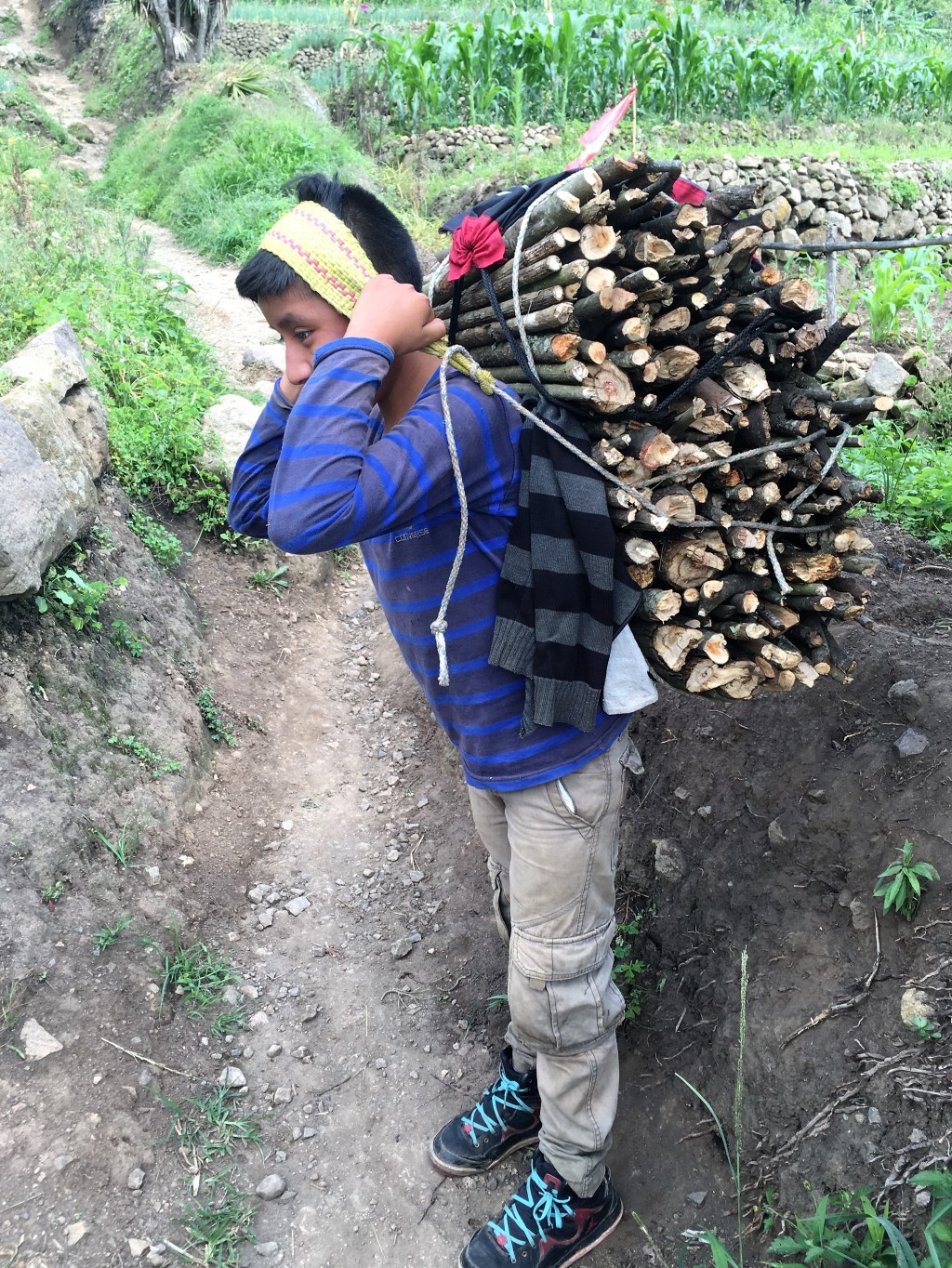
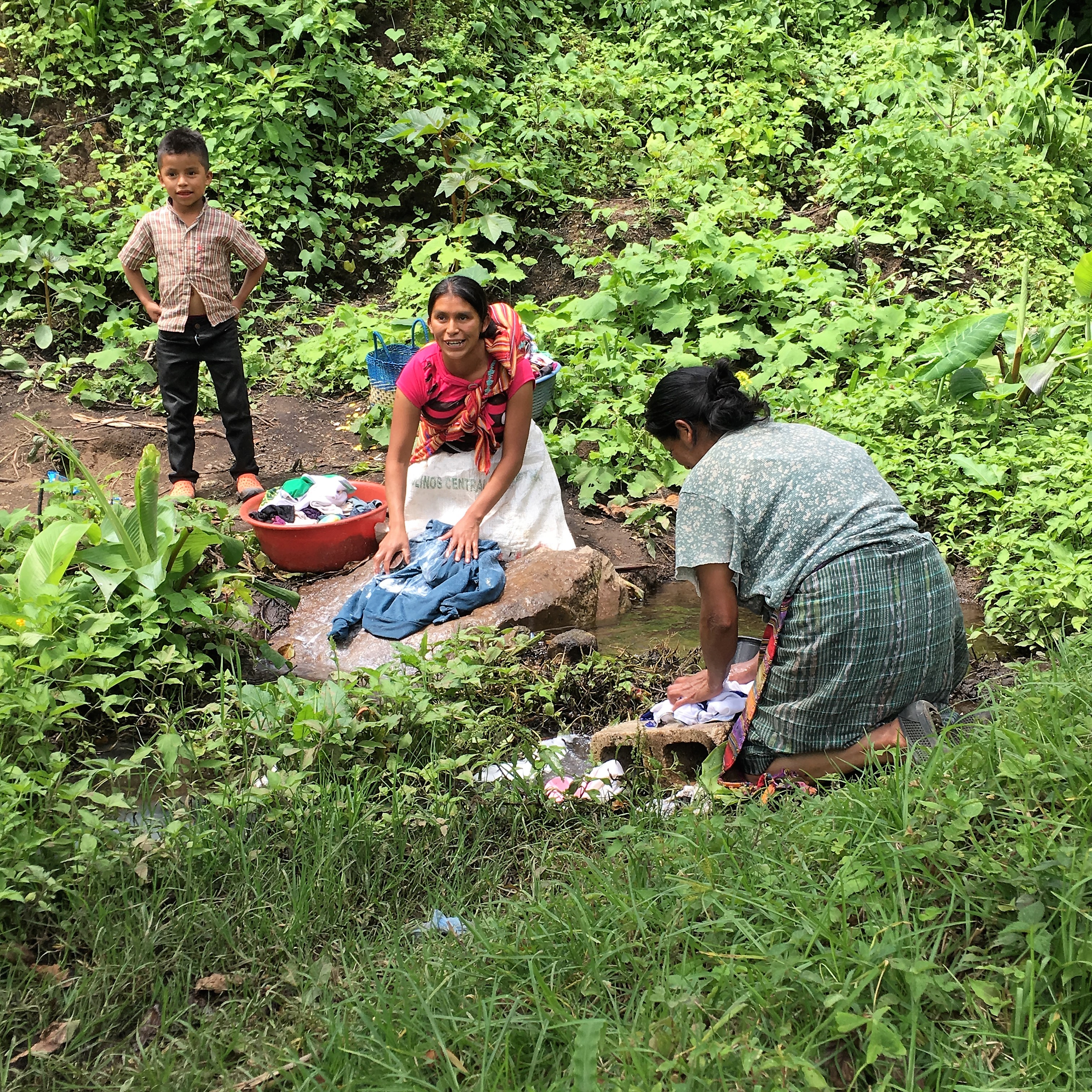
On that first trip, every time I saw a boy with a load of wood on his back, walking barefoot, or planting in the field, I wanted to poke Juan and Crystel. Wake them up to make sure they didn’t miss what I was seeing. The importance of it all. The women carrying heavy baskets on their head, the girls with a baby or small child strapped to their back, meat hanging in the open market, the bright orange lava flowing down the side of Volcano Pacaya.
A man carrying boards up a trail to the next village.
They seemed to want to run away from the sights.
We were all startled. On our return to the United States, the four of us would have kissed the ground under the Welcome to Houston sign if we weren’t running north as quickly as we could.
Two years later when they were nine, we returned to Guatemala to meet Juan and Crystel’s birth families and to travel to Lake Atitlan.
At Lake Atitlan we had young Guatemalan men as guides.
Knowledgeable about their country and heritage, they answered our questions and shared their stories. It was with Juan and Crystel, that they had a different purpose—to show them that they should be proud to be Guatemalan.
During this fourth trip, I was even more aware of the relationship that our guide, Alex, had with Juan and Crystel. He had endeared himself to them as well as to Jody and me. He welcomed us and our friends, Pat and Mary, into his home. His family took a day trip with us to Hot Springs Fuenta Georginas, outside of the Mayan Village of Zunil, Guatemala. By sharing his family, his wife and two children, he provided us all with another experience—being around a Guatemalan family in Guatemala and seeing him as a loving father.
Our trips changed me. I no longer felt as if I needed to elbow the children.
This time, I heard Juan say, “Did you see that boy with the three cement blocks?” The Guatemalan boy had stopped to take a rest. The blocks must have matched his weight.
Crystel poked me and held out a fresh sprig of basil for me to smell.
Bringing home firewood for cooking.
I can still surprise my children. I gave a loud two handed whistle and hollered to let our friends know that the public boat we were on was coming to their dock. I surprised the other Guatemalans as well. This time instead of being shushed, Crystel told me that I needed to teach her how to whistle like that.
My experience is that when difference becomes normal the world is pretty darn awesome.
Thanks to Nancy Hoffman of Guatemala Reservations for introducing my family to Lee and Elaine Beal. We have stayed at Los Elementos Adventure Center on Santa Cruz la Laguna on our last 3 trips to Lake Atitlan. Juan and Crystel would have it no other way. Thanks to the Beal’s for training guides like Alex Vincente Lopez for us who come to learn the heritage of Guatemalans and to see the beauty of the country.
Jody met me at the end of the driveway. In her hand she held a yellow envelope addressed to me.
Notifications on two prior occasions from the Jerome Foundation came by email: We’re sorry to inform you….
This was an envelope. A large envelope. I opened it slowly and carefully which isn’t my nature. Rejections don’t come in such packaging. This could only mean one thing.
As I pulled out the contents I realized that I’ve been a beneficiary of much goodness: wonderful teachers, mentors, my writing group, peers, friends, and family.
In November of 2012, participating in Mary Carroll Moore’s weekend workshop, “How to Plan, Write, and Develop a Book,” at the Loft Literary Center, I understood for the first time what my book was about: A Woman’s Search to Be Seen. Using her W-shaped Storyboard and Three-Act Structure, I left her workshop with an outline and edited structure for my near completed manuscript. That weekend, I revised several chapters and was able to reach a new depth in my writing.
More importantly, I was excited about my writing and my book, HOUSE OF FIRE. I had been working for ten years on finding the right structure to tell my story.
After applying and receiving a Next Step Grant funded by the McKnight Foundation, I attended a one-week writing retreat with Mary Carroll Moore at the Madeline Island School of Arts, September 2013 and participated in two twelve-week online classes – “Your Book Starts Here: Part 3.
Since winning the Loft mentorship, I have been working closely with mentor, Mark Anthony Rolo.
Under his tutelage, I enhanced the structure of my book to weave in my present story with back story. For example, on our flight to adopt Antonio and Crystel the sun is setting when the plane descends into the airspace above Guatemala City. Three large volcanoes dominate the horizon and I ruminate how both me and the Guatemalans were literally running from fire in 1974 when I was 15-years old.
And now, receiving a Jerome Travel and Study Grant allows me to travel to Guatemala to research indigenous Mayans and Mayan heritage to inform my memoir. I’m truly blessed. This trip is critical to finishing my book.
The trip is detailed field research on the traditions and history of Antonio’s and Crystel’s homeland. Besides the powerful emotional content intended for the last chapters, my visit will also provide insights that will enrich the whole manuscript.
Pacaya Volcano
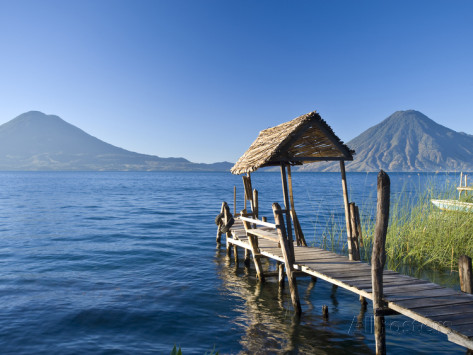
Following Antonio and Crystel visit with their birthmothers we will travel by van to Panajachel and board a lancha to take us to Santa Cruz la Laguna, a small pueblo located on the northern coast of Lake Atitlan in Solola, Guatemala.
Situated half a mile above the shore on the mountainside it is home to indigenous Mayans.
Accessible only by rocky footpaths and lanchas, Santa Cruz is a virtual island on the mountainside.
Because of its isolated nature and small size, Santa Cruz is a great home base for our stay. We will be employing indigenous Mayan guides to explore small, traditional Mayan villages around the lake. The guides will be much more than guides as Antonio and Crystel will daily be seeing their own rich café au lait skin.
Santa Cruz la Laguna
During our travel I will create a record of the voices, landscapes, and villages of the indigenous Mayans. Following my return home I will be able to create prose that truly draws its inspiration from the specific natural setting.
I’m lucky and grateful to have won a Next Step, Loft Mentorship, and Jerome Travel and Study Grant. Receiving these grants will help me complete HOUSE OF FIRE.
Antonio and Crystel, of course, understood the nuances of winning the Jerome Travel and Study Grant but it was Jody and I who were doing the HAPPY THANKFUL DANCE in the driveway.
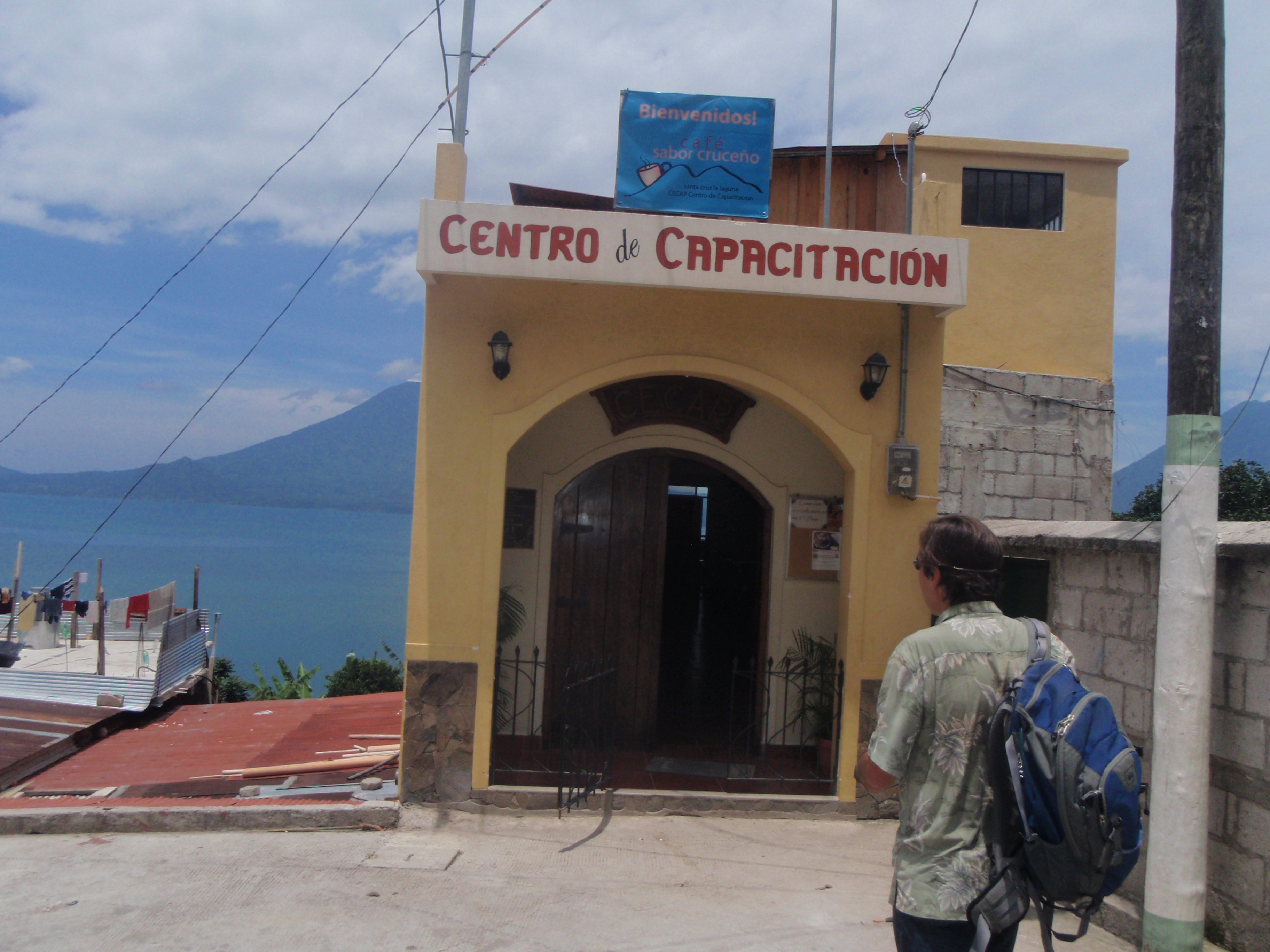
I walked into Cafe Sabor Cruzeno in Santa Cruz la Laguna, Lake Atitlan with trepidation. Not because it was recently opened. Not because it wasn’t yet rated on Trip Advisor or that it was a student-run café. And not because it was part of an NGO, Non-Government Organization.
Café Sabor Cruzeno was the result of the CECAP (Centro de Capacitacion) Culinary Arts program of Amigos de Santa Cruz foundation. The goal of the program is to train young people for successful employment in the restaurant and tourist business.
No, it was because I had my doubts that the culinary arts program would be successful with Antonio. I had a suitcase of dried pasta betting on it. Some people might pack extra clothes and shoes to match each outfit. I was more concerned that we have a food supply tucked away. When we traveled to Guatemala in 2010 I had forgotten to pack Crystel’s swimsuit. She ended up swimming in her Hello Kitty pajamas. But, I didn’t forget emergency rations for my son.
View from Café Sabor Cruzeno
Antonio is a healthy ten-year-old. He will eat a salad. Just don’t make a pyramid out of the raw vegetables. Instead, imagine a horizontal sundial and align the fixings uniformly around his plate. No dressing wanted or required. When Antonio and Crystel were in highchairs Jody and I would put food on each tray and what one toddler didn’t eat the other would. Being low maintenance, Crystel’s sundial can be any shape: cylindrical, conical, or vertical with a dab of ranch dressing. She’s satisfied with a ham sandwich. Antonio came to us waving a chicken leg in the air. He has never eaten a sandwich in his life. But give him a Sweet Hawaiian bun in one hand and a slice of salami in the other and he will happily eat them separately.
Our table waiting for us
We cater to Antonio and Crystel because we can, though sometimes I remind him that he was born in Guatemala. Tamales made of corn and filled with beans are eaten with nearly every meal.
Lee Beal, our guide, originally from Texas, has lived around the world over the years, with Colorado being his home base. His wife, Elaine, and he have been full-time residents of Santa Cruz for the past 5 years. The couple came to Guatemala looking for a simpler and more fulfilling life and found it on Lake Atitlan. Lee originally started working with Amigos de Santa Cruz foundation and now serves on the board of directors. As he learned more about the people of Santa Cruz he realized there was a need for jobs creation. A part of this is now being fulfilled through the CECAP vocational training center.
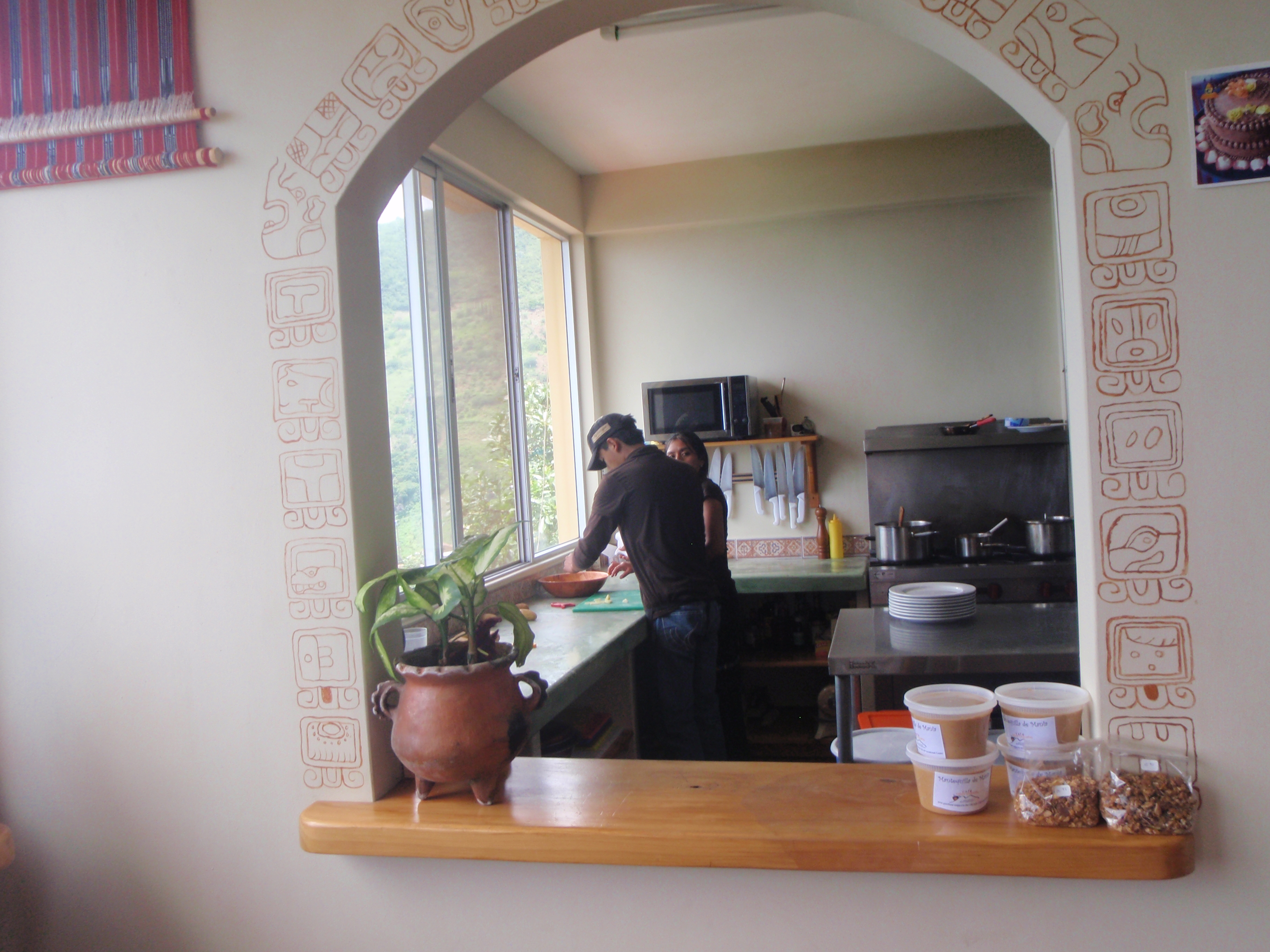
The kitchen
Walking into the restaurant, I was surprised how open, clean and fresh it was. I felt as if we were on top of a mountain and we were. Two graduates of the culinary arts program were busy in the kitchen completing our authentic Guatemalan meal. They would also be serving us.
I don’t out Antonio unless I have too. Usually I just take him aside and remind him that we have food at home and simply be polite and say, “No thank you” if he doesn’t like what’s served. No funny noises or grotesque looks necessary.
After snapping a picture of our seating area, I took a deep breath and sat down. We had our choice of freshly made cold tea, several sauces, mashed potatoes, and a mixture of glazed vegetables and chicken with pulique sauce. At first glance, there wasn’t anything that I thought Antonio would try. Pulique is a common dish of the Guatemalan highlands. It is often served at holidays, anniversaries, and yearly fairs. Alex, our Guatemalan guide, explained how special it was that our chef had made the pulique for us. (Lee has been employing local guides trained through INGUAT. His goal is to create well-paying jobs that fit with the Mayan culture.)
Antonio with Alex paying our bill
The pulique sauce was mild, gentle, and creamy. I watched Antonio as he scraped a bit of it off his chicken.He tried a bite, finished his chicken, and asked for more.
Antonio had proven that CECAP’s culinary arts program was headed for success.
The café is located in the vocational center which houses carpentry, welding, computer education, sewing and weaving. The training center was buzzing with students sewing on Singer sewing machines and students welding on the rooftop.
What makes CECAP unique is that it has always been a community-driven vision and not a government project. Amigos is helping CECAP become self-sufficient.
Singer sewing machines. Girls and boys sewing.
Touring the vocational education center, watching students sew and weld, and dining at the café were some of the many highlights of our trip. We were getting a glimpse into the future of Santa Cruz la Laguna. Santa Cruz is one of the 45 poorest townships in all of Guatemala with illiteracy and malnutrition among the highest in the country. Amigos believes that education is the key to breaking the cycle of poverty for the indigenous people of Guatemala. Their primary focus has been on education both at the primary and secondary level. We were fortunate to see it at work.
Before we left Minnesota, Crystel had told us that she wanted to learn how to weave while in Guatemala. Lee contacted a local Guatemalan and set up a time for us to meet with her in her home. Both Antonio and Crystel quickly became engaged in learning to weave. They returned to her home several afternoons to complete their projects.
While Antonio and Crystel were weaving, Lee took Jody and me on a tour of the town church and also to Casa Milagro. Casa Milagro (since 1992) is an NGO that supports widows and children. Thilda Zorn, founder and manager of the project, focuses on providing an environment for creativity, joy, and freedom. Jody and I purchased handicrafts that the children had made.
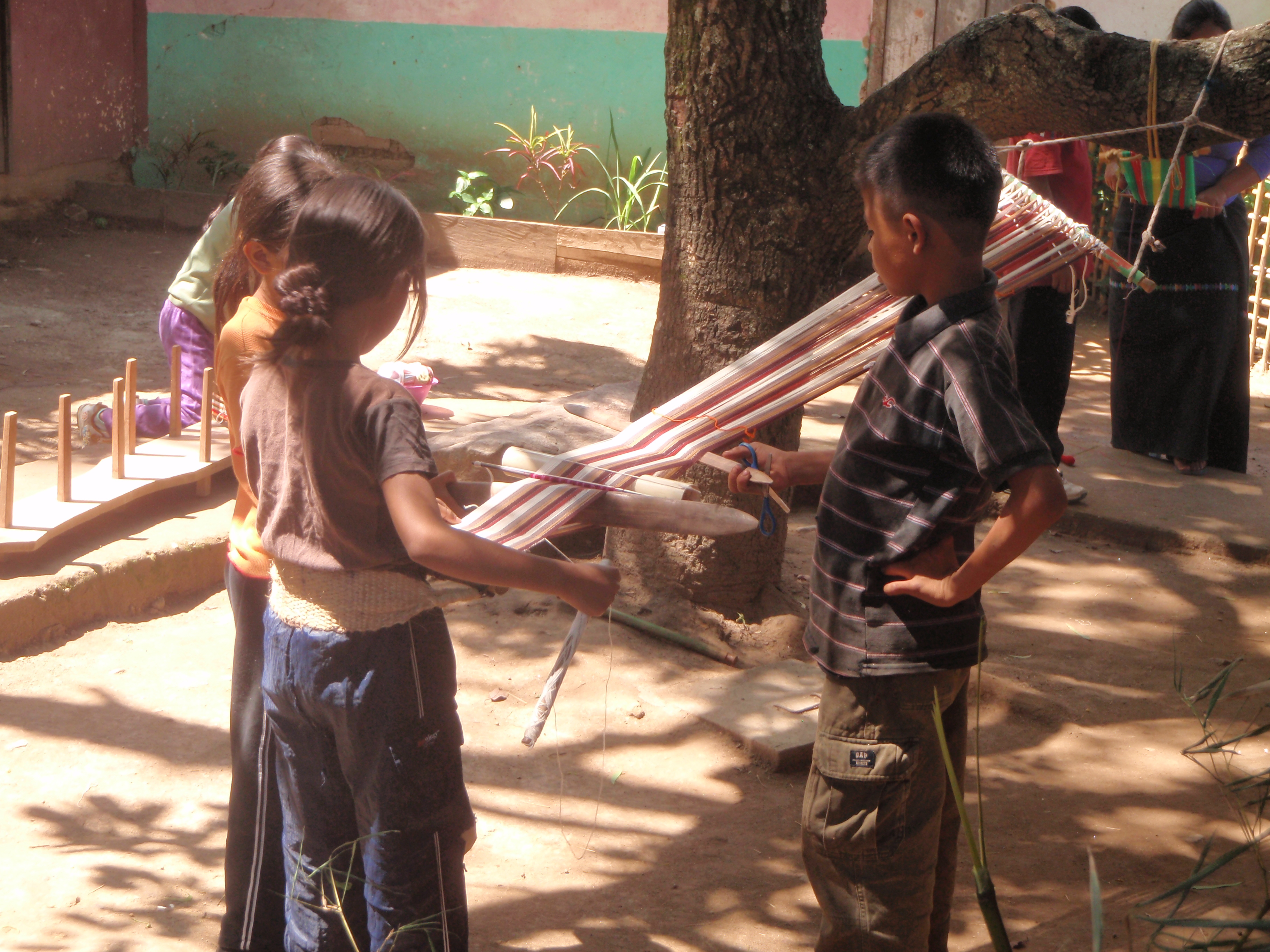
Casa Milagro – children learning to weave
By the time Jody and I returned to our children, Antonio had left with Alex and Zach to play soccer in the village square, and Crystel was making fast friends with the girl of the house.
Antonio rushed in breathless and excited. He was poking fun at Alex and Zach, “Those kids were smaller than me,” he laughed. “We lost 10-7. It cost us 3 quetzales (50 cents).” Apparently, there was a side bet and the local children came away the winners. “Alex, they blew right by you,” Antonio added. “And, Zach he couldn’t stop anything.”
Antonio and Crystel learning to weave
Antonio and Crystel were being changed. And, it had nothing to do with their parents and everything to do with their parents. We had brought them here – to their birth country to have an opportunity to connect with other Guatemalans.
The boy who wouldn’t look at the kids in the square the first night was now facing off with them in a soccer match and for a short time he had two older Guatemalans, Alex and Zach, that could brother him.
Antonio’s bud’s – Zach and AlexCrystel’s new friend
This very fine day would finish in a hot tub and swimming pool in the next village, El Jaibalito. A ten-minute launch from Los Elementos.

 During this fourth trip, I was even more aware of the relationship that our guide, Alex, had with Juan and Crystel. He had endeared himself to them as well as to Jody and me. He welcomed us and our friends, Pat and Mary, into his home. His family took a day trip with us to Hot Springs Fuenta Georginas, outside of the Mayan Village of Zunil, Guatemala. By sharing his family, his wife and two children, he provided us all with another experience—being around a Guatemalan family in Guatemala and seeing him as a loving father.

![guatemala-map[1]](https://wordsisters-blog.com/wp-content/uploads/2014/06/guatemala-map1.gif)