Tag: mental-health

  • SAD TIGER, My Coffee Table Book

    Sad Tiger by Neige Sinno, sits prominently displayed on my coffee table. It’s not an illustration book of art, travel, or architecture. It’s not a photo book of exotic animals.

    Sad Tiger is a powerful memoir that weaves Neige Sinno’s memory of sexual abuse and reflects upon literary works by authors who were abused and authors who wrote about abuse.

    It’s the most complete book about abuse that I have read. It’s my story. My all-embracing 4-year-old, 9-year-old, teenager, and adult self-story.

    Underlined sentences mark the early pages, but soon it became expeditious for me to place a vertical line in the margins highlighting entire passages. When I had an especially strong reaction to a passage, my vertical line became an elongated bold exclamation mark.  

    Emotion would build in me, and I’d write in the margin. There was no order or plan for my discourse. A conversation with myself, my mother, a memory would drive me to write in the top, sides, and bottom margins. Words would be vertical, horizontal or slanted, near the author’s words that elicited the feelings.

    I didn’t start out knowing that this book was going to be displayed on my coffee table. I didn’t intend to write or make any notations in the author’s memoir.

    It was instinctive, like breathing. On the first paragraph I underlined, “Even if you’ve not experienced it, the traumatic amnesia, the bewilderment, the silence of the victim is something we can all imagine or think we can.”

    In the second paragraph, when she wrote about the perpetrator’s assumed experience, I asked, Really that’s what it was like?

    Her words rang true.  “… And after it’s over, getting dressed, going back to family life as if nothing had happened. And once the madness has taken hold, doing it again, doing it again and again, for years.”

    I was in awe, too, that my family could go on as if nothing had happened. The sexual abuse, the violence, the awful words said quietly, shouted, or screamed. Survival was day by day, moment by moment. Wary and alert, vigilance didn’t stop the abuse. I could never escape but I could steel my body to not feel when it came. Even today, 51 years later, I can easily recall my stomach dropping and my impending sense of dread when I realized that I was trapped in a car in the middle of winter on a remote road. My older brother forced me to the back seat. We were supposed to be going to my beloved Aunt’s house—the reason I agreed that I would ride along. A gunshot sounded. No, I realized, with his weight pushing down on me, it was a tree limb snapping from the extreme cold. I don’t even remember if we made it to my aunt’s or what we did once we arrived.

    I hear my brothers’ saying, Why are you still writing about this? (As if we were ever really going to have a conversation about their assaults). I answer, Fuck you. It’s mine to write. You shouldn’t have fucking raped me if you didn’t want me to write about it.

    “A person rapes in order to exist,” I underlined. I have long thought that my oldest brothers raped me to have some semblance of power in the family. A response to the chaos of our life with our alcoholic father, our mother, and the on-going bedlam of being farm poor with 11 other siblings. Calamity struck every few years. Our barn burnt down when I was in 3rd grade. A few years later, our house burnt down. It wasn’t if something was going to happen, it was always when. My belief was they raped me because they could.

    I pressed pen to paper, Where were you, Mother? How could you not know? I wish someone had saved me! I wish someone cared enough. Was brave enough. Had the courage to confront what was easily seen.

    In the end, I saved myself and my three younger sisters. Like the author, I reported the abuse to the police when I was 19. I was afraid that my mother wouldn’t protect them, the same as she didn’t protect me. I would never have forgiven myself if I allowed it to happen to my sisters. I was no longer at home, mothering them, protecting them.

    And like Sinno, I am drawn towards books written by survivors. She says:

    “Many books are published every year by survivors. Mostly fiction. Whenever I come across one, I always like to flip through it. Some are well written, some not. Either way I read them with the same eye. I am looking for a description of the facts. I want to know exactly what he did, how many times, where, what he said, and so on.” Same, I wrote in the margin.

    I came across her book, Sad Tiger, in The New York Times book review section, May 2025. Sinno has said that Sad Tiger was written “out of necessity”, as an act of survival and understanding. Writing it was a way to reclaim her own story – to move from being the “object” of violence to the “subject” who names it.

    House of Fire: A Story of Love, Courage, and Transformation is a book that I had to write. The sexual abuse that happened to me isn’t me. It was done to me. It doesn’t define me. With writing House of Fire and telling my story, I brought the truth into the light and claimed my freedom. I cut the cord that bound me to my family and found me.

    Keeping quiet about abuse lets abusers win and minimizes your own life. Says, I’m not important. I’m not as important as the abuser. As the pedophile.

    Fuck you, I say.

    I love my life. There’s a deep peace in sitting on my deck, listening to chimes as leaves whisper and clouds float through the blue sky. I am in the moment, knowing my truth, living my truth, and speaking my truth.

    I’m immensely proud of who I am. Who I always was. A fighter with a belief in myself.

    I don’t write so that the abuse disappears. It will never disappear. It’s in my bones. My thoughts. My world. My very cells.  

    An elongated bold exclamation mark highlights one of the author’s final sentences, “Like so many others I was raped, I was defiled and betrayed at an age when all you have is trust, and yet I grew up to become an adult who has not raped or defiled or betrayed another person in return.”

    Same. With my wife, I’ve raised two children to adulthood. Slowly, intentionally, I made my body mine again. For so long my body was numb to pain and my tears stayed locked away. Now they flow easily. That is the work of love.

    I have a coffee book that’s all about me, my travels, my journey, and it sits next to mine.


  • Anxiety: It Often Gets the Best of Me

    I was an anxious kid, an even more anxious teen. So much so that the nuns at my Catholic school let me skip mass each morning because of how often I threw up or fainted. Even in college, I did so now and again. And while it’s been decades since, anxiety once again has become a near-constant companion, in large part due to COVID.

    And I’m not the only one who is anxious.

    The World Health Organization (WHO) reported that anxiety increased by 25% across the globe in the first year of the pandemic. And this fall, a panel of medical experts recommended for the first time that doctors screen all patients under the age of 65 for anxiety which, involves asking questions about symptoms: How often do you feel nervous, anxious or on edge? Do you have trouble concentrating? Does worry present you from falling or staying asleep?

    I’m not sure why I and all the rest of us age 65 and older aren’t covered by the WHO’s recommendation, but I do believe we ought to be. After all, it’s not like anxiety goes away with age. In fact, I and many of my friends and colleagues who are 65+ report an increase in anxiety, in part because we no longer have the self-esteem and support system that came with our jobs. Health issues are also a factor.

    Some of us also report an increase in hang-xiety, which is anxiety some people experience after drinking alcohol. I certainly did shortly after the start of the pandemic when I found myself indulging far too often in a second or even third cocktail, which research shows can decrease dopamine, a neurotransmitter that plays an important role in keeping anxiety under control.

    It’s one reason why I reluctantly gave up drinking this year. It’s also why I’m doing other things as well:  

    Journaling

    Setting reasonable goals

    Striving for progress, not perfection

    Asking for help and support

    Trying eye movement desensitization and reprocessing (EMDR) therapy

    I’m also admitting that I’m struggling. Doing so has been tough for me but it’s getting easier thanks to the love and support of family, friends and my fellow writers/Word Sisters.

  • IT’S A GOOD DAY WHEN I KICK SOMEONE IN THE HEAD

    Crystel, Antonio, Jody, Beth
    Crystel, Antonio, Jody, Beth

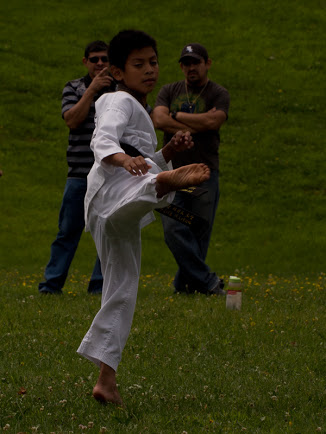
    I started Tae Kwon Do, at Kor Am Tae Kwon Do School when I was 50 years old. Yes, it was an age thing, time to do something new, challenge myself, and show the world that I’m really not all that old. For four years, I had been sitting with my back against the Do-Jang wall watching Antonio and Crystel progress through the belts. When they became black belts I decided to join.

    I told myself and others that it was to help keep the kids interested in Tae Kwon Do. Really, it was because I secretly wanted to join and it took turning 50 to gather the courage.

    Not that Antonio and Crystel didn’t liven up a bit when they watched me put on the stiff white uniform. Crystel got this sparkle in her eye. I knew I was in trouble then. Because they have a black belt, they outranked their mom. When they weren’t telling me what to do they were laughing. I always seemed to be a kick behind, a jump behind, a punch behind and pointed in a different direction than the other students. I thought I might be the first person who didn’t progress from a “no-belt” to a white belt.

    Crystel
    Crystel

    It was a source of pride for me when after five classes that white belt was placed around my midsection. At Kor Am Tae Kwon Do, the adults and children take classes together and I’m sure that my smile was just as wide as the five-year-old that started class at the same time as I did. And, I’m pretty sure he was already better than me.

    Antonio
    Antonio

    The exercise time that I spent running was now being eaten up by three to four classes a week at Tae Kwon Do. At first, I was disappointed. I wasn’t getting the same type of workout. Doing Tae Kwon Do, I wasn’t even sweating. I was such a klutz in class and had such a slow learning curve that it was a personal challenge just to show up and take my place at the back of the room.

    I persevered and started noticing benefits. With the twenty minutes or so of exercises that we did at the beginning of class I found that I was able to stretch my legs more than I had in years. I also felt more in tune with my body. We used so many muscles groups exercising that I knew myself better. So, even though, I was only running on the weekends, I felt like I was in better shape because I was just so much more aware of my whole body.

    Jody
    Jody

    Kihap (the yell that is shouted when practicing Tae Kwon Do) is the hardest thing for a new student to do. The yell often sounds like “Haaaa!” or “Ahoe!”  The kihap is designed to regulate breathing, and can be used to intimidate, distract, or startle your opponent which can cause the effect of “freezing” your opponent momentarily just prior to a strike. For me, I think of it as in terms of my personal statement. Me saying, “I’m here! Take notice of me! This is my space!” But even though, I’m not known to be shy, it took many classes for me to find my voice.

    I love that in Tae Kwon Do you are expected to be loud and defend yourself. I don’t know of any place else where you are not only given the right to defend yourself but it is expected. I used to be concerned that in a dangerous situation where there was a threat of being assaulted that I would lose my voice or become immobile. I don’t worry about that anymore. Tae Kwon Do has taught me what I can do.

    Role playing. I disarmed the bad guy.
    Role playing. I disarmed the bad guy.

    Sparring is my favorite discipline of Tae Kwon Do. I enjoy when I can kick a person in the head. That accomplishment hasn’t come without me being on the receiving end of a few black eyes, bloody noses and sore ribs. Still, there isn’t any quit in me.

    A part of the membership oath of Kor-Am Tae Kwon Do School is that we are united in mutual friendship. I feel a kinship with everyone from the youngest member to the oldest member, belt and age-wise.

    And especially with the people on whom I get to practice my strikes.