Tag: life

  • Lazy, Crazy, Days of Summer

    So, this is summer. We all began daydreaming about this time of year during the February/March doldrums. Longer days, more time to bike, read in a comfy outdoor chair, walks with friends or family, cookouts, maybe swim, possibly attend a local festival or even a trip to the state fair or a getaway.  Don’t think about bugs, grass cutting, watering the gardens, traffic, crowds, bored kids, very hot days, house maintenance at your place or a relative’s, ants in the kitchen, work that doesn’t diminish or go away, higher food costs or utility bills. Just roll out the lazy days. Really?

    For each of us with plans for a long weekend, there is a scheduler or boss with post it notes from a few of our peers for the same time off and calendars needing additional worker hours. Caregivers are scrambling to fit in dentist appointments, physicals, and eye tests and all required before the last week of August. And don’t forget finding drivers’ ed if there is an appropriate age kid in the house.

    What is it about our easy-going collective summer fantasy? Planted in our rhythms by school calendars built around agricultural and/or weather limitations centuries ago. Perpetuated by advertisers and businesses. Lots of people work their longest hours in warm weather. For them summer means more bucks to stretch through slow times. Or those extra summer jobs pay for the extra summer expenses. 

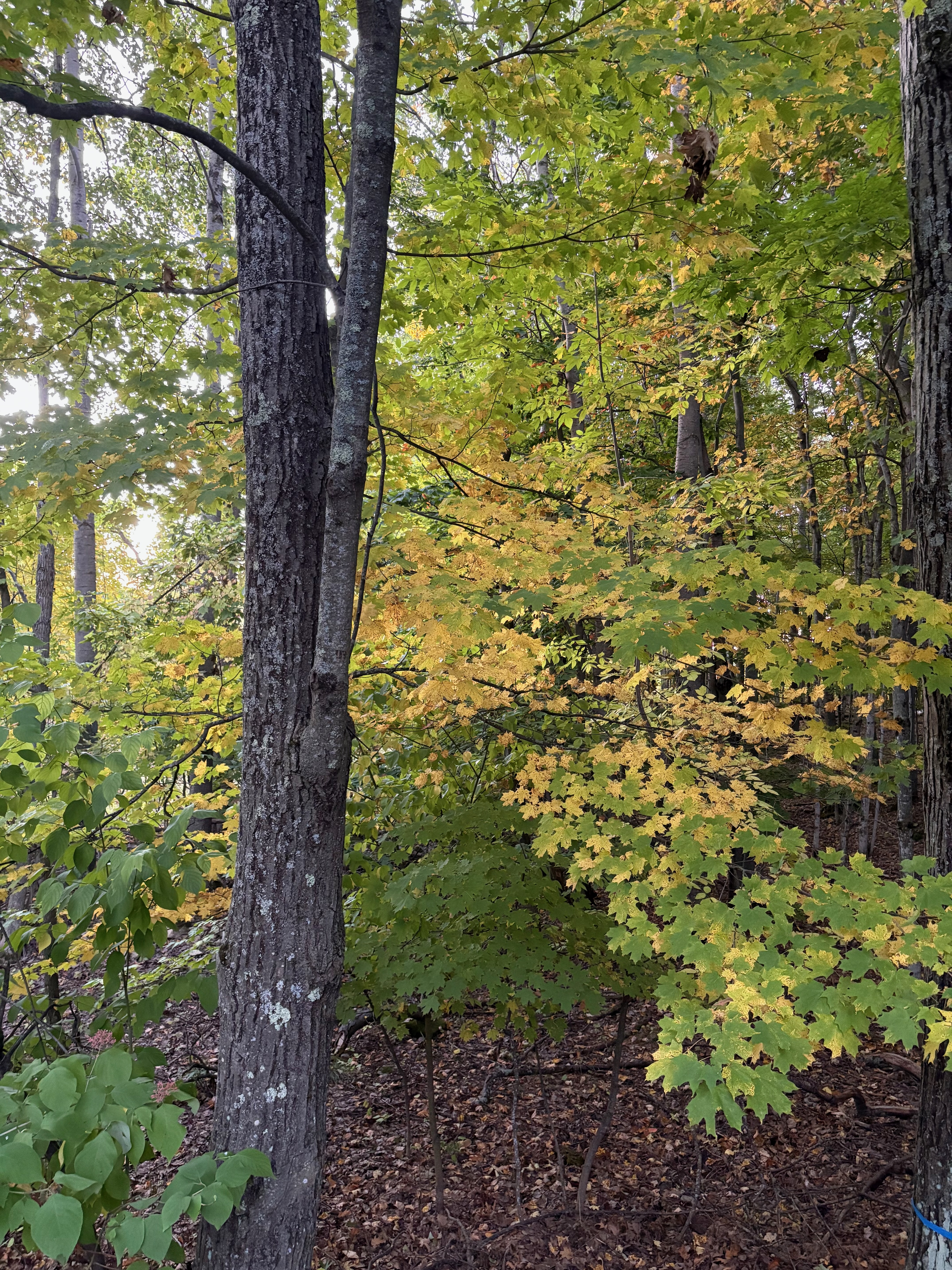
    What we share in our summer dreams across many parts of the United States are the simple pleasures of walking outside without a coat or gloves, not slipping on ice, seeing neighbors or friends while casually walking, sitting on a public bench sipping a cup of coffee or slushy. There are flowers to admire, fresh vegetables and fruit available that taste better, sunlight more hours instead of porch and garage lights. After staying inside during sunlight-starved months of cold, this is worth the wait. Wasps, bees, flies, mosquitos and ticks: please give us a break.

  • The Mirror

    What a twelve-year-old learns to survive sometimes becomes the skill she uses decades later at a poker table.

    Lying didn’t come naturally to me. I was twelve when I realized, quite suddenly, that I wouldn’t survive my family’s chaos if I didn’t learn how.

    I stood in front of the assistant principal, heat climbing up my neck and into my face. I could feel the redness spreading across my cheeks. The corners of my mouth twitched. My eyes kept sliding away from his.

    He asked the question again.

    I tried to answer, but the truth was written all over me. My breathing had changed. My hands shifted at my sides. My face burned like a signal light.

    I remember thinking: This is a problem.

    That afternoon, when I got home, I went straight into the bathroom and closed the door behind me. I turned on the light and stood in front of the mirror. I shut the household noise off and stared at my reflection.

    I knew exactly what to do.

    I looked into my own eyes and said the words out loud.

    “I didn’t do it.
    I wasn’t there.
    It wasn’t me.
    I don’t know how that happened.”

    My face flushed immediately. My mouth tightened. My eyes shifted away.

    So I tried again.

    And again.

    I practiced until the red stopped rising in my face. Until my breathing stayed steady. Until I could hold my own gaze without flinching. I practiced until my shoulders relaxed and my voice sounded ordinary.

    I practiced until my body stopped betraying me.

    That was the day I learned that unless someone actually saw me do something, I could lie convincingly.

    When I was nineteen, I had a different realization.

    I was mowing the lawn on a nice summer day. I paused, looked to the sky, and watched the clouds drift.

    And it hit me.

    I was exactly where I had said I would be.

    No excuses.
    No stories.
    No explanations.

    Just the truth.

    There was freedom in that.

    A lightness.

    I remember thinking: This is better. I have no reason to lie anymore. I’m safe.

    I went back to the mirror. I stood there looking at myself and said, quietly at first, “I love me.”

    My eyes slid away from my own reflection.

    So I said it again.

    “I love me.”

    I stayed there repeating it until I could look myself straight in the eyes without my gaze moving off the mirror.

    “I love me.
    I love me.
    I love me.”

    It felt strange. Uncomfortable.

    Slowly the words settled.

    I believed me.

    Today, I still practice with a mirror.

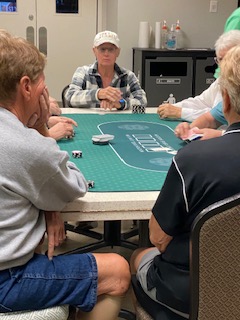
    Before a poker tournament starts, I give myself the same quiet talk.

    “I love me.
    I’ve beaten everyone at this table before.
    I can beat them today.
    Play my cards.
    Trust myself.”

    Poker is about many things—math, probability, timing—but there is another part of it people don’t always talk about.

    Control.

    At the poker table, I can keep my emotions exactly the same whether I’m holding a seven and a two or a pair of aces. My breathing stays steady. My hands rest in the same place. My face doesn’t give anything away.

    No tells.

    Sometimes I think about that twelve-year-old girl standing in the bathroom mirror, practicing how not to show the truth on her face. She didn’t know it then, but she was learning something about herself, about discipline, about control, about surviving difficult moments without falling apart.

    Poker uses those same muscles.

    But it also asks for something more.

    It asks me to stay present.

    Every hand is a surprise. Every card an unknown. Sometimes the deck gives you everything. Sometimes it gives you nothing.

    And when it gives me nothing, that’s okay too.

    I can push my chair back, smile across the table, and say,

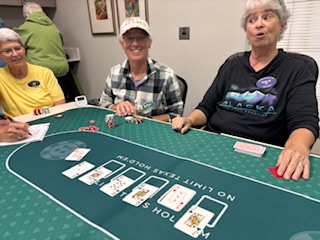
    “Nice game, ladies.”

    Because the real victory happened long before the cards were dealt.

    It happened the day I learned to look at myself in the mirror and tell the truth.

  • Moving On

    Moving On

    “Crystel’s carrying the dining room table out of the house!” Jody said, a note of panic in her voice. “Now the chairs!”

    Quietly, I felt proud of Crystel. She was going ahead with gumption, emptying our house while we were in Florida, not asking permission, not making a fuss. Jody kept tabs on the coming and goings through the Blink footage, watching life continue without us. In what felt like solidarity with her alarm, I said, “Yeah… she could have told us before she did it.”

    “Well, you did tell her to give everything away,” Jody said, somewhat accusingly.

    “Yeah,” I said. “I did say that didn’t I?”

    I imagined walking into our house when we returned in May and not seeing our dining room table. Juan wouldn’t be assembling a Lego set or Crystel stitching at the table. Our final board game had already happened.

    The two girls turned the table sideways to fit through the door, and the leaf extension opened awkwardly.

    “We better remind her to get the table leaves from the basement,” Jody said.

    “You’d think she’d know that” I said, cocking my head studying the video clip. The extension fell completely open now. It was like watching a movie reel, silent, irreversible.

    “Yeah,” Jody replied. “You’d think so… but.”

    Later, we got a photo from Crystel. She was sitting at the table in its new home. She had gifted the table to her friend who was moving into a new apartment.

    Quickly, Jody texted a list: These are the things I want from the house—do not give away. Heart-shaped end table from her mother. Charging side table in living room. Lounge chair the cats sit in.

    Our house will go on the market by summer. Juan and Crystel are turning twenty-four this year still living at home. Juan has a plan to move into an apartment with his girlfriend. Crystel’s plans are fluid. It’s as if the house is still raising the kids, negotiating garbage duty, washing dishes, cleaning house.

    After the house sale, Jody and I plan on living in our RV. Maybe sooner than expected, judging by how quickly our household items are leaving through the front door.

    “I think it’s a good idea,” I said to Jody, “that Crystel is helping give things away. With the dining room table gone, there’s no pretending we’re not leaving.”

    Twenty-five years, we lived in that house. The only home Juan and Crystel knew. They are dismantling their childhood while still living inside it. Crystel has sewn her t-shirts into a quilt; Juan is going through his sweatshirts one by one.

    Maybe this is how it happens. Not with one final goodbye, but piece by piece. A table. A chair. A room that echoes a little more than it used to.

    For years we filled that house with noise, laughter, birthdays, school and neighborhood parties. Arguments and apologies.

    Now they are emptying it.