Tag: heritage

  • Reflections from My Great Grandmother’s Rocker

    Some nights sleep is elusive and I’m up earlier than expected—an experience I share with many people my age. At 6:15, I sit in my great grandmother’s rocker reading a book about baby care, since I will be a first-time grandmother in a month or so.

    I try to imagine Anna Kuntz Pleitz and wonder what she was thinking when my grandmother, Helen Wagner Pleitz was pregnant with my mother, Eileen Pleitz Shriner in 1921. I wonder how Anna would view my self-assigned reading.

    Anna lived with her son Frank and daughter-in-law Helen and would have been on hand when they were having children. I speculate that her knowledge of babies and mothering was held in high regard. Anna would have known the secrets of nursing and how to soothe a fussy baby. Like I do. In her day there may have been magazine articles and books about the ‘modern’ methods, but I don’t envision her reading them. She and Helen would have been confident of her skills. 

    Or maybe not. Throughout the 20th century and into this one, each new generation has had their own take on parenting and baby care. So I volunteered to read the Mayo Guide to Your Baby’s First Years along with the What to Expect website to learn what’s new in the 30+ years since I had newborns. I want to be familiar with what my daughter-in-law and son are learning. 

    My mother said my great great uncle, whose name I don’t know, made this beautiful platform rocker and matching footstool for his sister Anna. Making furniture was his trade. Anna’s husband George also made furniture, so perhaps it could be his handiwork. It is in the Eastlake style, so its design and decorations are simpler than ornate Victorian furniture. I don’t know if Anna brought it from Alsace (on the border of France and Germany) when she emigrated from France or if it was made in the U.S. 

    It’s a ladies rocker, which means its frame is smaller and lower. It’s very comfortable and fits me perfectly. More than 100 years later, the rocker doesn’t even squeak. A couple of years ago, I had it reupholstered and replaced the antique-looking gold striped fabric my parents had chosen with an off-white tweed with threads of red and gold and blue. I wanted the rocker to be used and not be a museum piece.

    I silently rock and think of Anna, Helen, and my mother sending their love and wisdom.
  • The Half-Life of Family Heirlooms

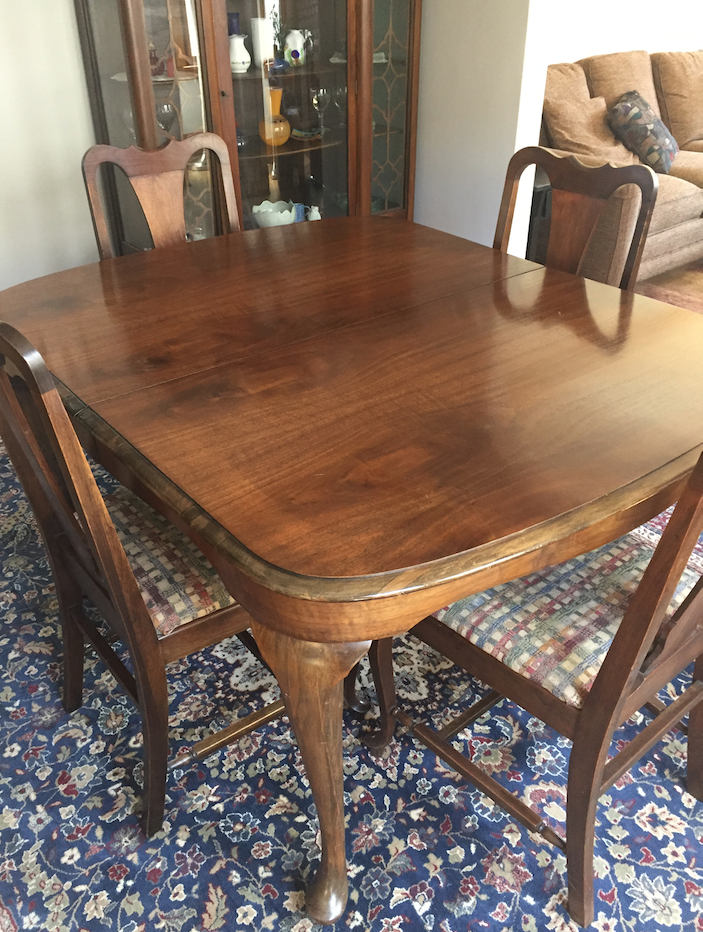
    Recently, when I served dessert to women friends around my grandmother’s dining room table, we described our uneasy relationship with the objects the women of our families treasured.

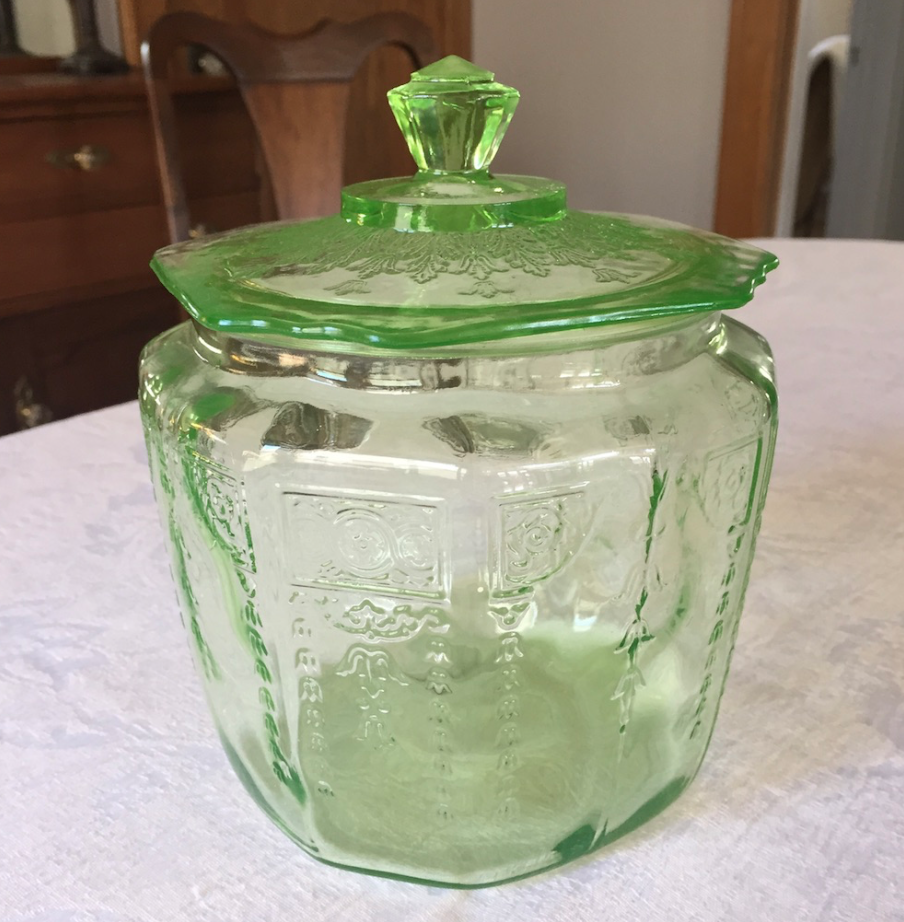
    Now when we have homemade cookies, we store them in Mimmie Shriner’s Depression glass instead of saving it for good.

    Women of the Greatest Generation, like my mother, cared about “good” china, crystal, and real silverware. They hoped to get full sets of it as wedding presents, and they cherished their mother’s and grandmother’s things. For them, the hope chest tradition was alive and well. They collected china and linens before they married and instilled that value in my Baby Boom friends and me. But our Millennial kids don’t want to fuss with handwashing goblets or ironing tablecloths. Not that I blame them. I don’t either. Nonetheless, my friends and I are distressed about what to do with the tableware and linens we’ve inherited. Let alone the quilts, furniture, and photographs.

    We were brought up to value them, but the tableware really doesn’t make much sense in our lives. Where do you keep it between holidays? Wouldn’t holiday meals be less work if all your dishes could go in the dishwasher? And yet, this stuff mattered so much to our mothers. How can we just donate it to charity? But people do—Goodwill is full of 12-piece place settings with dainty floral borders. I’ve seen Waterford crystal goblets there too.

    Articles like,No One Wants Your Stuffhave taught me to rethink my assumptions. The popularity of books like The Gentle Art of Swedish Death Cleaningand The Life-Changing Magic of Tidying Up make clear that either I can purge my stuff or my kids will.

    Mimmie Shriner’s table where she served her out-of-work relatives on Sundays during the Depression

    I’m becoming reconciled to the half-life of memories. When my siblings, first cousins, and I—the last people to remember Mimmie Shriner or Grandma Pleitz—are gone, my grandmothers will become “ancestors” instead of the vivid people they are in my head. Mimmie’s dining room table will just be an antique table, and Grandma Pleitz’s crystal goblets will just be wine glasses. Their significance is in my memories; my sons and any future daughters-in-law don’t have those associations—they never knew my grandmothers.

    Many evenings, I sip wine from one of Grandma Pleitz’s eight goblets.

    Yet the objects are a visible reminder of past generations—hardworking, loving women who wanted pretty things in their lives. How can I honor the memory of these women without feeling burdened by their stuff? One way I’ve chosen is to use the good crystal and china even if it isn’t a holiday. When it chips or breaks, I throw it out. That way my grandmothers come to mind and are more present in my life. If their tablecloths get shrunk or stained—so be it. At least they got used and enjoyed. Likewise, I honor my grandmothers by keeping a few things I really like so I can look at them often. Finally, I remind myself that heritage doesn’t reside in the objects alone. It’s also passed down through our family’s recipes, traditions, stories, and values.

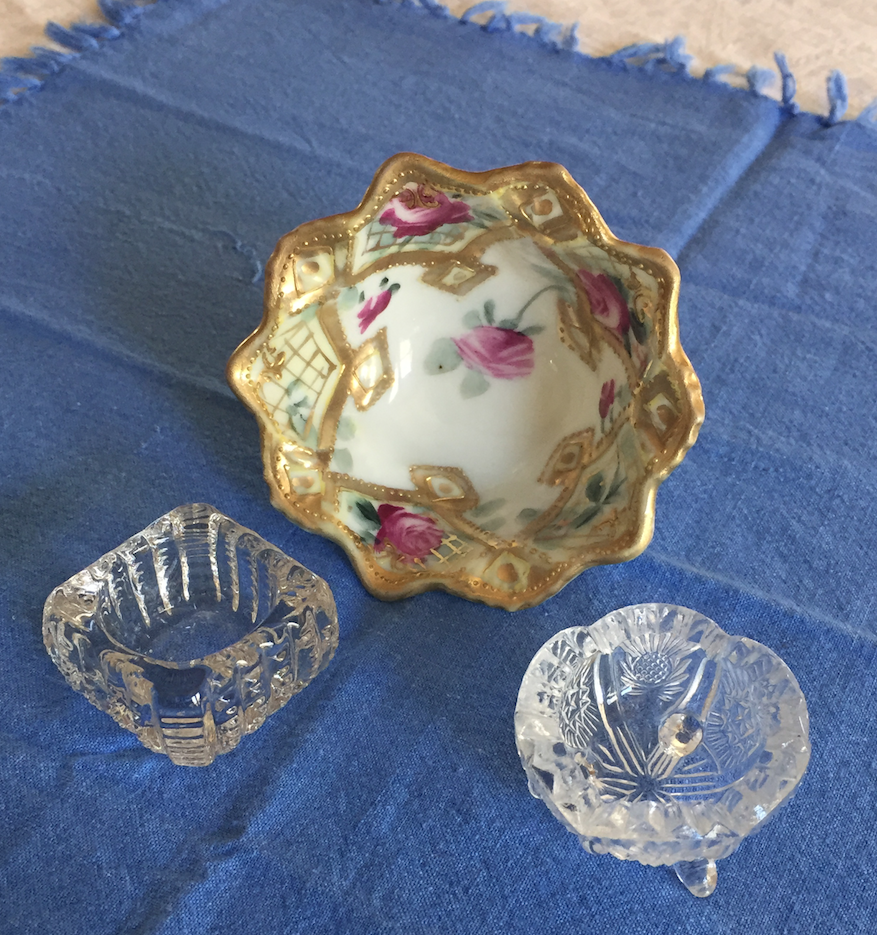
    Mimmie put hairpins in this small handpainted dish. I never put salt Grandma Pletiz’s salt cellars, but I still like them.

    I accept that my sons and future daughters-in-law may not care about my stuff—whether inherited or chosen during 30+ years of marriage. If they do, they will have different memories than mine. I hope they only keep what they care about.